What is the biggest planet?
Short answer
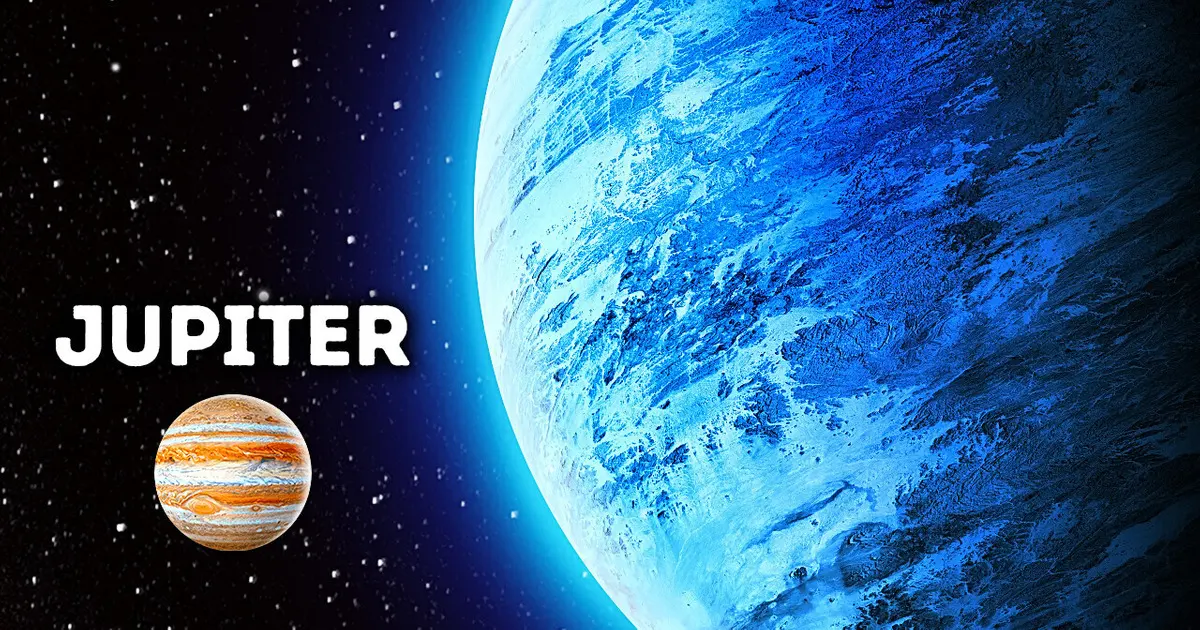
Jupiter is the largest planet in our solar system. It is a gas giant with a mass more than twice that of all other planets combined. Its diameter is approximately 86,881 miles, which is about 11 times wider than Earth. If it were a hollow shell, over 1,300 Earths could fit inside.
On this page
What makes Jupiter the biggest planet?
Jupiter is classified as a gas giant, composed primarily of hydrogen and helium, much like a star. Unlike rocky planets such as Earth or Mars, it lacks a solid surface, meaning an object would sink deeper into its dense atmosphere until the pressure became crushing. Its immense size is a result of its rapid accumulation of gas and dust during the early formation of the solar system.
The sheer scale of the planet is difficult to visualize without comparisons. Its mass is roughly 318 times that of Earth, and its gravity is strong enough to influence the orbits of nearby asteroids and comets. This gravitational pull acts as a shield for the inner solar system, often attracting or deflecting space debris that might otherwise collide with smaller, habitable worlds.
How do scientists measure planetary size?
Astronomers determine the size of a planet by observing its transit across a star or by calculating its gravitational influence on nearby moons. For Jupiter, researchers use data from space probes like Juno to map its internal structure and magnetic field. These measurements allow scientists to estimate the planet's volume and density with high precision.
To calculate the size of a planet, scientists typically follow these steps:
- Measure the time it takes for the planet to orbit its host star.
- Observe the dip in light when the planet passes in front of the star.
- Analyze the gravitational tug the planet exerts on its moons or neighboring planets.
- Apply mathematical models to determine the planet's diameter and mass based on these observations.
Why are there bigger planets outside our solar system?
While Jupiter is the largest in our neighborhood, astronomers have discovered "super-Jupiters" orbiting distant stars. These exoplanets can be several times more massive than Jupiter, pushing the boundaries of what defines a planet versus a brown dwarf. A brown dwarf is essentially a failed star that is too massive to be a planet but lacks the internal pressure to ignite nuclear fusion.
Distinguishing between a massive planet and a small star is a common challenge in modern astrophysics. Researchers look for specific characteristics to classify these objects:
- Orbital characteristics: Planets typically orbit stars, while brown dwarfs may exist in isolation.
- Composition: Planets have distinct chemical signatures compared to stars.
- Temperature: Brown dwarfs emit heat from their formation, while planets are generally cooler.
- Mass thresholds: Objects exceeding 13 times the mass of Jupiter are often categorized as brown dwarfs.
How to observe Jupiter from home?
You do not need a professional observatory to see the largest planet in the solar system. Jupiter is often one of the brightest objects in the night sky, appearing as a steady, non-twinkling light. Using a basic pair of binoculars or a small amateur telescope, you can easily spot the planet and its four largest moons: Io, Europa, Ganymede, and Callisto.
When planning your observation, keep these tips in mind to ensure the best view:
- Check a sky map app to locate Jupiter’s position relative to the horizon.
- Choose a night with minimal light pollution and clear, stable atmospheric conditions.
- Allow your eyes to adjust to the darkness for at least 20 minutes before looking through an eyepiece.
- Use a tripod for your binoculars or telescope to keep the image steady and clear.
Common mistakes when studying planetary sizes?
A frequent error is confusing mass with volume. While some exoplanets are physically larger than Jupiter in terms of diameter, they may be much less dense, making them lighter in total mass. Another common mistake is assuming that all gas giants have a solid core, when in reality, the interior of these planets is a complex mix of liquid metallic hydrogen and exotic materials under extreme pressure.
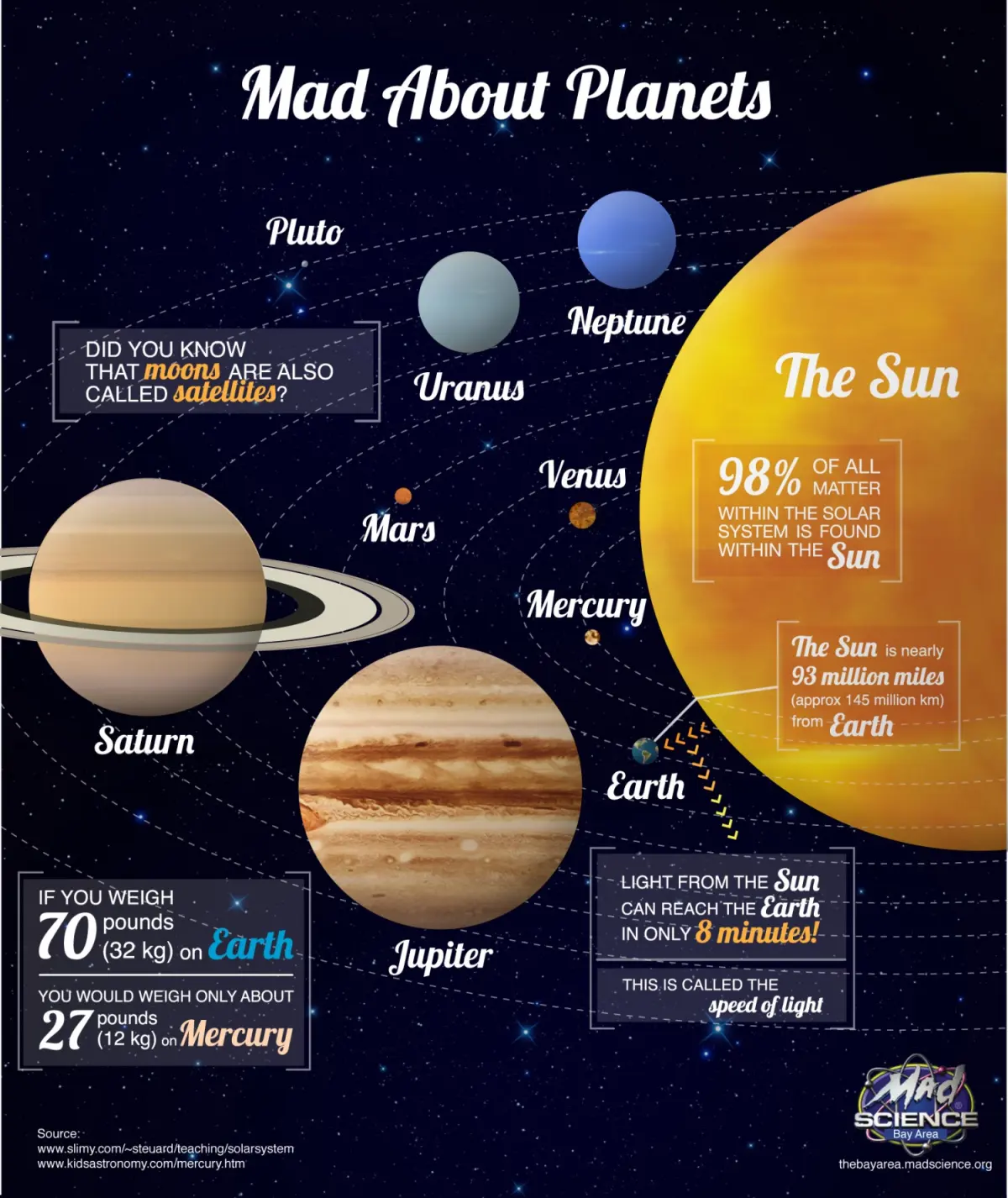
Beginners often struggle with the scale of the solar system, frequently misinterpreting diagrams that show planets close together. In reality, the distance between these bodies is vast, and Jupiter is roughly five times farther from the Sun than Earth is. Always consult updated astronomical databases rather than outdated textbooks to ensure you are working with the most accurate, peer-reviewed data regarding planetary dimensions and compositions.
Key facts
- Jupiter is the largest planet in our solar system, with a diameter roughly 11 times that of Earth.
- Its mass is more than twice that of all the other planets in the solar system combined.
- Jupiter is a gas giant composed primarily of hydrogen and helium, lacking a solid surface to stand on.
- A day on Jupiter lasts only about 10 hours, making it the fastest-spinning planet in the solar system.
- The Great Red Spot is a massive, persistent storm on Jupiter that is wider than the entire Earth.
- To visualize the scale, you could fit more than 1,300 Earths inside the volume of Jupiter.
The bottom line
Jupiter reigns as the undisputed giant of our solar system, dwarfing all other planets in both mass and volume. While its gaseous composition and extreme environment make it inhospitable for human exploration, its massive gravity and numerous moons play a critical role in shaping our cosmic neighborhood. Understanding Jupiter provides essential insights into the formation of planetary systems and the complex dynamics of giant gas worlds.
People also ask
Is Jupiter the largest planet in the universe?
No, Jupiter is only the largest planet in our solar system. Astronomers have discovered thousands of exoplanets orbiting other stars, some of which are significantly larger and more massive than Jupiter.
Could humans ever land on Jupiter?
No, humans cannot land on Jupiter because it is a gas giant without a solid surface. Furthermore, the extreme atmospheric pressure and intense radiation levels would destroy any spacecraft attempting to descend into its depths.
What would happen if Jupiter were a star?
Jupiter is often called a "failed star" because it is made of the same elements as the Sun, but it lacks the mass required to trigger nuclear fusion. If it had been about 75 to 80 times more massive, it could have ignited to become a red dwarf star.
How many moons does Jupiter have?
Jupiter has a vast collection of natural satellites, with 95 officially recognized moons as of 2026. The four largest—Io, Europa, Ganymede, and Callisto—are known as the Galilean moons and can be seen with a pair of binoculars.
Why does Jupiter have a Great Red Spot?
The Great Red Spot is a high-pressure anticyclonic storm that has been raging for at least 350 years. Its distinct reddish color is likely caused by complex chemical reactions involving sulfur and phosphorus compounds exposed to solar ultraviolet radiation.
How can I see Jupiter in the night sky?
Jupiter is one of the brightest objects in the sky and is easily visible to the naked eye as a steady, white light. You can identify it by its brightness, which often outshines all stars, and by using free stargazing apps to track its current position relative to constellations.
This answer was created with the help of AI research tools and reference sources. Spotted an error? Let us know — we correct mistakes quickly. See our editorial policy.