How many planets are in our solar system?
Short answer
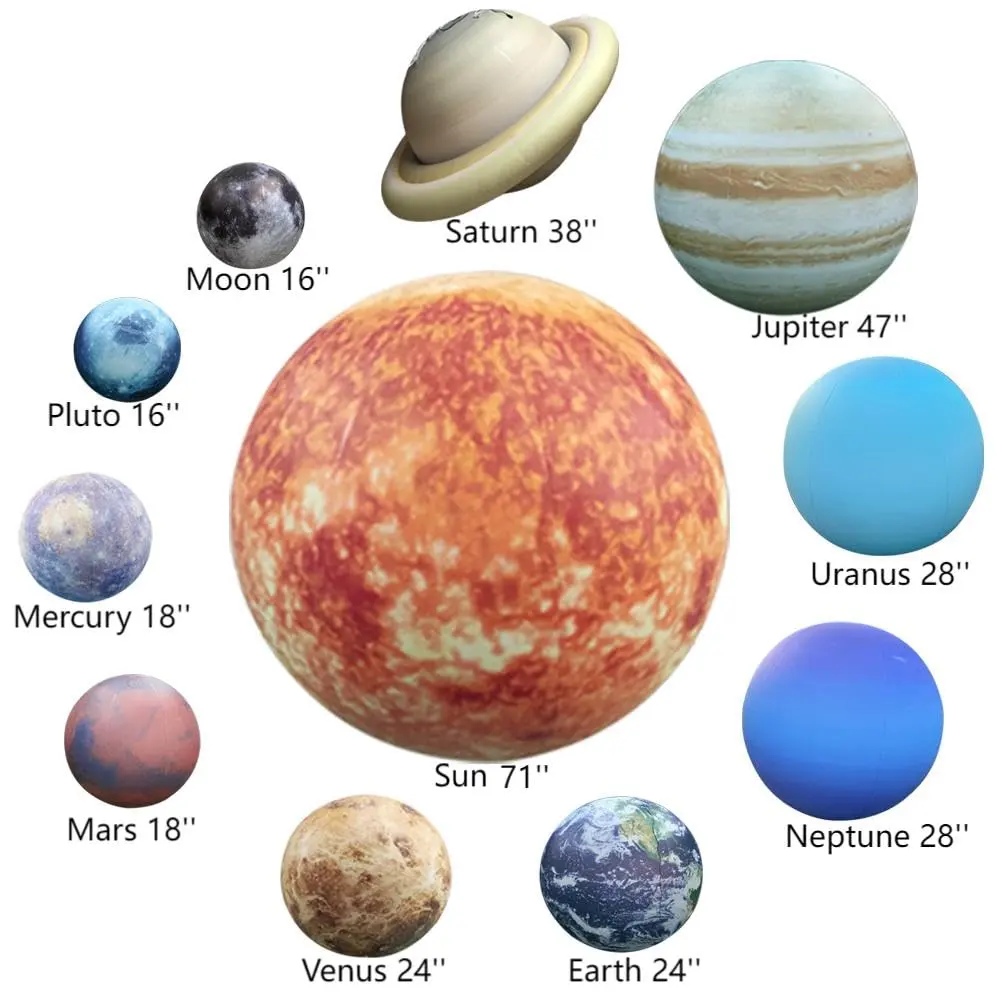
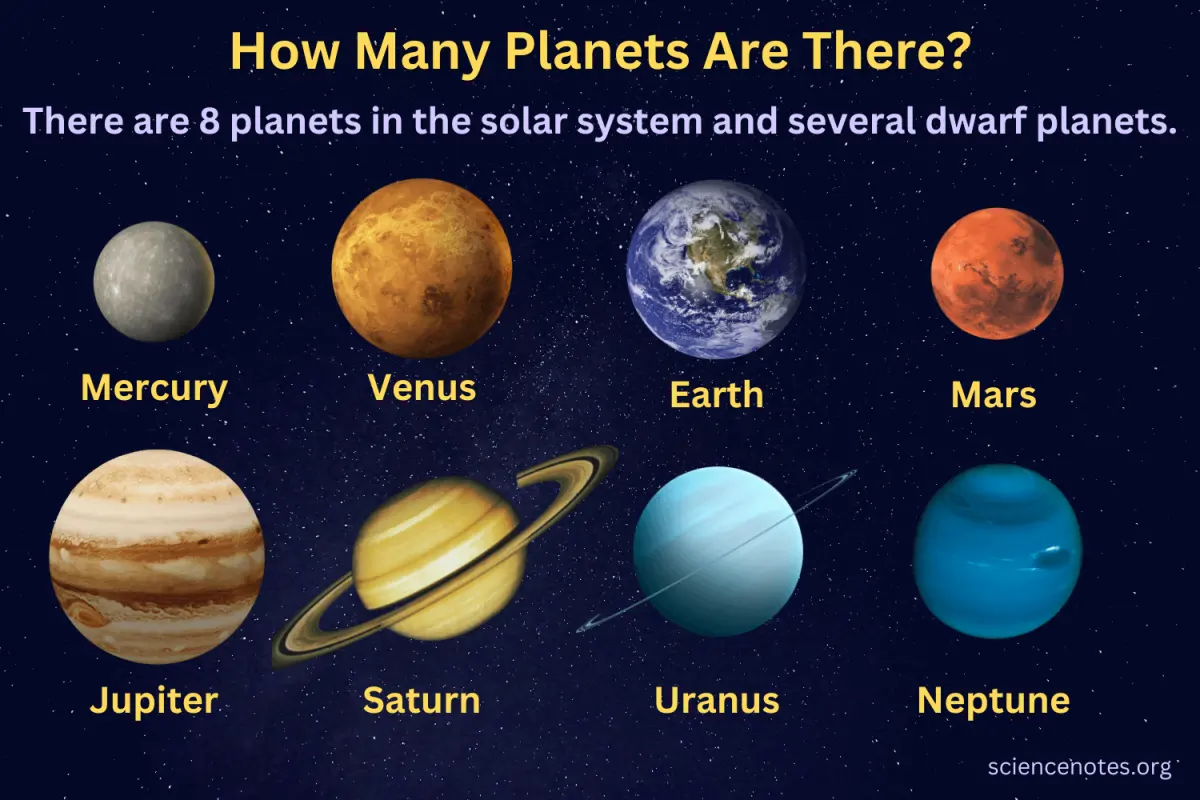
There are eight planets in our solar system. Following the 2006 reclassification by the International Astronomical Union, Pluto was redesignated as a dwarf planet. The recognized planets, in order of increasing distance from the Sun, are Mercury, Venus, Earth, Mars, Jupiter, Saturn, Uranus, and Neptune.
On this page
How are planets officially classified?
In 2006, the International Astronomical Union (IAU) established a formal definition for a planet within our solar system. To be considered a planet, a celestial body must meet three specific criteria: it must orbit the Sun, it must have sufficient mass to assume a nearly round shape due to its own gravity, and it must have "cleared the neighborhood" around its orbit. Clearing the neighborhood means the object has become gravitationally dominant, meaning there are no other bodies of comparable size in its orbital path other than its own satellites.
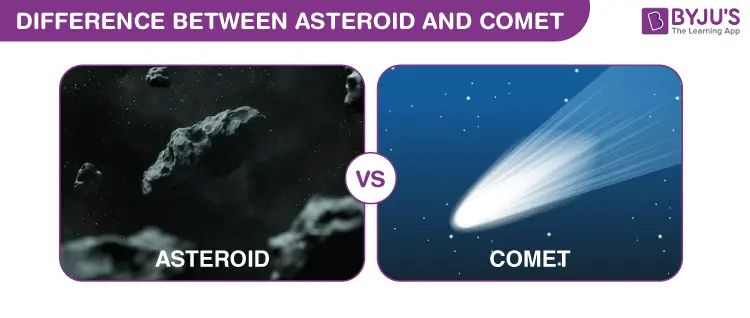
Pluto fails the third criterion because it resides within the Kuiper Belt, a region populated by many other icy objects. Because Pluto shares its orbital space with these smaller bodies, it is now categorized as a dwarf planet. This definition provides a clear scientific boundary that distinguishes the eight major planets from the vast number of smaller objects, such as asteroids and comets, that also orbit the Sun.
What are the names of the eight planets?
The solar system is organized into two distinct groups of planets based on their composition and proximity to the Sun. The inner, terrestrial planets are primarily composed of rock and metal, while the outer, giant planets are massive worlds dominated by hydrogen, helium, and ices. Understanding this order is essential for visualizing the layout of our local neighborhood in space.
The eight recognized planets are listed below in their order from the Sun:
- Mercury: The smallest planet and the closest to the Sun.
- Venus: Often called Earth's twin due to its similar size and density.
- Earth: The only known planet to support liquid water and life.
- Mars: Known as the Red Planet due to iron oxide on its surface.
- Jupiter: A gas giant that is the largest planet in the solar system.
- Saturn: Famous for its extensive and complex ring system.
- Uranus: An ice giant that rotates on its side.
- Neptune: The most distant planet, known for its intense winds.
How can I identify planets in the night sky?
Observing the planets without a telescope is a rewarding hobby that requires only a clear view of the horizon and a basic understanding of planetary motion. Unlike stars, which twinkle due to atmospheric turbulence, planets typically shine with a steady, constant light. This is the most reliable way for a beginner to distinguish a planet from a distant star during a clear night.
To begin your observations, follow these steps:
- Download a reliable stargazing application to locate which planets are currently visible in your hemisphere.
- Find a location away from city lights to maximize visibility of the night sky.
- Observe the object for several minutes; if the light remains steady rather than flickering, it is likely a planet.
- Use binoculars to see if you can resolve the disk of a planet like Jupiter or the rings of Saturn.
- Keep a log of your sightings, noting the date, time, and the planet's position relative to recognizable constellations.
Why do people still argue about Pluto?
The debate regarding Pluto’s status often stems from emotional attachment and the historical context of its discovery in 1930. For 76 years, textbooks taught that there were nine planets, making the 2006 reclassification a significant shift in public perception. Many people feel that the term "dwarf planet" diminishes the scientific importance of Pluto, even though the classification is intended to clarify its physical nature rather than its value.
From a scientific perspective, the reclassification was necessary to maintain order in astronomical taxonomy. If Pluto were considered a planet, astronomers would likely have to grant planet status to many other similar objects in the Kuiper Belt, such as Eris, Haumea, and Makemake. By keeping the list at eight, scientists maintain a clear distinction between the dominant bodies that shaped the solar system and the smaller remnants left over from the formation process.
Common mistakes when learning about the solar system
A frequent error is assuming that the solar system is static or that the planets are perfectly spaced. In reality, the planets are in constant motion, and their distances from one another change significantly as they complete their respective orbits. Another common mistake is relying on outdated diagrams that show the planets in a straight line, which is a rare alignment that does not represent their actual, scattered positions in space.
Avoid these common misconceptions to improve your understanding:
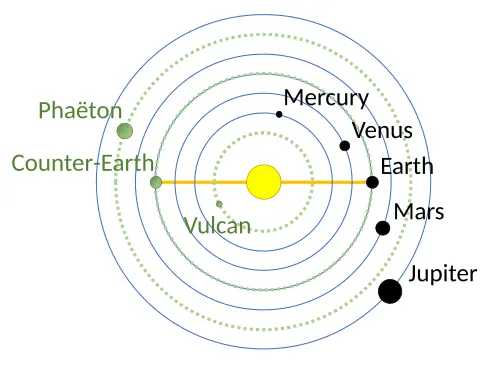
- Do not assume that planets orbit in perfect circles; they actually follow elliptical, or oval-shaped, paths.
- Do not believe that the asteroid belt is a crowded region like those seen in science fiction films; in reality, the objects are millions of miles apart.
- Do not confuse the solar system with a galaxy; our solar system is just one small part of the much larger Milky Way galaxy.
- Do not forget that moons are not planets, even if they are large, because they orbit a planet rather than the Sun directly.
Key facts
- There are eight recognized planets in our solar system: Mercury, Venus, Earth, Mars, Jupiter, Saturn, Uranus, and Neptune.
- Pluto was reclassified from a planet to a "dwarf planet" by the International Astronomical Union in 2006.
- A planet must orbit the Sun, be spherical due to its own gravity, and have "cleared the neighborhood" around its orbit.
- The four inner planets are terrestrial and rocky, while the four outer planets are gas and ice giants.
- To identify planets in the night sky, look for points of light that do not twinkle like stars.
- Avoid common confusion by remembering that the asteroid belt between Mars and Jupiter is not a planet.
The bottom line
Our solar system consists of eight official planets, categorized as either rocky terrestrial worlds or massive gas and ice giants. While historical definitions once included Pluto, current scientific standards require a planet to dominate its orbital path. Understanding these classifications helps clarify the structure of our celestial neighborhood, reminding us that the solar system remains a dynamic environment subject to ongoing discovery and refined scientific observation.
People also ask
Why is Pluto no longer considered a planet?
Pluto fails the third criterion for planethood because it shares its orbital path with many other objects in the Kuiper Belt. It has not cleared its neighborhood of debris, leading to its 2006 reclassification as a dwarf planet.
Are there more planets waiting to be discovered?
Scientists are actively searching for a theoretical "Planet Nine" located far beyond Neptune, based on gravitational patterns observed in distant objects. While no direct observation has confirmed its existence, mathematical models suggest a large body may exist in the outer reaches.
How can I tell the difference between a planet and a star?
Planets generally shine with a steady light, whereas stars tend to twinkle due to atmospheric turbulence. Additionally, planets change their position relative to the background constellations over several weeks or months.
What is the largest planet in our solar system?
Jupiter is the largest planet, possessing more than twice the mass of all the other planets combined. It is a gas giant composed primarily of hydrogen and helium, featuring a massive storm known as the Great Red Spot.
Do all planets have moons?
Mercury and Venus are the only planets in our solar system that do not have any natural satellites. The other six planets possess a combined total of hundreds of moons, ranging from small captured asteroids to massive worlds like Titan and Ganymede.
What is the hottest planet in the solar system?
Although Mercury is closest to the Sun, Venus is the hottest planet due to its thick, heat-trapping atmosphere. The runaway greenhouse effect on Venus maintains surface temperatures high enough to melt lead.
This answer was created with the help of AI research tools and reference sources. Spotted an error? Let us know — we correct mistakes quickly. See our editorial policy.