What is the difference between a comet and an asteroid?
Short answer
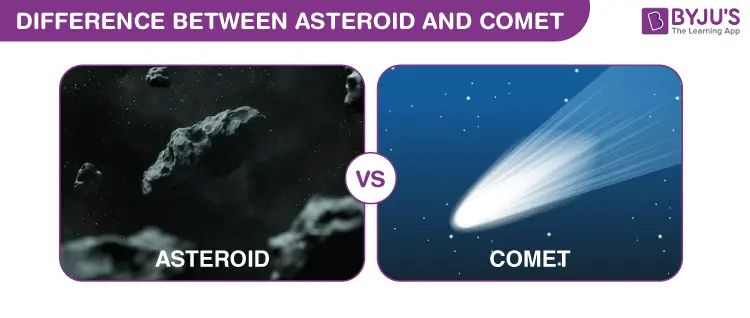
Asteroids are rocky, metallic bodies primarily located in the inner solar system, while comets are icy, dusty objects that originate from the outer reaches. When comets approach the Sun, their ices vaporize to create a glowing atmosphere and tail, a feature absent in solid, inert asteroids.
On this page
What are the primary physical differences?
Asteroids are essentially the rocky leftovers from the formation of the solar system approximately 4.6 billion years ago. Most are composed of minerals, metals like nickel and iron, and silicate rock. Because they formed closer to the Sun where temperatures were too high for volatile compounds to remain solid, they lack the ice and gas components found in comets. They range in size from tiny boulders to massive bodies like Vesta, which measures over 500 kilometers in diameter.
Comets, by contrast, are often described as "dirty snowballs." They consist of a mixture of frozen gases, such as water ice, carbon dioxide, methane, and ammonia, embedded with dust and rocky debris. This composition makes them much more fragile than asteroids. When a comet nears the Sun, the heat causes its ices to sublimate directly into gas, forming a hazy envelope called a coma and often a brilliant, long tail that points away from the solar wind.
Where do they orbit in space?
The distribution of these objects is largely determined by the temperature of the region where they formed. Most asteroids reside in the main asteroid belt, a vast region located between the orbits of Mars and Jupiter. This area contains millions of objects that are held in place by the gravitational influence of Jupiter, preventing them from coalescing into a planet. While some asteroids occupy orbits that cross the path of Earth, they generally follow relatively circular, stable paths.
Comets typically originate from much colder, distant regions of the solar system. These include the Kuiper Belt, located just beyond Neptune, and the Oort Cloud, a spherical shell that surrounds the entire solar system at an immense distance. Because of their origins, comets tend to have highly elliptical, elongated orbits that take them far into the outer solar system before swinging them back toward the Sun. This leads to the following orbital characteristics:
- Short-period comets: Orbit the Sun in less than 200 years, usually originating from the Kuiper Belt.
- Long-period comets: Take thousands or even millions of years to complete one orbit, arriving from the Oort Cloud.
How do astronomers classify these objects?
Classification relies on both the physical composition and the orbital behavior of the object. Astronomers use spectroscopic analysis to determine the surface materials of an object, which helps distinguish between carbonaceous, silicate, or metallic asteroids. If an object displays a coma or a tail during its approach to the Sun, it is classified as a comet, regardless of its size or origin. This dynamic classification is essential because some objects, known as active asteroids, can occasionally display comet-like features due to impacts or rotation-induced mass loss.
To distinguish between these objects during amateur observations, experts look for specific indicators:
- Check the object's speed and trajectory against known star charts or databases like the Minor Planet Center.
- Look for a fuzzy appearance (the coma) which indicates outgassing, a hallmark of cometary activity.
- Observe the object over several weeks; asteroids will appear as steady, star-like points of light, while comets may develop tails as they heat up.
Why do comets develop tails?
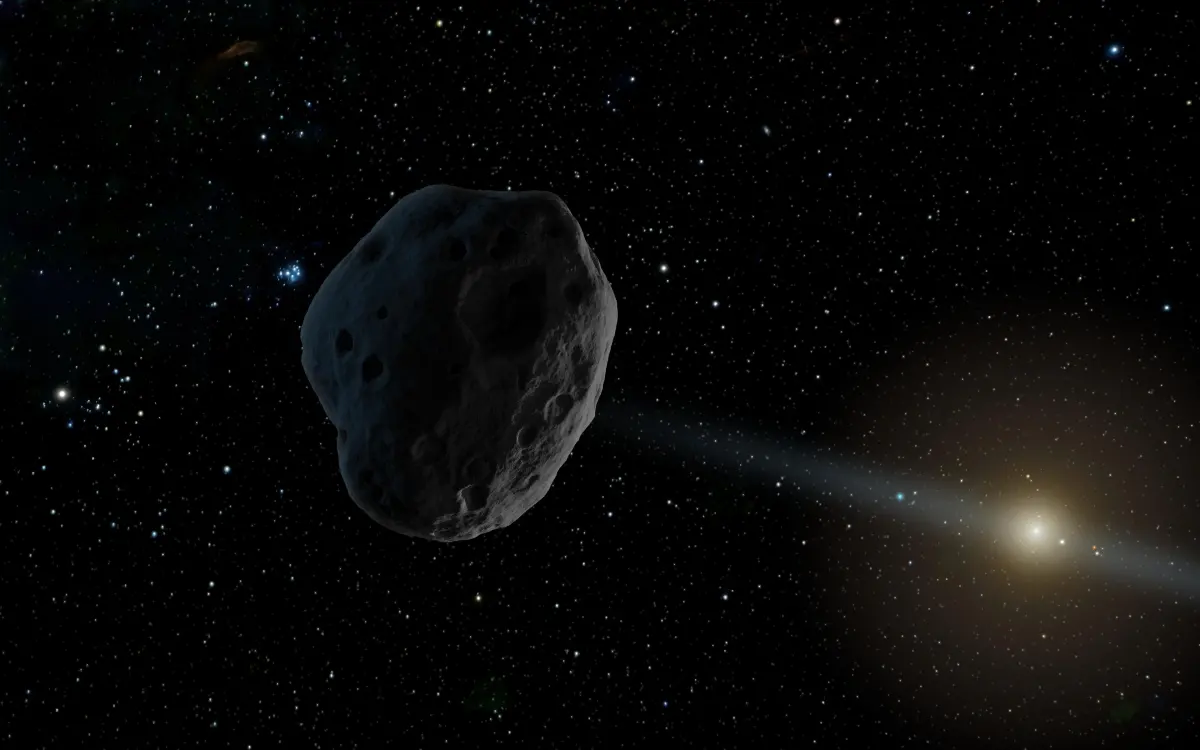
The formation of a tail is a direct result of the comet's icy composition reacting to solar radiation. As a comet moves from the deep freeze of the outer solar system into the inner solar system, the Sun’s heat warms its nucleus. This causes the frozen gases to turn into vapor, releasing trapped dust particles into space. This process creates the coma, a glowing cloud of gas and dust that can grow to be hundreds of thousands of kilometers wide.
The solar wind and radiation pressure then push these materials away from the Sun, creating two distinct types of tails. The ion tail, composed of charged gas particles, usually points directly away from the Sun and appears blue due to fluorescence. The dust tail, made of larger particles, follows a slightly curved path along the comet's orbital trajectory. Unlike comets, asteroids do not have enough volatile material to produce these spectacular displays, which is why they remain simple points of light even when they pass relatively close to the Sun.
Common mistakes when identifying space objects
A frequent error for beginners is assuming that every moving object in the night sky is a comet. In reality, most objects that appear to move against the background of stars are asteroids or artificial satellites. Another common mistake is confusing a comet’s tail with a streak from a meteor. A meteor is a small piece of debris burning up in Earth's atmosphere, lasting only a fraction of a second, whereas a comet remains visible in the same general area of the sky for several weeks or months.
To avoid these pitfalls, follow these practical guidelines:
- Never assume an object is a comet just because it is moving; verify its identity using a reliable astronomy application or the latest orbital data.
- Do not mistake the light reflection of an asteroid for a coma; asteroids are solid rocks and will not show the diffuse, fuzzy glow characteristic of a comet.
- Be patient, as comets are often faint and require binoculars or a telescope to be seen clearly, whereas many asteroids are far too dim to be spotted without professional-grade equipment.
Key facts
- Asteroids are primarily composed of rock and metal, while comets consist of ice, dust, and rocky material.
- Most asteroids orbit the Sun in the main belt between Mars and Jupiter, whereas comets originate from the distant Oort Cloud or Kuiper Belt.
- Comets develop a glowing "coma" and a tail of gas and dust when they approach the Sun's heat.
- Asteroids typically have stable, circular orbits, while comets follow highly elliptical, elongated paths.
- You can distinguish them by their appearance: asteroids look like points of light, while comets often appear fuzzy or streaked.
- To avoid confusion, remember that asteroids are "space rocks" while comets are "dirty snowballs."
The bottom line
The fundamental difference between these celestial bodies lies in their composition and orbital behavior. Asteroids are rocky remnants from the early solar system that stay mostly within the inner regions. In contrast, comets are icy wanderers that transform dramatically when they approach the Sun. Understanding these distinctions helps astronomers map the history of our solar system and identify potential hazards lurking in the vast depths of space.
People also ask
Can you see a comet without a telescope?
Yes, some comets like Neowise in 2020 become bright enough to be seen with the naked eye. However, most require binoculars or a telescope to be clearly visible.
Do asteroids ever hit Earth?
Yes, asteroids occasionally collide with Earth, though most burn up in the atmosphere as meteors. Large impacts are rare and occur on timescales of millions of years.
Why do comets have tails?
As a comet nears the Sun, solar radiation causes its frozen gases to sublimate into a gas. This releases trapped dust, creating a luminous tail that always points away from the Sun.
Are all asteroids round?
No, small asteroids are often irregularly shaped, resembling potatoes or peanuts. Only the largest objects, like the dwarf planet Ceres, have enough gravity to pull themselves into a sphere.
How many asteroids are in our solar system?
Scientists have identified over a million asteroids in the main belt alone. Millions more likely exist, ranging from small pebbles to objects hundreds of kilometers wide.
What happens if a comet hits a planet?
A comet impact releases immense energy due to its high velocity and icy composition. A famous example is the 1994 collision of Comet Shoemaker-Levy 9 with Jupiter.
This answer was created with the help of AI research tools and reference sources. Spotted an error? Let us know — we correct mistakes quickly. See our editorial policy.