How many babies do kangaroos have?
Short answer
Kangaroos typically give birth to only one baby, known as a joey, at a time. While it is biologically possible for a female to have twins, this is extremely rare in the wild. The mother’s reproductive system is highly specialized, focusing resources on the successful development of a single offspring within her pouch.
On this page
How does kangaroo reproduction work?
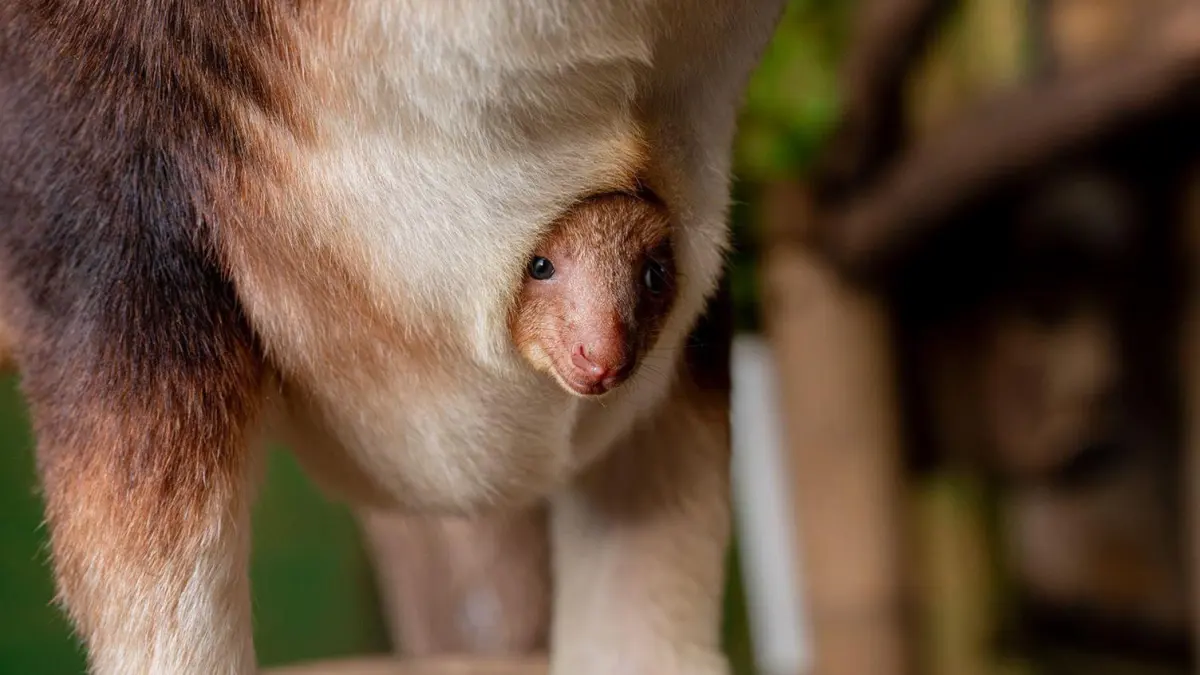
Kangaroos utilize a unique reproductive strategy characterized by a very short gestation period. After conception, a kangaroo joey is born in an extremely underdeveloped state, often described as being the size of a jellybean or a honeybee. This tiny, hairless creature must crawl unaided from the birth canal into the mother’s pouch to continue its growth.
Once inside the pouch, the joey attaches itself to a teat, which swells in its mouth to provide a secure anchor. The mother’s milk composition changes as the joey grows, providing specific nutrients required for different stages of development. This process ensures that the mother does not overextend her physical resources, allowing her to survive in the often harsh and unpredictable Australian environment.
Why do kangaroos have only one baby?
The primary reason kangaroos favor single births is the high energy cost associated with lactation and pouch maintenance. Carrying a developing joey requires significant metabolic investment, and the pouch can physically accommodate only one occupant comfortably. By limiting the litter size, the mother ensures that the joey receives consistent access to milk and protection from predators.
Evolutionary pressures have favored this "quality over quantity" approach for macropods. If a mother attempted to raise multiple joeys simultaneously, she might struggle to provide enough milk for both, potentially leading to the death of both offspring. This biological constraint acts as a survival mechanism, keeping the population stable while ensuring that the individual joey has the highest possible chance of reaching maturity.
How long does a joey stay in the pouch?
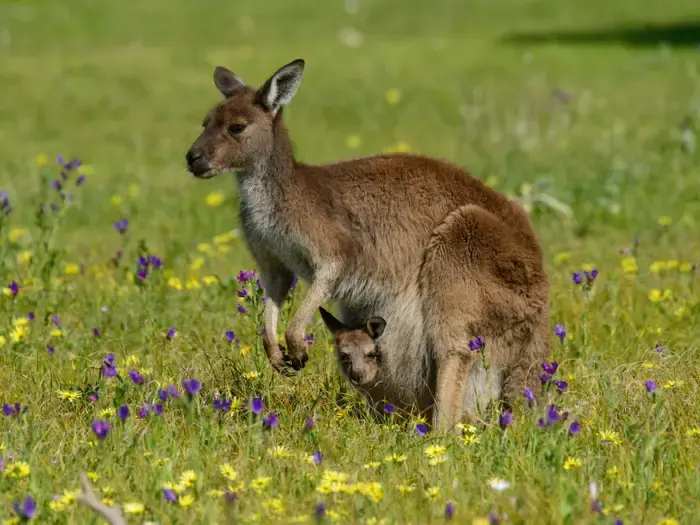
The development of a joey is a lengthy process that involves several distinct stages of growth. While the initial gestation is brief, the time spent inside the pouch is substantial, typically lasting between six to nine months depending on the species. During this period, the joey gradually develops fur, opens its eyes, and begins to explore the world outside the pouch.
- Birth: The joey is born after roughly 30 to 40 days of gestation.
- Pouch Life: The joey remains attached to the teat, growing steadily for several months.
- Emergence: The joey begins to poke its head out to observe the surroundings.
- Permanent Exit: The joey finally leaves the pouch for good, though it may still return to nurse.
What is embryonic diapause?
One of the most fascinating aspects of kangaroo biology is a phenomenon known as embryonic diapause. This allows a female kangaroo to pause the development of a new embryo if she is already nursing a joey in her pouch. By holding the embryo in a state of suspended animation, the mother can ensure that she does not have two dependent offspring competing for the same limited resources.
- The mother mates shortly after giving birth to the first joey.
- The resulting embryo enters a dormant state in the uterus.
- Development resumes only when the current joey leaves the pouch or dies.
- This mechanism allows for a rapid replacement of offspring if environmental conditions are favorable.
This sophisticated reproductive control is a key reason why kangaroo populations can recover quickly after droughts or other natural disasters. It effectively creates a "backup" system that keeps the species resilient in the face of environmental fluctuations.
Common mistakes when observing kangaroo joeys
People often assume that seeing a joey outside the pouch means it is fully independent, but this is a common misconception. A joey that is frequently seen grazing near its mother is still likely dependent on her for milk and safety. Attempting to approach or feed these young animals can cause significant stress to both the joey and the mother, potentially leading the mother to abandon her offspring.
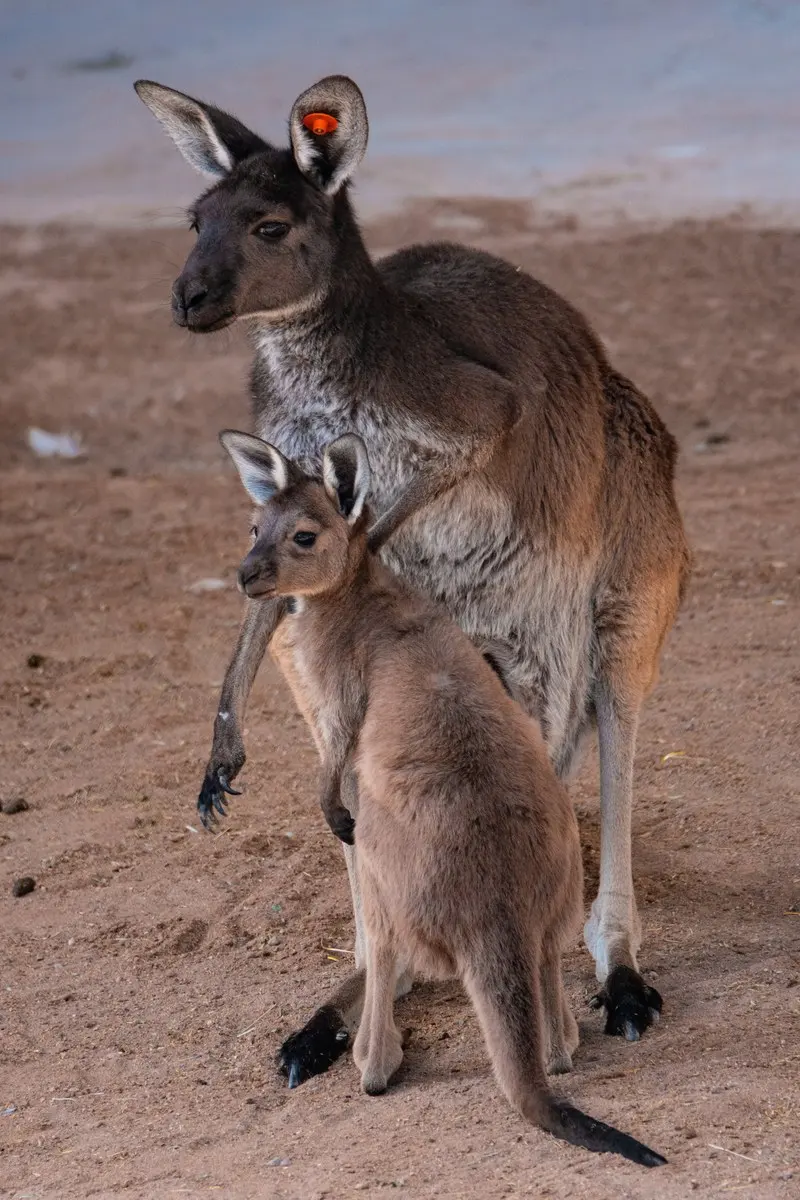
Another error involves misinterpreting the presence of multiple joeys near a mother. Sometimes a mother will have a joey in the pouch and an older "young-at-foot" joey following her. This does not mean she gave birth to twins; it simply indicates that the older sibling has not yet fully weaned. Always maintain a respectful distance when observing wild kangaroos to avoid disrupting these delicate family dynamics and ensure the safety of the animals.
Key facts
- Female kangaroos almost always give birth to only one offspring at a time, known as a joey.
- Kangaroos possess the unique ability of embryonic diapause, allowing them to pause a pregnancy until the current joey leaves the pouch.
- A newborn joey is incredibly small, often weighing less than one gram and measuring about the size of a jellybean.
- After birth, the joey crawls unaided from the birth canal into the mother’s pouch to attach to a teat.
- Mothers can produce two different types of milk simultaneously to support a joey in the pouch and an older sibling outside.
- Twins are extremely rare in kangaroos and usually result in both joeys failing to survive due to limited pouch space and resources.
The bottom line
Kangaroos typically produce a single joey at a time, ensuring the highest chance of survival for their offspring. Through the remarkable biological process of embryonic diapause, they efficiently manage reproduction based on environmental conditions. While twins are biologically possible, they are infrequent and rarely successful. Understanding these unique reproductive strategies highlights the evolutionary adaptations that allow kangaroos to thrive in the unpredictable Australian landscape.
People also ask
How long does a joey stay in the pouch?
A joey typically remains inside the pouch for about six to nine months. After this period, it begins to venture out for short durations but returns to the pouch for safety and nursing until it is about a year old.
Can a kangaroo have two joeys at once?
While it is biologically possible for a female to have two joeys at different stages of development, they usually occupy different roles. One may be a tiny joey inside the pouch while the other is an older "at-foot" joey that still returns to drink milk.
How do kangaroos care for their young?
The mother provides warmth, protection, and specialized milk within the pouch. As the joey grows, the mother encourages it to graze on grass while remaining close by for protection from predators.
Do male kangaroos help raise the joeys?
No, male kangaroos, known as boomers, do not participate in the rearing of young. The female, or doe, is solely responsible for the protection and nourishment of the joey until it reaches independence.
What happens if a joey dies in the pouch?
If a joey dies, the mother can often resume the development of a dormant embryo through embryonic diapause. This ensures that the reproductive cycle continues without a significant delay, which is vital for the species' survival in harsh environments.
How do you tell if a kangaroo has a joey?
You can often spot a joey by looking for movement or a pair of legs sticking out of the mother's pouch. If the mother appears to have a bulging belly or moves with a slight shift in balance, she is likely carrying a joey.
This answer was created with the help of AI research tools and reference sources. Spotted an error? Let us know — we correct mistakes quickly. See our editorial policy.