What is the difference between a star and a planet?
Short answer
Stars are massive, luminous spheres of plasma that generate energy through nuclear fusion in their cores. Planets are smaller, non-luminous bodies that orbit stars and have cleared their orbital paths of debris. While stars shine by their own internal light, planets are visible primarily by reflecting the light of their host stars.
On this page
How do stars generate light and heat?
Stars are celestial engines powered by nuclear fusion. In the core of a star, intense pressure and temperatures—often exceeding 15 million degrees Celsius—force hydrogen atoms to fuse into helium. This process releases an immense amount of energy in the form of electromagnetic radiation, including the visible light we see from Earth. Because of this internal furnace, stars are self-luminous objects that remain stable for billions of years.
The lifecycle of a star depends largely on its initial mass. Our Sun, a yellow dwarf, has been shining for about 4.6 billion years and will continue to do so for another 5 billion. When stars run out of hydrogen fuel, they expand into red giants before eventually shedding their outer layers. Depending on their size, they may end as dense white dwarfs, neutron stars, or black holes.
Why do planets orbit stars?
Planets are defined by their gravitational relationship with a host star. They form from the leftover gas and dust in the protoplanetary disk surrounding a young star. Because they lack the mass required to initiate nuclear fusion, they remain relatively cool, solid, or gaseous bodies. Their primary characteristic is that they orbit a star in a stable path, held in place by the star’s dominant gravitational pull.
To be officially classified as a planet in our solar system, a body must meet three specific criteria established by the International Astronomical Union:
- It must orbit the Sun.
- It must have sufficient mass to assume a nearly round shape due to its own gravity.
- It must have "cleared the neighborhood" around its orbit, meaning it is the gravitationally dominant body in its path.
How can you tell them apart in the night sky?
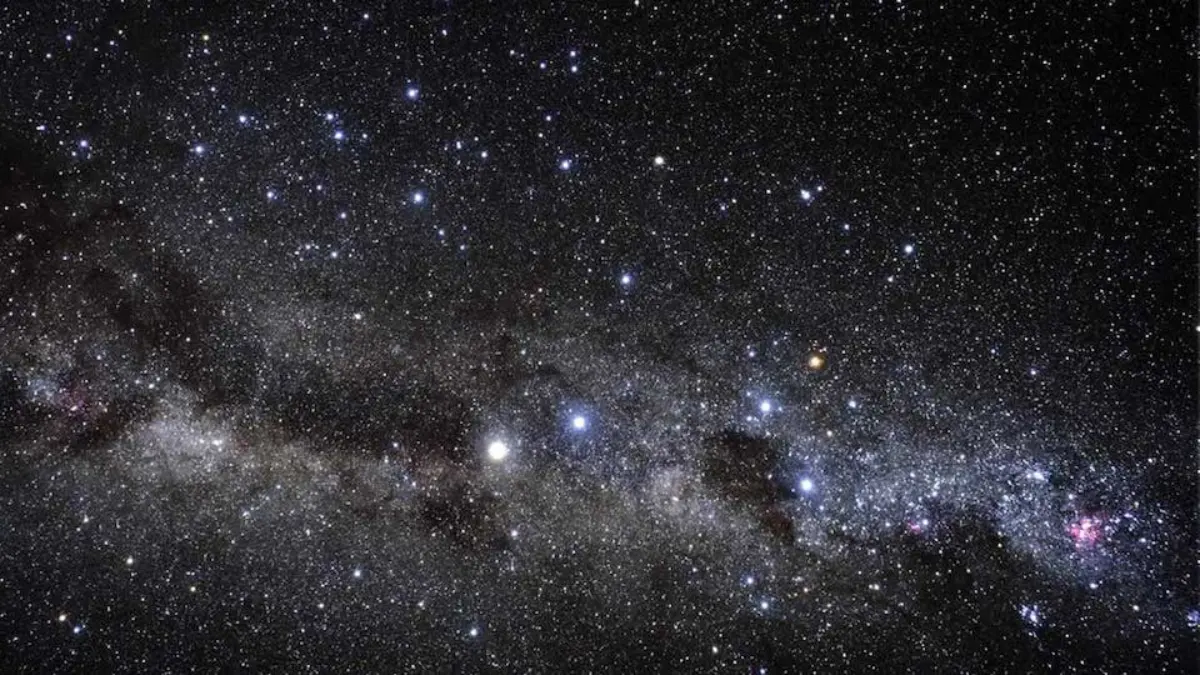
Distinguishing between stars and planets while stargazing is a common challenge for beginners. Stars are typically located at immense distances, appearing as tiny, flickering pinpoints of light. This flickering, or scintillation, is caused by the Earth’s atmosphere bending the starlight as it travels through different layers of air. Planets, being much closer to Earth, appear as steady, non-twinkling disks of light.
If you are trying to identify a bright object in the sky, follow these steps to determine its nature:
- Observe the object's light: If it twinkles rapidly, it is likely a star. If it shines with a steady, constant glow, it is likely a planet.
- Check its position: Planets move across the background of fixed stars over several weeks. Use a sky-mapping application to see if the object is located along the ecliptic, the path the Sun follows.
- Use binoculars: A small telescope or binoculars will reveal a planet as a tiny disk, whereas even the most powerful telescopes show stars only as points of light.

What are the physical differences between them?
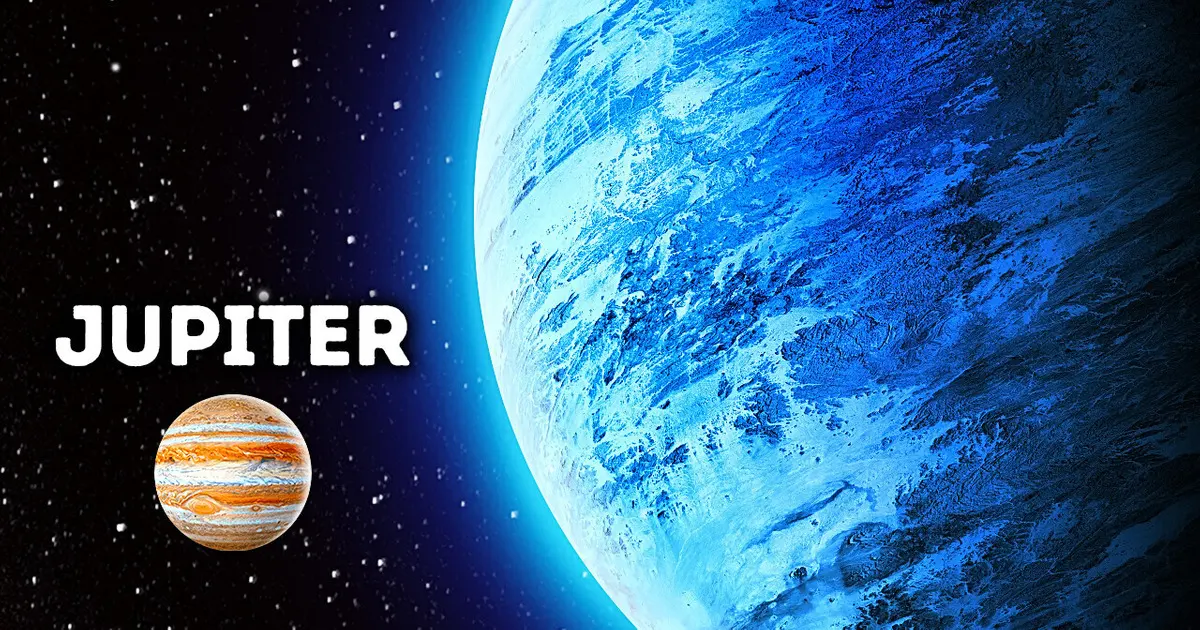
The most fundamental difference is mass. A star is massive enough to create the internal pressure necessary for fusion, which requires at least 75 to 80 times the mass of Jupiter. Anything smaller than this threshold is generally classified as a planet or a brown dwarf—a "failed star" that is too small to sustain hydrogen fusion. Because stars are so massive, they exert significant gravitational influence on everything around them, including entire planetary systems.
Planets are significantly smaller and composed of various materials. Terrestrial planets like Earth and Mars are made of rock and metal, while gas giants like Jupiter and Saturn consist mostly of hydrogen and helium. Unlike stars, planets do not have the internal heat source required to emit their own light. They are visible only because they reflect the light of the star they orbit, similar to how a mirror reflects light in a dark room.
Common mistakes when identifying celestial bodies
A frequent error is assuming that every bright object in the night sky is a star. Many of the brightest "stars" people see are actually planets like Venus, Mars, or Jupiter. For instance, Venus is often mistaken for a star because it is incredibly bright, earning it the nickname "the Morning Star" or "the Evening Star." Confusing these bodies is common, but understanding the steady-light rule helps clarify the difference quickly.
Another mistake is ignoring the seasonal movement of objects. Because the Earth orbits the Sun, our perspective on the positions of planets changes throughout the year. Beginners often fail to account for the fact that planets follow the zodiac constellations, while stars remain in fixed patterns known as constellations. To avoid confusion, keep these tips in mind:
- Avoid looking at objects near the horizon, as atmospheric distortion makes even steady planets appear to twinkle.
- Use a planisphere or a reliable mobile astronomy app to verify if a bright object is a planet or a distant star.
- Remember that the Moon is not a star or a planet, but a natural satellite that also reflects sunlight.
Key facts
- Stars generate light and heat through nuclear fusion, while planets reflect light from their host stars.
- Stars are massive spheres of plasma, whereas planets are composed of rock, ice, or gas.
- A star must have enough mass to ignite hydrogen fusion in its core, typically requiring at least 80 times the mass of Jupiter.
- Planets must clear their orbital paths of other debris to be classified as major planets in our solar system.
- To identify a star in the night sky, look for objects that twinkle due to atmospheric turbulence; planets generally shine with a steady light.
- Avoid the mistake of calling a moon a planet; moons orbit planets, while planets orbit stars.
The bottom line
The fundamental difference between a star and a planet lies in their mass and energy production. Stars are massive, self-luminous bodies fueled by nuclear fusion, acting as the gravitational anchors of solar systems. Planets are smaller bodies that orbit these stars, reflecting their light rather than creating their own. Understanding this distinction helps observers navigate the night sky and appreciate the complex mechanics of our vast universe.
People also ask
Can a planet turn into a star?
No, a planet cannot become a star because it lacks the necessary mass to trigger nuclear fusion. Even the largest gas giants, like Jupiter, would need to be dozens of times more massive to ignite their cores.
Why do stars twinkle but planets do not?
Stars appear as tiny points of light, so their beams are easily distorted by the Earth's atmosphere, creating a twinkling effect. Planets appear as small disks, which are more stable and produce a steadier glow.
Are there planets that orbit more than one star?
Yes, these are known as circumbinary planets. Astronomers have discovered systems where a planet orbits a pair of stars, similar to the fictional planet Tatooine from Star Wars.
How do scientists distinguish between a brown dwarf and a planet?
Brown dwarfs are "failed stars" that are more massive than planets but not heavy enough to sustain long-term hydrogen fusion. They occupy a gray area between the largest planets and the smallest true stars.
Do all stars have planets orbiting them?
Most stars are believed to host at least one planet, though detection depends on our current technology. Exoplanet surveys have confirmed thousands of planetary systems throughout the Milky Way galaxy.
Is the Sun a typical star?
The Sun is classified as a G-type main-sequence star, often called a yellow dwarf. While it is average in size and temperature compared to all stars, it is brighter and more massive than about 85 percent of the stars in our galaxy.
This answer was created with the help of AI research tools and reference sources. Spotted an error? Let us know — we correct mistakes quickly. See our editorial policy.