Who invented basketball?
Short answer
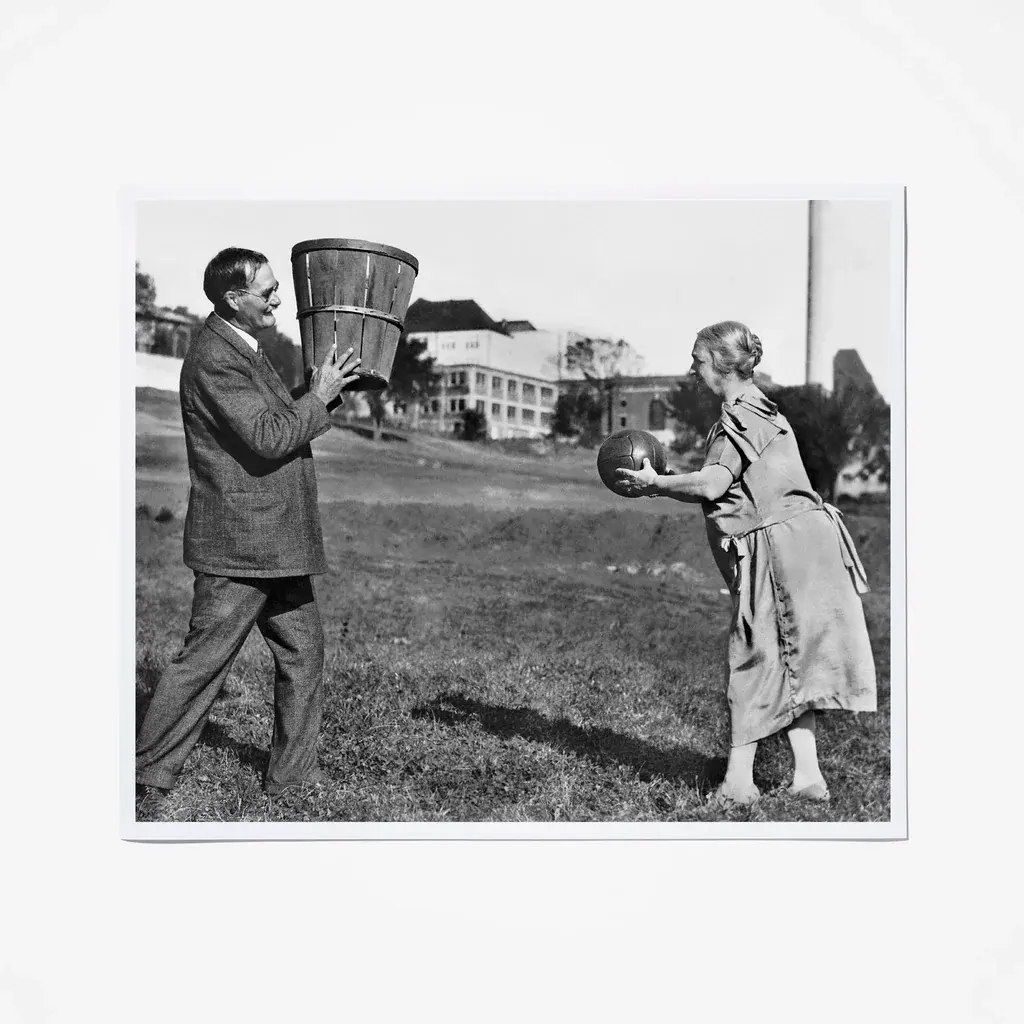
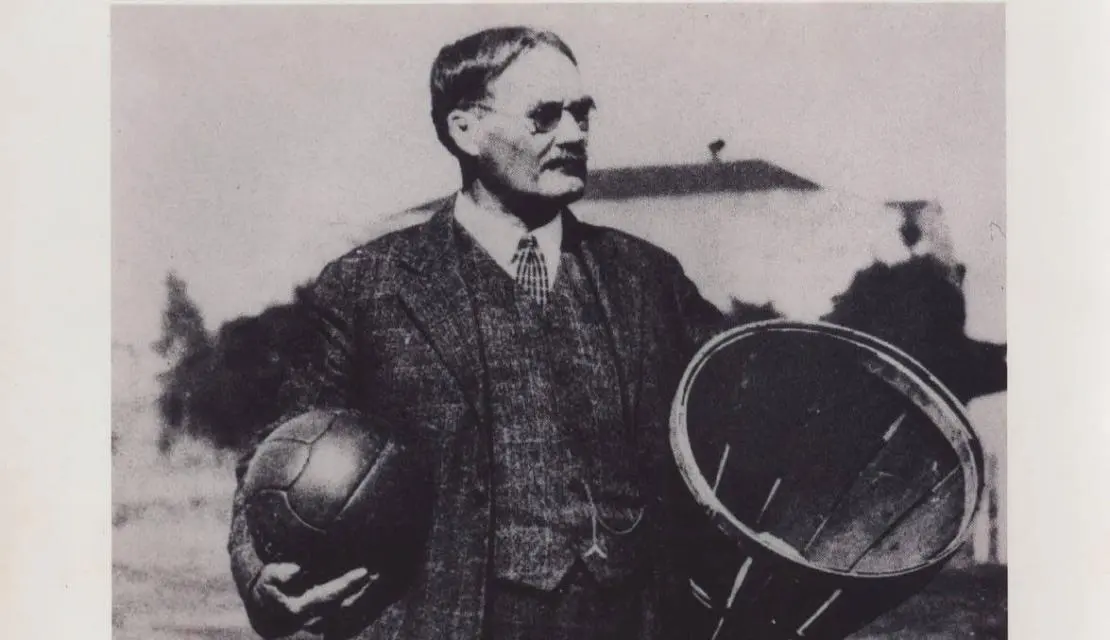
James Naismith, a Canadian physical education instructor, invented basketball in December 1891. Working at Springfield College in Massachusetts, he sought an indoor activity to keep his students active during the harsh winter months. He nailed two peach baskets to a balcony railing and drafted thirteen basic rules to govern the game.
On this page
Why was basketball invented?
In the winter of 1891, James Naismith faced a significant challenge at the International YMCA Training School in Springfield, Massachusetts. His superiors tasked him with creating an indoor game to occupy a rowdy class of young men during the cold months when outdoor sports like football and baseball were impossible. The primary goal was to provide a safe, engaging activity that could be played in a confined gymnasium space without the rough physical contact that often led to injuries in other sports of the era.
Naismith wanted a game that focused on skill and accuracy rather than brute force. He observed that most popular games of the time relied heavily on running with a ball, which made indoor play dangerous in a crowded gym. By emphasizing passing and shooting rather than tackling or body checking, he effectively minimized the risk of collisions. This focus on controlled movement laid the foundation for the sport’s development into a global phenomenon.
How did the first game work?
The original game was markedly different from the modern version played in professional leagues today. Naismith utilized a soccer ball and two peach baskets, which were mounted ten feet above the floor on the gymnasium balcony. Because the baskets had solid bottoms, a janitor had to climb a ladder to retrieve the ball every time a player successfully scored a goal. This slow process made the game much more deliberate and tactical than the fast-paced action seen in contemporary basketball.
The inaugural match featured several distinct rules that differ from modern standards:
- Players could not dribble the ball, as the rules only allowed for passing.
- A goal was scored by throwing the ball into the basket from anywhere on the court.
- If the ball went out of bounds, it was thrown back into play by the first person to touch it.
- Referees were responsible for keeping track of fouls and counting the goals made by each team.
What were the original rules of basketball?
Naismith drafted thirteen fundamental rules to ensure fair play and maintain order among the students. These rules were designed to prevent the roughhousing that occurred in other sports. For instance, the rules strictly prohibited holding, pushing, tripping, or striking an opponent. If a player committed three consecutive fouls, the opposing team was awarded a goal. These regulations were posted on the gymnasium wall to ensure every participant understood the expectations before the game began.
The game was divided into two fifteen-minute halves with a five-minute rest period in between. The team that scored the most goals during this time was declared the winner. These rules were surprisingly effective, as they provided a clear framework that allowed the game to be played consistently across different locations. As the sport grew in popularity, these original guidelines were refined and expanded, eventually evolving into the complex rulebook used by organizations like the NBA and FIBA today.
Common mistakes when learning basketball history
Many people mistakenly believe that basketball was created with the intent of being a high-speed, high-scoring game. In reality, Naismith designed it as a low-scoring, tactical exercise where accuracy was paramount. Another common misconception is that the sport immediately became a professional enterprise. It actually took several decades for the game to transition from a collegiate and YMCA-based recreational activity into the professional spectacle that dominates sports media today.
When studying the origins of the game, avoid these common errors:
- Assuming the peach baskets were always open at the bottom; they were initially closed, requiring manual retrieval.
- Believing that dribbling was part of the original design; the concept of dribbling was introduced several years later.
- Thinking the game was played with a basketball; the first games used a standard soccer ball.
- Overlooking the influence of the YMCA; the organization was instrumental in spreading the game across the United States and abroad.
How to appreciate the evolution of the sport
To truly understand basketball, one must appreciate how the equipment and rules have changed over time. The transition from peach baskets to metal hoops with nets occurred as the sport moved into larger arenas. Similarly, the introduction of the dribble fundamentally changed the game, allowing for faster movement and more creative offensive strategies. By comparing the original thirteen rules to the current rulebook, you can see how the sport has adapted to emphasize athleticism, speed, and strategic depth while maintaining its core objective of shooting a ball into a hoop.
Today, basketball is played by millions of people in virtually every country, yet it retains the spirit of Naismith’s original vision. Whether you are playing on a professional court or a local park, the fundamental principles of teamwork, accuracy, and sportsmanship remain the same. Understanding the humble beginnings of this sport provides a deeper connection to the game and highlights the ingenuity required to turn a simple winter activity into one of the most popular and influential sports in human history.
Key facts
- Dr. James Naismith, a Canadian physical education instructor, invented basketball in December 1891.
- The game was created at Springfield College in Massachusetts to keep students active indoors during the winter.
- The first "hoops" were two peach baskets nailed to the balcony railing, 10 feet above the floor.
- Naismith drafted 13 basic rules, many of which still form the foundation of the modern game.
- Players used a soccer ball for the first games because it was the most common ball available.
- The first game ended with a score of 1-0, as the peach baskets still had their bottoms intact.
The bottom line
Basketball was invented in 1891 by Dr. James Naismith as a safe, indoor alternative to football during the cold Massachusetts winter. By nailing two peach baskets to a gymnasium balcony and establishing 13 fundamental rules, he created a global phenomenon. Today, the sport has evolved significantly from its humble beginnings, yet it remains rooted in the core principles of passing, shooting, and strategic team movement.
People also ask
Why were peach baskets used instead of nets?
Naismith chose peach baskets because they were readily available items at the school. It was only later that the bottoms were removed so the ball could fall through, eliminating the need to climb a ladder to retrieve it.
How many players were on the court in the original game?
The first game featured nine players on each side. This number was chosen simply because there were 18 students in Naismith's class at the time.
Was dribbling part of the original rules?
No, dribbling was not part of the original 13 rules. Players could only move the ball by passing it to teammates from the spot where they caught it.
What is the most common mistake beginners make when learning the history?
A common error is assuming the game was always fast-paced. Because there was no dribbling and the baskets were closed, the original game was much slower and more focused on passing.
Did Naismith play in the first game?
No, Naismith served as the referee and instructor during the first match. He watched his students implement the rules he had written on a piece of paper earlier that day.
When did basketball become an Olympic sport?
Basketball was introduced as a demonstration sport at the 1904 St. Louis Olympics. It became an official medal sport for men at the 1936 Berlin Games.
This answer was created with the help of AI research tools and reference sources. Spotted an error? Let us know — we correct mistakes quickly. See our editorial policy.