Who invented the stapler?
Short answer
The modern stapler does not have a single inventor but evolved from 18th-century prototypes. King Louis XV of France used a primitive, gold-stapled device for royal documents. However, the first patented stapler was created by Henry Heyl in 1877, followed by George McGill’s more practical designs in the late 19th century.
On this page
Who invented the first stapler?
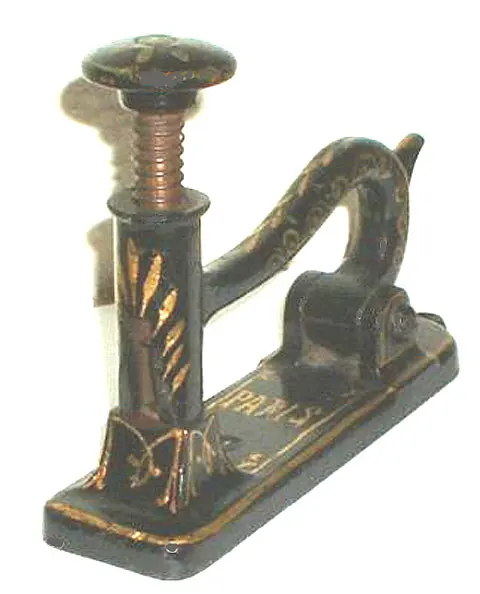
The history of the stapler begins in the 18th century, long before the mass-produced office supplies we recognize today. King Louis XV of France is often credited with commissioning the first known stapling device. Each staple was handmade and inscribed with the royal insignia, serving as a sign of authority rather than a tool for efficiency. These early devices were cumbersome and required manual labor to insert each individual fastener into the paper.
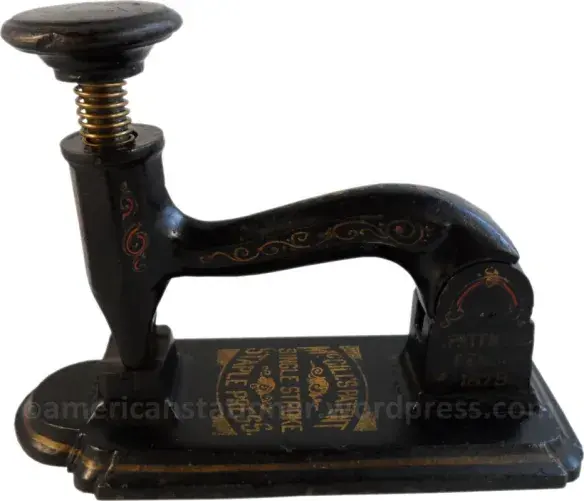
By the mid-19th century, inventors began seeking ways to mechanize the process of binding documents. In 1866, George McGill received a patent for a small, bendable brass paper fastener, which served as the precursor to the modern staple. Henry Heyl later patented the first machine that could both insert and clinch a staple in a single motion in 1877. While these inventions were revolutionary, they were far from the lightweight, spring-loaded staplers found in modern classrooms and offices today.
Why did stapler designs change over time?
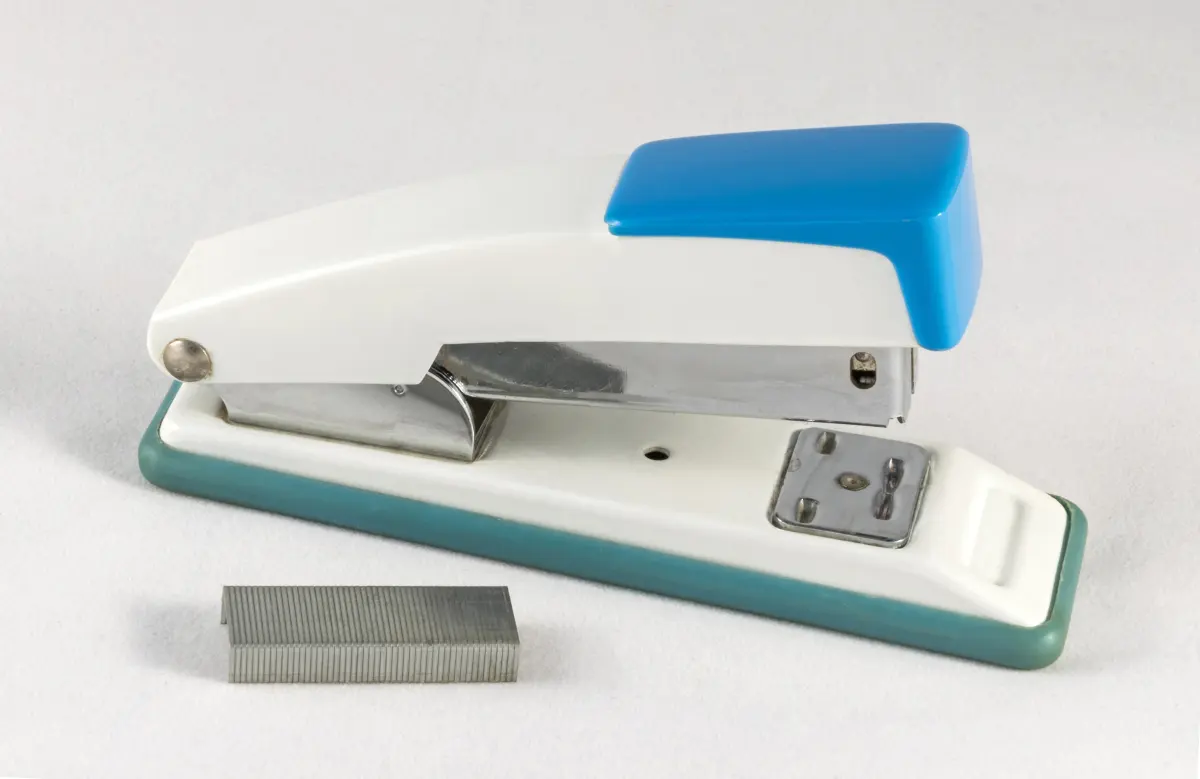
Early staplers were notoriously unreliable and difficult to operate. Many required the user to manually feed individual staples into the mechanism, which was a slow and frustrating process. The industry shifted toward "magazine-fed" staplers, which allowed users to load a strip of pre-connected staples into the device. This transition made stapling a rapid, continuous task, significantly increasing productivity in growing businesses and law offices.
The evolution of the stapler design focused on three primary areas:
- Ease of reloading: Developing strips of connected staples rather than loose pins.
- Clinching mechanisms: Improving the base plate to ensure staples folded inward properly.
- Portability: Reducing the weight of the device by using stamped steel instead of cast iron.
As these improvements took hold, the stapler became a staple of the industrial age. The design eventually stabilized into the familiar "swing-line" style that dominates the market today, emphasizing durability and a simple spring-loaded action.
How to use a stapler correctly
Using a stapler seems intuitive, but improper technique often leads to jams or poorly secured documents. To ensure a clean, professional finish, place your document on a flat, hard surface before pressing down firmly. Avoid slamming the stapler, as this can cause the staple to buckle or pierce the paper incorrectly. If you are stapling a large stack, ensure the staple length is appropriate for the thickness of the paper.
Follow these steps for optimal performance:
- Ensure the staple magazine is fully seated and not obstructed by debris.
- Align the paper stack squarely against the back of the stapler's throat.
- Apply steady, even pressure to the center of the top cap.
- Check that the staple legs have folded inward against the anvil.
If the stapler fails to clinch the staple, the anvil—the metal plate at the base—may be rotated to the wrong setting. Most staplers have two settings: one for permanent stapling and one for temporary pinning.
Common mistakes when using a stapler
The most frequent error users make is attempting to staple too many sheets at once. Every stapler has a specific capacity, typically ranging from 15 to 50 sheets for standard models. Forcing a thick stack into a small stapler will almost certainly result in a jammed machine. When a jam occurs, do not use a screwdriver or sharp object to pry the staple out, as this can damage the internal spring mechanism.
Another common mistake is using the wrong size of staples. Staples come in various "gauge" sizes and leg lengths; using a staple that is too long for the paper stack will cause the legs to overlap or crush. Always verify the compatibility of your staples with the specific model of stapler you are using. If your stapler consistently jams, it is often a sign that the internal track is dirty or that the spring has lost its tension over time.
Best practices for maintaining a stapler
A well-maintained stapler can last for decades, but it requires occasional attention to keep the internal components moving smoothly. If you notice the device becoming difficult to press, a small amount of lubricant on the moving parts can restore its functionality. Keep the device free of dust and paper scraps, which can accumulate in the staple track and prevent the next staple from sliding forward into the firing position.
If you find yourself needing to clear a jam, follow this procedure:
- Open the stapler to expose the staple track.
- Remove the entire strip of staples to clear the path.
- Use a pair of needle-nose pliers to gently pull out any mangled metal.
- Reinsert a fresh, clean strip of staples and test on a scrap piece of paper.
By following these simple maintenance steps, you ensure that your stapler remains a reliable tool for organizing your documents without the frustration of constant mechanical failure.
Key facts
- King Louis XV of France used a primitive stapler in the 18th century, with each staple bearing the royal insignia.
- George McGill received the first U.S. patent for a paper fastener in 1867, which was a bendable brass clip.
- The first commercially successful stapler was the McGill Single-Stroke Staple Press, patented in 1879.
- Early staplers required users to manually load individual staples one by one rather than using a continuous strip.
- Swingline introduced the "Speed Stapler" in 1937, which featured the top-loading magazine design still standard today.
- To avoid jams, always ensure you are using the specific size of staple recommended by the manufacturer for your device.
The bottom line
While the history of the stapler spans from 18th-century French royalty to modern office convenience, its evolution was defined by the transition from individual fasteners to the efficient, top-loading magazine designs of the 1930s. Today, the stapler remains an essential tool. By selecting the correct staple size and maintaining the internal mechanism, users can ensure reliable performance and avoid the frustration of common paper jams.
People also ask
How do I clear a jammed stapler?
Open the top cover or magazine to remove any bent or stuck staples using needle-nose pliers. Ensure the remaining staples are sitting flat and are not misaligned before closing the device.
What is the difference between a standard stapler and a heavy-duty stapler?
Standard staplers are designed for 2 to 20 sheets of paper using light-gauge wire. Heavy-duty staplers use thicker wire and longer staple legs to penetrate stacks of paper up to 100 sheets or more.
Why do some staplers have a rotating anvil?
The anvil is the metal plate under the staple. Rotating it allows you to switch between a standard clinch, where the legs bend inward, and a temporary pin clinch, where the legs bend outward for easy removal.
Can I use any staples in my stapler?
No, staples come in various leg lengths and crown widths. Using the wrong size can cause frequent jams or damage the internal mechanism of your stapler.
What is a "tacker" stapler?
A tacker is a type of stapler that opens completely flat, allowing you to drive staples into surfaces like bulletin boards or upholstery. It functions similarly to a staple gun.
How should I store my stapler to keep it working well?
Keep the stapler in a dry, room-temperature environment to prevent rust. Avoid dropping it, as internal springs can become misaligned, causing the stapler to lose its force.
This answer was created with the help of AI research tools and reference sources. Spotted an error? Let us know — we correct mistakes quickly. See our editorial policy.