Who invented the elevator?
Short answer
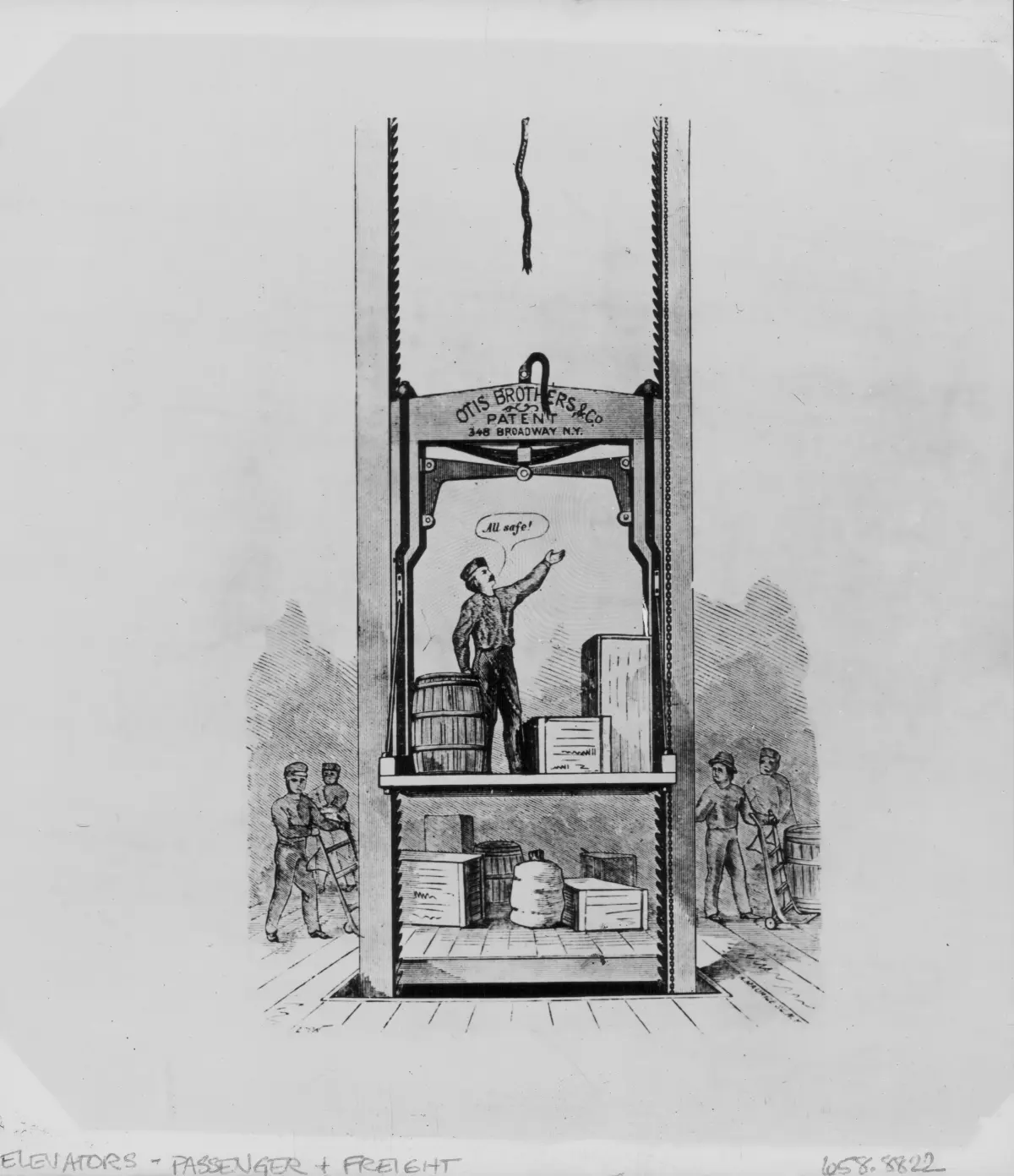
The modern safety elevator was invented by Elisha Graves Otis, who demonstrated his revolutionary safety brake at the 1854 New York Crystal Palace Exhibition. While rudimentary lifting platforms existed in antiquity, Otis’s invention solved the critical problem of cable failure, transforming vertical transit from a dangerous novelty into a reliable urban necessity.
On this page
Who invented the elevator?
The history of vertical transport begins long before the modern era. Ancient civilizations, including the Romans, utilized simple hoists powered by human, animal, or water power. Archimedes is credited with designing one of the earliest lifting devices around 236 BCE, which used a system of ropes and pulleys to move heavy loads. These early machines were primarily functional tools for construction or mining rather than passenger transport.
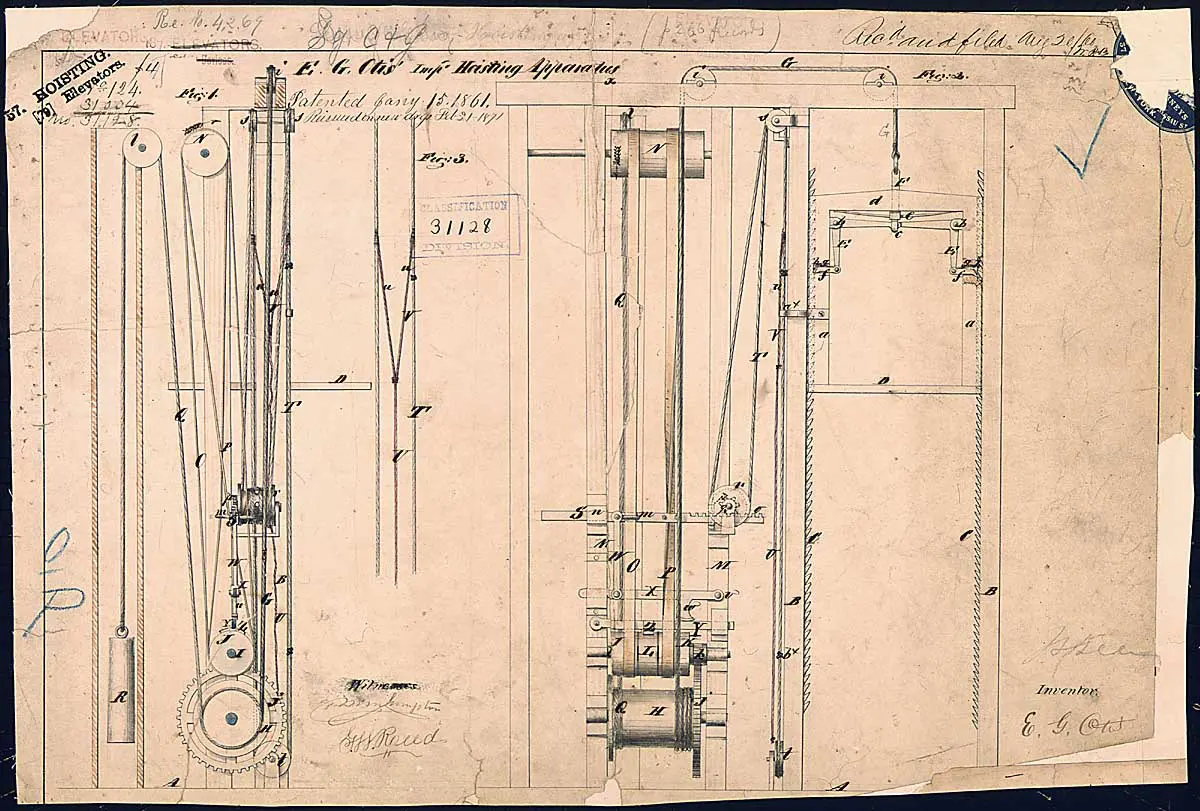
The transition to the modern elevator began in the mid-19th century as buildings grew taller and the demand for efficient movement increased. Elisha Graves Otis, an American industrialist, recognized that the primary obstacle to widespread adoption was the fear of falling. In 1852, he developed a "safety elevator" equipped with a ratchet mechanism. If the hoisting rope snapped, the spring-loaded brakes would instantly engage with the guide rails, preventing the car from plummeting.
How did the safety elevator change cities?
The invention of the safety brake fundamentally altered the architectural landscape of the world. Before 1854, the height of a building was limited by how many stairs a person was willing to climb, usually capping out at five or six stories. By ensuring passenger safety, Otis paved the way for the development of the skyscraper, allowing cities to grow upward rather than just outward.
The impact of this technology was immediate and profound for urban development:
- Real estate values in city centers increased as vertical space became accessible.
- Architects were no longer constrained by the physical limitations of staircases.
- High-rise offices and luxury apartments became viable, leading to the modern metropolitan skyline.
- Efficient vertical logistics allowed for the concentration of commerce in dense, centralized hubs.
This shift enabled the creation of the modern central business district, where thousands of employees could work in a single building. Without the reliable elevator, the dense, high-density urban environments that define modern life would be physically impossible to navigate or maintain.
What were the key milestones in elevator history?
Elevator technology evolved rapidly following the success of the Otis safety brake. The transition from steam power to electricity marked the next major leap, allowing for smoother, faster, and more controlled movement. In 1880, Werner von Siemens installed the first electric elevator in Germany, which drastically reduced the mechanical footprint of the machinery required to operate the lift.
Key historical milestones include:
- 1854: Elisha Otis demonstrates his safety brake at the Crystal Palace.
- 1857: The first commercial passenger elevator is installed in the E.V. Haughwout Department Store in New York.
- 1880: Werner von Siemens introduces the first electric elevator.
- 1889: The Otis Brothers and Company installs the first successful direct-connected electric elevator.
- 1903: The gearless traction elevator is introduced, allowing for even taller building heights.
These advancements turned the elevator from a specialized industrial tool into an essential utility. By the early 20th century, the elevator had become a standard feature in almost all commercial and residential buildings of significant height.

How to operate a modern elevator safely?
Operating a modern elevator is straightforward, but users should follow basic etiquette and safety protocols to ensure a smooth experience. Most elevators are automated, requiring only a simple button press to reach a desired floor. However, users must remain aware of their surroundings to avoid common accidents or delays in service.
Follow these steps for safe usage:
- Press the call button once and wait for the elevator to arrive.
- Stand clear of the doors as they open to allow existing passengers to exit.
- Enter the car promptly and press the button for your destination floor.
- If the elevator is full, wait for the next car rather than forcing your way inside.
- In the event of a mechanical failure, use the emergency call button or phone to contact building management.
Always keep your belongings close to your body to prevent items from getting stuck in the door tracks. If you are traveling with pets or large equipment, ensure they are fully inside the car before the doors begin to close.
Common mistakes when using elevators
One of the most frequent errors users make is attempting to hold the elevator door open with their hands or feet. Modern elevators are equipped with sensors, but these can sometimes fail or be obscured by thin objects, leading to injuries. Instead, use the designated "door open" button located on the control panel to hold the car for others.
Another common mistake involves ignoring weight capacities. Overloading an elevator can trigger safety sensors that disable the car, causing unnecessary delays for everyone inside. Additionally, users often panic if the elevator stops between floors. It is important to remember that elevators are equipped with multiple redundant safety systems, including mechanical brakes and emergency power supplies. If you find yourself stuck, remain calm, press the alarm button, and wait for professional assistance. Never attempt to force the doors open or climb out of the car, as this is the most dangerous action a passenger can take during a malfunction.
Key facts
- Elisha Otis did not invent the elevator, but he invented the safety brake in 1852 that made vertical travel safe for passengers.
- Archimedes is credited with creating the first primitive elevator device in 236 BCE, which used a system of ropes and pulleys.
- The first commercial passenger elevator was installed in the Haughwout Department Store in New York City in 1857.
- Modern elevators rely on counterweights that are typically 40 to 50 percent heavier than the empty car to reduce energy consumption.
- Never attempt to force elevator doors open if the car stops between floors, as this can trigger a safety lockout or cause a fall.
- If you are trapped in an elevator, use the emergency call button or phone rather than trying to climb out through the ceiling hatch.
The bottom line
While ancient civilizations used simple pulley systems for lifting, Elisha Otis transformed the elevator into a reliable tool for urban growth by inventing the safety brake. This critical development turned vertical movement into a standard feature of modern architecture. By understanding the mechanical safety features and following basic operational etiquette, users can safely navigate the complex systems that define our contemporary skyline and high-rise living.
People also ask
How does an elevator safety brake work?
The system features a spring-loaded mechanism that keeps toothed metal rails engaged with the guide rails. If the hoisting cable snaps, the loss of tension releases the springs, causing the teeth to bite into the rails and lock the car in place.
Who installed the first electric elevator?
German inventor Werner von Siemens introduced the first electric elevator in 1880. This innovation replaced steam-powered systems and allowed for much faster and smoother operation in taller buildings.
Why do elevators have mirrors?
Mirrors were originally installed in early elevators to alleviate the claustrophobia felt by passengers in small, enclosed spaces. They also serve a practical purpose by distracting people, which reduces the perceived wait time during travel.
What happens if an elevator cable breaks?
Modern elevators use multiple steel cables, and the failure of a single cable is extremely rare. Even if all cables were to fail, the mechanical safety brakes and electromagnetic brakes would stop the car before it reached dangerous speeds.
Do elevators have a maximum weight capacity?
Yes, every elevator is rated for a specific weight limit to ensure the motor and cables function correctly. Exceeding this limit can trigger an alarm, prevent the doors from closing, or cause the system to stall for safety reasons.
How do elevators know which floor to go to?
Elevators use a computerized control system that receives input from buttons pressed inside and outside the car. The controller calculates the most efficient route based on the current location of the car and the direction of other pending requests.
This answer was created with the help of AI research tools and reference sources. Spotted an error? Let us know — we correct mistakes quickly. See our editorial policy.