Who invented the animated cartoon?
Short answer
The animated cartoon was not invented by a single individual but evolved through the contributions of several pioneers. Émile Reynaud is often credited with the first public projections of animated sequences in 1892, while J. Stuart Blackton and Émile Cohl later refined the medium into the film-based format recognized today.
On this page
Who was the first to animate?
The history of animation begins with optical toys designed to create the illusion of motion through persistence of vision. In the mid-19th century, devices like the phenakistiscope and the zoetrope allowed viewers to see a sequence of static images appear to move when spun rapidly. These early inventions laid the mechanical groundwork for what would eventually become the animated cartoon.
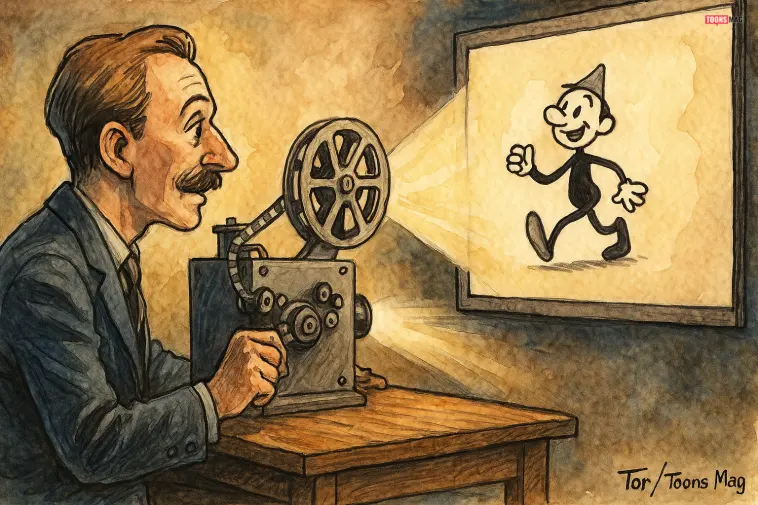
French inventor Émile Reynaud took this concept further by developing the Théâtre Optique. In 1892, he began public screenings at the Musée Grévin in Paris, using a system of mirrors and a long strip of hand-painted images. While these were not films in the modern sense, they represented the first time an audience watched a projected, narrative-driven animation.
- Phenakistiscope (1832): Used a spinning disk with slits to view sequential drawings.
- Zoetrope (1834): Employed a rotating drum to display images through vertical slots.
- Théâtre Optique (1892): Introduced long-form, projected storytelling to a paying public audience.
How did film change animation?
The transition from mechanical devices to the motion picture camera revolutionized the industry. J. Stuart Blackton, often called the father of American animation, produced "Humorous Phases of Funny Faces" in 1906. This work is widely considered the first animated film recorded on standard motion picture stock, utilizing the stop-motion technique to make drawings appear to move.
Following Blackton, the French artist Émile Cohl created "Fantasmagorie" in 1908. Cohl’s work was significant because it utilized a technique called double exposure, where he placed his drawings over a background. This allowed for more complex movements and established the visual language that would define early 20th-century animation. These pioneers proved that animation could be a viable commercial medium rather than just a scientific curiosity.
- Frame-by-frame photography became the industry standard.
- Artists began using paper and ink rather than painting directly onto glass.
- The concept of the "cel" or transparent sheet was later developed to save time.
Why did animation become popular?
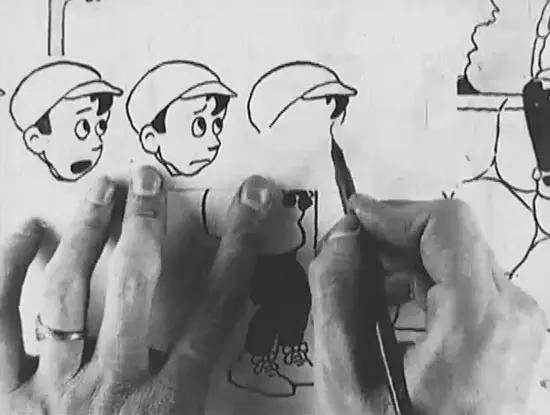
Animation gained widespread popularity because it offered a level of creative freedom that live-action film could not match. Producers realized they could depict impossible scenarios, such as talking animals or transformations, which captivated audiences. This novelty turned the animated short into a staple of cinema programs, often appearing before feature-length movies to entertain crowds.
The industry also benefited from the development of standardized production methods. Studios began to organize work into assembly lines, where lead animators drew key poses and assistants filled in the "in-between" frames. This division of labor allowed for the rapid production of weekly shorts, fueling a constant demand for new, humorous content that kept theaters full and audiences returning for more.
Common mistakes when studying animation history
A frequent error is attributing the invention of animation to a single person like Walt Disney. While Disney was a monumental figure who popularized the medium and introduced synchronized sound and color, he entered the field decades after the first animated films were produced. Overlooking the contributions of European pioneers like Reynaud and Cohl leads to a distorted view of how the technology evolved.
Another mistake is ignoring the role of technical limitations in early animation style. Many early cartoons look "jittery" because animators had not yet perfected the process of registration, which keeps drawings aligned across frames. Understanding that these visual quirks were the result of evolving technology, rather than artistic choice, is essential for anyone trying to accurately interpret the history of the medium.
- Assuming the "Golden Age" of animation was the beginning of the craft.
- Confusing early optical toys with later film-based animation techniques.
- Neglecting the influence of stop-motion photography on traditional hand-drawn animation.
How to learn more about early cartoons
If you are interested in the technical roots of the medium, start by examining the patents and journals from the 1890s. Many archives have digitized the original sketches and diagrams of early optical devices, providing a clear look at how these inventors solved the problem of fluid motion. Comparing these early designs to modern digital software reveals that the fundamental principles of timing and spacing remain largely unchanged.
Finally, seek out restored versions of early films like "Fantasmagorie" or Winsor McCay’s "Gertie the Dinosaur." Watching these works in their original context helps clarify how animation transitioned from a technical experiment into a sophisticated form of storytelling. By studying the progression from hand-painted strips to the refined cel animation of the 1920s, you gain a comprehensive understanding of how the animated cartoon became a cornerstone of global entertainment.
Key facts
- Émile Reynaud is credited with the first public projection of animated images in 1892 using his Théâtre Optique.
- J. Stuart Blackton produced "Humorous Phases of Funny Faces" in 1906, often cited as the first film using stop-motion and frame-by-frame animation.
- Winsor McCay’s "Gertie the Dinosaur" (1914) introduced character personality and fluid movement, setting the standard for future animators.
- The "cel" animation process, patented by Earl Hurd in 1914, allowed artists to draw characters on transparent sheets over static backgrounds.
- To animate effectively, start by mastering the "12 principles of animation," specifically squash and stretch, which give objects a sense of weight.
- Avoid the common mistake of "twining," where limbs move in a perfectly straight, robotic line; always use arcs to make movement feel natural.
The bottom line
The invention of the animated cartoon was not the work of one person, but a gradual evolution of technology and artistry. From Émile Reynaud’s early optical projections to the technical breakthroughs of Blackton and McCay, the medium grew through collective innovation. Today, animation remains a blend of rigorous technical discipline and creative storytelling, requiring a deep understanding of movement, timing, and character development to succeed.
People also ask
What is the difference between a cartoon and an animation?
An animation is the broader technical process of creating the illusion of motion, while a cartoon is a specific style often characterized by caricature or humor. All cartoons are animations, but not all animations are cartoons.
Did Walt Disney invent the animated cartoon?
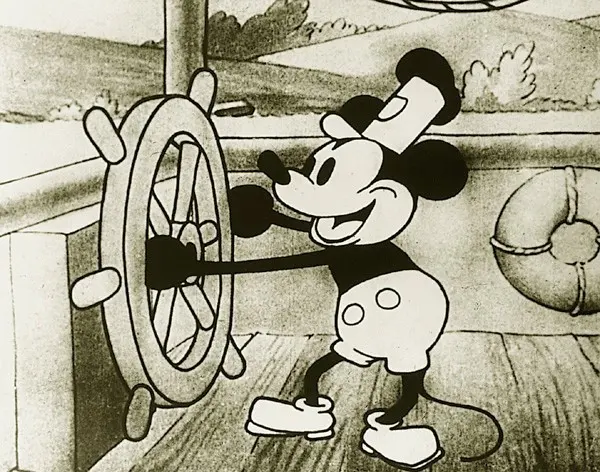
No, Walt Disney did not invent animation, but he revolutionized the medium by introducing synchronized sound and color. His 1928 film "Steamboat Willie" popularized the medium and established the studio system for mass production.
What was the first animated film with sound?
The first animated film with fully synchronized sound was "Steamboat Willie," released by Walt Disney in 1928. Earlier attempts existed, but this film’s success made sound a permanent requirement for the industry.
How long does it take to create a short animated cartoon?
A simple 30-second animation can take anywhere from a few days to several weeks depending on the complexity. Professional studios often spend months or years on a single feature film due to the thousands of frames required.
What is the "frame rate" in animation?
Frame rate refers to how many individual images, or frames, are displayed per second. Standard film animation typically runs at 24 frames per second to ensure smooth, lifelike motion for the viewer.
Can I create an animated cartoon at home?
Yes, modern software allows anyone to create animations on a computer or tablet. Beginners should start with simple "frame-by-frame" apps to understand the fundamentals of timing and spacing before moving to complex software.
This answer was created with the help of AI research tools and reference sources. Spotted an error? Let us know — we correct mistakes quickly. See our editorial policy.