How do you draw a cartoon horse?
Short answer
Drawing a cartoon horse involves simplifying the animal’s complex anatomy into basic geometric shapes like circles and ovals. By focusing on the characteristic long muzzle, arched neck, and flowing mane, you create a recognizable caricature. Consistent proportions and exaggerated features, such as large expressive eyes, help establish the horse’s playful, animated personality.
On this page
How to structure a cartoon horse
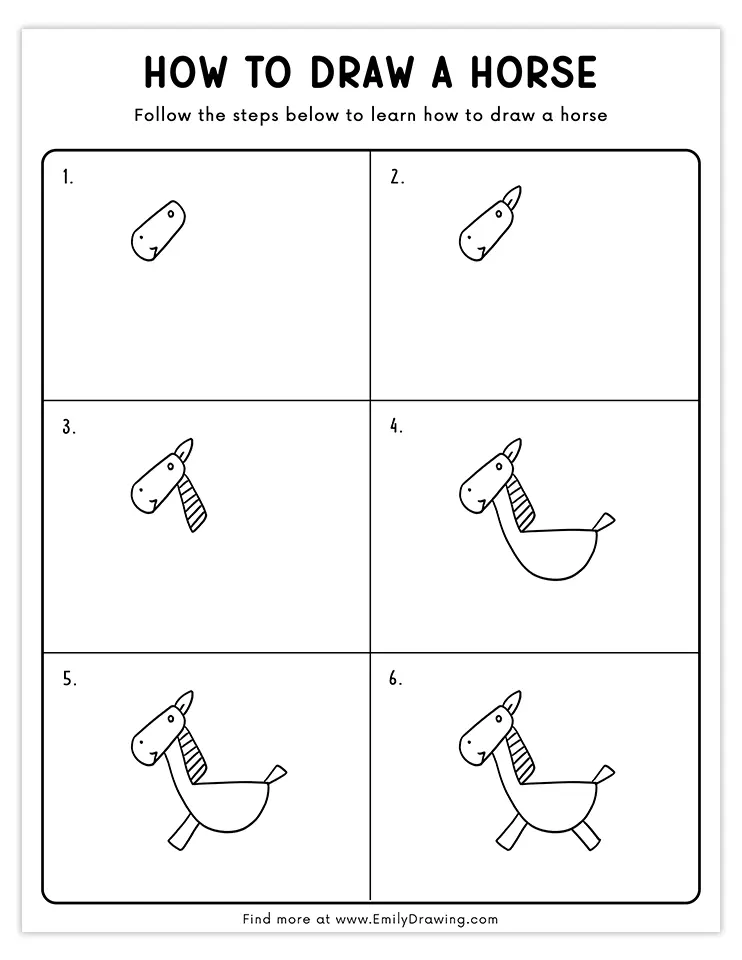
To begin drawing a cartoon horse, start by breaking down the body into three primary shapes: a circle for the head, a smaller circle for the muzzle, and a large oval for the torso. This foundational approach ensures that your proportions remain consistent before you add any specific details. Connect the head to the body with two curved lines to form a thick, sturdy neck.
Once the basic framework is established, you can refine the silhouette. Remember that horses have distinct joints, so use small circles to mark where the shoulders and hips will connect to the legs. This skeletal guide prevents the limbs from looking like simple sticks and provides a realistic base for your cartoon style. Keep your initial pencil lines light so they can be easily erased or covered later.
Best tools for cartooning beginners
For those just starting, a simple HB graphite pencil and a high-quality vinyl eraser are the most effective tools. The HB pencil provides enough versatility to create both light construction lines and darker, final outlines. Using a sketchbook with smooth, heavyweight paper prevents smudging and allows for cleaner lines when you decide to ink your final drawing.
If you prefer digital tools, a tablet with pressure-sensitive software is an excellent investment. Digital platforms allow you to use layers, which is a significant advantage for beginners. You can draw your construction shapes on a bottom layer, lower the opacity, and then draw your clean, final lines on a top layer. This method makes it much easier to correct mistakes without having to redraw the entire image from scratch.
- Graphite pencils (HB or 2B) for sketching.
- A kneaded eraser for lifting graphite without damaging the paper.
- Fine-liner pens or digital brushes for adding final, bold outlines.
- A sketchbook with at least 80lb paper weight.
How to draw horse features
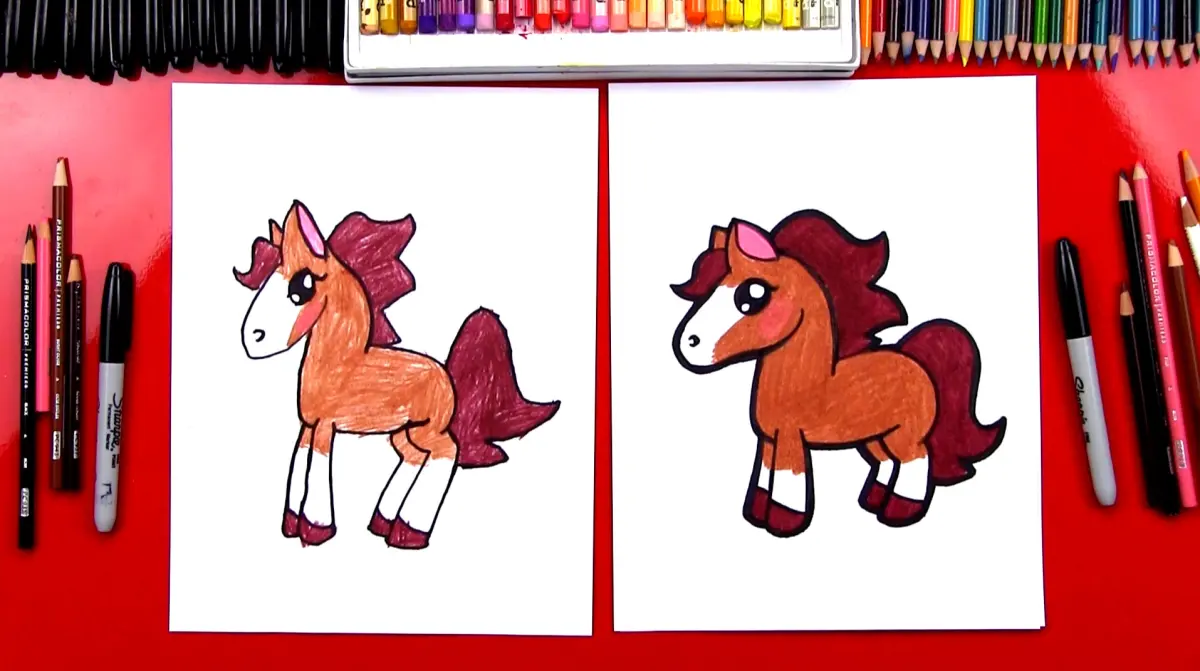
The face is the most expressive part of a cartoon horse. Start by placing two large, oval eyes on the sides of the head circle. Horses have wide-set eyes, which gives them their gentle, alert appearance. Add a small, curved line for the nostril on the muzzle and a simple upward curve for the mouth to give the horse a friendly expression.
The ears should be placed near the top of the head and shaped like small, pointed triangles. For the mane and tail, avoid drawing individual hairs, as this can make the drawing look cluttered. Instead, draw the mane as a single, flowing shape that follows the curve of the neck. You can add a few jagged lines at the edges to suggest volume and movement, giving your horse a more dynamic look.
- Use large, oval eyes to convey personality.
- Keep the muzzle rounded to maintain a soft, cartoon aesthetic.
- Draw the mane as a singular, stylized shape rather than thin strands.
- Position ears slightly forward to show interest or curiosity.
Common mistakes when drawing horses
A frequent error is making the legs too thin or failing to include the proper joints. Horses are powerful animals, even in cartoon form, so ensure the upper part of the leg is thicker than the lower part. Another common issue is placing the eyes too close together. Because horses are prey animals, their eyes are naturally positioned on the sides of their heads to provide a wide field of vision.
Avoid drawing the neck as a straight, rectangular block. The neck should have a distinct arch, with the top being slightly longer than the bottom to accommodate the mane. If the neck looks too stiff, the entire horse will appear wooden and unnatural. Always check the flow of your lines to ensure they connect smoothly, creating a cohesive silhouette that feels balanced rather than disjointed or awkward.
How to add personality to your drawing
Once you have the basic form down, you can add personality through subtle adjustments to the facial features and posture. A horse with ears pinned back might look angry or annoyed, while a horse with wide eyes and raised eyebrows looks surprised or excited. You can also tilt the head or bend the neck to suggest movement or curiosity, which makes the character feel alive.
Experimenting with the mane and tail can also define the horse's character. A wild, messy mane might suggest a rugged, adventurous horse, while a neatly groomed, flowing mane suggests a refined or elegant personality. Don't be afraid to exaggerate these features to tell a story through your art. By combining these simple design choices with your basic anatomical structure, you can create a unique, memorable cartoon horse that stands out with its own distinct charm and style.
Key facts
- Use simple geometric shapes like circles for the head and body to establish proportions.
- Establish the horse's "gesture" by drawing a curved line for the spine before adding mass.
- Keep the legs thin and slightly tapered, remembering that horse knees are actually wrists.
- Simplify the mane and tail into large, flowing shapes rather than drawing individual hairs.
- Exaggerate the eyes and nostrils to give the cartoon horse more personality and expression.
- Use a light pencil for initial sketches so you can easily erase guidelines later.
The bottom line
Drawing a cartoon horse is an exercise in simplification and exaggeration. By breaking the complex anatomy down into manageable circles and lines, you can capture the essence of the animal without getting bogged down in detail. Focus on the flow of the spine and the character of the face to bring your drawing to life. Practice these basic shapes consistently to develop your own unique artistic style.
People also ask
What is the most common mistake when drawing a horse's legs?
Beginners often draw the legs too straight or place the joints incorrectly. Remember that the "knee" on the front leg is actually a wrist, and the hock on the back leg bends in the opposite direction of human knees.
Should I start with the head or the body?
Start with the body shapes first to ensure the horse fits on your paper. Once the torso and hindquarters are placed, you can size the head proportionally to the rest of the frame.
How do I make a cartoon horse look like it is running?
Focus on the angle of the spine and the extension of the legs. A running horse should have its body stretched out horizontally with at least one or two legs off the ground.
How can I make the horse look friendly?
Use rounded shapes for the muzzle and large, soft eyes with prominent eyelashes. Avoid sharp, jagged lines, as these tend to make a character look aggressive or mean.
Do I need to know horse anatomy to draw a cartoon?
You do not need to be a veterinarian, but understanding basic skeletal structure helps. Knowing where the major joints are located prevents the horse from looking like it has rubbery, boneless limbs.
What is the best way to draw a horse's mane?
Treat the mane as a single, solid mass or a series of thick ribbons. Avoid drawing every single strand, as this makes the drawing look cluttered and messy in a cartoon style.
This answer was created with the help of AI research tools and reference sources. Spotted an error? Let us know — we correct mistakes quickly. See our editorial policy.