How do you draw a cartoon robot?
Short answer
Drawing a cartoon robot involves constructing a character from basic geometric shapes like squares, circles, and cylinders. By layering these simple forms, you create a sturdy foundation before adding mechanical details such as antennas, gears, and wires. Focus on clear silhouettes and expressive features to give your robot a distinct personality.
On this page
How to start drawing a robot for beginners
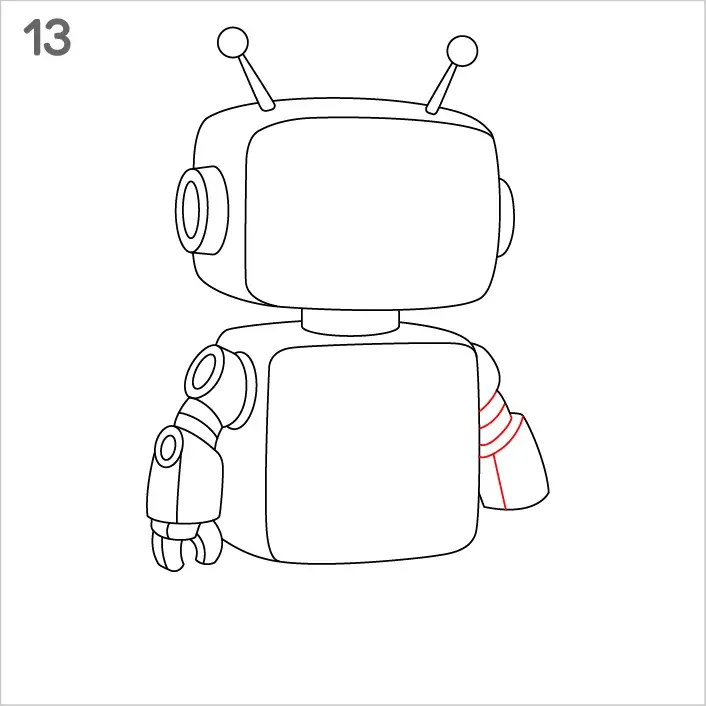
The most effective way to begin drawing a cartoon robot is to break down complex machinery into elementary geometric primitives. Start by sketching a square for the torso, a circle for the head, and rectangles for the limbs. This approach prevents you from getting overwhelmed by intricate details too early in the process. Once your basic skeleton is established, you can refine the edges to make them look more metallic or rounded depending on the aesthetic you desire.
Consistency in your shapes helps maintain the structural integrity of your character. If your robot is meant to look heavy and industrial, use blocky, sharp-angled shapes. If you want a friendly, approachable robot, utilize softer curves and circular joints. Practice drawing these shapes in perspective to ensure the robot looks like a three-dimensional object rather than a flat drawing.
- Sketch a primary shape for the torso.
- Add a circular or boxy head on top.
- Attach limbs using cylinders or rectangular prisms.
- Connect the parts with small circles to represent joints.
What tools are best for drawing cartoons
While you can draw a robot with any writing implement, using specific tools can improve your precision and line quality. Graphite pencils with a lead hardness of HB or 2B are ideal for the initial sketching phase, as they allow for light lines that are easy to erase. Once the sketch is finalized, fine-liner pens or markers with varying tip sizes help define the final contours and add depth to your character.
Digital drawing tablets are also popular because they allow artists to use layers. By separating your construction lines from your final ink, you can clean up your work without damaging the base sketch. Regardless of your medium, keep a high-quality eraser nearby to clean up overlapping lines. Using a ruler or a compass can also assist in creating perfectly straight edges or symmetrical circles, which are hallmarks of a clean, mechanical look.
- Mechanical pencils for thin, precise guidelines.
- Fine-liner pens for permanent outlines.
- Erasers that do not leave residue on the paper.
- A ruler for creating sharp, mechanical corners.
How to add personality to your robot
A cartoon robot needs more than just a metallic frame; it requires personality to become memorable. You can achieve this through the design of the eyes, which are often the most expressive part of a robot. Use simple shapes like glowing circles, horizontal slits, or even digital screens to convey emotion. A robot with large, round eyes often appears curious, while narrow, angular eyes can make a character look stern or aggressive.
Consider the robot's function when adding accessories. A robot built for cleaning might have a vacuum attachment or a broom, while a robot built for space exploration might feature antennas, thrusters, and satellite dishes. Adding small details like rivets, vents, or glowing buttons provides a sense of scale and realism. Think about the robot's "posture" as well; a slumped shoulder or a tilted head can tell a story about the character's mood or internal state.

Common mistakes when drawing robots
One of the most frequent errors is over-complicating the design. Beginners often try to cram too many wires, bolts, and panels into a small space, which makes the drawing look cluttered and difficult to read. Focus on a clean silhouette first; if the robot is recognizable just by its outline, you have succeeded. Simplify your design by removing unnecessary lines that do not contribute to the character's overall shape.
Another common mistake is neglecting the joints. Even a robot needs to move, so ensure that the limbs have logical connection points. If a limb is just floating near the torso, the character will look disjointed and unstable. Make sure the joints look like they belong to the machine, whether they are ball-and-socket joints, hinges, or hydraulic pistons. Always check that your robot’s proportions remain consistent across its body to avoid a lopsided appearance.
How to refine and ink your cartoon
The final stage of drawing involves inking your sketch to make the lines permanent and crisp. Start by tracing your construction lines with a steady hand, focusing on creating clean, continuous strokes. If you want to emphasize the metallic nature of the robot, use thicker lines for the outer edges and thinner lines for the interior details. This contrast helps the viewer understand the depth and volume of the robot’s body.
Once the ink is dry, carefully erase all of the underlying pencil marks. You can then add shading to create a sense of light and shadow, which makes the metal look shiny and reflective. Use cross-hatching or solid black fills to indicate areas where the light does not reach. Adding a few highlights with a white gel pen can make the metal look polished and brand new. Finally, step back and evaluate your work to ensure the robot looks cohesive and ready for action.
Key facts
- Start by sketching basic geometric shapes like squares, rectangles, and circles to form the robot's primary structure.
- Connect limbs using cylinders or accordion-style tubes to suggest mechanical flexibility and movement.
- Add "greebles"—small, non-functional details like bolts, vents, and wires—to give the robot a complex, industrial appearance.
- Use a thick, bold outline for the main body and thinner lines for internal details to create visual depth.
- Incorporate expressive features such as glowing circular eyes or an antenna to establish the robot's personality.
- Apply a metallic color palette using shades of gray, silver, and blue, adding white highlights to simulate reflective surfaces.
The bottom line
Drawing a cartoon robot is an exercise in combining basic geometry with creative mechanical details. By starting with simple shapes and layering on functional components like bolts and antennas, you can build a character with distinct personality. Focus on clean lines and strategic highlights to emulate a metallic look, ensuring your robot appears both structurally sound and visually engaging for any animation or illustration project.
People also ask
How do I make a robot look friendly rather than intimidating?
Use rounded corners and soft, circular shapes instead of sharp angles or spikes. Large, wide-set eyes and a simple curved mouth often make a character appear approachable and kind.
What is the best way to draw metallic textures?
Focus on high-contrast lighting by placing bright white highlights next to dark shadows. This contrast mimics the way light reflects off polished steel or chrome surfaces.
Should I use a ruler for my robot drawings?
Using a ruler helps create clean, precise lines that define a machine's rigid structure. However, freehand drawing can add a sense of organic character and charm to the design.
How can I show that my robot is old or rusty?
Add irregular patches of brown or orange color to represent rust and include dents or missing panels. These imperfections suggest the robot has seen extensive use over many years.
What are the most important parts of a robot's face?
The eyes, often represented by lenses or screens, are the most critical element for conveying emotion. Adding an antenna or a small speaker grille can also reinforce the mechanical theme.
Can I combine human features with robotic parts?
Yes, "cyborg" designs are common in animation and allow for a blend of organic movement and mechanical utility. Mixing these elements creates a unique visual contrast between flesh and steel.
This answer was created with the help of AI research tools and reference sources. Spotted an error? Let us know — we correct mistakes quickly. See our editorial policy.