What do blue whales eat?
Short answer
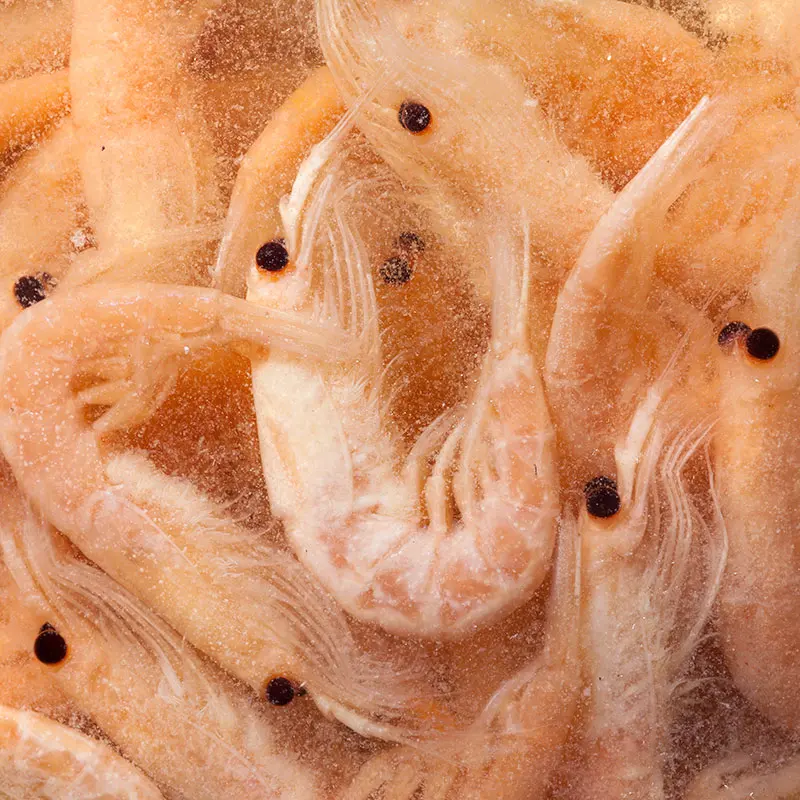
Blue whales eat almost exclusively small, shrimp-like crustaceans called krill. Despite their massive size, these marine mammals survive by consuming millions of these tiny organisms daily. During peak feeding seasons, an adult blue whale can ingest up to four tons of krill in a single day to maintain its enormous body weight.
On this page
What do blue whales eat exactly?
The primary diet of the blue whale consists of euphausiids, commonly known as krill. These tiny, translucent crustaceans are abundant in cold, nutrient-rich waters across the globe. While blue whales are occasionally known to ingest small fish or copepods accidentally, these make up an insignificant fraction of their total caloric intake.
To sustain their massive frames, which can reach lengths of up to 100 feet, blue whales must consume massive quantities of food. An adult whale typically targets dense swarms of krill located at depths ranging from 300 to 600 feet. By focusing on these concentrated patches, the whales maximize their energy intake while minimizing the effort required to hunt.
- Antarctic krill (Euphausia superba)
- Pacific krill (Euphausia pacifica)
- Northern krill (Meganyctiphanes norvegica)
- Various small schooling fish (incidental consumption)
How do blue whales catch their food?
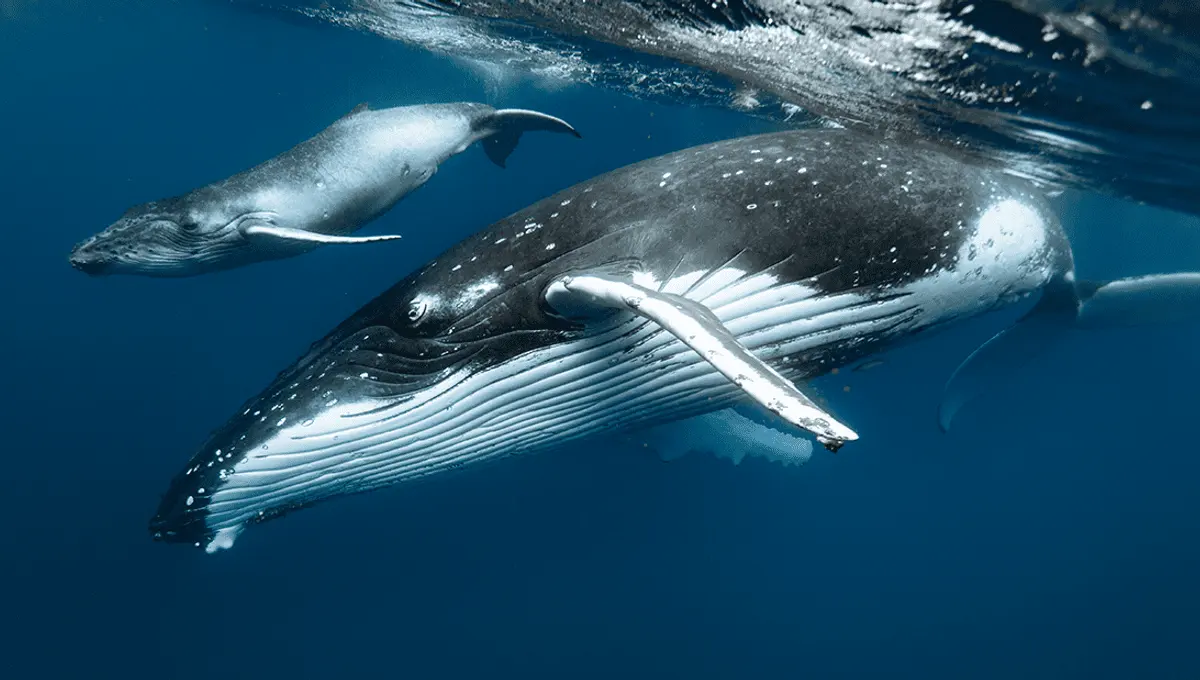
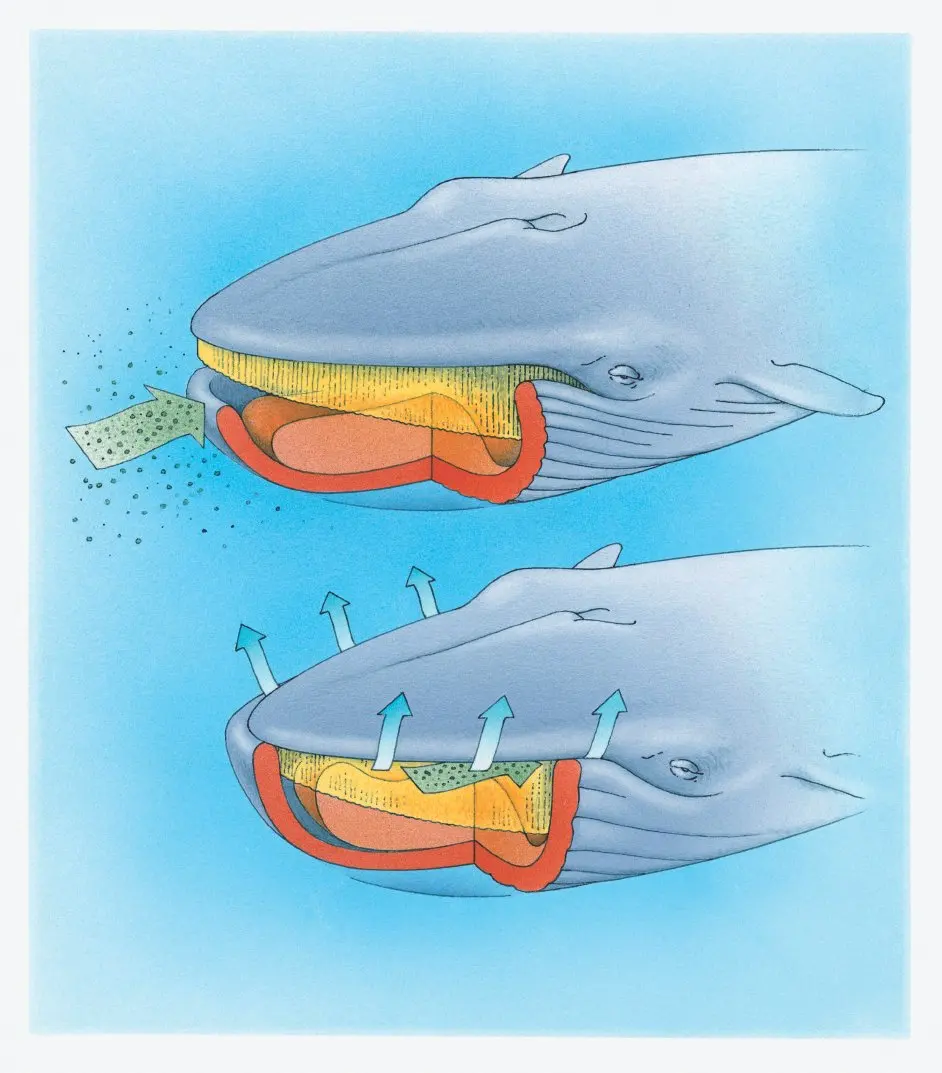
Blue whales are filter feeders that utilize a specialized technique known as lunge feeding. The whale approaches a swarm of krill at high speed with its mouth wide open, engulfing both the prey and a massive volume of water. This action causes the whale's throat pleats—longitudinal folds of skin—to expand like an accordion, allowing it to take in a weight of water nearly equal to its own body mass.
Once the whale has filled its mouth, it uses its massive tongue to push the water out through its baleen plates. These plates are made of keratin, the same material found in human fingernails, and act as a fine-mesh sieve. The water escapes through the sides of the mouth, while the thousands of krill are trapped inside, ready to be swallowed.
- Locate a dense swarm of krill using sonar or visual cues.
- Accelerate toward the swarm with the mouth fully distended.
- Close the jaws and contract the throat pleats to force water out.
- Use the tongue to scrape the trapped krill from the baleen.
- Swallow the concentrated mass of prey.
Where do blue whales feed?
Blue whales are migratory creatures that travel thousands of miles between breeding grounds in tropical waters and feeding grounds in polar regions. They spend the summer months in high-latitude waters, such as the Southern Ocean or the North Pacific, where the melting ice and long daylight hours trigger massive blooms of phytoplankton. These blooms provide the primary food source for krill, creating the dense swarms that whales rely on.
Because they fast for much of the winter while in warmer breeding waters, the summer feeding season is critical for their survival. During these months, whales focus on building up thick layers of blubber, which serve as an energy reserve for the rest of the year. If the krill population in a specific region declines, the whales must move to find more productive feeding grounds to ensure they have enough energy for migration and reproduction.
Why do blue whales eat so much?
The sheer scale of a blue whale requires an immense amount of energy to support its biological functions. A blue whale can weigh up to 200 tons, and maintaining this mass requires a constant supply of fuel. By eating millions of krill, which are rich in protein and lipids, the whale can satisfy its high metabolic demands. This efficiency is the only way an animal of such proportions can exist in the ocean.
Interestingly, the energy expenditure of lunge feeding is quite high, meaning the whale must be selective about which swarms it targets. If a swarm is too thin or sparse, the energy spent swimming and lunging will outweigh the calories gained from the meal. Consequently, blue whales have evolved to be highly efficient at identifying the most nutrient-dense patches of prey, ensuring they gain more energy than they expend during each feeding event.
Common mistakes when observing whale feeding
One frequent error observers make is assuming that whales are constantly feeding throughout the year. In reality, blue whales are seasonal feeders, and their behavior changes significantly depending on their location and the time of year. Those hoping to see feeding behavior should prioritize trips to high-latitude regions during the summer months when krill populations are at their peak.
Another mistake is misinterpreting whale behavior during surface intervals. While it may look like a whale is feeding when it breaches or splashes, these actions are often related to communication or social interaction rather than hunting. True lunge feeding is usually a more subtle, powerful movement that occurs just below the surface or at significant depths. Understanding these biological rhythms is essential for anyone interested in the true nature of how the largest animal on Earth sustains its life.
Key facts
- Blue whales feed almost exclusively on krill, which are tiny, shrimp-like crustaceans.
- An adult blue whale can consume up to 4 tons of krill in a single day during peak feeding season.
- They use baleen plates, made of keratin, to filter large volumes of seawater and trap their prey.
- Blue whales are "lunge feeders," accelerating toward a swarm of krill with their mouths wide open to engulf massive amounts of water.
- A single mouthful can contain up to 100 tons of water and krill, which is then expelled through the baleen.
- They primarily feed in cold, productive waters near the poles, such as the Southern Ocean, during the summer months.
The bottom line
The blue whale’s diet is a masterclass in efficiency, centered almost entirely on the consumption of tiny krill. By utilizing their massive mouths and specialized baleen plates, these giants filter immense quantities of prey to fuel their enormous bodies. This specialized feeding strategy allows them to thrive in cold, productive oceans, highlighting the critical importance of maintaining healthy marine ecosystems for the survival of the world's largest animals.
People also ask
Do blue whales ever eat fish?
While they primarily consume krill, blue whales occasionally ingest small schooling fish or copepods that happen to be within a swarm of krill. However, these are incidental additions rather than a primary food source.
How do blue whales find enough food to support their massive size?
They rely on their keen sense of smell and sight to locate dense patches of krill in the ocean. By targeting these high-density areas, they maximize their caloric intake while minimizing the energy expended during the lunge-feeding process.
Do blue whales eat during the winter?
Blue whales generally fast during the winter months when they migrate to warmer, tropical waters to breed and give birth. They survive this period by relying on the thick layer of blubber they built up while feeding in the nutrient-rich polar waters.
How deep do blue whales dive to find krill?
While krill are often found near the surface, blue whales can dive to depths of over 300 meters to reach deep-water swarms. Most of their feeding activity, however, occurs within the top 100 meters of the water column.
What happens if a blue whale accidentally swallows plastic?
Like many marine mammals, blue whales are susceptible to ingesting microplastics that are mixed in with their prey. This can lead to internal blockages or the accumulation of toxic chemicals in their tissues, posing a significant threat to their long-term health.
Can blue whales feed in groups?
Blue whales are typically solitary feeders, but they may congregate in areas where food is exceptionally abundant. Unlike humpback whales, they do not typically use complex cooperative hunting strategies to capture their prey.
This answer was created with the help of AI research tools and reference sources. Spotted an error? Let us know — we correct mistakes quickly. See our editorial policy.