Where do orangutans live?
Short answer
Orangutans live exclusively in the tropical rainforests of Southeast Asia, specifically on the islands of Borneo and Sumatra. They are primarily arboreal, spending nearly all their time in the high canopy. Due to severe habitat loss, their wild populations are now restricted to fragmented pockets of protected lowland and mountainous forest.
On this page
Where do orangutans live in the wild?
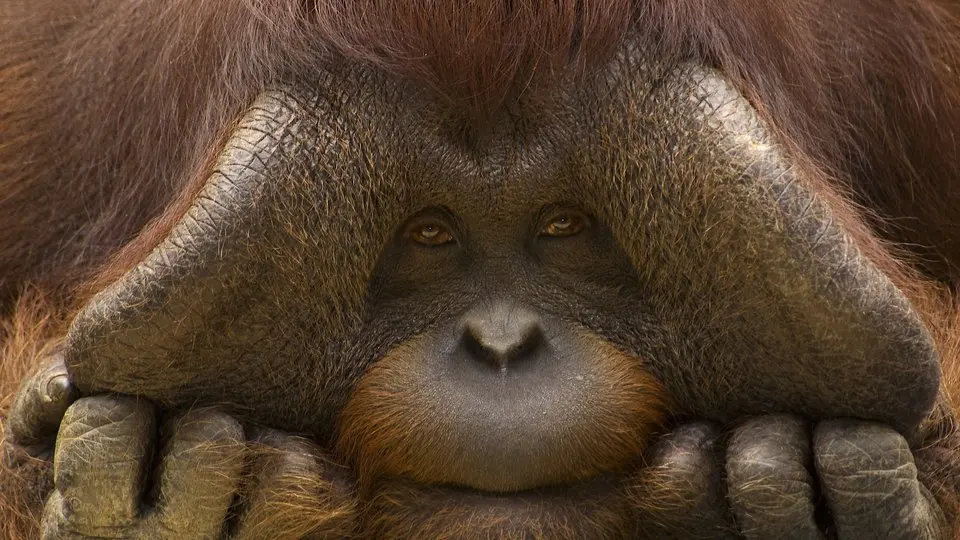
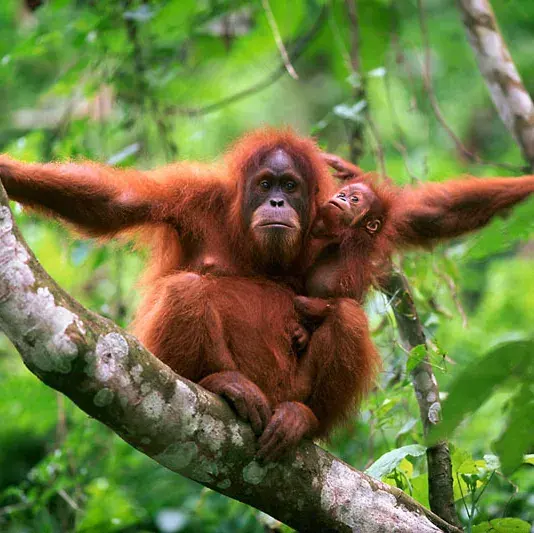
Orangutans are the only great apes native to Asia. They inhabit the dense, humid rainforests of Borneo and Sumatra, which are the third and sixth largest islands in the world, respectively. These primates require vast, continuous tracts of forest to forage for fruit, their primary food source. Because they are almost entirely arboreal, they rarely descend to the forest floor, preferring the safety and resources found in the upper canopy layers.
The distribution of these apes is divided by species. The Bornean orangutan (Pongo pygmaeus) is found across much of the island of Borneo, while the Sumatran orangutan (Pongo abelii) and the Tapanuli orangutan (Pongo tapanuliensis) are restricted to Sumatra. The Tapanuli orangutan, discovered as a distinct species in 2017, occupies a very small, isolated area in the Batang Toru ecosystem. Their range is strictly tropical, characterized by high rainfall and year-round temperatures that rarely drop below 20 degrees Celsius.
What kind of habitat do orangutans need?
Orangutans thrive in primary lowland dipterocarp forests. These ecosystems provide a consistent supply of fruit, such as figs and durians, which are essential for the energy-intensive lifestyle of these large apes. They also utilize peat swamp forests, which are waterlogged areas where trees grow in thick layers of organic peat. These environments are critical because they offer a diverse array of vegetation and nesting materials.
To maintain a healthy population, orangutans require specific environmental features:
- A high density of fruit-bearing trees to support year-round feeding.
- Mature, tall trees that allow for movement through the canopy without descending.
- Access to permanent water sources, such as rivers or streams, within their home range.
- Sufficient space to build new sleeping nests every evening, which requires sturdy branches.
These habitats are currently under extreme pressure from human activities. As forests are cleared for timber or converted into agricultural land, the orangutans' ability to find food and mates is severely compromised.
How do orangutans move through their environment?
Orangutans are masters of the canopy, utilizing a method of locomotion known as arboreal brachiation and quadrumanous climbing. Their long, powerful arms and hook-like hands allow them to swing between branches with remarkable grace. They also use their feet, which are as dexterous as their hands, to grip branches while they reach for fruit or navigate gaps in the foliage. This specialized movement allows them to traverse miles of forest without ever touching the ground.
When traveling through the trees, they often follow established pathways. They are highly intelligent, possessing a mental map of their territory that helps them locate seasonal fruit sources. Their movement patterns are influenced by:
- The ripening cycles of specific fruit trees within their range.
- The need to avoid potential predators or human encroachment.
- The social structure, as females typically maintain smaller, stable home ranges.
- The search for suitable nesting sites as the sun begins to set.
Why is orangutan habitat disappearing?
The primary driver of habitat loss for orangutans is the expansion of industrial agriculture, particularly oil palm plantations. Large sections of rainforest are cleared and burned to make space for these crops, which destroys the complex ecosystem required by the apes. Logging operations further degrade the forest by removing the oldest, largest trees, which are the most important for both food production and nesting.
Common mistakes when discussing conservation include:
- Assuming that all forest types are equally suitable for orangutans; they specifically require primary or high-quality secondary forests.
- Believing that protected status on paper prevents all illegal logging or poaching.
- Ignoring the impact of forest fragmentation, which isolates populations and prevents genetic diversity.
- Overestimating the ability of orangutans to adapt to non-forested landscapes or plantations.
Effective conservation requires protecting large, connected corridors of forest. Without these, orangutans become trapped in small islands of trees, leading to starvation and inbreeding.
How can people help protect orangutan homes?
Supporting the survival of orangutans involves both local and global actions. On a practical level, consumers can choose products that are certified as sustainable, specifically looking for labels that guarantee no deforestation was involved in the production of palm oil. By reducing the demand for unsustainable agricultural products, the economic incentive to clear-cut rainforests is lowered. Additionally, supporting reputable non-governmental organizations that focus on forest restoration and community-led conservation is vital.
To contribute to their protection, follow these guidelines:
- Research the supply chains of companies you purchase from regularly.
- Donate to organizations that purchase land to create protected wildlife corridors.
- Advocate for policies that enforce strict environmental regulations on logging and land use.
- Educate others about the link between consumer choices and the destruction of the Indonesian and Malaysian rainforests.
By maintaining a focus on habitat preservation rather than just individual animal rescue, we can ensure that these magnificent creatures continue to exist in their natural, wild environments for generations to come.
Key facts
- Orangutans are found exclusively in the wild on the Southeast Asian islands of Borneo and Sumatra.
- They are the only great apes native to Asia, spending nearly all of their lives in the forest canopy.
- Three distinct species exist: the Bornean, Sumatran, and the Tapanuli orangutan, the latter discovered in 2017.
- These primates require large, contiguous tracts of tropical rainforest to find sufficient fruit, their primary food source.
- Habitat loss due to palm oil plantations and logging remains the single greatest threat to their survival.
- When visiting protected areas, maintain a distance of at least 10 meters to prevent the transmission of human respiratory illnesses.
The bottom line
Orangutans are highly specialized primates restricted to the dwindling rainforests of Borneo and Sumatra. Their survival depends entirely on the preservation of these dense canopy environments. As they face severe pressure from deforestation and illegal trade, protecting their natural habitat is essential. By supporting sustainable agriculture and eco-tourism, humans can help ensure these intelligent, solitary apes continue to thrive in their native tropical homes.
People also ask
Are orangutans social animals?
Unlike gorillas or chimpanzees, orangutans are semi-solitary. Mothers and their offspring spend several years together, but adults typically forage and sleep alone.
How long do orangutans live?
In the wild, orangutans typically live between 35 and 45 years. Under human care in zoos or sanctuaries, they can occasionally reach their late 50s.
What do orangutans eat?
Their diet consists primarily of fruit, specifically figs and durians. They also consume leaves, bark, flowers, and occasionally insects or bird eggs.
Can you keep an orangutan as a pet?
No, it is illegal and unethical to keep orangutans as pets. They are endangered species that require complex social structures and vast forest environments to thrive.
How do orangutans sleep?
Every night, they construct a new sleeping nest high in the trees using branches and leaves. These platforms are reinforced to support their weight and provide safety from ground predators.
Why are orangutans considered "gardeners of the forest"?
They play a vital role in seed dispersal by consuming large quantities of fruit and spreading seeds throughout the rainforest via their waste. This process helps maintain the health and diversity of their ecosystem.
This answer was created with the help of AI research tools and reference sources. Spotted an error? Let us know — we correct mistakes quickly. See our editorial policy.