Who invented the barcode?
Short answer
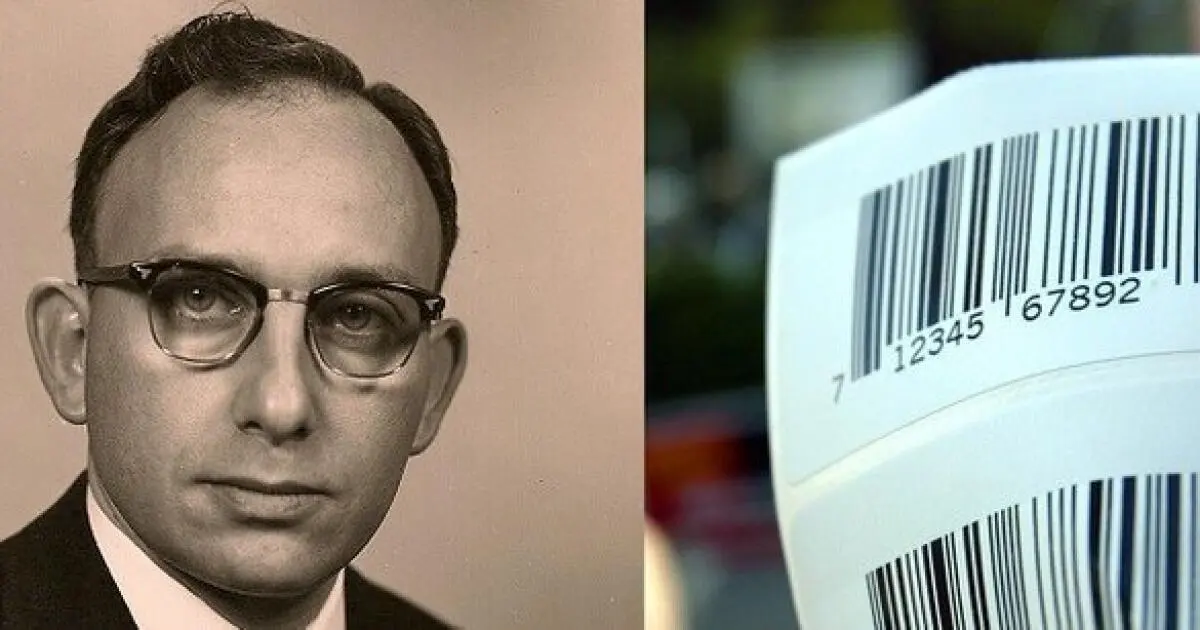
Norman Joseph Woodland and Bernard Silver invented the barcode. They filed a patent for their "Classifying Apparatus and Method" in 1949, inspired by Morse code. Their design utilized concentric circles rather than the modern linear bars, eventually leading to the Universal Product Code (UPC) system that revolutionized global retail and inventory management.
On this page
Who invented the barcode?
The invention of the barcode began in 1948 at Drexel Institute of Technology in Philadelphia. Norman Joseph Woodland, a graduate student, overheard a supermarket executive asking the dean for a way to automatically track product information at checkout. Woodland was intrigued by the challenge and began brainstorming methods to encode data visually. He eventually teamed up with his friend and fellow student, Bernard Silver, to refine the concept.
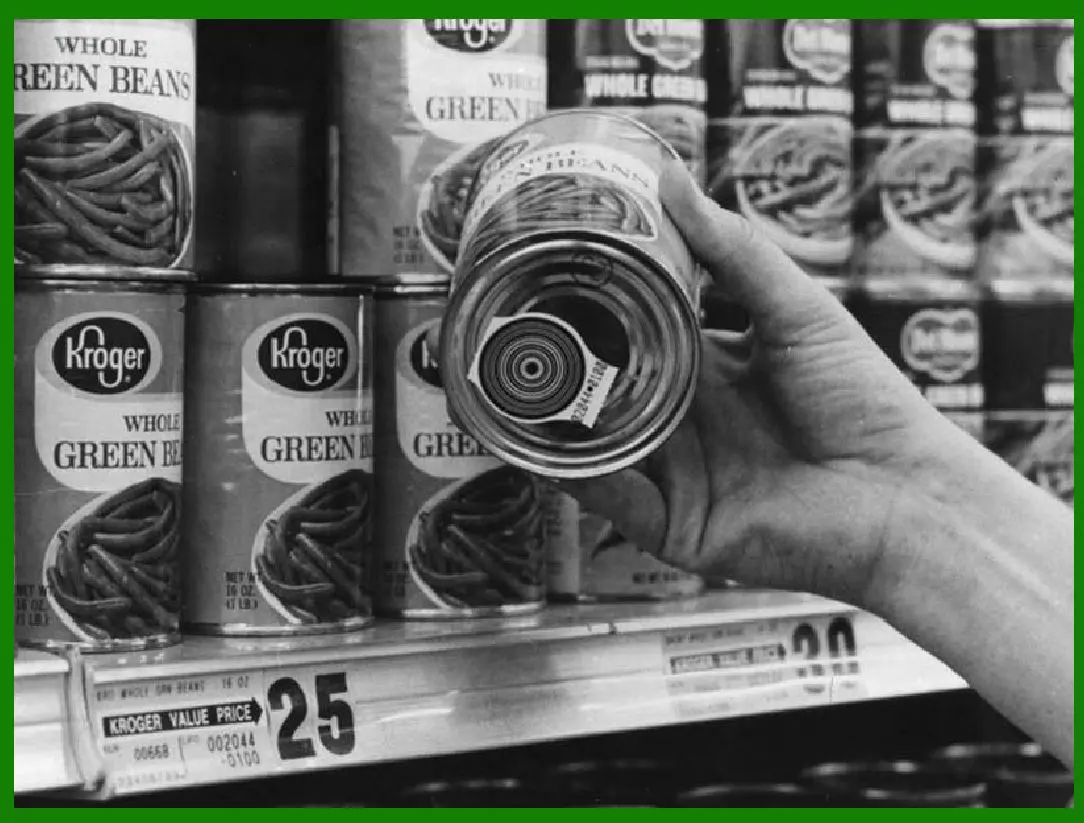
Drawing inspiration from Morse code, Woodland initially drew dots and dashes in the sand at a beach in Miami. He extended these into thin vertical lines, which he then arranged into a series of concentric circles to allow for omnidirectional scanning. The pair filed their patent for this "bull’s-eye" design on October 20, 1949. Although their early technology lacked the computer power to be practical at the time, their fundamental concept of using light-sensitive equipment to read patterns remains the foundation of modern logistics.
How does a barcode work?
A barcode functions as a visual representation of data that a machine can interpret. The scanner emits a beam of light, typically a laser or LED, which reflects off the barcode's surface. The black bars absorb the light, while the white spaces reflect it back to the sensor. This pattern of light and dark is converted into electrical pulses, which the computer translates into binary code.
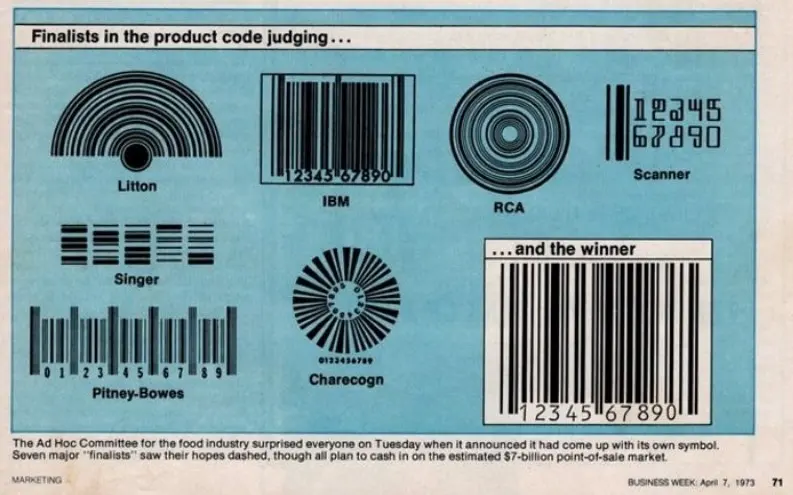
The most common standard is the Universal Product Code (UPC), which consists of a 12-digit number. The structure of this code is strictly regulated to ensure global consistency:
- The first digit identifies the system or category of the product.
- The next five digits represent the manufacturer’s identification number.
- The following five digits indicate the specific item's unique identifier.
- The final digit is a "check digit" used to verify the accuracy of the scan.
Why was the barcode developed?
The primary driver for the barcode was the need for efficiency in the retail industry. Before automated scanning, cashiers had to manually type the price of every item into a register, which was slow and prone to human error. Supermarket owners sought a system that could speed up checkout lines and provide real-time inventory tracking to prevent stockouts and overstocking.
Beyond retail, the barcode transformed supply chain management by providing granular visibility into the movement of goods. Manufacturers, distributors, and retailers could suddenly track a product from the factory floor to the store shelf. This capability allowed for:
- Faster processing of shipments at distribution centers.
- Accurate tracking of expiration dates for perishable goods.
- Automated reordering processes when inventory levels hit a specific threshold.
- Enhanced data collection regarding consumer purchasing habits and trends.
How to create a barcode for products
If you are a business owner looking to implement barcodes, you must first obtain a unique identification number. In the United States, GS1 is the primary organization that manages the assignment of UPCs. You cannot simply create a random number, as it must be globally unique to ensure your product can be scanned at any retailer worldwide.
Once you have your assigned numbers, follow these steps to generate your barcodes:
- Register with GS1 to receive your official Company Prefix.
- Assign individual item numbers to each of your unique products.
- Use a certified barcode generation software or service to create the graphic files.
- Select the appropriate barcode symbology, such as UPC-A or EAN-13, based on your target market.
- Ensure the barcode is printed with high-contrast ink, typically black on a white background, to guarantee readability.
Common mistakes when using barcodes
One of the most frequent errors is poor print quality or insufficient contrast. If the bars are blurry, smudged, or printed in colors that do not provide enough light reflection, the scanner will fail to decode the information. Always perform a "scan test" on your packaging before mass-producing labels to ensure the code is readable under various lighting conditions.
Another common mistake involves the placement of the barcode on the product packaging. If the barcode is placed on a curved surface, such as a bottle, the scanner may have difficulty reading the entire sequence. Additionally, avoid placing the barcode too close to the edge of a package or near other graphic elements that might interfere with the "quiet zone"—the clear white space required on both sides of the barcode. Failing to maintain this buffer zone is a frequent cause of scanning errors in high-volume retail environments.
Key facts
- Norman Joseph Woodland and Bernard Silver filed the first patent for a barcode system in 1949.
- The original design was inspired by Morse code, extending the dots and dashes into vertical lines.
- Woodland drew the first prototype in the sand on a Miami beach using his fingers.
- The first commercial scan occurred in 1974 at a Marsh Supermarket in Troy, Ohio, on a pack of Wrigley’s gum.
- Modern UPC (Universal Product Code) barcodes consist of 12 digits that identify the manufacturer and the specific product.
- When printing barcodes, ensure high contrast between the bars and the background to avoid scanning failures.
The bottom line
The invention of the barcode transformed global commerce by automating inventory management and checkout processes. Born from a simple idea on a beach in 1949, the technology evolved into the standardized UPC system we rely on today. By enabling instantaneous data capture, the barcode remains a foundational tool for supply chains, ensuring that millions of products are tracked accurately from the factory to the consumer.
People also ask
Why are barcodes shaped like vertical lines?
Vertical lines allow a scanner to read the code even if the label is slightly tilted or damaged. A horizontal scan line can cross the entire code at any height to capture the full data sequence.
Can a barcode be scanned if it is partially covered?
Most modern barcodes use error-correction algorithms that allow them to be read even if a small portion is obscured. However, if the vertical bars are torn or smudged beyond recognition, the scanner will fail.
What is the difference between a UPC and a QR code?
A UPC is a one-dimensional barcode used primarily for tracking retail inventory and pricing. A QR code is two-dimensional, capable of storing much more data, such as website URLs or contact information.
How do scanners read the information in a barcode?
A scanner emits a beam of light that reflects off the barcode's white spaces and is absorbed by the black bars. A sensor measures this reflected light to translate the pattern into a digital number.
Do all countries use the same barcode system?
While the UPC is standard in the United States and Canada, the EAN (European Article Number) is the global standard used in most other countries. Most modern scanners are compatible with both formats.
Can I create a custom barcode for my own products?
Yes, businesses can register for a unique company prefix through GS1, the organization that manages global barcode standards. Avoid using free online barcode generators for retail products, as these are often not globally unique.
This answer was created with the help of AI research tools and reference sources. Spotted an error? Let us know — we correct mistakes quickly. See our editorial policy.