Who invented the calculator?
Short answer
The calculator was not invented by a single person, but evolved over centuries. Blaise Pascal created the first mechanical adding machine in 1642. Later, in the 1970s, companies like Texas Instruments and Sharp developed the handheld electronic calculators that defined the modern era, building on decades of breakthroughs in microchip and transistor technology.
On this page
Who invented the first mechanical calculator?
The history of the calculator begins with the need to automate complex arithmetic. In 1642, French mathematician Blaise Pascal invented the Pascaline to assist his father, a tax commissioner, with tedious calculations. This device used a series of interlocking gears and wheels to perform addition and subtraction. While revolutionary, it was expensive and difficult to manufacture, limiting its widespread adoption.
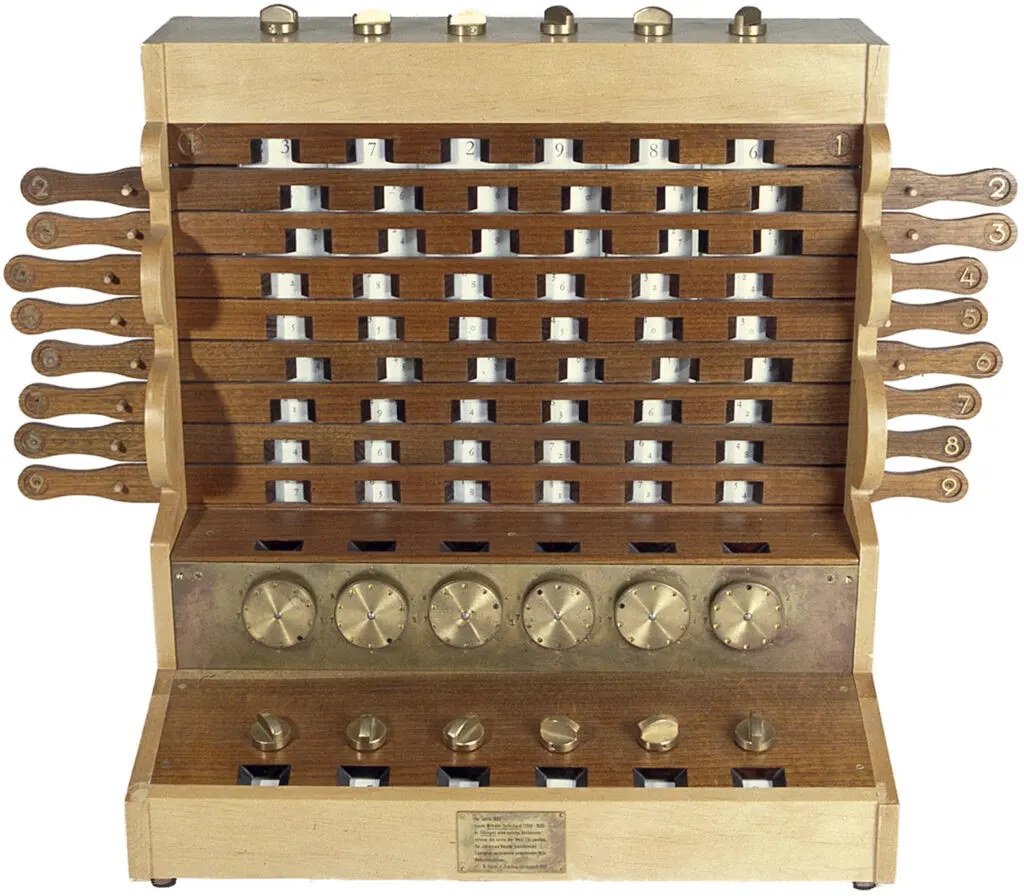
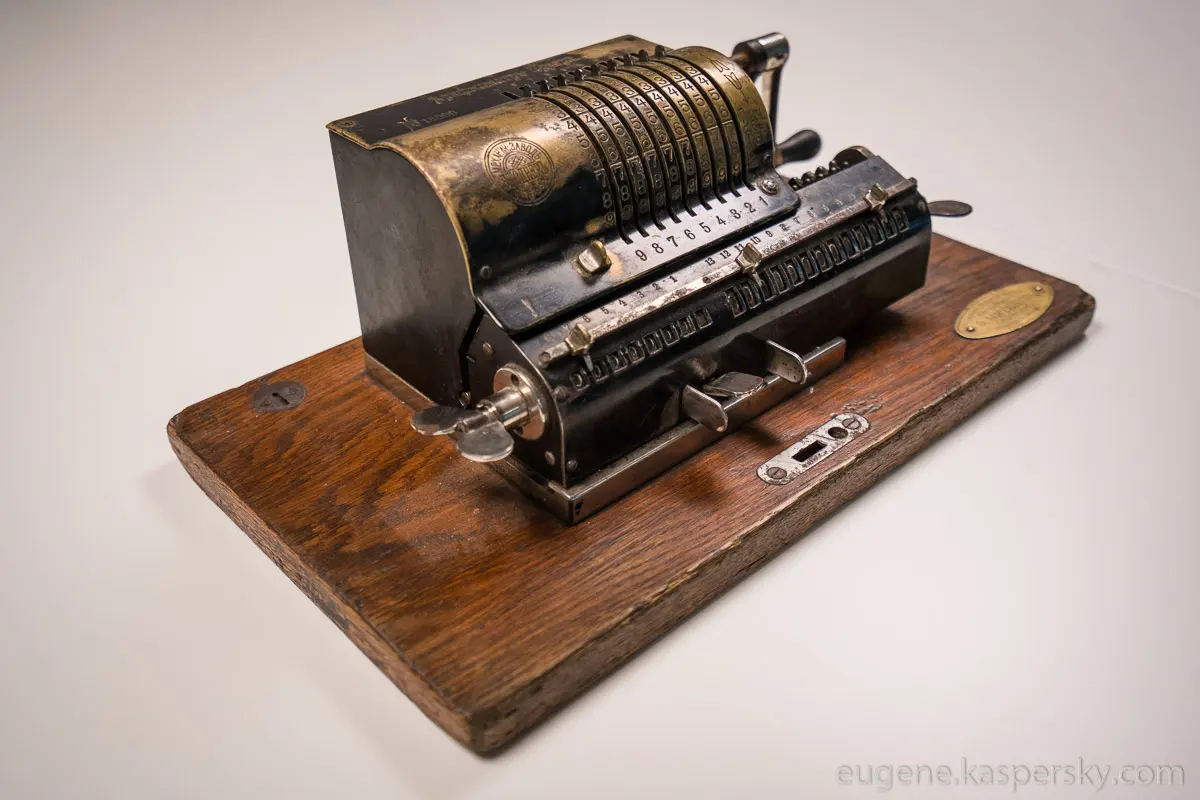
Following Pascal, Gottfried Wilhelm Leibniz improved upon these concepts in the 1670s by designing the Stepped Reckoner. This machine introduced the Leibniz wheel, which allowed for multiplication and division as well. These early mechanical devices established the fundamental logic of computation, relying on physical movement rather than electricity. They were the ancestors of the desktop calculators that would dominate offices for the next three centuries.
How did electronic calculators replace mechanical ones?
The transition from mechanical gears to electronic circuits occurred in the mid-20th century. Early electronic calculators, such as the ANITA MK VII introduced in 1961, were bulky, desk-sized machines that used vacuum tubes. These were eventually replaced by solid-state transistors, which were significantly smaller, more reliable, and consumed less power. This shift allowed engineers to shrink the internal components of a calculator to a fraction of their original size.
By the early 1970s, the development of integrated circuits—or microchips—enabled the creation of the pocket-sized calculator. Companies like Busicom, Sharp, and Texas Instruments competed to pack the power of a room-sized computer into a handheld plastic casing. This era marked a turning point where mathematical power became accessible to students, engineers, and the general public at an affordable price point.
- 1961: The ANITA MK VII becomes the first electronic desktop calculator.
- 1967: Texas Instruments develops the first handheld prototype.
- 1971: The Busicom LE-120A becomes the first calculator to use a single-chip processor.
- 1972: The HP-35 is released, offering advanced scientific functions in a portable format.
What are the different types of calculators?
Modern calculators are categorized based on their intended use and the complexity of the math they can handle. Basic calculators are designed for simple arithmetic, such as addition, subtraction, multiplication, and division. These are ideal for everyday financial tasks like balancing a checkbook or calculating tips at a restaurant. They are straightforward and generally feature large, easy-to-read displays.
Scientific and graphing calculators serve a much more specialized purpose. These devices include functions for trigonometry, logarithms, and statistical analysis. Graphing calculators, in particular, allow users to plot functions on a screen, which is essential for algebra and calculus students. Choosing the right tool depends on the user's specific mathematical requirements and their comfort level with complex interfaces.
- Basic: Best for simple arithmetic and household finances.
- Scientific: Necessary for high school and college-level science courses.
- Graphing: Crucial for advanced mathematics and engineering visualization.
- Financial: Specialized for business professionals dealing with interest rates and cash flows.
What are common mistakes when using a calculator?
One of the most frequent errors users make is neglecting the order of operations, often referred to as PEMDAS or BODMAS. Many basic calculators process inputs sequentially rather than following algebraic rules, which can lead to incorrect results if the user does not group terms correctly. Always verify whether your device follows standard algebraic logic before performing multi-step calculations.
Another common mistake is failing to clear the memory or the previous entry before starting a new problem. This is particularly problematic on older models or specialized financial calculators where values are stored in registers. Users should also be wary of rounding errors, especially when dealing with long strings of decimals. If you are performing a series of calculations, keep the intermediate values as precise as possible to ensure the final answer remains accurate.
How to choose the best calculator for your needs?
When selecting a calculator, start by identifying your primary goal. If you are a student, check your syllabus or consult your instructor, as many schools have specific requirements for graphing calculators during exams. If you are a professional, consider the specific functions you use daily; for instance, accountants benefit from dedicated "tax" or "margin" buttons that simplify common business formulas.
Durability and power source are also practical considerations. Solar-powered calculators are excellent for long-term use because they do not require battery replacements, provided they are used in well-lit environments. Conversely, battery-operated models offer more consistent performance in low-light settings. Avoid purchasing overly complex devices if you only need basic functions, as the extra buttons can make simple tasks more confusing and increase the likelihood of input errors during daily use.
Key facts
- The abacus, used since ancient times, is considered the earliest manual calculating tool.
- Blaise Pascal invented the first mechanical adding machine, the Pascaline, in 1642.
- Gottfried Wilhelm Leibniz improved mechanical calculation by inventing the stepped reckoner in 1673.
- The first handheld electronic calculator, the Canon Pocketronic, was released in 1970.
- When using a calculator, always perform a quick mental estimate to catch potential input errors.
- Avoid the "order of operations" mistake by using parentheses to group terms if your device does not follow PEMDAS automatically.
The bottom line
The invention of the calculator was not a single event but a centuries-long evolution. It began with manual tools like the abacus, progressed through mechanical gear-based machines designed by Pascal and Leibniz, and culminated in the electronic revolution of the 1970s. Today, calculators are essential digital tools, but understanding their history helps users appreciate the precision and logic required for accurate mathematical computation.
People also ask
What is the difference between a mechanical and electronic calculator?
Mechanical calculators rely on physical gears and levers to perform arithmetic operations manually. Electronic calculators use integrated circuits and batteries to process numbers digitally and display results on a screen.
Who created the first pocket-sized electronic calculator?
A team at Texas Instruments, led by Jack Kilby, Jerry Merryman, and James Van Tassel, developed the first portable electronic calculator prototype in 1967. It was later commercialized by Canon in 1970.
Did Charles Babbage invent the calculator?
Charles Babbage designed the Difference Engine and the Analytical Engine, which were early precursors to the modern computer. While these were complex calculating machines, they were much more advanced than the simple calculators invented by Pascal.
How do I ensure my calculator is set to the correct mode?
Most scientific calculators have a "DRG" or "Mode" button to switch between Degrees, Radians, and Gradians. Always check the small indicator on the display screen before performing trigonometric calculations to avoid incorrect results.
Why do some calculators show long strings of decimals?
This occurs because the calculator is performing division or irrational number calculations that do not result in a clean integer. You can usually adjust the display settings to round the output to a specific number of decimal places.
Are slide rules considered calculators?
Yes, slide rules are analog computers used primarily for multiplication, division, and logarithms. They were the standard tool for engineers and scientists until the widespread adoption of electronic calculators in the 1970s.
This answer was created with the help of AI research tools and reference sources. Spotted an error? Let us know — we correct mistakes quickly. See our editorial policy.