Who invented the alphabet?
Short answer
The Phoenicians are widely credited with refining and popularizing the first true alphabet around 1050 BCE. However, its origins trace back to Proto-Sinaitic script, developed by Semitic workers in Egypt around 1800 BCE. These innovators adapted Egyptian hieroglyphs into a simplified system where each symbol represented a single consonant sound.
On this page
Who actually invented the alphabet?
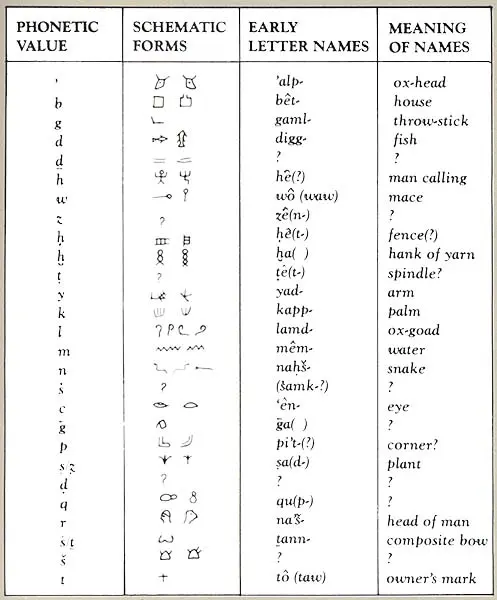
The invention of the alphabet was not a single moment of genius but a gradual evolution of writing systems. The earliest precursors, known as Proto-Sinaitic or Proto-Canaanite script, appeared in the Sinai Peninsula and the Levant. Semitic-speaking laborers, likely influenced by Egyptian hieroglyphics, began using a limited set of signs to represent specific sounds rather than entire words or concepts. This shift from logosyllabic systems, which required hundreds of characters, to a phonetic system was a revolutionary leap in literacy.
While the Phoenicians did not invent the concept of phonetic writing from scratch, they were the primary architects of its success. By the 11th century BCE, they had standardized a 22-letter script that was efficient for trade and record-keeping across the Mediterranean. Because the Phoenicians were master mariners and merchants, their script spread rapidly to neighboring cultures. This system served as the direct ancestor to nearly all modern alphabetic writing, including Greek, Latin, Arabic, and Hebrew.
How did the alphabet evolve from hieroglyphs?
The process of creating an alphabet involved a method called the acrophonic principle. In this system, the name of a character began with the sound it represented. For example, the symbol for an ox head, which was "alp" in Semitic languages, became the letter representing the "a" sound. This allowed for a much smaller, more flexible set of characters that could be learned by non-scribes.
The transition from complex symbols to a simple alphabet followed these general stages:
- Pictographic representation: Using a picture of an object to represent the object itself.
- Ideographic shift: Using the picture to represent a related concept or idea.
- Phonetic abstraction: Using the symbol to represent only the initial sound of the word, eventually discarding the original pictorial meaning.
- Standardization: Simplifying the shapes into consistent, easily recognizable lines that could be carved into stone or scratched into clay.
Why was the alphabet a turning point for history?
Before the invention of the alphabet, writing was the exclusive domain of highly trained scribes who spent years memorizing thousands of complex characters. This created a significant barrier to entry, effectively keeping knowledge and power concentrated in the hands of a small elite. The alphabet democratized information by making literacy accessible to a much broader segment of the population, including merchants and administrators.
This shift enabled the rapid expansion of commerce, law, and literature. When writing became easier to learn, it became easier to record contracts, document history, and transmit ideas across vast distances. The ability to write down spoken language precisely allowed for the development of complex bureaucracies and the preservation of cultural narratives that might otherwise have been lost to oral tradition. Without this fundamental change in how we encode speech, the development of modern civilization would have been significantly delayed.
Common mistakes when studying the history of writing
A frequent error is assuming that the alphabet was invented by a single person in a single location. In reality, the development was a collaborative, cross-cultural process spanning several centuries. It is also a mistake to view the alphabet as a static invention; it has undergone constant refinement, with different cultures adding vowels, changing orientations, or adapting shapes to fit their specific linguistic needs.
Another common misconception is that the Phoenician alphabet contained vowels. The early Semitic scripts were abjads, meaning they primarily represented consonants, leaving the reader to infer the vowels based on context. It was not until the Greeks adopted the Phoenician system around the 8th century BCE that vowels were explicitly introduced as distinct letters. When researching this topic, keep these distinctions in mind to avoid confusing the original consonantal systems with the later, more complete phonetic alphabets used in Europe today.
How to trace the alphabet to modern letters
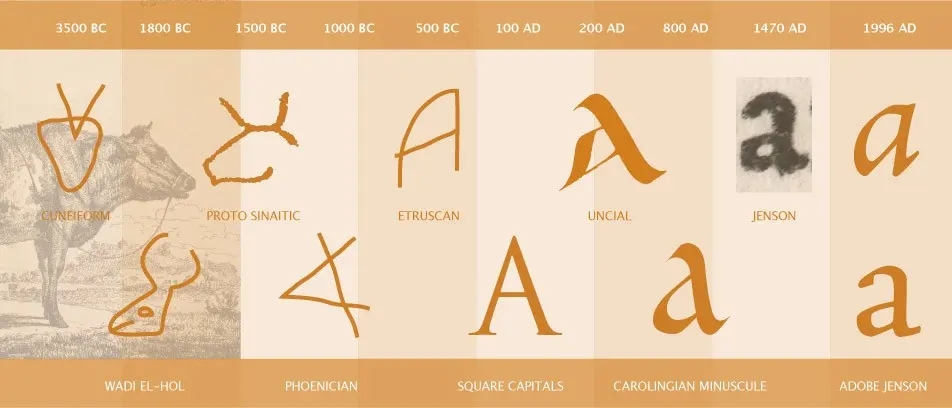
If you want to see the connection between ancient symbols and modern letters, you can follow the lineage of specific characters. The letter "A," for instance, can be traced back to the Phoenician "aleph," which was turned upside down to become the Greek "alpha." Similarly, the letter "B" evolved from the Phoenician "beth," which represented a house. By looking at these historical transitions, one can see how the shapes were simplified over millennia.
To explore these connections, follow these steps:
- Identify a letter in the modern Latin alphabet.
- Research its Phoenician or Proto-Sinaitic equivalent.
- Observe how the shape was rotated or stylized over time to suit different writing tools, such as reed pens or chisels.
- Compare the phonetic value in the original language to its modern usage.
By following this lineage, you will see that our modern writing system is a direct legacy of the ancient Mediterranean trade networks. Every time you write a sentence, you are utilizing a technology that has been refined through thousands of years of human interaction and adaptation.
Key facts
- The alphabet was invented by Semitic-speaking workers in Egypt around 1800 BCE.
- These early innovators adapted Egyptian hieroglyphs to represent individual consonant sounds.
- This system, known as Proto-Sinaitic, simplified writing for non-scribes by using only about 30 signs.
- The Phoenicians later refined this script into a 22-letter system around 1050 BCE.
- Phoenician traders spread the alphabet across the Mediterranean, influencing Greek and Aramaic scripts.
- To trace alphabetic evolution, look for the shift from logograms, which represent whole words, to phonograms, which represent sounds.
The bottom line
The invention of the alphabet was a transformative leap in human communication, shifting from complex, elite-controlled symbols to a democratic, phonetic system. By isolating individual sounds, Semitic workers created a versatile tool that enabled widespread literacy. This innovation traveled through Phoenician, Greek, and Roman cultures, eventually forming the foundation for the written languages that define our modern global society and facilitate the exchange of complex ideas.
People also ask
Did the Phoenicians invent the alphabet?
While the Phoenicians are often credited with the alphabet, they actually refined and popularized an earlier system. They streamlined the Proto-Sinaitic script into a practical, standardized tool for maritime trade.
How did the alphabet change from the original version?
The original Semitic script lacked vowels, representing only consonants. The Greeks later added dedicated letters for vowel sounds, creating the first true phonetic alphabet that mirrors modern Western systems.
Why were hieroglyphs abandoned for an alphabet?
Hieroglyphs were complex, requiring years of training to master hundreds of symbols. An alphabet allowed common workers to record information quickly using a small, manageable set of characters.
What is the difference between an alphabet and a syllabary?
An alphabet assigns a character to a single consonant or vowel sound. A syllabary, such as Japanese Katakana, uses characters to represent entire syllables consisting of a consonant and a vowel.
How did the alphabet reach the Western world?
The Greeks adopted the Phoenician script and passed it to the Etruscans in Italy. The Romans then adapted the Etruscan version to create the Latin alphabet, which is used by most Western languages today.
Are all writing systems alphabets?
No, many systems are logographic or logosyllabic. For example, Chinese characters represent concepts or words rather than individual sounds, making them fundamentally different from alphabetic systems.
This answer was created with the help of AI research tools and reference sources. Spotted an error? Let us know — we correct mistakes quickly. See our editorial policy.