Who invented the escalator?
Short answer
The escalator was not invented by a single person but evolved through several patents. Nathan Ames received the first patent for a "revolving stairs" design in 1859, while Jesse Reno built the first functional commercial unit in 1891. Charles Seeberger later coined the term "escalator" for the Otis Elevator Company in 1900.
On this page
Who actually invented the escalator?
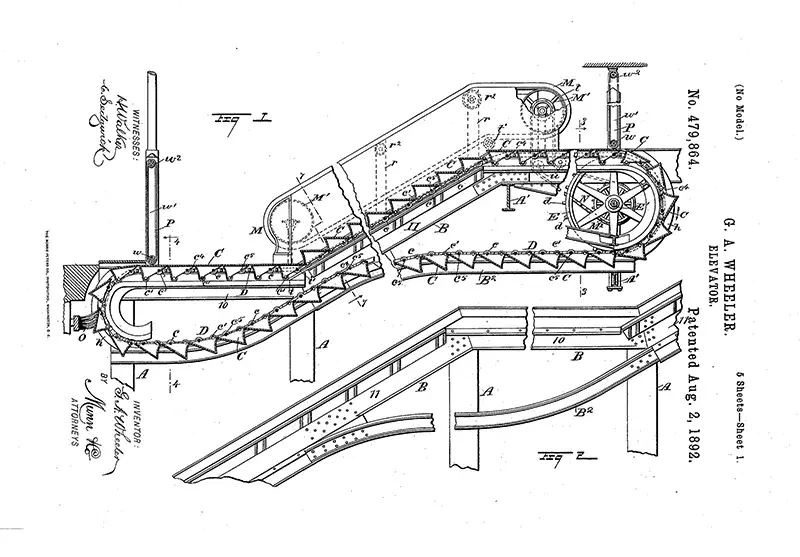
The history of the escalator is a narrative of incremental innovation rather than a singular "eureka" moment. In 1859, Nathan Ames patented a design for a revolving staircase, though he never built a working prototype. His concept relied on a continuous loop of steps, which laid the theoretical foundation for modern vertical transportation.
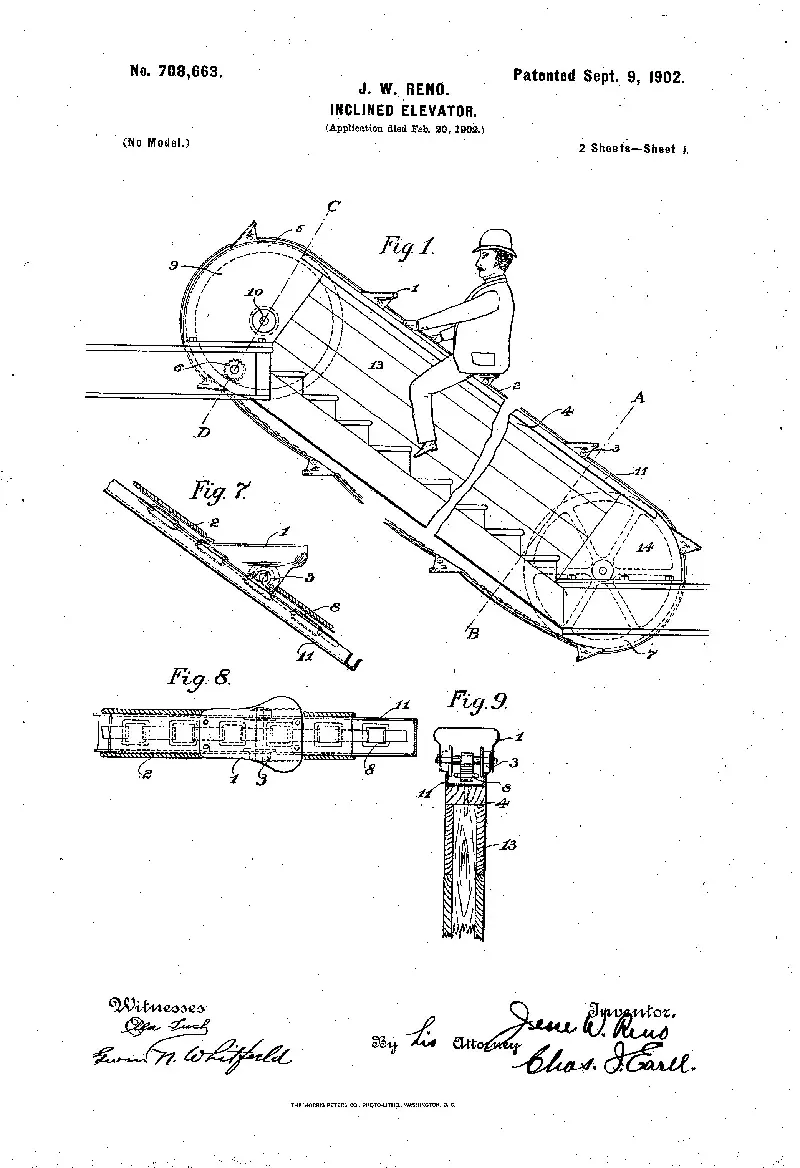
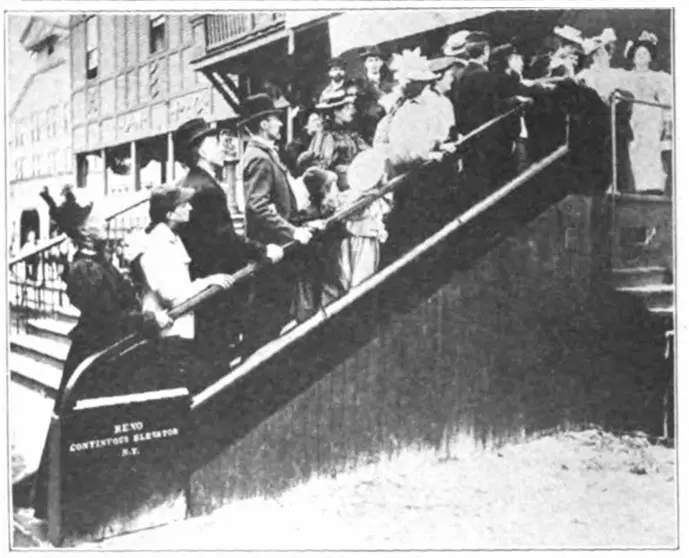
Decades later, Jesse Reno successfully installed the first working "inclined elevator" at Coney Island in 1891. His design featured a moving belt with cleats rather than individual steps, creating a steep, conveyor-like experience for amusement park visitors. While these early versions were rudimentary, they proved that the public was willing to embrace mechanized movement between floors.
How does an escalator work?
An escalator functions as a chain of individual, interlocking steps driven by a heavy-duty electric motor. These steps are connected to a continuous loop of chain that travels along a track system, ensuring they remain horizontal while moving upward or downward. As the steps reach the top or bottom, they disappear into a comb plate, which prevents debris from entering the internal machinery.
The system is supported by a truss structure that houses the motor, gears, and safety mechanisms. The handrails move at the same speed as the steps, powered by a separate drive system synchronized with the main chain. This synchronization is critical for passenger safety, as it allows users to maintain their balance while transitioning between the moving stairs and the stationary floor.
What are the key safety features?
Modern escalators are equipped with sophisticated safety systems designed to prevent accidents and mechanical failures. If an obstruction is detected or a chain breaks, the unit automatically triggers an emergency stop to prevent injuries. These systems are tested rigorously to ensure they can carry thousands of passengers daily without incident.
To ensure your own safety when riding, follow these standard protocols:
- Always stand in the center of the step to avoid contact with the side skirts.
- Hold the handrail firmly at all times to maintain stability.
- Pick up your feet when approaching the exit to avoid tripping on the comb plate.
- Keep loose clothing, shoelaces, and long hair away from the edges where the steps meet the side panels.
Common mistakes when using escalators
Many passengers inadvertently create hazards by failing to observe basic etiquette and safety rules. A frequent error is standing on the left side of the escalator in regions where the "stand right, walk left" rule is in effect. This blocks the path for those in a hurry, which can lead to congestion at the landings and potential collisions.
Another common mistake involves improper loading and unloading techniques. Some users attempt to jump onto the escalator or run off at the end, which significantly increases the risk of a fall. Parents should also be particularly cautious with young children, as small feet can easily get caught in the gaps between steps or near the side skirts.
- Do not allow children to sit or play on the steps.
- Never bring strollers, wheelchairs, or heavy luggage onto an escalator.
- Avoid leaning over the handrail or looking down at the moving steps for extended periods.
- Always face forward and remain alert until you have completely cleared the landing area.
Why did the design change over time?
The transition from Reno’s conveyor-style belt to the modern step-based escalator was driven by the need for comfort and accessibility. Charles Seeberger, working with the Otis Elevator Company, refined the design to include horizontal steps that provided a more natural walking experience. This evolution made the technology suitable for department stores, subway stations, and large public venues.
Materials also changed significantly throughout the 20th century to improve durability and fire resistance. Early wooden steps were eventually replaced by aluminum and steel, which reduced maintenance costs and enhanced structural integrity. Today, sensors and microprocessors monitor the speed and load of the escalator in real time, allowing for energy-efficient operation that slows the unit down when no passengers are detected. This ongoing refinement ensures that the escalator remains an essential component of modern urban infrastructure, balancing high-capacity transport with user safety and mechanical reliability.
Key facts
- Nathan Ames received the first patent for a "revolving stairs" design in 1859, though he never built a functional prototype.
- Jesse Reno installed the first operating escalator, called an "inclined elevator," at Coney Island in 1896.
- Charles Seeberger coined the term "escalator" in 1900, combining the Latin word scala (steps) with the word "elevator."
- The Otis Elevator Company purchased Seeberger’s design and began mass-producing escalators for commercial use in the early 20th century.
- Always stand on the right side of an escalator to allow others to pass on the left, which is a standard safety and etiquette practice.
- Never walk on a moving escalator, as sudden stops or mechanical failures can easily cause riders to lose their balance and fall.
The bottom line
While Nathan Ames patented the initial concept in 1859, the practical evolution of the escalator was driven by pioneers like Jesse Reno and Charles Seeberger. Their innovations transformed urban transit, allowing for the efficient movement of large crowds in department stores and subway systems. Today, these machines remain essential infrastructure, provided that passengers follow basic safety protocols to avoid accidents during their daily vertical commute.
People also ask
How does an escalator work?
An escalator uses a motor-driven chain system to pull a continuous loop of steps along a metal track. The steps remain horizontal as they move, guided by rollers that travel through a concealed internal rail system.
Are escalators faster than stairs?
Escalators typically move at a speed of about 100 to 150 feet per minute. While they are faster than walking up a long flight of stairs, they are primarily designed for efficiency and crowd management rather than raw speed.
Why do escalators have brushes on the sides?
The brushes along the edges of the steps are safety features designed to keep loose clothing, shoelaces, and footwear away from the gap between the moving steps and the stationary side panels. They also serve as a tactile warning to keep feet centered.
Can escalators be reversed?
Yes, most modern escalators can be set to run in either direction depending on traffic flow requirements. Operators often change the direction to accommodate peak hours, such as moving crowds toward exits at the end of a workday.
What happens if an escalator chain breaks?
Modern escalators are equipped with automatic braking systems that engage immediately if a drive chain snaps or the speed becomes irregular. These safety brakes prevent the stairs from collapsing or accelerating out of control.
Why are escalator steps made of metal?
Metal, typically aluminum or steel, provides the necessary structural strength to support the weight of multiple passengers simultaneously. These materials are also durable, fire-resistant, and easy to maintain in high-traffic public environments.
This answer was created with the help of AI research tools and reference sources. Spotted an error? Let us know — we correct mistakes quickly. See our editorial policy.