What is Prague known for?
Short answer
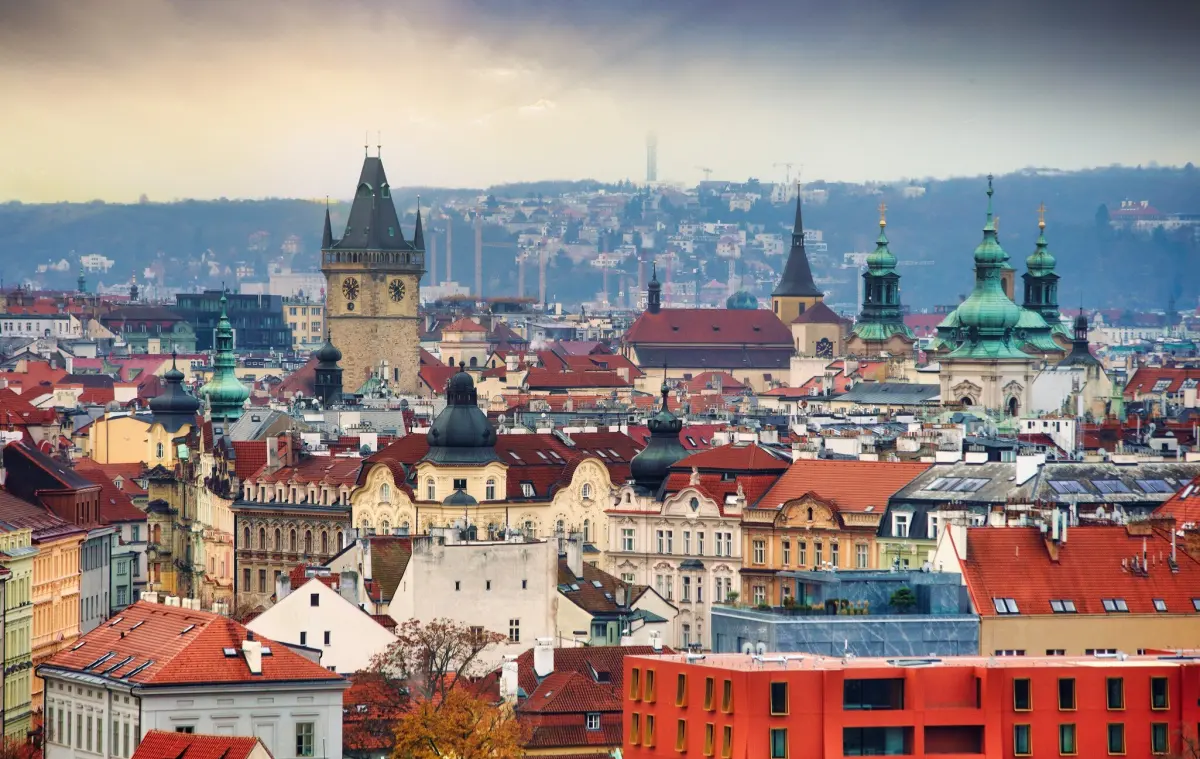
Prague is world-renowned for its remarkably preserved medieval architecture, earning it the nickname "The City of a Hundred Spires." As the capital of the Czech Republic, it serves as a global cultural hub, celebrated for its historic Old Town, iconic Charles Bridge, massive castle complex, and vibrant beer culture.
On this page
Why is Prague called the City of a Hundred Spires?
The nickname reflects the city's unique skyline, which features a dense concentration of church towers, domes, and steeples spanning over a millennium of architectural styles. Walking through the historic center, visitors encounter a seamless blend of Romanesque, Gothic, Renaissance, and Baroque designs. This architectural diversity exists because Prague largely escaped the widespread destruction that leveled many other European capitals during the World Wars.
The sheer volume of spires is a testament to the city's deep religious history and its status as a former seat of the Holy Roman Empire. Today, these structures serve as landmarks that help travelers navigate the winding, cobblestone streets of the central districts. Whether viewed from the riverbanks or the high vantage points of Petřín Hill, the skyline remains one of the most photographed and recognizable urban vistas in the world.
What are the must-see landmarks in Prague?
Prague offers an abundance of historical sites, but several locations are essential for any first-time visitor. The Prague Castle complex, founded in the 9th century, holds the Guinness World Record for the largest coherent castle area in the world, covering nearly 70,000 square meters. Below the castle, the Charles Bridge serves as the city’s most famous pedestrian artery, lined with 30 statues of saints.
To make the most of your sightseeing, consider visiting these primary locations:
- Prague Castle: Explore St. Vitus Cathedral and the Golden Lane.
- Old Town Square: Witness the hourly performance of the 600-year-old Astronomical Clock.
- Charles Bridge: Visit at sunrise to avoid the massive crowds that gather by midday.
- Jewish Quarter: Tour the historic synagogues and the Old Jewish Cemetery.
- Petřín Lookout Tower: Enjoy panoramic views of the city from this miniature Eiffel Tower replica.
How do I navigate the Prague public transport system?
Prague boasts one of the most efficient and affordable public transportation networks in Europe. The system integrates trams, buses, a three-line metro, and even river ferries into a single, seamless operation. Most visitors find that the tram network is the most convenient way to travel, as it reaches almost every major tourist site while providing a scenic view of the city’s architecture along the way.
Following these steps will ensure you use the system correctly:
- Purchase a ticket from a yellow machine, a convenience store, or the "PID Lítačka" mobile application.
- Validate your paper ticket in the yellow machine immediately upon boarding your first vehicle.
- Keep your ticket for the duration of your journey, as plainclothes inspectors frequently check for compliance.
- Use the metro for long-distance cross-town travel, as it is significantly faster than trams or buses.
- Note that tickets are time-based, meaning you can transfer between different modes of transport as long as your ticket remains valid.
What is the best way to experience Czech beer culture?
Prague is the heart of a nation that consumes more beer per capita than any other country in the world. The local brewing tradition is centered on the Pilsner style, which originated in the nearby city of Plzeň in 1842. Visitors will find that beer is often cheaper than bottled water in many restaurants, reflecting its status as a staple of the local diet.
When ordering, look for "tankové pivo," which refers to beer served directly from pressurized tanks rather than kegs, ensuring maximum freshness. It is customary to tip by rounding up the bill, but avoid leaving large tips, as this is not standard practice. Many traditional pubs serve hearty Czech comfort food, such as goulash with bread dumplings or fried cheese, which are designed to pair perfectly with the local lagers.
Common mistakes when visiting Prague
Many travelers fall into traps that can detract from their experience or lead to unnecessary expenses. One of the most frequent errors is relying on street-side currency exchange kiosks, which often charge exorbitant fees and offer poor rates. Always use official bank ATMs to withdraw local currency, the Czech koruna, and avoid using "Euronet" branded machines, which are known for high transaction charges.
Another common mistake involves dining in the immediate vicinity of the Old Town Square. These establishments are often overpriced and prioritize tourist volume over culinary quality. Instead, walk a few blocks into the residential neighborhoods of Vinohrady or Letná to find authentic restaurants where locals dine. Finally, be mindful of the cobblestones; while they contribute to the city's charm, they are notoriously difficult to walk on in high heels or thin-soled shoes. Wearing sturdy, comfortable footwear is essential for navigating the historic center safely and comfortably throughout your entire stay.
Key facts
- Prague is known as the "City of a Hundred Spires" due to its dense concentration of historic church steeples and towers.
- The Charles Bridge, commissioned by King Charles IV in 1357, is a pedestrian stone bridge adorned with 30 statues of saints.
- Prague Castle is the largest ancient castle complex in the world, covering an area of over 70,000 square meters.
- The Astronomical Clock, installed in 1410, is the third-oldest astronomical clock in the world and the oldest still in operation.
- Avoid changing money at street kiosks; use official bank ATMs or credit cards to avoid high commission fees and poor exchange rates.
- Utilize the city's extensive tram system, which is widely considered one of the most efficient and scenic ways to navigate the historic center.
The bottom line
Prague stands as a premier European destination, celebrated for its remarkably preserved medieval architecture and rich cultural history. By exploring landmarks like the Charles Bridge and the expansive Prague Castle, visitors gain insight into the heart of Central Europe. With efficient public transport and a welcoming atmosphere, the city offers an accessible experience for those looking to immerse themselves in centuries of art, music, and tradition.
People also ask
Is it safe to drink tap water in Prague?
Yes, the tap water in Prague is perfectly safe to drink and meets all European Union quality standards. Most locals and tourists drink it directly from the tap without any issues.
What is the best time of year to visit Prague?
The best times to visit are during the shoulder seasons of late spring (May and June) or early autumn (September and October). These months offer pleasant weather and fewer crowds than the peak summer season.
Do I need to learn Czech to get around the city?
You do not need to speak Czech, as English is widely spoken in hotels, restaurants, and tourist areas. Learning a few basic phrases like "Dobrý den" (Good day) is appreciated by locals but is not required.
Are there any specific dress codes for visiting churches?
When visiting cathedrals or churches, it is respectful to dress modestly by covering your shoulders and knees. While not strictly enforced everywhere, it is a common courtesy in places of worship.
How do I validate my public transport ticket?
If you purchase a paper ticket, you must validate it by inserting it into the yellow machines found on trams or at metro station entrances. Failure to validate your ticket can result in a significant fine during random inspections.
Is Prague an expensive city for tourists?
Prague is generally more affordable than many Western European capitals like Paris or London. While prices in the historic center are higher, you can find excellent value by eating and shopping in neighborhoods outside the main tourist zones.
This answer was created with the help of AI research tools and reference sources. Spotted an error? Let us know — we correct mistakes quickly. See our editorial policy.