What is Canadian Confederation?
Short answer
Canadian Confederation was the process by which the British colonies of Canada, Nova Scotia, and New Brunswick were united into the Dominion of Canada on July 1, 1867. This political union established a federal system of government, creating a new nation under the British North America Act and laying the foundation for modern Canada.
On this page
Why did Canadian Confederation happen?
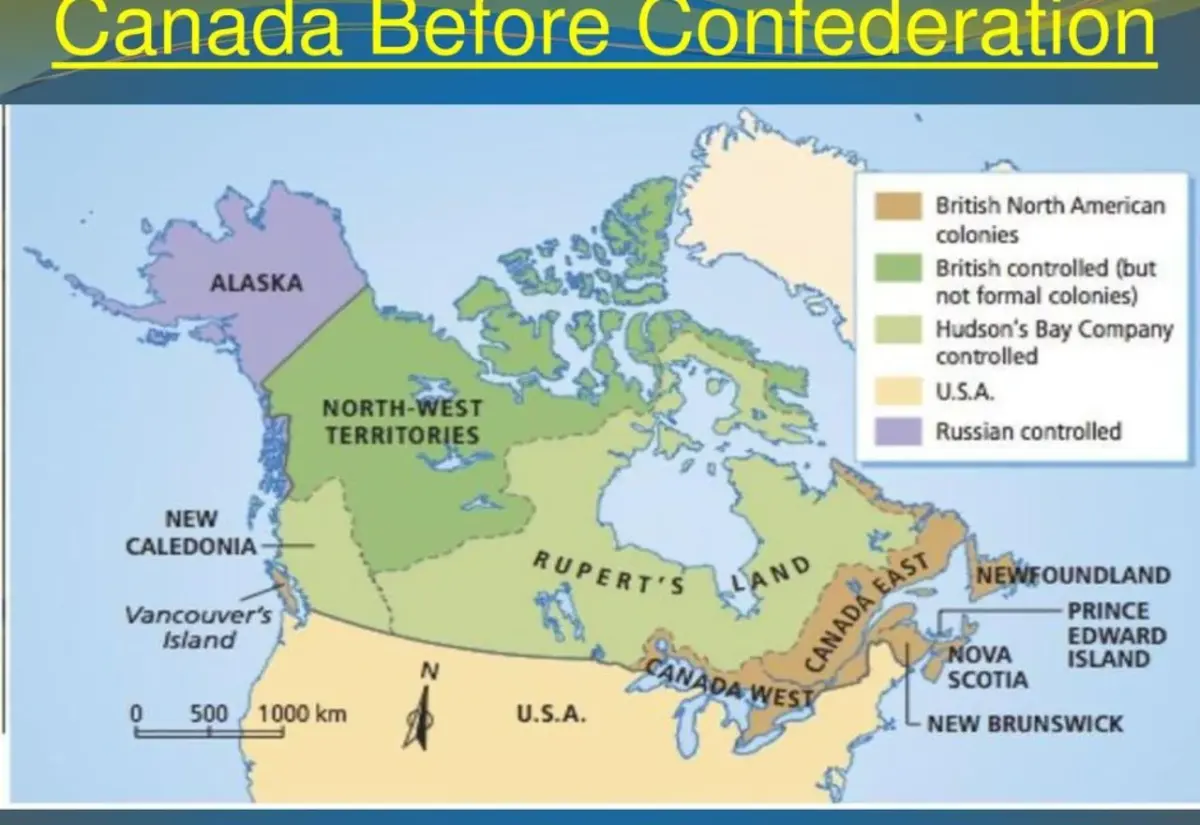
By the 1860s, the British North American colonies faced significant political and economic instability. The Province of Canada, comprising Canada West and Canada East, was plagued by legislative gridlock, as the two regions struggled to agree on governance. Leaders like John A. Macdonald and George-Étienne Cartier realized that a federal union could resolve these internal tensions while fostering economic growth through a shared market and a transcontinental railway.
External pressures also played a critical role in the movement toward unity. The United States had recently concluded its Civil War, leaving a massive, battle-hardened army on the border and fueling fears of American expansionism. Additionally, Britain was increasingly eager to reduce its administrative and military costs in the colonies. Confederation offered a pragmatic solution: a stronger, unified entity capable of self-defense and economic self-sufficiency, while still maintaining a formal constitutional link to the British Crown.
How was the process of Confederation organized?
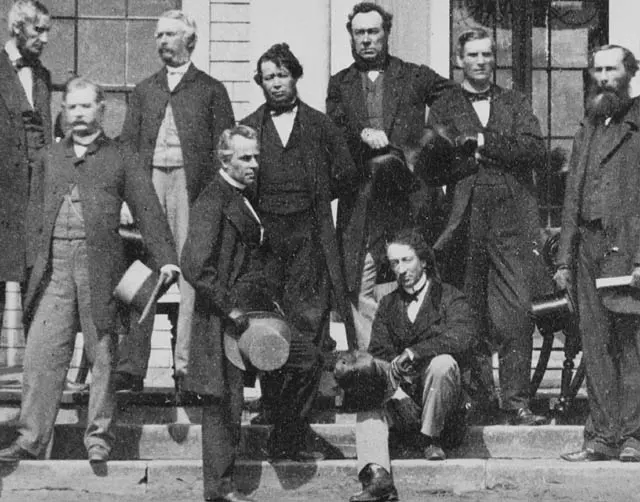
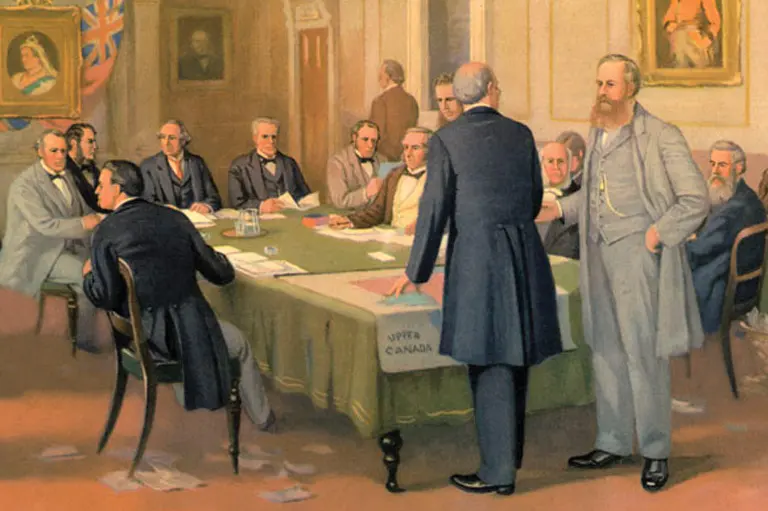
The path to nationhood was paved through a series of formal diplomatic gatherings known as the Confederation Conferences. These meetings allowed colonial leaders to negotiate the division of powers between the federal government and the provinces. The process followed a structured sequence of political consensus-building:
- The Charlottetown Conference (1864): Maritime leaders and Canadian representatives met to discuss the possibility of a broader union.
- The Quebec Conference (1864): Delegates drafted the 72 Resolutions, which formed the blueprint for the new federal constitution.
- The London Conference (1866): Colonial leaders traveled to England to finalize the terms with the British government.
- The British North America Act (1867): The British Parliament passed the act, officially creating the Dominion of Canada on July 1.
These negotiations were not universally popular, as many colonists feared losing their local autonomy or cultural identity. The process required significant compromise, particularly regarding the rights of French-speaking Canadians and the financial obligations of the smaller Maritime colonies.
What are the key features of the Canadian government?
Confederation established a constitutional monarchy that combined British parliamentary traditions with a federal structure. Power is divided between the federal government in Ottawa and the provincial governments, ensuring that local concerns are addressed while national interests remain under central authority. The system is designed to balance regional representation with national unity.
The structure of the government includes several essential components:
- The Sovereign: Represented by the Governor General, serving as the formal head of state.
- The House of Commons: An elected body where members represent specific geographic districts across the country.
- The Senate: An appointed chamber intended to provide "sober second thought" to legislation and represent regional interests.
- The Judiciary: An independent court system tasked with interpreting the constitution and upholding the rule of law.
This division of power was intentionally designed to prevent the centralization of authority seen in the United States, which many Canadian founders viewed as a contributing factor to the American Civil War.
How did the map of Canada expand after 1867?
The original 1867 union included only four provinces: Ontario, Quebec, Nova Scotia, and New Brunswick. However, the founders envisioned a country that would stretch from the Atlantic to the Pacific. Over the following decades, the federal government negotiated the entry of other territories and colonies to complete the map of the modern nation.
The expansion occurred in several distinct stages:
- Manitoba (1870): Entered after the Red River Resistance and the negotiation of the Manitoba Act.
- British Columbia (1871): Joined on the condition that the federal government build a railway to the Pacific coast.
- Prince Edward Island (1873): Joined after the federal government agreed to assume the colony's railway debts.
- Alberta and Saskatchewan (1905): Created from the Northwest Territories to accommodate rapid settlement.
- Newfoundland and Labrador (1949): The final province to join, following a narrow vote in a provincial referendum.
This steady growth transformed the Dominion from a small collection of eastern colonies into a massive, transcontinental nation.
Common mistakes when studying Canadian Confederation
A frequent error is assuming that Confederation was a popular revolution driven by the public. In reality, it was a top-down project led by political elites, and in many regions, such as Nova Scotia, there was significant public opposition to the union. Assuming that the 1867 agreement was a final, static document is another mistake; the constitution has been amended many times to reflect changing social and political realities.
When learning about this period, avoid these common misconceptions:
- Believing that all colonies joined simultaneously; the process was staggered over nearly a century.
- Overlooking the role of Indigenous peoples, who were largely excluded from the negotiations despite the profound impact the expansion had on their lands and sovereignty.
- Assuming the British North America Act granted full independence; Canada did not achieve complete control over its foreign policy and constitutional amendments until much later in the 20th century.
By recognizing these nuances, one gains a more accurate understanding of how Canada evolved into the diverse and complex federation that exists today.
Key facts
- Confederation occurred on July 1, 1867, through the British North America Act.
- The process united the Province of Canada, Nova Scotia, and New Brunswick into the Dominion of Canada.
- Sir John A. Macdonald served as the first Prime Minister of the new nation.
- The British Parliament passed the act, granting Canada self-governing status within the British Empire.
- Avoid confusing Confederation with full independence, as Canada did not gain complete control over its foreign policy until 1931.
- Research specific provincial entry dates, as the original four provinces were joined by others like British Columbia in 1871 and Newfoundland in 1949.
The bottom line
Canadian Confederation was the transformative political process that united separate British colonies into a single federal dominion. By establishing a central government while preserving provincial authority, the founders created a framework for national expansion and internal stability. Understanding this history is essential for grasping how Canada evolved from a collection of fragmented territories into the diverse, self-governing, and sovereign nation that exists today.
People also ask
Why did the colonies decide to unite in 1867?
The colonies sought economic growth through a transcontinental railway and feared potential military expansion from the United States following the American Civil War.
Who were the Fathers of Confederation?
These were the 36 political leaders who attended conferences in Charlottetown, Quebec, and London to negotiate the terms of the union.
Is Canada a republic or a constitutional monarchy?
Canada is a constitutional monarchy, meaning it retains the British monarch as the official head of state while operating under a parliamentary democracy.
Did all Canadian provinces join at the same time?
No, the process was gradual; only four provinces formed the original union, while others joined over the subsequent 100 years.
What is the significance of the British North America Act?
This act, now known as the Constitution Act, 1867, serves as the foundational document that defined the division of powers between federal and provincial governments.
How can I learn more about my province’s specific entry into Confederation?
Consult the official government archives or the Canadian Encyclopedia, which provide detailed timelines and historical documents regarding each province's unique journey into the union.
This answer was created with the help of AI research tools and reference sources. Spotted an error? Let us know — we correct mistakes quickly. See our editorial policy.