What was the French Revolution?
Short answer
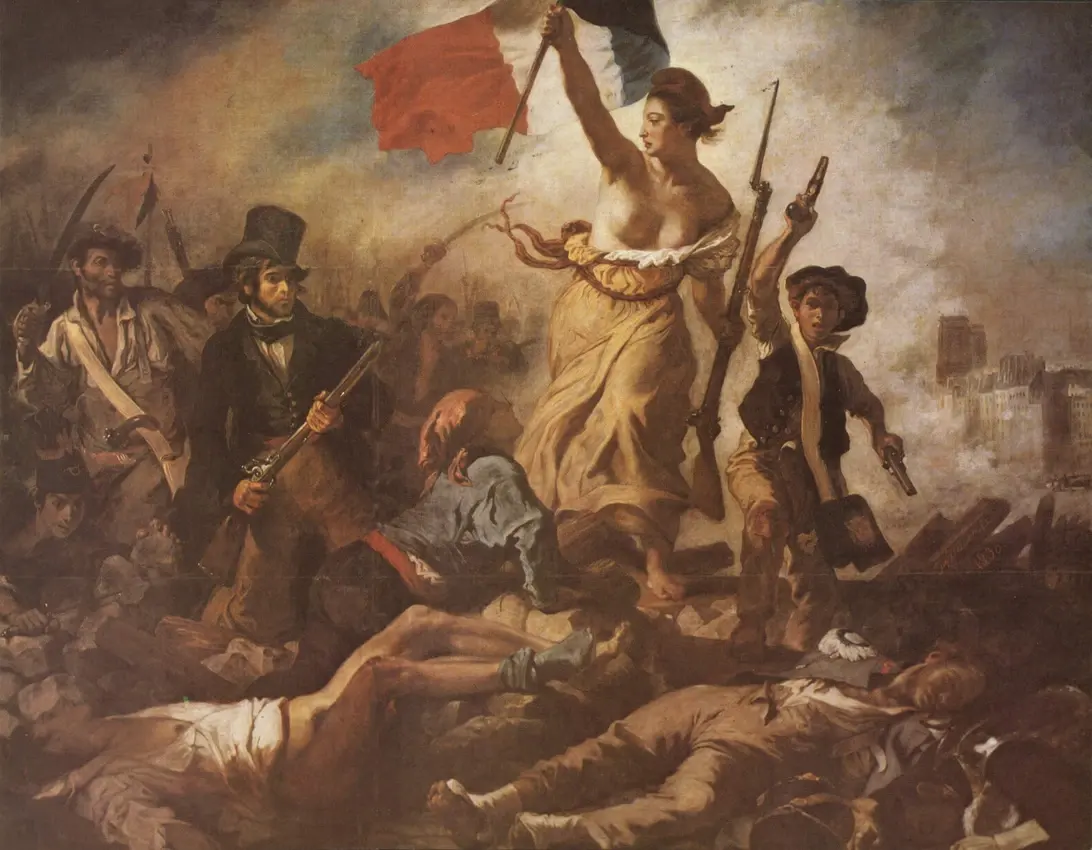
The French Revolution was a transformative period of social and political upheaval in France from 1789 to 1799. It dismantled the absolute monarchy, abolished the feudal system, and established principles of citizenship and inalienable rights. This era fundamentally reshaped modern governance, ending centuries of aristocratic privilege and fueling the rise of democracy.
On this page
Why did the French Revolution happen?
The revolution was primarily triggered by a severe financial crisis, exacerbated by France’s involvement in the American Revolutionary War and poor harvests. King Louis XVI faced a bankrupt treasury, leading him to convene the Estates-General in May 1789 to propose new taxes. This assembly represented the clergy, the nobility, and the commoners, known as the Third Estate.
The Third Estate, representing 98% of the population, grew frustrated with the voting system that favored the elite. They broke away to form the National Assembly, signaling the end of absolute royal authority. Widespread famine and resentment toward the lavish lifestyles of the monarchy at Versailles pushed the urban poor and peasantry toward open rebellion.
- The Enlightenment: Philosophers like Rousseau and Voltaire promoted ideas of equality and individual liberty.
- Economic hardship: The price of bread skyrocketed, leading to mass starvation.
- Taxation inequality: The nobility and clergy were largely exempt from taxes, placing the burden on the poor.
What were the key events of the revolution?
The revolution began in earnest on July 14, 1789, with the storming of the Bastille, a state prison that symbolized royal tyranny. Shortly after, the National Assembly issued the Declaration of the Rights of Man and of the Citizen. This document asserted that all men were born free and equal in rights, effectively ending the feudal order.
As the movement radicalized, the monarchy was eventually abolished, and France was declared a republic in 1792. King Louis XVI and Queen Marie Antoinette were executed by guillotine in 1793. This period, known as the Reign of Terror, saw the Committee of Public Safety, led by Maximilien Robespierre, execute thousands of perceived enemies of the revolution.
- 1789: The Tennis Court Oath and the storming of the Bastille.
- 1791: The royal family attempts to flee France but is captured at Varennes.
- 1793: The execution of Louis XVI marks the transition to a radical republic.
- 1794: The Thermidorian Reaction leads to the fall and execution of Robespierre.
Who were the major figures involved?
The revolution featured a wide array of personalities, ranging from idealistic reformers to ruthless political operators. King Louis XVI was a central figure whose indecision and resistance to change doomed his reign. His wife, Marie Antoinette, became a lightning rod for public hatred due to her perceived indifference to the suffering of the French people.
Maximilien Robespierre emerged as the most influential leader during the radical phase. Initially a defender of the poor, he became the architect of the Reign of Terror in his pursuit of a "Republic of Virtue." Napoleon Bonaparte, a brilliant military strategist, eventually rose through the ranks during the chaos, ultimately seizing power in 1799 and ending the revolutionary decade.
- Marquis de Lafayette: A hero of the American Revolution who helped draft the Declaration of the Rights of Man.
- Georges Danton: A powerful orator who helped organize the defense of France against foreign invaders.
- Jean-Paul Marat: A radical journalist whose inflammatory writings incited violence against the aristocracy.
Common mistakes when studying the French Revolution
Many students mistakenly assume the revolution was a single, unified event with a clear beginning and end. In reality, it was a series of overlapping conflicts involving different political factions, such as the moderate Girondins and the radical Jacobins. Failing to distinguish between these groups leads to a misunderstanding of how the revolution shifted from calls for a constitutional monarchy to the total destruction of the old regime.
Another common error is viewing the revolution solely as an internal French affair. The conflict triggered a series of wars across Europe as neighboring monarchies feared the spread of revolutionary ideals. These wars were essential to the revolution's progression, as they created the conditions that allowed military leaders like Napoleon to gain immense political influence and eventually dismantle the republic.
- Do not simplify the causes as just "taxes"; the cultural shift toward secularism and rights was equally vital.
- Avoid assuming the guillotine was used only on royals; most victims were commoners and political rivals.
- Remember that the revolution did not lead immediately to stable democracy, but rather to a military dictatorship.
How does the revolution impact us today?
The legacy of the French Revolution is embedded in the political structures of most modern nations. The concepts of "liberty, equality, and fraternity" became the foundational pillars of democratic societies worldwide. The revolution proved that the power of the state resides in the people, not in a divinely appointed monarch, a concept that remains the bedrock of modern constitutional law.
Furthermore, the revolution pioneered the modern secular state, separating religious institutions from political governance. It also introduced the concept of universal human rights, which would later influence the development of international law and the United Nations. While the revolution was marked by extreme violence and instability, its long-term contribution was the birth of the modern citizen who possesses the legal right to participate in the shaping of their own government.
Key facts
- The French Revolution began in 1789 and lasted until 1799, fundamentally altering the course of modern history.
- King Louis XVI and his wife, Marie Antoinette, were executed by guillotine in 1793 for treason.
- The Declaration of the Rights of Man and of the Citizen, adopted in 1789, established the core revolutionary principles of "Liberty, Equality, Fraternity."
- The Reign of Terror, led by Maximilien Robespierre, resulted in the execution of approximately 17,000 people perceived as enemies of the revolution.
- To study the revolution effectively, focus on the shift from absolute monarchy to the rise of Napoleon Bonaparte’s military dictatorship.
- Avoid the common mistake of viewing the revolution as a single event; it was a decade-long series of shifting political factions and social upheavals.
The bottom line
The French Revolution was a transformative era that dismantled centuries of feudalism and absolute monarchy in favor of republican ideals. By challenging the divine right of kings, it established the foundation for modern democratic governance and human rights. While marred by extreme violence and political instability, its legacy continues to influence global political thought, emphasizing the power of collective action in demanding systemic social change.
People also ask
What caused the French Revolution?
The revolution was primarily triggered by a severe financial crisis, widespread famine, and deep resentment toward the rigid social hierarchy of the Ancien Régime. Enlightenment ideas regarding individual rights and the inefficiency of the monarchy further fueled public unrest.
What was the significance of the storming of the Bastille?
On July 14, 1789, Parisian revolutionaries seized the Bastille, a state prison that symbolized royal tyranny. This act served as a powerful flashpoint that signaled the collapse of royal authority and the beginning of the armed struggle.
Who were the Jacobins?
The Jacobins were a radical political group that dominated the National Convention during the most intense phase of the revolution. They advocated for a republic and were the primary architects of the Reign of Terror.
How did the revolution end?
The revolution concluded in 1799 when Napoleon Bonaparte staged a coup d'état, overthrowing the ineffective government known as the Directory. He eventually declared himself Emperor of the French, effectively ending the republican experiment.
What was the role of women in the French Revolution?
Women were active participants, notably during the Women's March on Versailles in 1789, which forced the royal family to return to Paris. Despite their contributions, they were largely excluded from formal political rights and the new legal codes.
Why was the guillotine used so extensively?
The guillotine was introduced as a "humane" and egalitarian method of execution intended to be swift and painless for all social classes. It became the iconic symbol of the revolution's violence during the state-sponsored purges.
This answer was created with the help of AI research tools and reference sources. Spotted an error? Let us know — we correct mistakes quickly. See our editorial policy.