How does an electric car work?
Short answer
Electric vehicles operate by using electricity stored in a high-voltage battery pack to power one or more electric motors. This energy is converted into mechanical motion, which turns the wheels. Unlike internal combustion engines, these vehicles produce no tailpipe emissions and rely on regenerative braking to recapture energy during deceleration.
On this page
How do electric car components work together?
An electric vehicle (EV) replaces the traditional engine, fuel tank, and exhaust system with a simplified drivetrain. The primary power source is a large lithium-ion battery pack, usually located along the vehicle's floor to lower the center of gravity. This battery sends direct current (DC) electricity to an inverter, which converts it into alternating current (AC) to drive the electric motor.
The motor then spins a transmission—often a single-speed gearbox—to deliver power directly to the wheels. Because electric motors provide maximum torque instantly, EVs offer rapid acceleration without the need for complex gear shifting. The entire system is managed by a sophisticated onboard computer that monitors temperature, energy flow, and battery health to ensure optimal performance and safety.
- Battery Pack: Stores electrical energy as chemical potential.
- Inverter: Converts DC from the battery to AC for the motor.
- Electric Motor: Uses electromagnetic fields to create rotational force.
- Drivetrain: Transfers power from the motor to the wheels.
How do you charge an electric car?
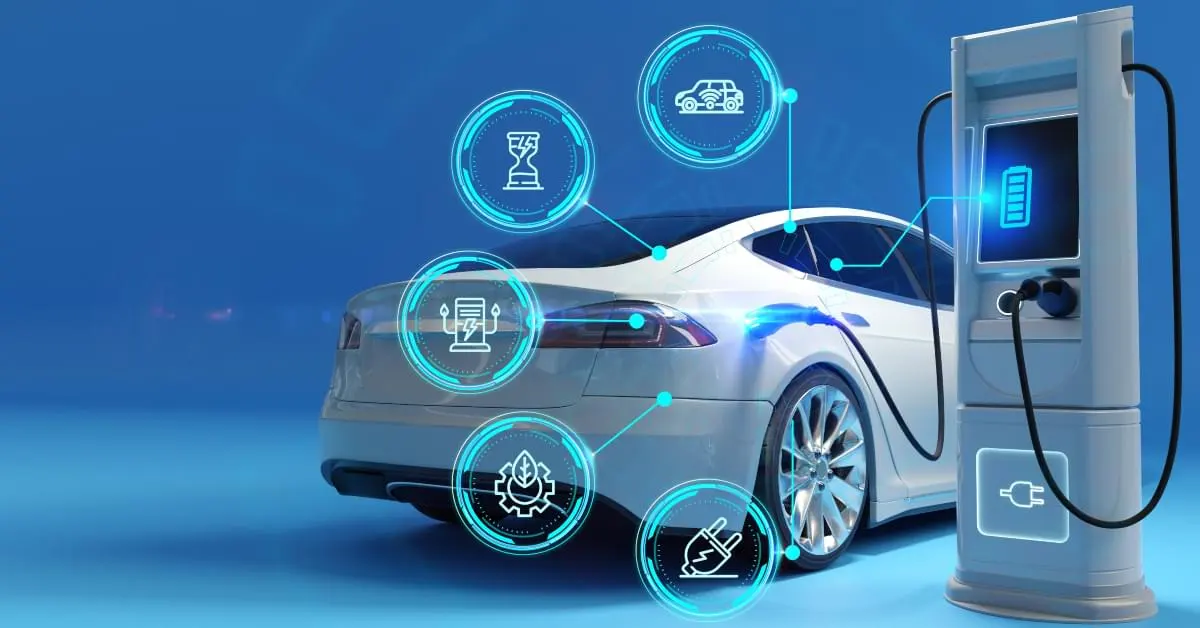
Charging an EV involves connecting the vehicle to an external power supply using a standardized charging cable. Most owners charge at home using a Level 1 or Level 2 charger, which replenishes the battery overnight. Level 1 uses a standard 120-volt household outlet, while Level 2 requires a 240-volt circuit, similar to those used for electric clothes dryers.
For long-distance travel, public DC fast chargers provide a high-voltage charge that can bring a battery from 10% to 80% capacity in 20 to 40 minutes. To charge effectively, follow these steps:
- Park your vehicle close enough to the charging station to avoid cable strain.
- Open the charging port door and insert the connector until it clicks securely.
- Authenticate the session via a mobile app or a credit card reader on the station.
- Monitor the dashboard or app to ensure the charging process has initiated.
How does regenerative braking work?
Regenerative braking is a feature that allows an electric vehicle to act as a generator when the driver lifts their foot off the accelerator. Instead of relying solely on friction brakes, the electric motor reverses its function, using the momentum of the moving wheels to create electricity. This energy is then sent back into the battery pack, extending the vehicle's range.
This process also provides a noticeable "braking" effect, often allowing for "one-pedal driving." In this mode, the vehicle slows down significantly just by easing off the accelerator, minimizing the need to use the physical brake pedal. This not only saves energy but also reduces wear on brake pads and rotors, leading to lower maintenance costs over the life of the vehicle.
What are common mistakes when owning an electric car?
Many new EV owners make the mistake of frequently charging their batteries to 100% or letting them drain to 0%. Lithium-ion batteries are most stable when kept between 20% and 80% charge for daily use. Regularly charging to full capacity can accelerate battery degradation over several years, potentially reducing the total range of the vehicle.
Another common error is failing to plan for cold weather, which significantly impacts range. Batteries lose efficiency in freezing temperatures, and the energy required to heat the cabin can drain the battery faster than expected. Always pre-condition your car while it is still plugged in during the winter; this warms the battery and the interior cabin using grid power instead of stored battery energy.
- Charging to 100% daily instead of 80%.
- Ignoring tire pressure, which impacts rolling resistance and range.
- Relying exclusively on fast chargers, which can stress the battery thermal management system.
- Forgetting to account for elevation changes on long road trips.
Why do electric cars require less maintenance?
Electric vehicles have significantly fewer moving parts than internal combustion engine vehicles. There are no spark plugs, timing belts, oil filters, or complex exhaust systems to replace or repair. This simplicity translates into fewer trips to the service center and less money spent on routine mechanical upkeep over the vehicle's lifespan.
The most frequent maintenance tasks for an EV are limited to checking tires, replacing cabin air filters, and topping off wiper fluid. While the battery and motor are highly reliable, the cooling system that prevents the battery from overheating must be monitored periodically. By avoiding the need for frequent oil changes and transmission fluid flushes, owners can save thousands of dollars in maintenance costs over the course of a decade.
Key facts
- Electric vehicles (EVs) use a battery pack to store electricity, which powers one or more electric motors to turn the wheels.
- Unlike internal combustion engines, EVs have no transmission, spark plugs, or exhaust systems, significantly reducing maintenance needs.
- Regenerative braking captures kinetic energy during deceleration, converting it back into electricity to recharge the battery while driving.
- Lithium-ion batteries are the industry standard, typically lasting between 10 to 20 years before requiring replacement or recycling.
- Charging speeds vary significantly; Level 1 uses a standard wall outlet, while Level 3 DC fast chargers can provide an 80% charge in 20-30 minutes.
- Avoid keeping your battery at 0% or 100% for extended periods, as this can accelerate chemical degradation and shorten the overall lifespan.
The bottom line
Electric vehicles represent a fundamental shift in automotive technology by replacing complex combustion engines with efficient electric motors and battery storage. By utilizing regenerative braking and home charging, owners can enjoy lower operational costs and reduced maintenance. While range and charging times remain key considerations, the simplicity of the powertrain and the environmental benefits make EVs a practical choice for modern drivers seeking efficiency and reliability.
People also ask
How far can an electric car travel on a single charge?
Most modern electric vehicles offer a range between 200 and 400 miles on a full charge. Real-world range fluctuates based on driving speed, climate control usage, and outdoor temperature.
Is it cheaper to charge an EV than to buy gasoline?
Yes, charging an electric vehicle is generally significantly cheaper than purchasing gasoline for a comparable distance. Electricity costs are more stable, and the efficiency of electric motors far exceeds that of combustion engines.
How long does it take to charge an electric car at home?
Using a Level 2 home charger, most EVs can reach a full charge overnight, typically taking 6 to 10 hours. Standard wall outlets are much slower, often requiring several days to fully replenish a depleted battery.
Do electric cars require less maintenance than gas cars?
Electric cars have fewer moving parts and do not require oil changes, timing belt replacements, or spark plug maintenance. Owners primarily need to monitor tire pressure, cabin air filters, and brake fluid.
What happens if an electric car runs out of power on the road?
If the battery reaches zero, the vehicle will stop, similar to running out of gas. Most EVs provide multiple warnings as the charge drops, and roadside assistance can often tow the vehicle to the nearest charging station.
Are electric vehicles safe in rain or through car washes?
Electric vehicles are designed with sealed battery packs and electrical components to ensure safety in wet conditions. They are as safe as, if not safer than, traditional vehicles when driving through heavy rain or using automatic car washes.
This answer was created with the help of AI research tools and reference sources. Spotted an error? Let us know — we correct mistakes quickly. See our editorial policy.