What is an electric circuit?
Short answer
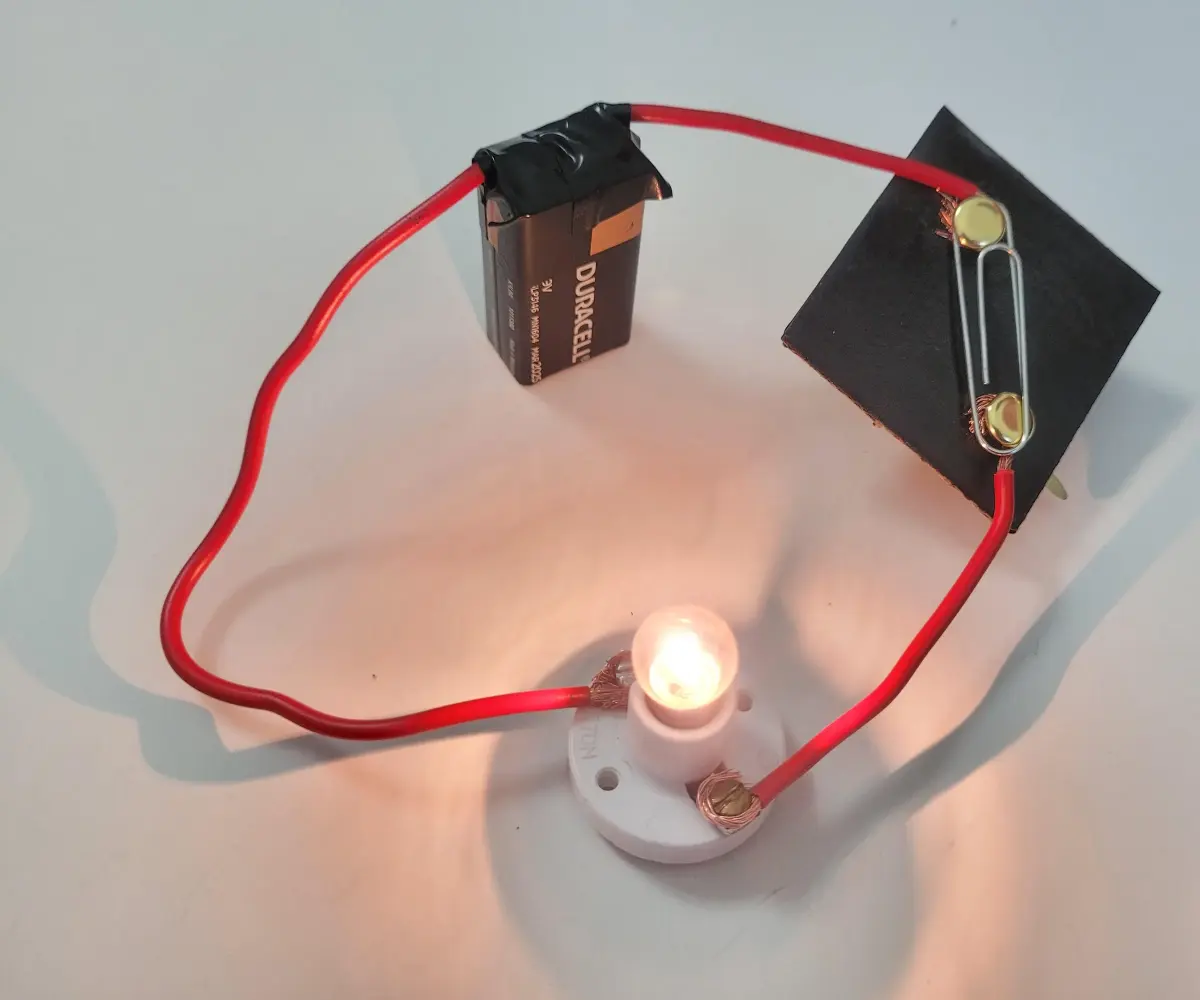
An electric circuit is a closed, continuous loop that allows electric charge to flow. It typically consists of a power source, conductive paths, and a load, such as a lightbulb or motor. When the path is complete, current moves through the components, enabling the device to perform work or produce energy.
On this page
How does an electric circuit work?
An electric circuit functions by providing a controlled path for electrons to move from a region of high electrical potential to one of lower potential. This movement, known as electric current, is measured in amperes. For a circuit to operate, it must form a complete loop, often called a closed circuit, which connects the positive and negative terminals of a power source. If there is a break in the path, such as an open switch or a severed wire, the circuit becomes "open," and the flow of electrons ceases immediately.
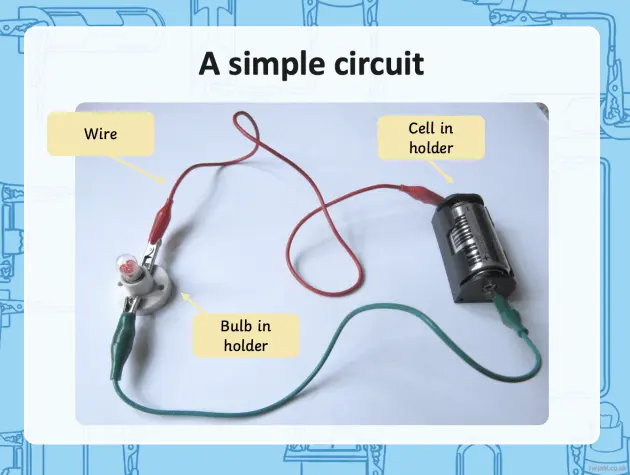
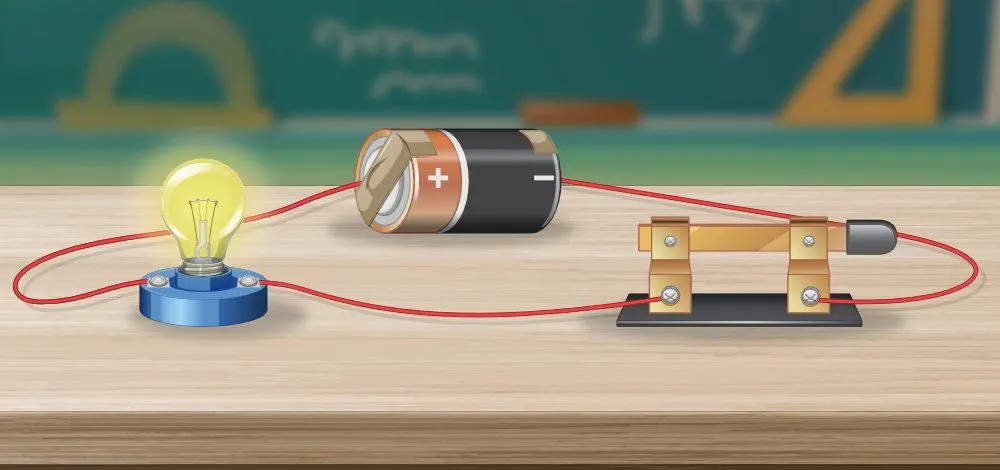
The fundamental components required for a basic circuit include a voltage source, such as a battery or power plant, and conductive wires usually made of copper. The load, which is the device consuming the energy, acts as a resistor that converts electrical energy into other forms like light, heat, or motion. Engineers use specific symbols to represent these parts in diagrams, ensuring that complex designs can be communicated clearly across the globe.
What are the different types of electric circuits?
Circuits are generally classified based on how their components are arranged relative to the power source. The two primary configurations are series circuits and parallel circuits, each offering distinct advantages for different electrical applications. Understanding these arrangements is essential for anyone working with electronics or household wiring.
- Series Circuit: Components are connected end-to-end in a single path. If one component fails, the entire circuit breaks.
- Parallel Circuit: Components are connected across multiple branches. If one branch fails, the others continue to function independently.
- Short Circuit: An unintended, low-resistance path that allows excessive current to flow, often leading to overheating or fires.
In a series circuit, the total voltage is divided among the components, while the current remains constant throughout the loop. In contrast, parallel circuits maintain the same voltage across each branch, which is why household outlets are wired in parallel; this allows you to turn off a lamp without cutting power to the refrigerator or television.
How to build a simple circuit for beginners
Building a basic circuit is an excellent way to understand how electricity behaves in a controlled environment. You will need a small battery, such as an AA or 9-volt, a light-emitting diode (LED), and a piece of insulated copper wire. Always ensure your components are compatible with the voltage of your power source to prevent damage.
- Strip the ends of your copper wires to expose the conductive metal.
- Connect one end of a wire to the positive terminal of the battery and the other to the positive leg of the LED.
- Use a second wire to connect the negative leg of the LED back to the negative terminal of the battery.
- Observe the LED as it illuminates, confirming that the loop is complete and current is flowing.
If the LED does not light up, check your connections to ensure they are tight and that the polarity of the LED is correct. LEDs are directional components, meaning they only allow current to flow in one direction, so rotating the component often solves the issue.
Why do electric circuits fail?
Circuit failures are usually the result of physical damage, component degradation, or electrical overload. A common issue is the "open circuit," where a wire has snapped or a connection has corroded, preventing the flow of electrons. Environmental factors like moisture can also cause short circuits by creating unintended conductive paths between components, which can lead to dangerous surges in current.
Overloading occurs when too many devices are plugged into a single circuit, drawing more current than the wires are rated to handle. This causes the wires to heat up, potentially melting insulation and creating a fire hazard. Modern electrical systems use protective devices to mitigate these risks:
- Fuses: A thin wire that melts and breaks the circuit when current exceeds a safety limit.
- Circuit Breakers: An automatic switch that "trips" and cuts power when it detects an overload or short circuit.
- Surge Protectors: Devices that divert excess voltage away from sensitive electronics during power spikes.
Common mistakes when working with electric circuits
Working with electricity requires precision and strict adherence to safety protocols to prevent injury or equipment damage. One of the most frequent errors is failing to disconnect the power source before modifying or repairing a circuit. Even low-voltage batteries can cause sparks or damage sensitive components if a short circuit is accidentally created during the assembly process.
Another common mistake is ignoring the power ratings of resistors and other passive components. If a resistor is not rated for the amount of power passing through it, it will overheat and potentially catch fire. Always verify that your components can handle the expected voltage and current levels by consulting the manufacturer's data sheets. Finally, avoid using frayed or damaged wires, as these provide inconsistent resistance and pose a significant shock hazard. By maintaining organized workspaces and double-checking your connections before applying power, you can ensure your electrical projects are both successful and safe.
Key facts
- An electric circuit is a closed loop that allows electric charge to flow continuously from a source to a device and back again.
- The fundamental components of a circuit are a power source (like a battery), a conductor (like copper wire), and a load (like a lightbulb).
- Direct Current (DC) flows in one direction, while Alternating Current (AC) periodically reverses direction, which is the standard for household power.
- Voltage acts as the electrical pressure pushing current through the circuit, measured in volts (V).
- Resistance, measured in ohms (Ω), is the opposition to current flow; high resistance limits the amount of current passing through a component.
- A "short circuit" occurs when current bypasses the intended load, often causing wires to overheat and potentially start a fire.
The bottom line
An electric circuit is the essential pathway that powers our modern world, functioning through a continuous loop of moving electrons. By understanding the relationship between voltage, current, and resistance, you can safely manage electrical components and troubleshoot basic devices. Always prioritize safety by ensuring your connections are secure and avoiding overloaded circuits, as these foundational principles remain the core of every electronic system in existence.
People also ask
What is the difference between a series and a parallel circuit?
In a series circuit, components are connected end-to-end, meaning the current must pass through each one sequentially. In a parallel circuit, components are connected across the same two points, providing multiple paths for the current to flow.
How do I safely build a simple circuit with a battery and a lightbulb?
Connect one end of a copper wire to the positive terminal of a battery and the other end to the base of a small lightbulb. Use a second wire to connect the negative battery terminal to the side of the bulb's casing to complete the loop. Avoid using frayed wires or batteries that feel hot to the touch.
What is a fuse and why is it important?
A fuse is a safety device containing a thin wire that melts if the current becomes too high. By breaking the circuit, it prevents damage to appliances and reduces the risk of electrical fires.
Why does a circuit need a switch?
A switch acts as a mechanical bridge that can open or close a circuit. When open, the path is broken and current stops flowing; when closed, the path is restored and the device turns on.
What is Ohm's Law?
Ohm's Law states that the current flowing through a conductor is directly proportional to the voltage and inversely proportional to the resistance. It is mathematically expressed as V = I × R, where V is voltage, I is current, and R is resistance.
Can electricity flow through an open circuit?
No, electricity requires a continuous, unbroken path to flow. If there is a gap in the circuit, such as a broken wire or an open switch, the electrical potential cannot drive the current, and the device will not function.
This answer was created with the help of AI research tools and reference sources. Spotted an error? Let us know — we correct mistakes quickly. See our editorial policy.