What is Hogan's Alley?
Short answer
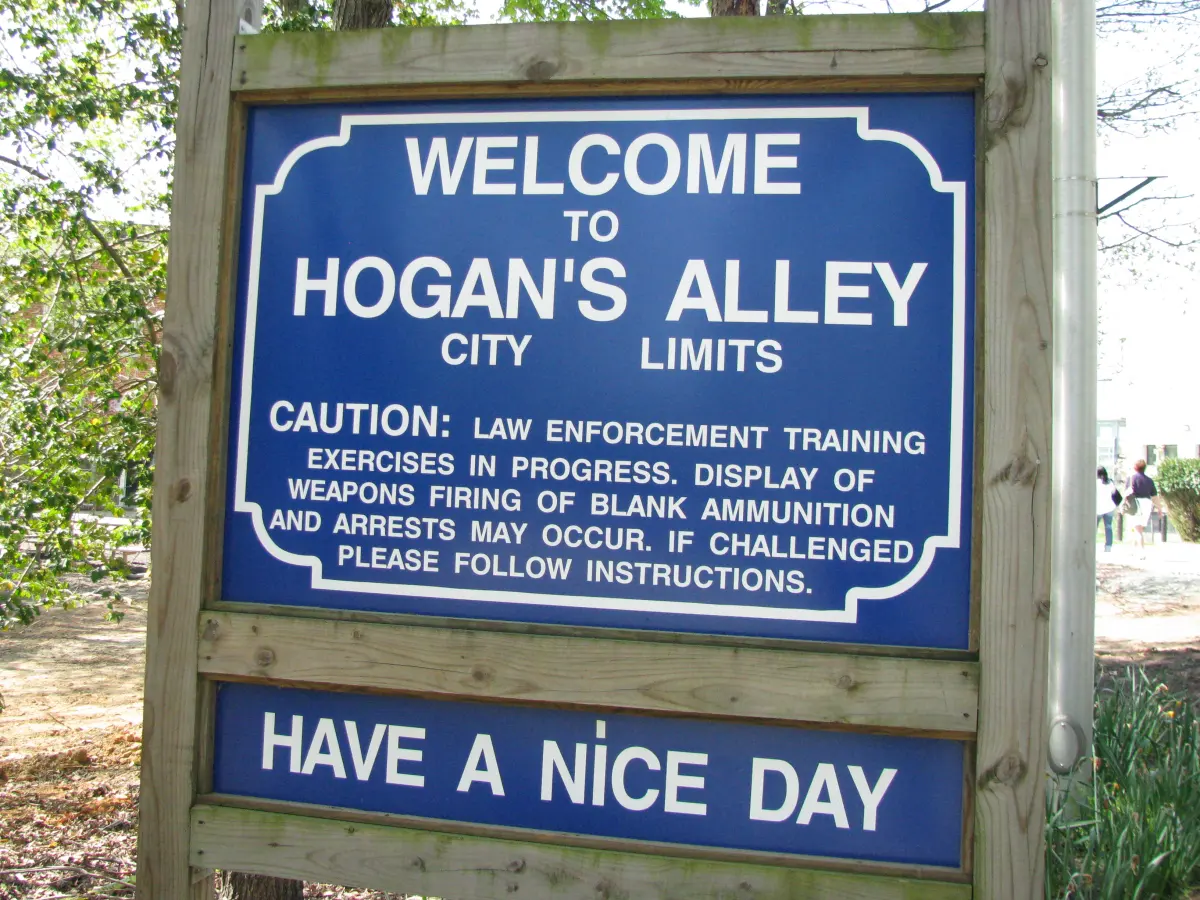
Hogan’s Alley is a specialized tactical training facility located at the FBI Academy in Quantico, Virginia. It features a mock town designed to simulate real-world law enforcement scenarios, including bank robberies and hostage situations. Agents utilize this controlled environment to practice marksmanship, decision-making, and tactical movement under high-stress conditions.
On this page
What is Hogan's Alley used for?
Hogan’s Alley serves as the primary practical training ground for FBI agents and law enforcement personnel to hone their tactical skills. The facility replicates a small-town environment, complete with storefronts, a bank, a post office, and residential areas. By creating a realistic setting, instructors can place trainees in complex, unpredictable situations that mirror the challenges of field operations.
The core purpose of the facility is to bridge the gap between classroom theory and physical execution. Trainees must navigate the environment while managing weapon safety, communication, and team coordination. Because the scenarios involve live-action role players, agents learn to read body language and assess threats in real time. This experiential learning is critical for developing the split-second judgment required in high-stakes encounters.
How does FBI tactical training work?
Training at the facility follows a structured progression, moving from basic movement techniques to advanced multi-person operations. Instructors emphasize the "OODA loop"—observe, orient, decide, and act—to ensure agents remain calm under pressure. The training is designed to be physically and mentally taxing, forcing participants to perform complex tasks while their heart rates are elevated.
The training process typically involves the following stages:
- Briefing: Instructors outline the mission objectives and safety protocols.
- Execution: Trainees enter the alley to resolve the simulated incident.
- Debriefing: Participants review their performance with instructors to identify tactical errors.
- Iteration: Agents repeat the scenario to integrate feedback and improve efficiency.
By repeating these cycles, the FBI ensures that agents develop muscle memory for standard operating procedures. This repetition helps reduce hesitation during actual emergencies, where every second is vital for public and officer safety.
What are the main features of the facility?
The physical layout of Hogan’s Alley is intentionally designed to mimic the architectural variety found in American municipalities. It includes various building types that force agents to adapt their tactics to different environments, such as tight hallways, open lobbies, or exterior urban spaces. These structures are modular, allowing instructors to rearrange interiors to keep training scenarios fresh and unpredictable.
Key components of the facility include:
- The Bank: A high-security simulation area used for practicing robbery response and perimeter control.
- The Residential House: A space for practicing room-clearing techniques and domestic disturbance intervention.
- The Streetscape: Open areas that test an agent's ability to provide cover fire and move safely through public spaces.
- The Role-Player Quarters: Dedicated areas where actors prepare for their specific roles as suspects, victims, or bystanders.
These features allow for a comprehensive training experience that covers everything from low-light navigation to complex hostage rescue maneuvers.

Common mistakes when training in Hogan's Alley
Even experienced agents can fall into bad habits during high-intensity simulations. One of the most common errors is "tunnel vision," where a trainee focuses exclusively on a single threat while ignoring the wider environment. This can lead to a failure to notice secondary threats or civilian bystanders, which is a critical oversight in any law enforcement operation.
Another frequent mistake is poor communication within the tactical team. When agents fail to call out their movements or status clearly, the team loses its cohesion, leading to gaps in coverage. Additionally, many trainees struggle with weapon discipline, often failing to keep their fingers off the trigger until they are ready to fire. To avoid these pitfalls, trainees are encouraged to:
- Practice constant scanning of the environment.
- Use concise, standardized radio terminology.
- Maintain strict trigger discipline regardless of the simulated threat level.
- Prioritize verbal commands before resorting to physical force.
Why is Hogan's Alley important for law enforcement?
The facility is vital because it provides a safe environment to fail. In the field, a mistake can have catastrophic consequences, but in Hogan’s Alley, an error is simply a learning opportunity. By exposing agents to realistic stressors, the FBI can identify those who possess the necessary temperament and technical proficiency to handle the realities of federal investigations and tactical deployments.
Beyond technical skills, the facility fosters a culture of accountability and continuous improvement. The rigorous debriefing process ensures that every agent understands the legal and ethical implications of their actions. As threats evolve, the training scenarios at the facility are updated to reflect current trends in criminal activity. This ensures that agents remain at the forefront of modern law enforcement, prepared to protect the public with precision, professionalism, and a deep understanding of the tactical realities they will face throughout their careers.
Key facts
- Hogan’s Alley is a specialized tactical training facility located at the FBI Academy in Quantico, Virginia.
- The site consists of a simulated town designed to provide law enforcement agents with realistic environments for high-stakes training.
- It features authentic-looking structures, including a bank, a post office, a hotel, and various storefronts, to mimic real-world scenarios.
- Instructors use the facility to teach agents how to handle active shooter situations, hostage rescues, and surveillance operations.
- The name is a historical nod to a popular 19th-century comic strip, "Hogan's Alley," which featured a rough-and-tumble urban neighborhood.
- Trainees must avoid "tunnel vision" during exercises by maintaining situational awareness of their surroundings rather than focusing only on a single target.
The bottom line
Hogan’s Alley serves as a vital training ground for federal agents, providing a controlled yet realistic urban environment to practice complex law enforcement operations. By simulating high-stress scenarios within a mock town, the FBI ensures that agents are prepared for the unpredictability of field work. It remains an essential component of modern tactical training, emphasizing the importance of split-second decision-making and comprehensive situational awareness.
People also ask
Can the public visit Hogan’s Alley?
No, Hogan’s Alley is located within the secure perimeter of the FBI Academy and is not open to the public. Access is strictly limited to authorized law enforcement personnel and invited guests participating in official training programs.
How is the town maintained?
The FBI employs a dedicated staff to periodically change the signage and interior layouts of the buildings to keep the training environment fresh. This prevents agents from memorizing the layout and forces them to adapt to new tactical challenges during each session.
Are live rounds used in the facility?
Agents often use specialized training ammunition, such as marking cartridges or simunition, which allow for realistic force-on-force engagement without the lethality of live fire. These rounds leave a colored mark on clothing, providing immediate feedback on whether an agent’s shot was accurate.
What is the primary purpose of the training?
The facility is designed to bridge the gap between classroom theory and the unpredictable nature of real-world law enforcement. By placing agents in high-stress, simulated urban environments, instructors can evaluate decision-making, communication skills, and tactical proficiency under pressure.
How do instructors monitor the exercises?
Instructors observe the training from hidden vantage points or via a network of cameras strategically positioned throughout the town. This allows them to provide immediate debriefings and critiques once a scenario concludes.
Are there other "Hogan’s Alleys" in the United States?
While the FBI's facility at Quantico is the most famous, the term is often used generically by various police departments to describe any mock town or shoot house used for tactical training. Many large metropolitan police forces maintain their own versions of these simulated environments.
This answer was created with the help of AI research tools and reference sources. Spotted an error? Let us know — we correct mistakes quickly. See our editorial policy.