What do hyenas eat?
Short answer
Hyenas are primarily carnivorous hunters and scavengers. While the spotted hyena is a formidable predator that kills up to 95 percent of its food, all four species—spotted, striped, brown, and aardwolf—consume a wide variety of prey, including ungulates, small mammals, insects, and occasionally carrion found in their diverse African and Asian habitats.
On this page
What do spotted hyenas eat?
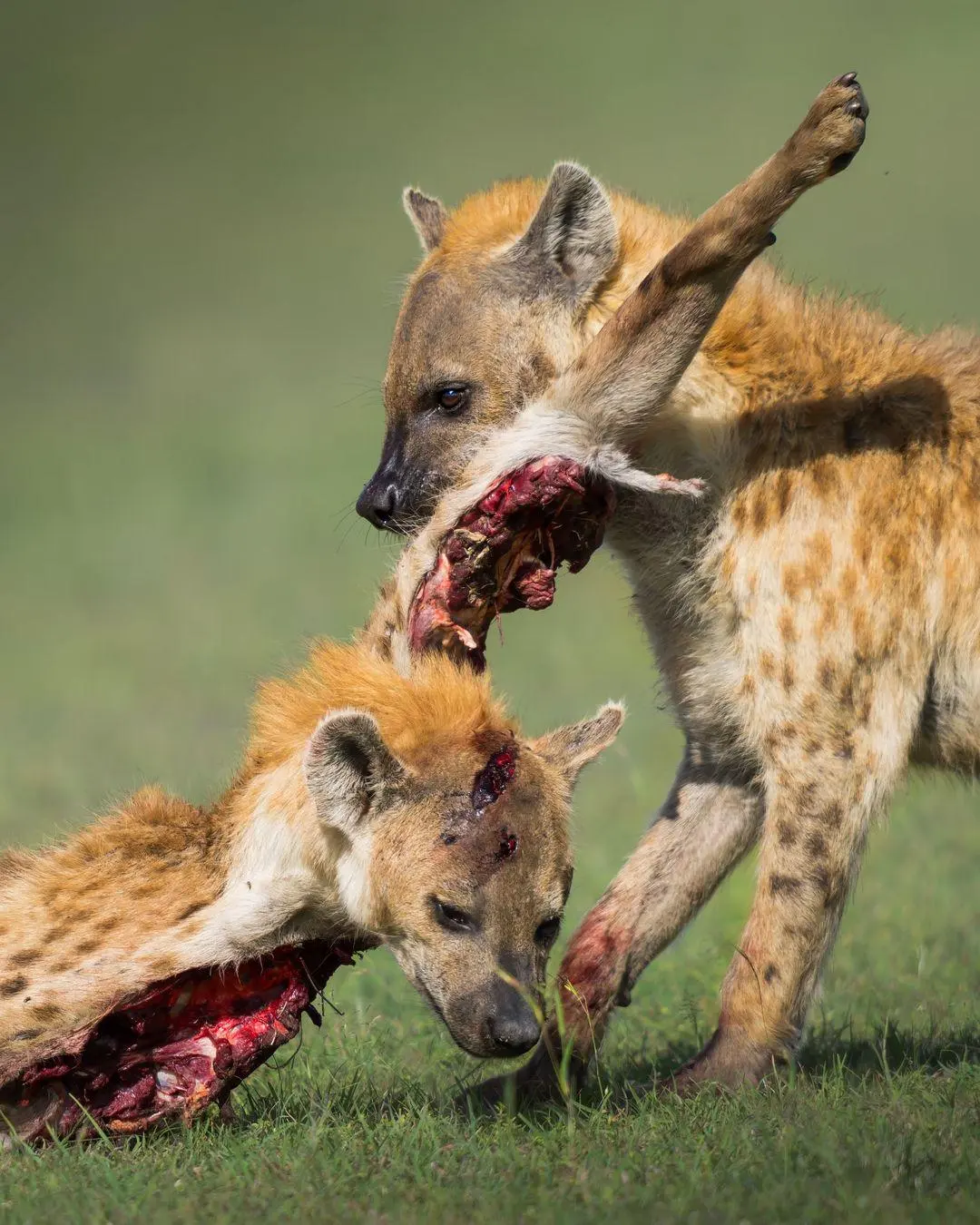
Spotted hyenas are the most famous members of the family and are highly efficient hunters. They primarily target medium-to-large ungulates such as wildebeest, zebras, and gazelles. Unlike the common misconception that they are merely scavengers, spotted hyenas operate in complex social clans that coordinate sophisticated hunting strategies to take down prey much larger than themselves.
Their diet is remarkably comprehensive due to their powerful jaws and specialized digestive systems. They consume almost every part of an animal, including bones, hooves, and horns. This ability to process calcium-rich bone allows them to thrive in environments where other predators might leave significant remains behind. Their typical diet includes:
- Wildebeest and zebras
- Thomson’s gazelles and impalas
- African buffalo
- Smaller mammals like hares or rodents
- Carrion from other predators' kills
What do striped and brown hyenas eat?
Striped and brown hyenas have more varied diets compared to their spotted cousins. These species are more solitary and rely heavily on scavenging, though they remain capable of opportunistic hunting. They often patrol large territories to find carcasses left by lions or leopards, but they also forage for smaller food sources to supplement their caloric intake.
Their dietary habits are opportunistic and seasonal, shifting based on what is available in their arid or scrubland environments. They frequently consume:
- Scavenged remains of large ungulates killed by apex predators.
- Small vertebrates such as reptiles, birds, and rodents.
- Seasonal fruits and vegetation, which provide essential moisture in dry climates.
- Insects and larvae found under rocks or in dry soil.
This flexibility allows them to survive in harsh landscapes, such as the Kalahari Desert or the rocky terrains of the Middle East, where large prey is not always guaranteed.
What does the aardwolf eat?
The aardwolf is a unique member of the hyena family that has evolved to occupy a completely different ecological niche. Unlike the other three species, the aardwolf is an insectivore that feeds almost exclusively on termites. A single aardwolf can consume up to 250,000 termites in a single night using its long, sticky tongue to lap them up from the ground.
Because they focus on such small prey, aardwolves do not hunt large mammals or scavenge carcasses. Their teeth are significantly smaller and less developed for crushing bone, reflecting their specialized diet. They are most active during the night when termites are above ground, and they typically maintain a territory that contains several active termite mounds to ensure a consistent food supply throughout the year.
Common mistakes when observing hyena feeding
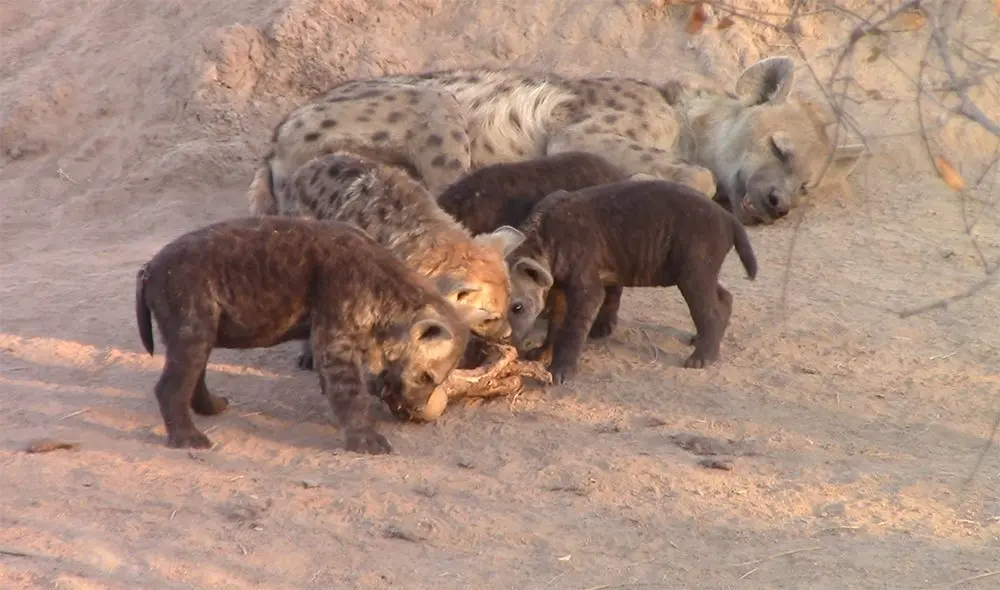
A frequent mistake people make is assuming that hyenas are strictly "garbage collectors" of the savanna. While they are excellent at cleaning up carcasses, this behavior is a survival strategy rather than a limitation. Viewing them only as scavengers ignores their role as apex predators that regulate populations of herbivores. Another error is assuming all hyenas behave the same way; the dietary gap between a spotted hyena and an aardwolf is as wide as the gap between a lion and a rabbit.
When observing these animals in the wild, it is important to avoid:
- Attempting to feed them, as this disrupts their natural hunting patterns and creates dangerous human-wildlife conflict.
- Assuming that a hyena seen near a carcass is the one that killed the prey.
- Underestimating their speed and agility, as they are capable of sustained long-distance chases that exhaust their prey.
How to identify hyena foraging signs
Identifying what a hyena has been eating is often possible by examining their scat or the surrounding area of a kill site. Hyena droppings are distinct because they are often white or light gray in color. This is a direct result of their high bone consumption, which leaves a significant amount of calcium phosphate in their waste. If you find white, chalky scat in the African bush, it is a definitive sign that a hyena has been feeding in the vicinity.
Furthermore, look for bone fragments that have been crushed rather than neatly sheared. While big cats like leopards often leave clean, sliced edges on bones, hyenas use their premolars to crack through dense marrow-filled bones. If you encounter a site where large bones have been pulverized, it is a clear indicator that hyenas were present. By paying attention to these physical signs, researchers and enthusiasts can better understand the ecological impact these animals have on their environment without needing to witness a hunt firsthand.
Key facts
- Spotted hyenas are primarily predators, hunting 60 to 95 percent of the food they consume.
- Their powerful jaws can exert a pressure of 1,100 pounds per square inch, allowing them to crush thick bones.
- Hyenas possess specialized digestive acids that enable them to consume and process skin, hooves, and bone marrow.
- They are opportunistic scavengers that will readily feed on carrion left behind by lions or leopards.
- A single hyena can consume up to 30 pounds of meat in one sitting during a successful feast.
- Avoid approaching a feeding hyena in the wild, as they are highly territorial and possess aggressive defensive instincts.
The bottom line
The spotted hyena is a highly efficient predator and scavenger with a digestive system built to consume entire carcasses, including bones. While they frequently hunt in coordinated packs to take down large ungulates, they remain opportunistic feeders that supplement their diet by scavenging. Understanding their role as both hunters and cleaners is essential for appreciating their vital contribution to the balance of African ecosystems.
People also ask
Do hyenas eat humans?
While rare, hyenas have been known to attack humans, particularly when natural prey is scarce or if the animals are sick. Most encounters occur at night near human settlements, so it is vital to secure food waste and maintain distance.
Are hyenas strictly carnivores?
Hyenas are hyper-carnivores, meaning their diet consists almost entirely of meat. However, they are occasionally observed eating wild fruits or vegetation to supplement their hydration needs during extreme droughts.
Do hyenas steal food from other predators?
Yes, spotted hyenas are notorious for kleptoparasitism, or stealing kills from other carnivores. They often use their superior numbers and loud vocalizations to intimidate lions or cheetahs into abandoning their prey.
How do hyenas find their food?
Hyenas rely on an excellent sense of smell and acute hearing to locate carcasses from miles away. They also monitor the movements of vultures, which often circle above a kill site, to identify potential food sources.
Do all hyena species eat the same things?
No, the diet varies significantly by species. While the spotted hyena is a formidable hunter, the smaller aardwolf feeds almost exclusively on termites and insect larvae.
How long can a hyena go without eating?
Hyenas are highly resilient and can survive for several days without a substantial meal. Their ability to digest almost every part of a carcass ensures they maximize the nutritional value of every successful hunt or scavenging opportunity.
This answer was created with the help of AI research tools and reference sources. Spotted an error? Let us know — we correct mistakes quickly. See our editorial policy.