How long do hyenas live?
Short answer
Spotted hyenas generally live between 12 and 20 years in the wild, though some individuals in protected environments have reached 25 years. Their lifespan is heavily influenced by social rank, food availability, and the presence of predators. In captivity, where veterinary care and consistent nutrition are provided, they can occasionally live up to 30 years.

On this page
How long do hyenas live in the wild?
In their natural habitat, the lifespan of a spotted hyena is primarily determined by its position within the clan’s complex social hierarchy. High-ranking females, known as matriarchs, typically enjoy better access to kills and safer denning sites, which contributes to increased longevity. Conversely, lower-ranking clan members often face higher risks of injury during feeding frenzies and may suffer from chronic malnutrition.
Environmental factors such as competition with lions and the prevalence of diseases also play significant roles in mortality rates. While many hyenas survive their first few years, the harsh reality of savanna life means that reaching the age of 20 is considered an exceptional feat for a wild animal. Most individuals succumb to starvation, territorial battles, or predation long before they reach their physiological maximum age.
What factors influence hyena lifespan?
Several biological and environmental variables dictate how long a hyena survives. Social structure is the most critical component, as the clan provides protection and hunting efficiency that solitary animals lack. Younger hyenas are particularly vulnerable, with high mortality rates occurring before they reach sexual maturity due to lack of experience and physical development.
- Social Status: Dominant individuals secure the best food sources, reducing stress and physical exhaustion.
- Prey Abundance: Consistent access to ungulates ensures the clan remains healthy and capable of defending territory.
- Disease Exposure: Outbreaks of canine distemper or rabies can decimate local populations regardless of individual fitness.
- Human Interference: Habitat loss and retaliatory killings by farmers remain the leading causes of premature death in many regions.
How does captivity affect hyena longevity?
Hyenas housed in zoos or wildlife sanctuaries often live significantly longer than their wild counterparts. The absence of natural predators, combined with a guaranteed daily diet and advanced medical interventions, removes the primary stressors of life in the bush. In these controlled environments, it is not uncommon for a spotted hyena to live into its late twenties or early thirties.
However, captivity presents its own set of challenges that can impact health. Maintaining the psychological well-being of these highly social animals is essential, as boredom or isolation can lead to stress-related ailments. Modern zoological facilities address this by providing complex enrichment programs that mimic natural foraging behaviors. These activities keep the animals mentally stimulated and physically active, which directly correlates with a longer, healthier life span.
How to identify an aging hyena?
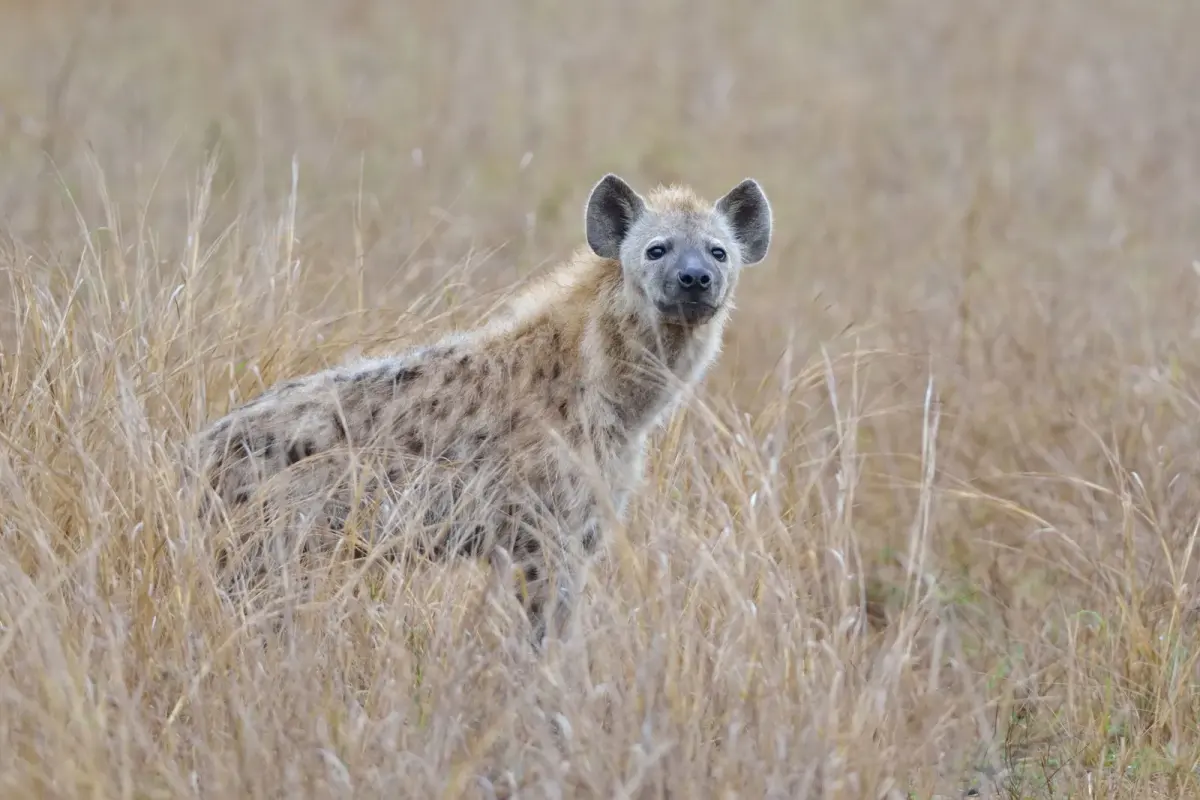
Observing the physical signs of aging in hyenas helps researchers understand the health of a population. As hyenas grow older, their physical appearance changes in ways that are easily observable to trained observers. These indicators serve as a biological clock, helping biologists estimate the age of individuals without historical records.
- Graying fur: The dark spots on a hyena’s coat often fade or turn gray, particularly around the muzzle and face.
- Dental wear: The teeth become significantly worn down or broken due to years of crushing bones, which is a primary task for the species.
- Mobility issues: Older hyenas may exhibit a stiffer gait or show signs of arthritis, making them slower during hunts.
- Scarring: A lifetime of social interactions and territorial defense leaves older individuals with a higher accumulation of visible scars and ear notches.
Common mistakes when estimating hyena age
One frequent error researchers and enthusiasts make is assuming that size is a direct indicator of age. While cubs are obviously smaller, adult hyenas reach their full physical size relatively early in life. Once they are fully grown, weight and height can fluctuate based on diet and pregnancy, making them unreliable metrics for determining chronological age.
Another common mistake is failing to account for the difference between the four species of hyenas. While the spotted hyena is the most well-known, the striped, brown, and aardwolf species have different life histories and average lifespans. For instance, the aardwolf has a specialized diet of termites and a different social structure, which impacts its survival rate compared to the more aggressive, pack-hunting spotted hyena. Always ensure you are referencing the specific species when discussing life expectancy, as applying data from one to another will lead to significant inaccuracies in your assessment.
Key facts
- Spotted hyenas typically live 12 to 20 years in the wild.
- In protected environments like zoos, they can reach 25 years or older.
- Females generally outlive males due to their dominant social status.
- High levels of competition for food significantly impact individual survival rates.
- Cubs face high mortality rates, with only about 50 percent surviving their first year.
- A common mistake is assuming all hyena species have the same lifespan; brown and striped hyenas vary in longevity.
The bottom line
The lifespan of a hyena is determined by a complex interplay of social hierarchy, nutrition, and environmental threats. While they can survive up to two decades in the wild, survival is never guaranteed due to fierce competition and external pressures. Understanding these factors reveals that being part of a dominant clan is the most significant advantage for an individual hyena seeking to reach its maximum biological potential.
People also ask
Do male and female hyenas have different lifespans?
Yes, females usually live longer than males. Because females are larger and hold higher social rank, they have priority access to food, which improves their overall health and longevity.
What is the biggest threat to a hyena's lifespan?
The primary threats are starvation, conflict with rival hyena clans, and predation by lions. Human-related factors, such as habitat loss and retaliatory killings by farmers, also drastically reduce their survival rates.
How long do hyenas live in captivity?
With consistent nutrition and veterinary care, captive spotted hyenas often live into their mid-twenties. The oldest recorded individuals in zoos have occasionally exceeded 30 years of age.
Do striped hyenas live as long as spotted hyenas?
Striped hyenas have similar lifespans to spotted hyenas, generally living 12 to 15 years in the wild. However, they are more solitary, which changes the nature of the risks they face compared to clan-based species.
At what age is a hyena considered an adult
Hyenas reach sexual maturity between two and three years of age. While they are physically mature, they often remain within their natal clan for several years before establishing their own social standing.
Does living in a clan help a hyena live longer?
Living in a clan provides significant protection against predators and ensures better access to communal kills. However, clan life also involves intense competition and internal fighting, which can lead to injuries that shorten an individual's life.
This answer was created with the help of AI research tools and reference sources. Spotted an error? Let us know — we correct mistakes quickly. See our editorial policy.