What were the Roaring Twenties?
Short answer
The Roaring Twenties was a decade of profound social, cultural, and economic transformation in the United States and Europe following World War I. Characterized by rapid industrial growth, the rise of consumerism, and a rebellious shift in social norms, this era—spanning roughly 1920 to 1929—fundamentally reshaped modern urban life and popular culture.
On this page
Why did the Roaring Twenties happen?
The decade emerged from the exhaustion of World War I and the 1918 influenza pandemic, leading to a widespread desire for normalcy and indulgence. As soldiers returned home, the United States transitioned from a wartime economy to a period of unprecedented industrial expansion. Mass production techniques, most notably Henry Ford’s assembly line, made automobiles and household appliances affordable for the middle class for the first time.
Economic prosperity was fueled by a booming stock market and the widespread availability of credit. This newfound wealth allowed Americans to embrace consumerism, shifting the national focus toward leisure and entertainment. The era also saw a massive migration from rural areas to cities, where the concentration of people fostered a vibrant, fast-paced culture that prioritized personal freedom and social experimentation over traditional Victorian values.
What were the key cultural shifts?
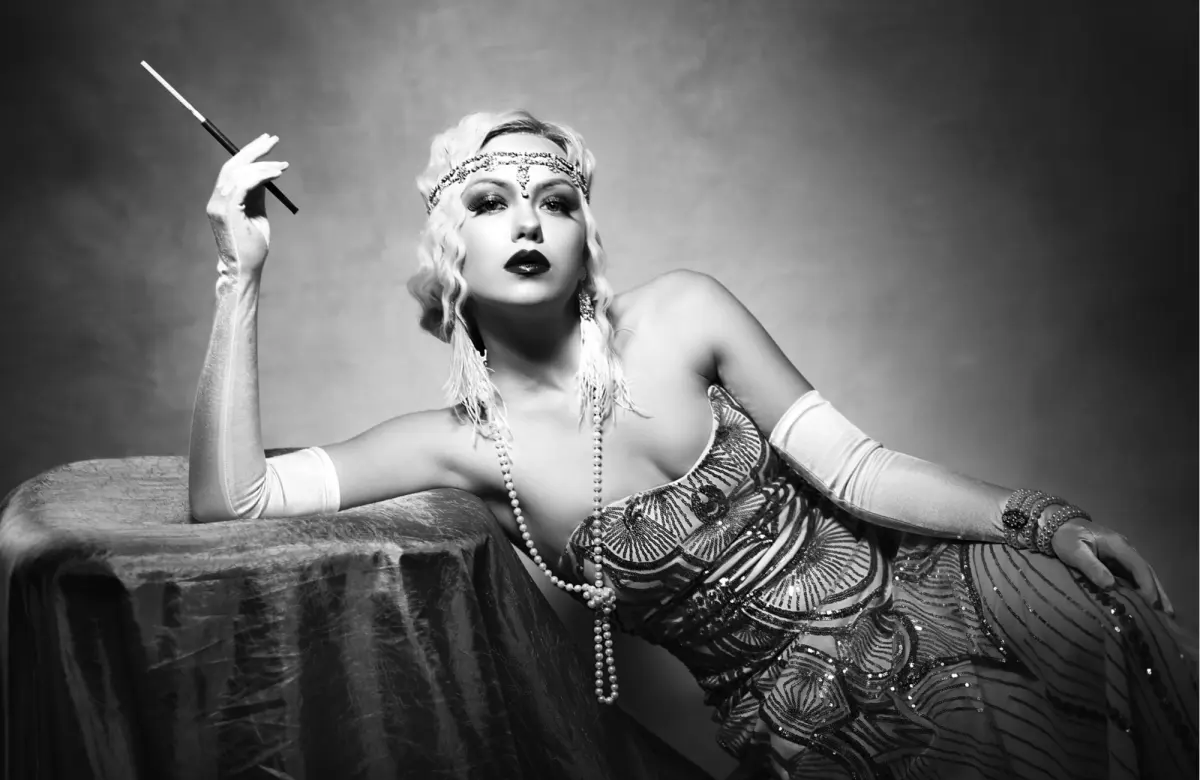
Social norms underwent a radical evolution, particularly regarding the role of women. The ratification of the 19th Amendment in 1920 granted women the right to vote, signaling a broader push for independence. "Flappers"—young women who bobbed their hair, wore short skirts, and smoked in public—became the iconic symbol of this generational rebellion against conservative expectations.
The cultural landscape was further defined by the following developments:
- The rise of jazz music, pioneered by artists like Louis Armstrong and Duke Ellington, which became the soundtrack of the decade.
- The Harlem Renaissance, a flowering of African American literature, art, and music centered in New York City.
- The birth of the commercial radio industry, which allowed news and music to reach millions of homes simultaneously.
- The expansion of the film industry, with Hollywood becoming the global center for cinematic entertainment and celebrity culture.
How did Prohibition affect society?
The 18th Amendment, which took effect in 1920, banned the manufacture, sale, and transportation of intoxicating liquors. Rather than curbing alcohol consumption, Prohibition created a massive underground market for illegal spirits. This led to the rise of "speakeasies," secret bars where men and women socialized together, often breaking gender norms of the time.
The unintended consequences of Prohibition included:
- The empowerment of organized crime syndicates, most notably led by figures like Al Capone in Chicago.
- An increase in public corruption as law enforcement and government officials were frequently bribed.
- The development of sophisticated smuggling networks, known as "bootlegging," which operated across international borders.
- A shift in drinking culture, as the clandestine nature of speakeasies made alcohol consumption a fashionable act of defiance.
Common mistakes when studying the era
A frequent error is assuming that the prosperity of the 1920s was shared equally among all Americans. While the stock market soared, many sectors—particularly agriculture—suffered from falling prices and overproduction throughout the decade. Farmers were largely excluded from the urban wealth, leading to a widening economic divide that predated the eventual market collapse.
Another mistake is viewing the decade as uniformly progressive. The 1920s also saw a resurgence of nativism and the rise of groups like the second Ku Klux Klan, which targeted immigrants, Catholics, and Jews. The passage of the Immigration Act of 1924, which severely restricted entry into the U.S., highlights the intense cultural anxiety that existed alongside the era’s celebrated hedonism and technological optimism.
How did the Roaring Twenties end?
The decade concluded with the catastrophic stock market crash of October 1929, an event known as Black Tuesday. The crash exposed the fragility of an economy built on speculative investment and excessive debt. As stock values plummeted, banks failed and businesses shuttered, marking the abrupt end of the era’s optimism and the beginning of the Great Depression.
The transition from the exuberance of the 1920s to the hardship of the 1930s was swift and jarring. The consumer-driven lifestyle that had defined the decade vanished, replaced by a struggle for basic survival. While the Roaring Twenties left a lasting legacy in music, literature, and social reform, the decade is ultimately remembered as a brief, intense period of excess that served as a prelude to the most severe economic crisis in modern history.
Key facts
- The Roaring Twenties refers to the decade of the 1920s in the United States, characterized by rapid economic growth and social change.
- The 18th Amendment, ratified in 1919, launched Prohibition, which banned the sale of alcohol and fueled the rise of illegal speakeasies.
- The 19th Amendment, ratified in 1920, granted women the right to vote, significantly shifting the American political landscape.
- The decade saw the rise of jazz music, popularized by icons like Louis Armstrong and Duke Ellington, defining the era's cultural soundtrack.
- Mass production, particularly Henry Ford’s assembly line, made automobiles like the Model T affordable for the average American family.
- The stock market crash of October 1929, known as Black Tuesday, abruptly ended the era's prosperity and triggered the Great Depression.
The bottom line
The Roaring Twenties was a transformative decade defined by unprecedented economic expansion, technological innovation, and cultural rebellion. While the era is remembered for its glitz, jazz, and newfound social freedoms, it was also marked by deep societal tensions and unsustainable financial practices. Ultimately, the period serves as a cautionary tale of how rapid prosperity can mask systemic vulnerabilities, leading to the devastating economic collapse of 1929.
People also ask
What was a "flapper" in the 1920s?
A flapper was a young woman who challenged traditional social norms by wearing short skirts, bobbing her hair, and listening to jazz. These women frequently smoked, drank, and drove cars, signaling a new era of female independence.
How did the radio change life in the 1920s?
Radio technology brought news, music, and sports directly into the living room for the first time. It created a shared national culture by allowing millions of people to listen to the same broadcasts simultaneously.
Why was the 1920s called the "Jazz Age"?
F. Scott Fitzgerald coined the term to describe the decade's vibrant and rebellious energy centered around jazz music. This genre emerged from African American communities and became the dominant popular music of the era.
What were speakeasies?
Speakeasies were illicit establishments that sold alcoholic beverages during the Prohibition era. To enter, patrons often needed a password or membership card to bypass law enforcement and secret doors.
How did consumer credit affect the 1920s economy?
The introduction of "buy now, pay later" installment plans allowed consumers to purchase expensive goods like radios and cars on credit. While this fueled economic growth, it also led to high levels of personal debt that contributed to the later financial collapse.
What was the Harlem Renaissance?
The Harlem Renaissance was a flourishing of African American art, literature, and music centered in the Harlem neighborhood of New York City. Figures like Langston Hughes and Zora Neale Hurston produced influential works that celebrated Black identity and culture.
This answer was created with the help of AI research tools and reference sources. Spotted an error? Let us know — we correct mistakes quickly. See our editorial policy.