What is a mammal?
Short answer
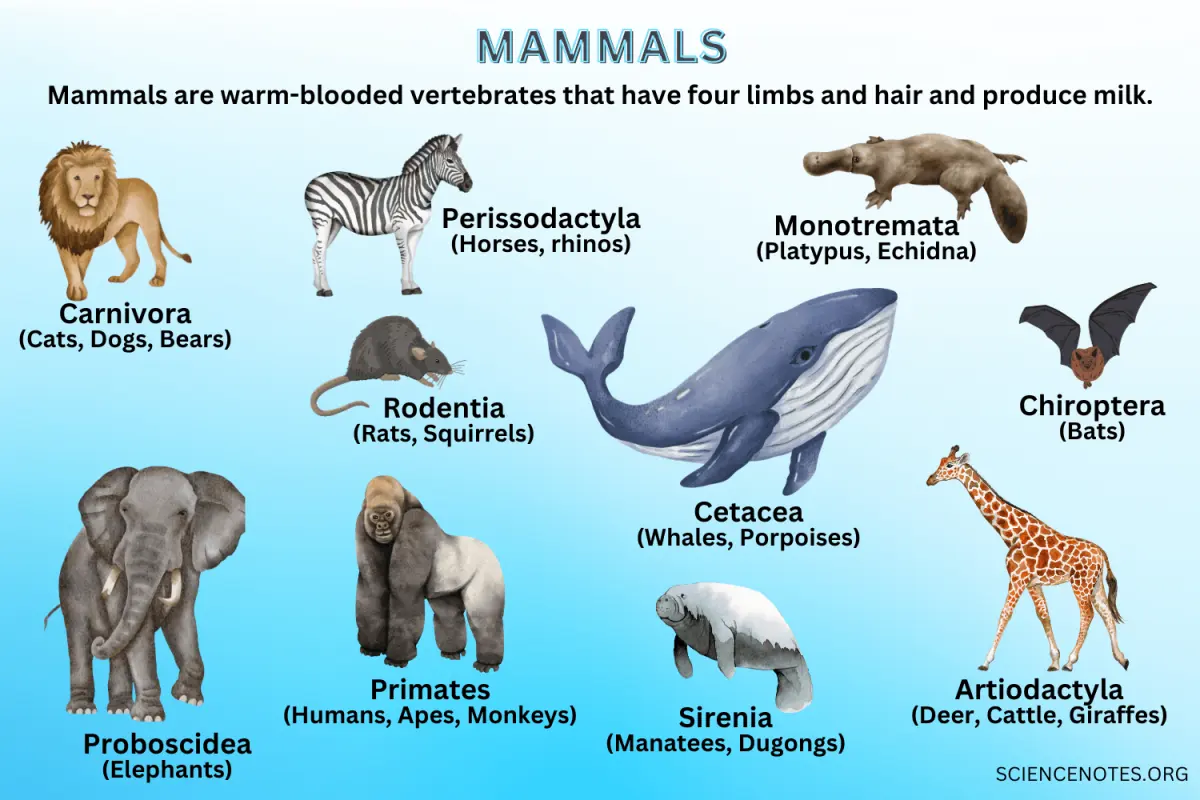
Mammals are warm-blooded vertebrate animals belonging to the class Mammalia. They are defined by the presence of mammary glands, which produce milk to nourish their young, and the possession of hair or fur. This diverse group includes approximately 6,500 species, ranging from tiny shrews to the massive blue whale.
On this page
What are the defining characteristics of mammals?
All mammals share a specific set of biological traits that distinguish them from birds, reptiles, amphibians, and fish. The most fundamental characteristic is the presence of mammary glands in females, which provide nutrient-rich milk for offspring. Additionally, all mammals possess hair or fur at some stage in their development, which serves to insulate the body and regulate internal temperature.
Beyond these external features, mammals are endothermic, meaning they generate their own body heat through metabolic processes. They also possess a neocortex, a specialized part of the brain responsible for higher-order functions like sensory perception and spatial reasoning. Their skeletal structure includes a unique middle ear containing three tiny bones—the malleus, incus, and stapes—which are essential for acute hearing. These traits collectively allow mammals to thrive in nearly every environment on Earth, from arid deserts to the deep ocean.
How do mammals reproduce and raise their young?
Mammals are categorized into three distinct groups based on their reproductive strategies. The vast majority are placental mammals, where the fetus develops inside the mother’s uterus and receives nourishment through a placenta. The other two groups are monotremes and marsupials, which exhibit unique evolutionary paths that differ from the standard placental model.
- Monotremes: These are egg-laying mammals, such as the platypus and echidna, found primarily in Australia and New Guinea.
- Marsupials: These animals, including kangaroos and koalas, give birth to relatively undeveloped young that finish growing in an external pouch.
- Placental mammals: This group includes humans, dogs, whales, and bats, which carry their young through a longer gestation period before birth.
Regardless of the method, all mammalian mothers provide milk for their offspring. This period of nursing is critical for the development of the young, as it provides essential antibodies and nutrients that strengthen the immune system before the animal transitions to independent feeding.
Why are mammals considered so diverse?
The evolutionary success of mammals is largely attributed to their ability to adapt to diverse ecological niches. Following the extinction of the non-avian dinosaurs approximately 66 million years ago, mammals underwent a rapid adaptive radiation. They evolved specialized limbs, teeth, and sensory organs to exploit resources in forests, grasslands, oceans, and even the air.
- Locomotion: Mammals have adapted limbs for running, climbing, swimming, or flying, such as the wings of bats or the flippers of dolphins.
- Dentition: Their teeth are highly specialized based on diet, with carnivores possessing sharp canines for tearing and herbivores having flat molars for grinding vegetation.
- Sensory adaptation: Species have evolved acute senses, such as the echolocation used by bats and whales to navigate and hunt in low-light environments.
This flexibility has allowed mammals to maintain complex social structures and high levels of intelligence. By occupying such varied roles, they remain essential components of global ecosystems as predators, prey, and pollinators.
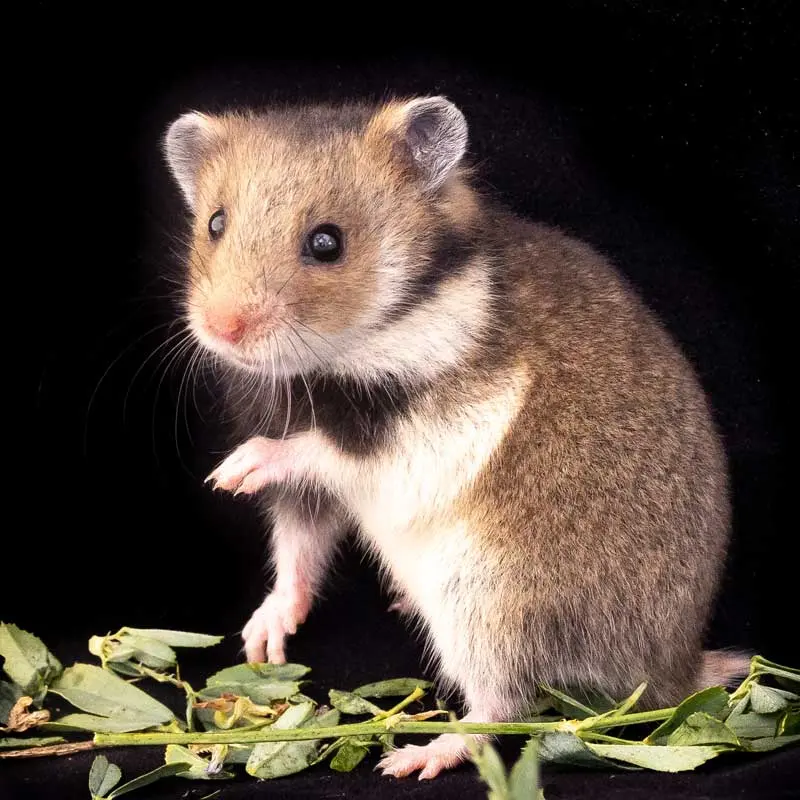
Common mistakes when identifying mammals
A frequent error is assuming that all mammals live on land or look like typical furry creatures. For instance, many people mistakenly categorize dolphins and whales as fish because they live in the water and lack visible fur. However, they are fully aquatic mammals that breathe air through lungs, give birth to live young, and nurse their offspring with milk.
Another common misconception is that all mammals are strictly terrestrial or diurnal. In reality, many species are nocturnal or fossorial, meaning they spend their lives underground. Furthermore, some people confuse mammals with other vertebrate classes that share superficial similarities. For example, while bats have wings and fly like birds, they are mammals because they have fur and feed their young milk. Always check for the presence of mammary glands and middle ear bones if you are unsure whether a specific animal belongs to the class Mammalia.
How to observe mammals in the wild
Observing mammals requires patience and an understanding of their natural behaviors. Most mammals are shy and will avoid human contact, so maintaining a quiet, respectful distance is essential for both your safety and the animal's well-being. Using binoculars or a camera with a telephoto lens allows you to study their movements without causing stress or altering their natural routines.
- Research the specific species in your area to understand their peak activity times, such as dawn or dusk.
- Look for signs of presence, including tracks, scat, burrows, or chewed vegetation, rather than just waiting for a direct sighting.
- Keep your movements slow and minimize noise to avoid alerting the animal to your presence.
- Never attempt to feed or touch wild mammals, as this can disrupt their natural foraging habits and potentially expose you to disease.
By following these guidelines, you can gain a deeper appreciation for the complex lives of mammals while ensuring that your presence does not negatively impact their environment.
Key facts
- All female mammals possess mammary glands that produce milk to nourish their young.
- Mammals are endothermic, meaning they regulate their own internal body temperature regardless of the environment.
- With the exception of monotremes like the platypus, mammals give birth to live young rather than laying eggs.
- Every mammal has hair or fur at some stage of its life cycle, even if only in the fetal stage.
- Mammals are characterized by having three middle-ear bones, known as the malleus, incus, and stapes.
- The neocortex is a specialized region of the brain found exclusively in mammals, responsible for higher-order functions.
The bottom line
Mammals are a diverse class of vertebrates defined by their ability to produce milk, maintain a constant body temperature, and grow hair. From the smallest shrew to the massive blue whale, these animals have evolved to thrive in almost every habitat on Earth. Understanding these core biological traits allows us to categorize the complex variety of life that shares our planet through a clear, scientific framework.
People also ask
Are whales and dolphins considered mammals?
Yes, whales and dolphins are marine mammals. Despite living in the ocean, they breathe air through lungs, give birth to live young, and nurse their offspring with milk.
Do all mammals live on land?
While most mammals are terrestrial, there are significant exceptions. Bats are the only mammals capable of true flight, and groups like cetaceans and sirenians are fully aquatic.
How do mammals maintain their body temperature?
Mammals use metabolic processes to generate heat, which is conserved by fur, hair, or layers of blubber. This allows them to remain active in diverse climates ranging from arctic tundras to hot deserts.
What is the difference between a marsupial and a placental mammal?
Placental mammals nourish their young inside the uterus through a placenta until they are well-developed. Marsupials give birth to relatively undeveloped young, which then continue to grow in an external pouch.
Why do mammals have hair if some species appear bald?
Hair provides insulation, sensory feedback, and protection from UV radiation. Even species that seem hairless, such as elephants or dolphins, possess sparse hair or follicles at specific life stages.
Are humans classified as mammals?
Humans are classified as placental mammals within the order Primates. We share the defining characteristics of the class, including mammary glands, hair, and complex brain structures.
This answer was created with the help of AI research tools and reference sources. Spotted an error? Let us know — we correct mistakes quickly. See our editorial policy.