How big do sloths get?
Short answer
Sloths vary significantly in size depending on their species. Modern two-toed sloths typically weigh between 9 and 19 pounds and measure about 23 to 27 inches long. Smaller three-toed sloths generally weigh 8 to 17 pounds and reach lengths of 17 to 31 inches, making them compact, arboreal mammals adapted for life in trees.
On this page
How big are the different sloth species?
There are six extant species of sloths, divided into two families: the two-toed sloths (Choloepodidae) and the three-toed sloths (Bradypodidae). Generally, two-toed sloths are slightly larger and more robust than their three-toed counterparts. The Hoffman’s two-toed sloth and Linnaeus’s two-toed sloth are the most common representatives of the former, while the brown-throated sloth is the most widespread of the three-toed variety.
Despite these differences, all modern sloths are relatively small compared to their extinct ancestors. Their size is an evolutionary trade-off, allowing them to hang from thin branches without breaking them. The following list outlines the typical physical dimensions of these animals:
- Linnaeus’s two-toed sloth: 11–19 pounds, 23–27 inches long.
- Brown-throated three-toed sloth: 8–14 pounds, 17–31 inches long.
- Pygmy three-toed sloth: 5–9 pounds, 19–21 inches long.
- Maned three-toed sloth: 9–17 pounds, 21–31 inches long.
Why did prehistoric sloths grow so large?
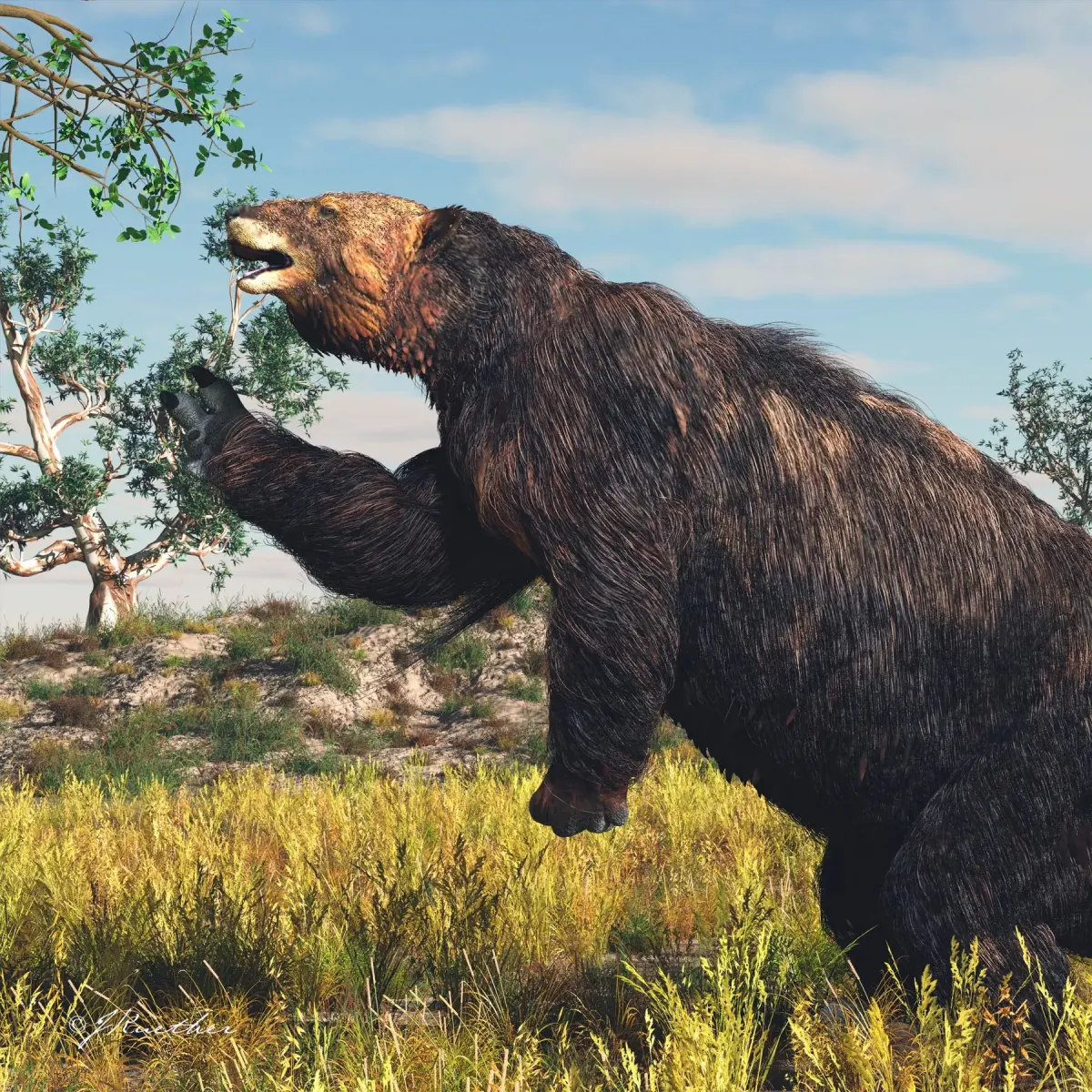
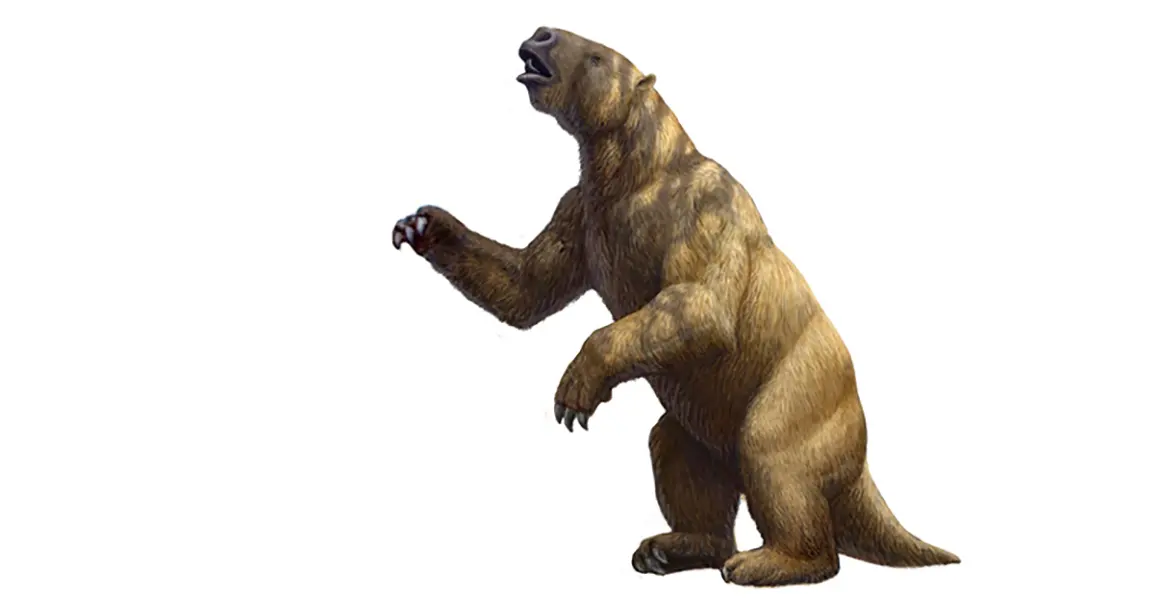
While modern sloths are small, their ancestors from the Pleistocene epoch were massive. Known as ground sloths, these creatures included the genus Megatherium, which could reach the size of a modern elephant. These animals lived on the ground rather than in the canopy, allowing them to bypass the weight limitations imposed by tree-dwelling life.
These giants stood up to 12 feet tall and weighed several tons. They relied on their immense size for protection against predators like saber-toothed cats and dire wolves. Unlike their modern descendants, which possess a slow metabolism suited for a low-energy diet of leaves, these giant sloths were capable of reaching high vegetation and excavating large burrows. Their extinction approximately 10,000 years ago marked the end of the era of megafauna, leaving only the small, arboreal species we recognize today.
How do sloths maintain their size in the wild?
A sloth’s size is intrinsically linked to its extremely slow metabolic rate. Because they consume a diet primarily consisting of low-nutrient leaves, they cannot afford the energy expenditure required for a large, muscular body. Their digestion process is one of the slowest of any mammal, sometimes taking up to 30 days to process a single meal.
To maintain their current size, sloths have evolved several energy-saving strategies:
- They maintain a low body temperature, which fluctuates with the ambient environment.
- They minimize movement to avoid burning excess calories.
- They possess a high percentage of body fat to serve as an energy reserve.
- They utilize a specialized stomach with multiple compartments to ferment tough cellulose.
These adaptations ensure that they remain lightweight enough to navigate the canopy while having enough mass to survive periods of food scarcity.
What are common mistakes when estimating sloth size?
A frequent error is assuming that a sloth’s long, shaggy fur indicates a massive body. In reality, the fur is often thick and matted to host algae and insects, which can make the animal appear significantly larger than its skeletal frame suggests. Observers often overestimate the weight of a sloth because they mistake the dense, coarse hair for muscle mass or bone structure.
Another mistake is confusing the length of the limbs with the length of the body. Sloths have disproportionately long arms compared to their torsos, which helps them reach across gaps in the rainforest canopy. When a sloth is curled into a ball, which is their preferred resting position, they appear much smaller than when they are fully extended. Always consider the posture of the animal before attempting to estimate its size, as a stretched-out sloth will look significantly longer than one tucked away in a tree fork.
How to identify a sloth's age by its size?
Determining the age of a sloth based on size can be difficult because growth rates vary based on food availability and environmental health. Young sloths stay with their mothers for about six to twelve months, during which time they grow rapidly. By the time they reach independence, they are usually close to their adult size, though they may lack the full muscle development of a mature adult.
If you are observing sloths in the wild, look for these indicators to distinguish between juveniles and adults:
- Juveniles tend to have a more slender build and lack the thick, weathered fur of older adults.
- Adults often display more prominent facial features and a broader chest.
- Older sloths may show signs of wear on their claws, which are used for gripping branches.
Keep in mind that size is not a perfect indicator of age, as a healthy, well-fed juvenile might be larger than a malnourished adult. Always observe from a distance to avoid stressing the animal, as human proximity can interfere with their natural feeding and resting behaviors.
Key facts
- Modern sloths are divided into two types: two-toed sloths, which grow to 23–27 inches, and three-toed sloths, which reach 17–31 inches.
- Adult sloths typically weigh between 8 and 18 pounds, depending on the specific species and environmental conditions.
- Extinct giant ground sloths, such as the Megatherium, reached lengths of up to 20 feet and weighed as much as 4 tons.
- When measuring a sloth, avoid handling them in the wild, as their long, sharp claws are designed for defense and can cause serious injury.
- Sloths appear larger than they are due to their thick, coarse fur, which often hosts algae and insects.
- A common mistake is assuming larger sloths are more aggressive; size does not correlate with temperament, as all sloths prefer to avoid conflict.
The bottom line
Modern sloths are small, specialized mammals that rarely exceed 18 pounds or 30 inches in length. While their ancestors were massive creatures roaming the earth, today’s sloths have adapted to a life in the canopy where a small, lightweight frame is essential for survival. Understanding these dimensions helps clarify that sloths are not large predators, but rather delicate, slow-moving animals perfectly suited for their environment.
People also ask
Are two-toed sloths larger than three-toed sloths?
Generally, two-toed sloths are slightly heavier and more robust than three-toed sloths. While their lengths are comparable, the two-toed variety often appears bulkier in body mass.
Do male sloths grow larger than females?
In most sloth species, there is very little sexual dimorphism, meaning males and females are roughly the same size. You cannot easily distinguish their gender based on physical stature alone.
How fast do sloths grow to their full size?
Sloths reach physical maturity between three and five years of age. Their slow metabolic rate means their growth process is significantly more gradual than that of other mammals.
Why were ancient sloths so much bigger than modern ones?
Giant ground sloths evolved to graze on the ground and defend themselves against prehistoric predators. Modern sloths evolved to be smaller to remain hidden in the forest canopy, where they are safer from threats.
Does a sloth’s diet affect its size?
Yes, sloths rely on a low-energy diet of leaves, which limits the amount of body mass they can maintain. This dietary constraint is a primary reason why they never evolved to be large animals.
Can you tell a sloth's age by its size?
No, size is not a reliable indicator of age once a sloth reaches adulthood. Because they grow so slowly, an adult sloth of any age will appear to be roughly the same size.
This answer was created with the help of AI research tools and reference sources. Spotted an error? Let us know — we correct mistakes quickly. See our editorial policy.