What do chimpanzees eat?
Short answer
Chimpanzees are omnivorous primates whose diet consists primarily of ripe fruit. They supplement this with leaves, blossoms, seeds, bark, and insects. While they are predominantly herbivorous, they also hunt small mammals, such as colobus monkeys, to obtain essential proteins and fats. Their diverse diet reflects their complex social structure and forest environment.
On this page
What do chimpanzees eat in the wild?
Chimpanzees are opportunistic omnivores, meaning they consume a wide variety of food sources available within their tropical forest and savanna habitats. Ripe fruit, particularly figs, makes up the largest portion of their daily intake, often accounting for more than 50 percent of their diet. Because fruit is seasonally available, chimpanzees must travel long distances to locate productive trees, demonstrating a sophisticated memory of forest geography and ripening cycles.
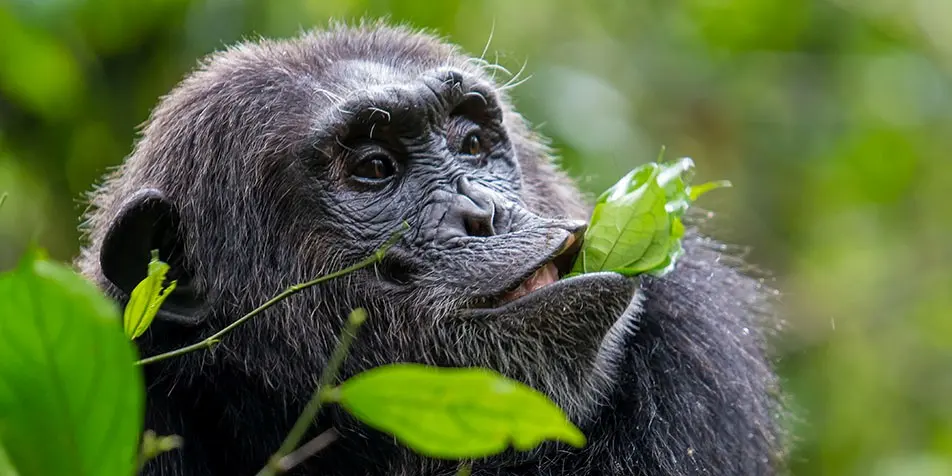
When fruit is scarce, chimpanzees shift their foraging focus toward structural plant parts. They consume young leaves, flowers, stems, and tree pith to maintain their energy levels. They are also known to strip bark from trees to access the nutrient-rich cambium layer underneath. This dietary flexibility allows chimpanzee populations to survive in diverse environments, ranging from dense rainforests in Central Africa to the drier, more open woodlands of Senegal.
How do chimpanzees hunt and eat meat?
While plants form the foundation of their nutrition, chimpanzees actively hunt small animals to supplement their protein intake. The most frequent prey items include western red colobus monkeys, though they also target bushbucks, duikers, and wild pigs. Hunting is often a cooperative social activity, particularly among males, who may coordinate their movements to trap or corner prey in the forest canopy.
The process of hunting and consuming prey follows a distinct pattern within chimpanzee communities:
- Social coordination: Males often communicate through vocalizations to track prey.
- Capture: The prey is seized by hand and killed through physical force.
- Distribution: The successful hunter often shares portions of the meat with other group members, including females and juveniles, which helps reinforce social bonds and political alliances.
- Consumption: Chimpanzees eat the meat alongside vegetation, often wrapping pieces of flesh in leaves to consume them alongside plant matter.
Why do chimpanzees use tools for foraging?
Chimpanzees are famous for their sophisticated use of tools to extract difficult-to-reach foods. This behavior is learned socially, with younger chimpanzees observing their mothers to master specific techniques. Tool use is most commonly associated with accessing high-energy foods that are otherwise protected by hard shells or deep crevices.
Common examples of tool-assisted foraging include:
- Termite fishing: Chimpanzees strip leaves from a twig or blade of grass and insert it into a termite mound, waiting for the insects to bite the tool before pulling it out to eat them.
- Nut cracking: In specific regions, chimpanzees use stone or wooden "hammers" and "anvils" to smash open hard-shelled nuts that contain high amounts of fat.
- Honey extraction: They use sticks to probe into bee nests to collect honey and larvae, carefully avoiding stings while gathering the sugary resource.
What are the nutritional requirements of chimpanzees?
To maintain their high activity levels, chimpanzees require a balanced intake of carbohydrates, proteins, and minerals. Carbohydrates are primarily sourced from the sugars found in ripe fruits, providing the immediate energy needed for climbing and social interaction. Proteins, obtained from insects and meat, are essential for muscle maintenance and growth, especially in developing juveniles.
Minerals are also a critical component of their health. Chimpanzees have been observed consuming clay or mineral-rich soil, a behavior known as geophagy. This practice is believed to help neutralize toxins found in certain plants or provide essential minerals like calcium and magnesium that may be lacking in their fruit-heavy diet. By selecting specific foods, they effectively manage their internal chemistry to prevent illness and ensure reproductive success throughout their long lifespans.
Common mistakes when feeding captive chimpanzees
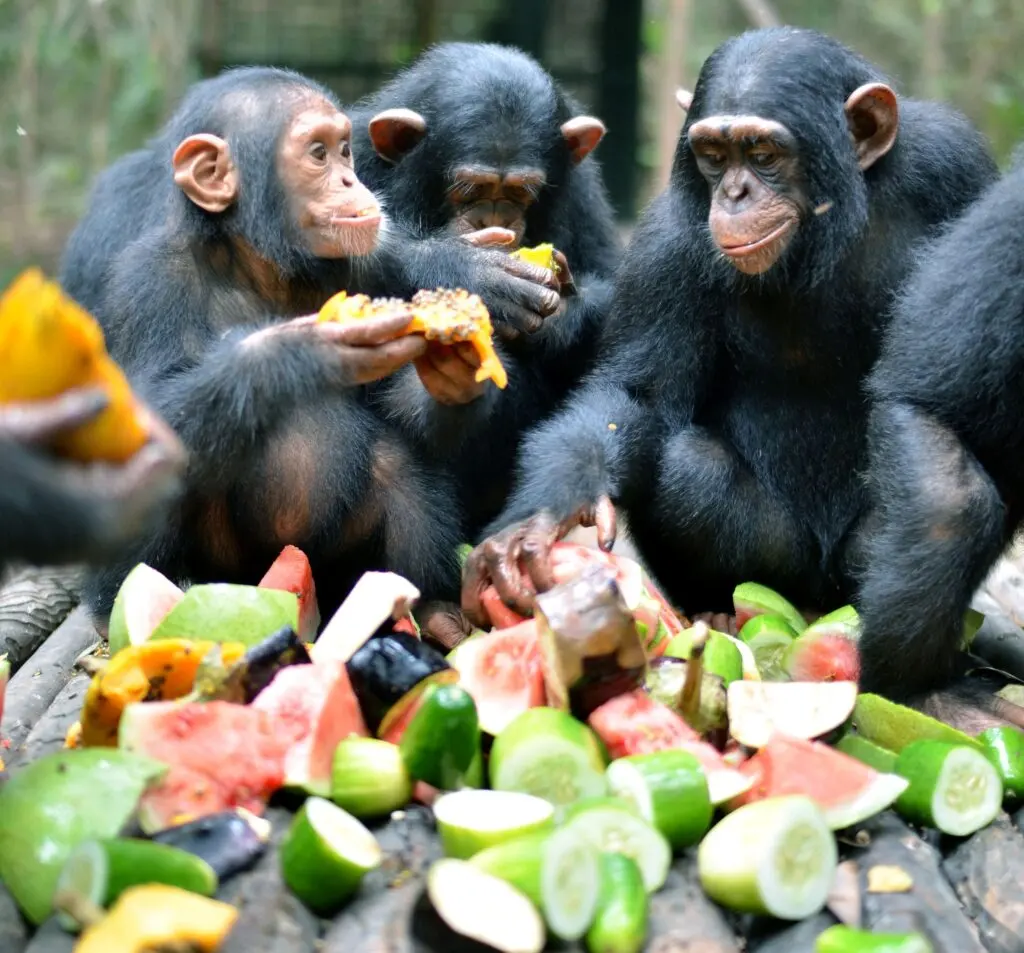
When chimpanzees are kept in sanctuaries or research facilities, providing an appropriate diet is essential for their physical and mental health. A common mistake is providing too much processed fruit, which is often higher in sugar and lower in fiber than the wild fruits they evolved to eat. This can lead to obesity, dental decay, and diabetes, mirroring health issues seen in humans.
To avoid these nutritional pitfalls, caretakers should follow these guidelines:
- Mimic natural foraging: Scatter food throughout the enclosure to encourage natural searching behaviors rather than providing it in a single pile.
- Prioritize fiber: Focus on leafy greens and complex vegetables that require significant chewing time.
- Limit sugar: Reduce the amount of sweet, cultivated fruits and replace them with browse—edible branches and leaves from non-toxic trees.
- Monitor weight: Regularly assess body condition scores to ensure the animals are not consuming excess calories compared to their daily activity levels.
By prioritizing these naturalistic feeding strategies, caretakers can help ensure that captive chimpanzees remain healthy and exhibit the natural behaviors inherent to their species.
Key facts
- Chimpanzees are primarily frugivores, meaning their diet consists mostly of ripe fruits like figs, which can make up over 50% of their daily intake.
- They are opportunistic omnivores that supplement their diet with leaves, seeds, flowers, bark, and pith when fruit is scarce.
- Meat consumption is a significant part of their behavior, often involving the cooperative hunting of smaller mammals like red colobus monkeys.
- Chimpanzees use tools, such as modified sticks, to "fish" for termites and ants, providing them with essential protein and fat.
- An adult chimpanzee typically consumes between 1,500 and 3,000 calories per day depending on activity levels and seasonal food availability.
- Avoid feeding wild chimpanzees human food, as it can cause health issues, alter their natural foraging behaviors, and increase the risk of disease transmission.
The bottom line
Chimpanzees maintain a complex and highly varied diet that centers on ripe fruits supplemented by vegetation, insects, and occasional meat. By utilizing sophisticated tool-use behaviors and foraging across vast forest territories, they meet their nutritional needs in a dynamic environment. Protecting their natural habitats is essential, as these primates rely on a wide range of specific wild plants and prey to remain healthy and thrive.
People also ask
Do chimpanzees eat insects?
Yes, chimpanzees frequently consume insects such as termites, ants, and bees. They use specialized tools like stripped twigs to extract these insects from mounds or nests, providing a vital source of protein.
How often do chimpanzees hunt for meat?
Hunting frequency varies by community, but it is typically a sporadic event rather than a daily occurrence. When they do hunt, they often work in groups to corner and capture prey like monkeys or small antelopes.
Do chimpanzees drink water?
While they obtain much of their hydration from the moisture in fruit and leaves, chimpanzees do drink water from streams and pools. They have also been observed using folded leaves as sponges to soak up water from tree hollows.
Can chimpanzees digest all types of plants?
No, chimpanzees are selective feeders that avoid toxic or indigestible plants. They possess a deep knowledge of their environment, often choosing specific medicinal plants to treat internal parasites or digestive discomfort.
Do chimpanzees store food for later?
Chimpanzees generally do not store food in the way squirrels or humans do. They are active foragers who spend much of their day moving through the forest canopy to find fresh food sources.
What is the biggest threat to their natural diet?
Habitat loss and deforestation are the primary threats, as they reduce the availability of the diverse plant species chimpanzees rely on. When their natural food sources disappear, chimpanzees are forced to travel further or risk starvation.
This answer was created with the help of AI research tools and reference sources. Spotted an error? Let us know — we correct mistakes quickly. See our editorial policy.