Who invented the battery?
Short answer
The Italian physicist Alessandro Volta invented the first true battery, known as the voltaic pile, in 1800. By stacking alternating discs of zinc and copper separated by cardboard soaked in saltwater, he created the first device capable of providing a steady, continuous flow of electric current, revolutionizing the study of electromagnetism.

On this page
Who invented the battery?
Alessandro Volta is officially credited with the invention of the battery, though his work was inspired by a scientific rivalry. In the late 1790s, his contemporary Luigi Galvani discovered that frog muscles twitched when touched by two different metals, which he attributed to "animal electricity." Volta disagreed, believing the electricity originated from the metals themselves rather than the biological tissue.
To prove his theory, Volta abandoned organic specimens and constructed a device using only inorganic materials. He stacked pairs of zinc and copper discs, placing brine-soaked cloth between each pair to act as an electrolyte. This stack, or "pile," successfully produced a constant electric current. His invention proved that electricity could be generated chemically, effectively ending the debate over animal electricity and laying the foundation for modern electrochemistry.
How does a battery work?
At its core, a battery is a device that converts chemical energy into electrical energy through a process called an electrochemical reaction. Every battery consists of three main components: an anode (negative electrode), a cathode (positive electrode), and an electrolyte. When the battery is connected to a circuit, a chemical reaction occurs that causes electrons to flow from the anode to the cathode.
This flow of electrons through an external wire creates the electric current used to power devices. The electrolyte acts as a medium that allows ions to move between the electrodes, maintaining the balance of the reaction. Over time, the chemical reactants within the battery are consumed, which eventually causes the voltage to drop and the battery to stop functioning.
- Anode: The source of electrons during the discharge process.
- Cathode: The electrode that accepts electrons from the external circuit.
- Electrolyte: A chemical medium that facilitates the movement of ions.
How to make a simple battery at home
You can replicate Volta’s experiment using common household items to understand the basic principles of voltage generation. This simple project demonstrates how dissimilar metals and an acidic electrolyte create a potential difference.
- Gather five copper pennies and five zinc-coated washers.
- Cut five small circles of cardboard, slightly smaller than the coins, and soak them in a mixture of water and salt.
- Stack the components in a repeating order: penny, cardboard, washer, penny, cardboard, washer.
- Ensure the stack remains stable and does not tip over.
- Use a multimeter to touch the bottom and top of the stack to measure the voltage produced.
Avoid using corroded coins or washers, as oxidation creates resistance that prevents the flow of electrons. Additionally, ensure the cardboard is damp but not dripping wet, as excess liquid can cause a short circuit between the layers, preventing the stack from generating a measurable current.
Why do batteries lose their charge?
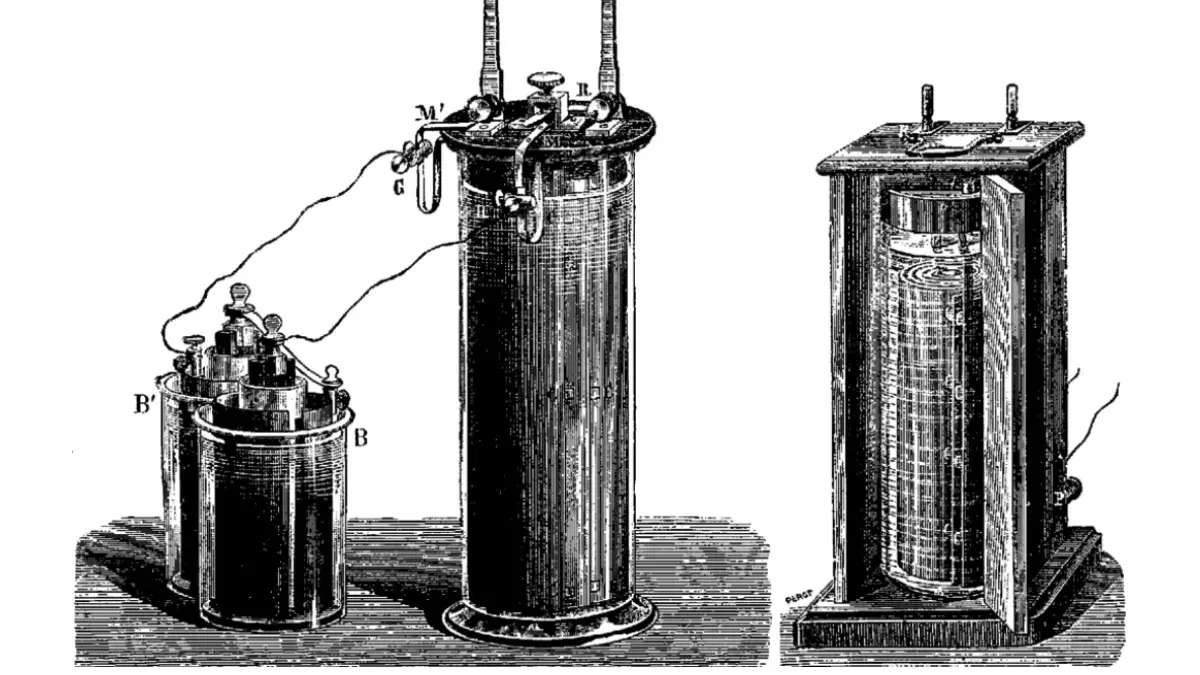
Even when not in use, batteries undergo a process known as self-discharge, where internal chemical reactions gradually deplete the stored energy. This occurs because the chemicals inside the battery are inherently unstable and react slowly over time, even without an external circuit connected. Factors such as high ambient temperatures significantly accelerate these internal reactions, leading to a faster loss of capacity.
In rechargeable batteries, the process is slightly different because the chemical reaction is reversible. When you plug a device into a charger, you force electrons back into the anode, restoring the chemical potential. However, this process is not perfectly efficient. Over hundreds of cycles, the internal structure of the electrodes degrades, and the electrolyte may dry out or crystallize, eventually rendering the battery unable to hold a charge effectively.
- High temperatures: Heat increases the rate of chemical degradation.
- Deep discharge: Frequently draining a battery to zero percent stresses the chemical structure.
- Age: Internal resistance builds up as the materials physically break down over time.
Common mistakes when using batteries
Many users unintentionally shorten the lifespan of their batteries through improper storage or charging habits. One of the most frequent errors is mixing old and new batteries in the same device. Because the old battery has higher internal resistance, it forces the new batteries to work harder, which can lead to overheating, leakage, or even a complete failure of the device.
Another common mistake is storing batteries in extreme temperatures, such as inside a hot car or a freezing garage. Extreme heat causes the chemicals to break down rapidly, while extreme cold can temporarily inhibit the chemical reaction, making the battery appear dead until it warms up. Always store batteries in a cool, dry place and remove them from devices that will not be used for an extended period to prevent potential leakage from damaging the battery compartment.
Key facts
- Alessandro Volta invented the first true battery, the voltaic pile, in 1800.
- The device consisted of alternating discs of zinc and copper separated by cardboard soaked in saltwater.
- Volta’s invention proved that electricity could be generated chemically rather than just through static discharge.
- To make a simple DIY battery, stack coins and cardboard soaked in vinegar to create a small voltage.
- Avoid short-circuiting batteries by ensuring the positive and negative terminals never touch directly with a conductive wire.
- Never attempt to recharge non-rechargeable alkaline batteries, as this can cause them to leak or explode.
The bottom line
Alessandro Volta revolutionized science in 1800 by inventing the voltaic pile, the first device to provide a continuous electric current. By stacking layers of zinc and copper, he moved beyond static electricity to chemical energy storage. Today, this fundamental discovery powers everything from small household electronics to massive grid storage systems, marking the essential transition into our modern, electrified world driven by portable chemical energy.
People also ask
What was the first battery ever made?
The first battery was the voltaic pile, created by Alessandro Volta in 1800. It used stacked metal discs to produce a steady flow of electric current.
Did the Baghdad Battery actually exist?
The Baghdad Battery refers to clay jars containing copper and iron found in Iraq, dating to the Parthian or Sassanid periods. While some suggest they were used for electroplating, there is no historical evidence that they functioned as batteries.
How do modern lithium-ion batteries work?
Modern batteries move lithium ions between a cathode and an anode through an electrolyte solution. This movement creates an electric current that powers devices like smartphones and electric vehicles.
What is the difference between a primary and secondary battery?
A primary battery is designed for single use and cannot be recharged once the chemical energy is depleted. A secondary battery, such as a lithium-ion cell, can be recharged by reversing the chemical reaction.
Why do batteries leak over time?
Batteries leak when the internal chemical structure breaks down, often due to age or improper storage. The resulting gas pressure can rupture the outer casing, releasing corrosive electrolyte fluid.
How should I dispose of old batteries?
You should never throw batteries in the regular trash, as they contain heavy metals that harm the environment. Instead, take them to a local hazardous waste collection site or a retail store that offers battery recycling programs.
This answer was created with the help of AI research tools and reference sources. Spotted an error? Let us know — we correct mistakes quickly. See our editorial policy.