Who invented the parachute?
Short answer
The parachute has no single inventor; rather, it evolved through centuries of conceptual design and iterative testing. Leonardo da Vinci first sketched a pyramidal device in 1485, but Louis-Sébastien Lenormand is credited with the first successful public jump in 1783, while André-Jacques Garnerin achieved the first high-altitude descent in 1797.
On this page
Who first designed the parachute?
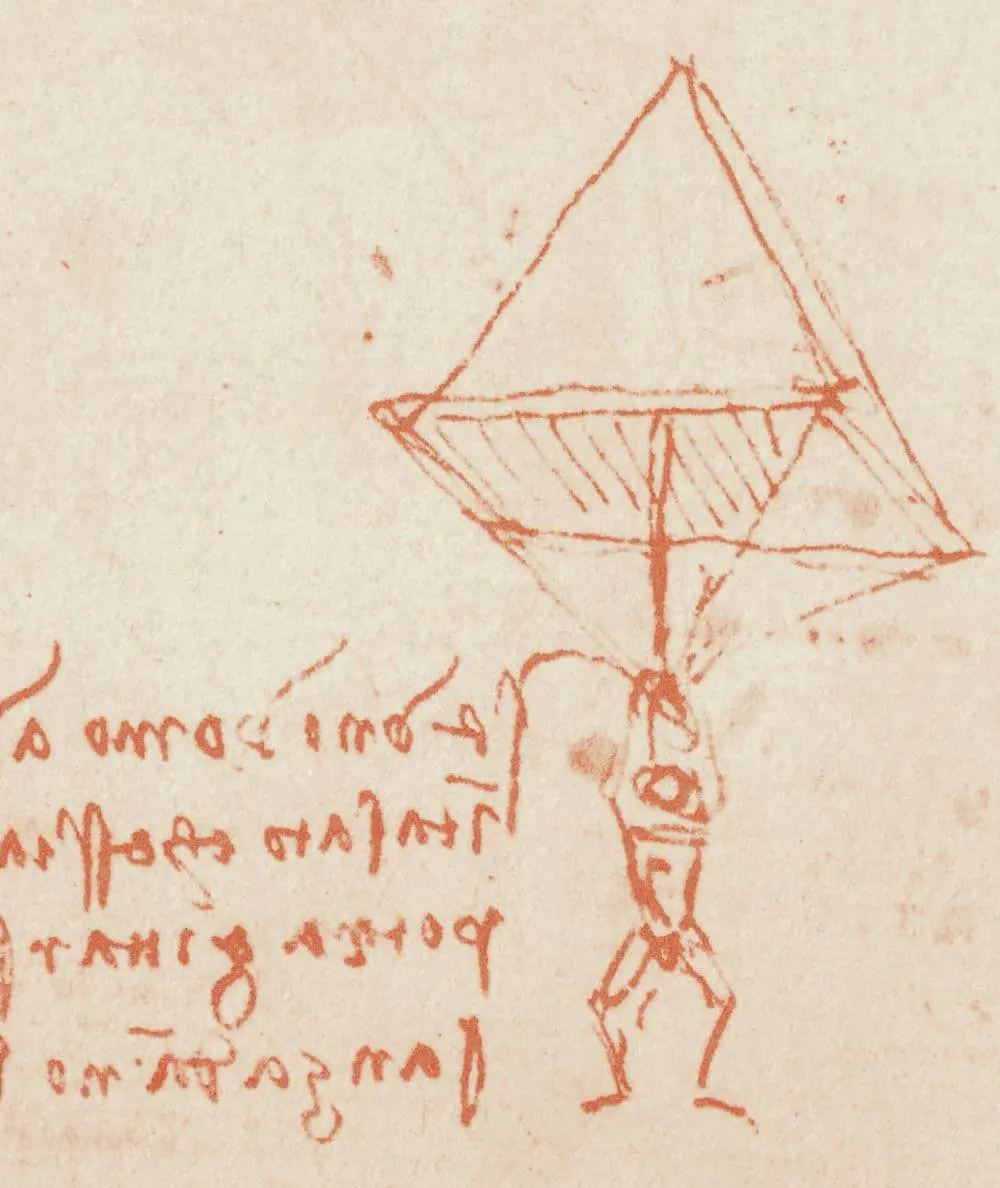
The concept of a parachute dates back to the Renaissance, long before modern aviation made such devices a necessity. Leonardo da Vinci is the most famous early visionary, having sketched a design for a pyramid-shaped linen structure in his notebooks around 1485. He theorized that a man could jump from any height without injury if he possessed a tent of linen with sealed pores. While da Vinci never built or tested his design, modern experiments in the 21st century have proven that his geometry was surprisingly aerodynamic and functional.
Before da Vinci, anonymous inventors in the Middle Ages created sketches of conical devices, though these remained purely theoretical. These early pioneers were inspired by the observation of falling objects and the desire to mimic the natural descent of seeds or birds. Their work established the fundamental principle of air resistance, which remains the core physics behind every modern parachute system used today.
How did the first successful jumps happen?
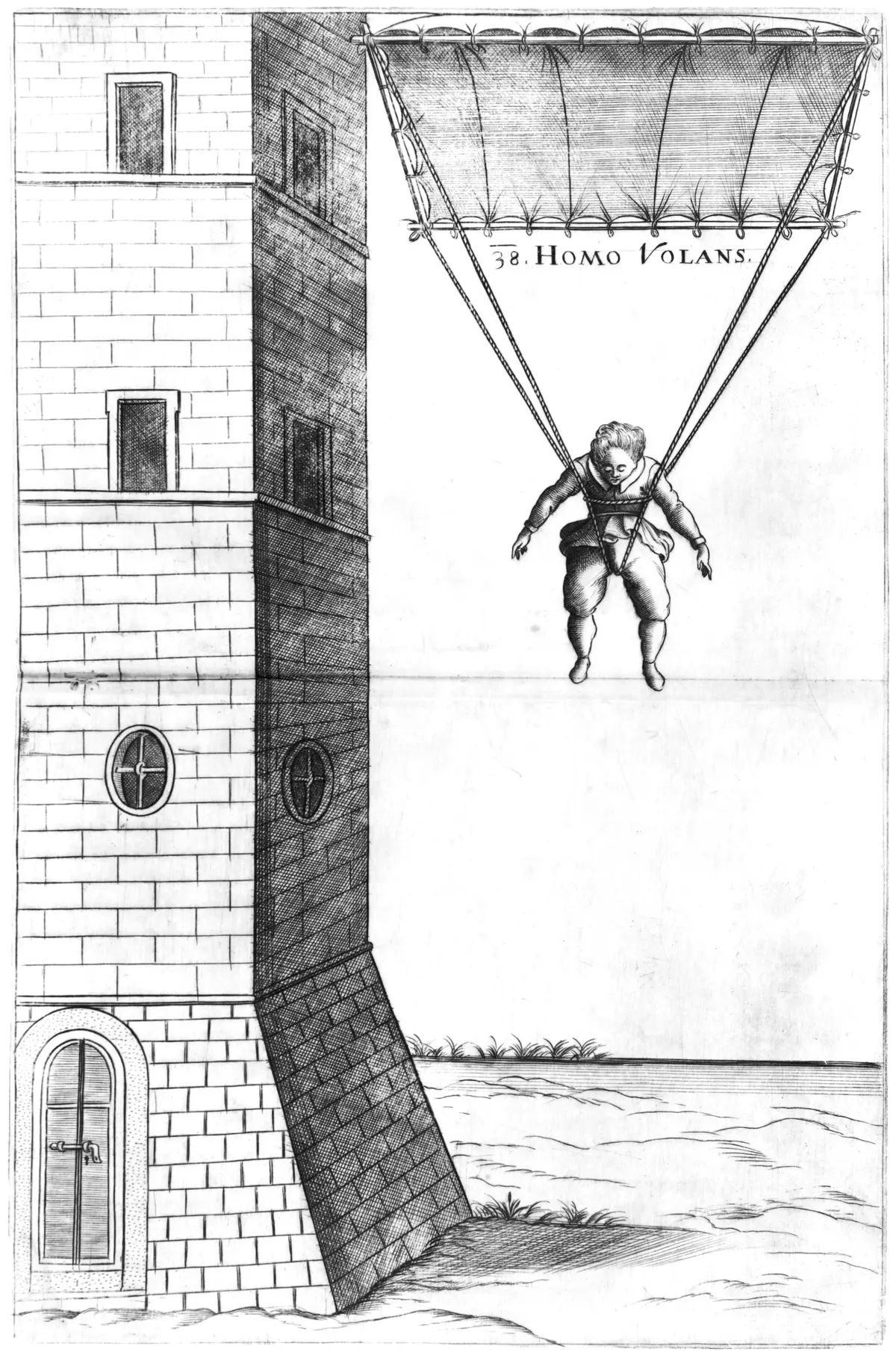
The transition from theory to practice occurred in the late 18th century, driven by Enlightenment-era curiosity. In 1783, French physicist Louis-Sébastien Lenormand jumped from the tower of the Montpellier observatory using a rigid, umbrella-like frame. He coined the term "parachute," derived from the French prefix "para" (against) and "chute" (fall). His successful landing proved that a controlled descent was possible, though his device was heavy and lacked the flexibility of later models.
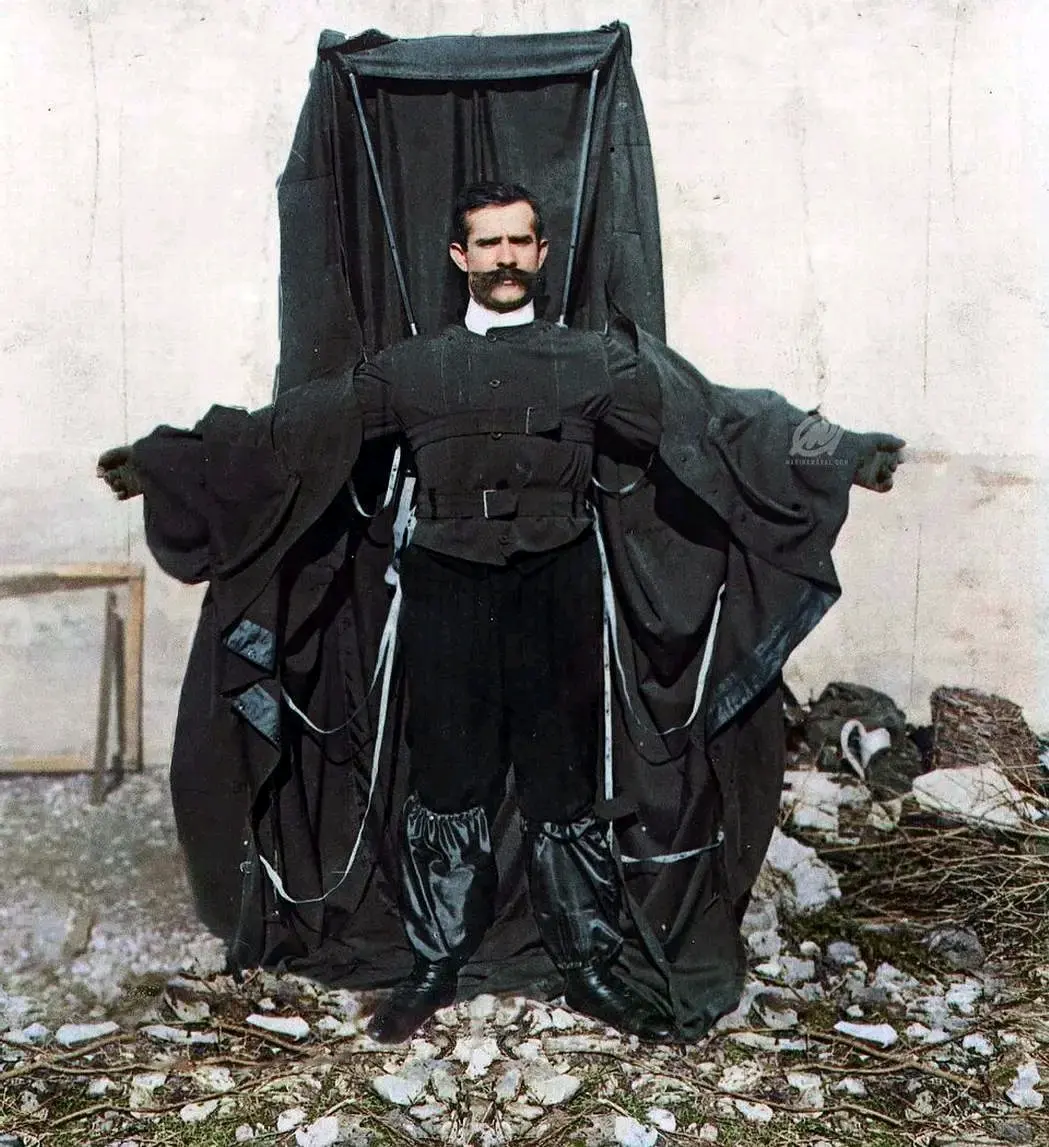
Following Lenormand, André-Jacques Garnerin achieved a major milestone in 1797 by jumping from a hydrogen balloon at an altitude of approximately 3,000 feet over Paris. Garnerin’s device was the first to resemble a modern parachute, consisting of a large canopy that opened during the fall. However, because his design lacked an air vent at the top, the canopy oscillated violently, leading to a bumpy and dangerous landing. This issue was eventually resolved by his student, Jérôme Lalande, who introduced the vent to stabilize the airflow.
How does a modern parachute work?
Modern parachutes operate on the principle of drag, where the surface area of the canopy creates enough air resistance to counteract the force of gravity. When a skydiver deploys their parachute, the canopy inflates, creating a high-pressure area beneath it that slows the descent rate to a manageable speed. This allows the user to navigate toward a landing zone by manipulating the steering toggles attached to the suspension lines.
The design of a parachute is a precise engineering task that involves several critical components:
- The canopy: A large fabric surface that catches the air.
- Suspension lines: High-strength cords that connect the canopy to the harness.
- The pilot chute: A small auxiliary parachute that pulls the main canopy out of its container.
- The harness: The webbing system that secures the skydiver to the parachute.
- The slider: A fabric panel that controls the speed of the canopy’s inflation to prevent structural damage.
Common mistakes when using a parachute
Safety in parachuting relies on strict adherence to protocols and equipment maintenance. One of the most common mistakes beginners make is failing to maintain a stable body position during deployment. If a jumper is tumbling or unstable when the parachute opens, the suspension lines can become tangled, leading to a "line-over" malfunction. Proper training emphasizes the "arch" position to ensure the canopy deploys cleanly.
Another frequent error involves improper packing of the parachute. If the lines are not stowed correctly or the pilot chute is not positioned to catch the wind, the parachute may fail to open or deploy prematurely. To ensure safety, follow these fundamental steps:
- Perform a thorough pre-flight inspection of all lines and fabric.
- Ensure the pilot chute is packed with sufficient tension.
- Verify that the deployment handle is accessible and clear of obstructions.
- Always check the weather conditions to avoid high-altitude turbulence.
- Practice emergency procedures until they become muscle memory.
Why is parachute technology still evolving?
Despite centuries of development, parachute technology continues to advance to meet the needs of space exploration and military operations. Modern materials, such as high-strength nylon and specialized polymers, have made parachutes lighter and more durable than the heavy canvases used by early pioneers. Engineers now use computer modeling to simulate airflow, allowing for the creation of ram-air canopies that behave more like wings than simple umbrellas.
These advancements are essential for landing heavy payloads, such as Mars rovers or space capsules, which require precise descent control. Today’s systems often feature automated deployment triggers, known as Automatic Activation Devices (AADs), which deploy a reserve parachute if the user reaches a critical altitude without slowing down. As we look toward the future of space tourism and aerial logistics, the parachute remains a vital piece of technology that balances the raw power of gravity with the sophisticated principles of fluid dynamics.
Key facts
- Leonardo da Vinci sketched a pyramid-shaped parachute design in his notebooks around 1485.
- Louis-Sébastien Lenormand performed the first recorded successful parachute jump in 1783 using two large umbrellas.
- André-Jacques Garnerin completed the first high-altitude descent from a hydrogen balloon in 1797.
- Modern parachute design relies on the principle of air resistance, or drag, to slow a falling object's terminal velocity.
- Always check the reserve parachute deployment handle before every jump to ensure it is clear of obstructions.
- Never attempt to pack a parachute without professional certification, as improper folding can cause the canopy to fail to open.
The bottom line
The invention of the parachute was an evolutionary process rather than a single moment of discovery. From early artistic sketches by da Vinci to the practical balloon tests of the 18th century, innovators gradually refined the technology. Today, parachuting is a sophisticated science of aerodynamics, relying on precise engineering and rigorous safety protocols to ensure that jumpers can descend from the skies with reliable control and safety.
People also ask
How does a parachute actually work?
A parachute creates drag by capturing air inside a large canopy, which significantly increases the surface area exposed to wind. This resistance counteracts the force of gravity, slowing the descent to a safe speed for landing.
What is terminal velocity?
Terminal velocity is the maximum speed a falling object reaches when the upward force of air resistance equals the downward force of gravity. For a human in a belly-to-earth position, this is typically about 120 miles per hour.
Are all parachutes the same shape?
No, parachutes vary by purpose, ranging from round canopies used for cargo or military static-line jumps to rectangular, steerable ram-air wings used in sport skydiving. The design depends on the required stability, steering capability, and landing precision.
What is a reserve parachute?
A reserve parachute is a secondary canopy packed into the harness system as a backup in case the primary parachute fails to deploy or malfunctions. Regulations require these to be inspected and repacked by a certified rigger at specific intervals.
Can you steer a parachute?
Modern sport parachutes feature "toggles" or steering lines that allow the pilot to manipulate the shape of the canopy. By pulling these lines, the jumper can change direction, flare for a soft landing, or increase forward speed.
What happens if a parachute does not open?
If a main parachute fails, the jumper must cut it away using a release handle and immediately deploy the reserve parachute. Most modern systems also include an Automatic Activation Device that triggers the reserve if the jumper remains at a high speed below a certain altitude.
This answer was created with the help of AI research tools and reference sources. Spotted an error? Let us know — we correct mistakes quickly. See our editorial policy.