What is alliteration?
Short answer
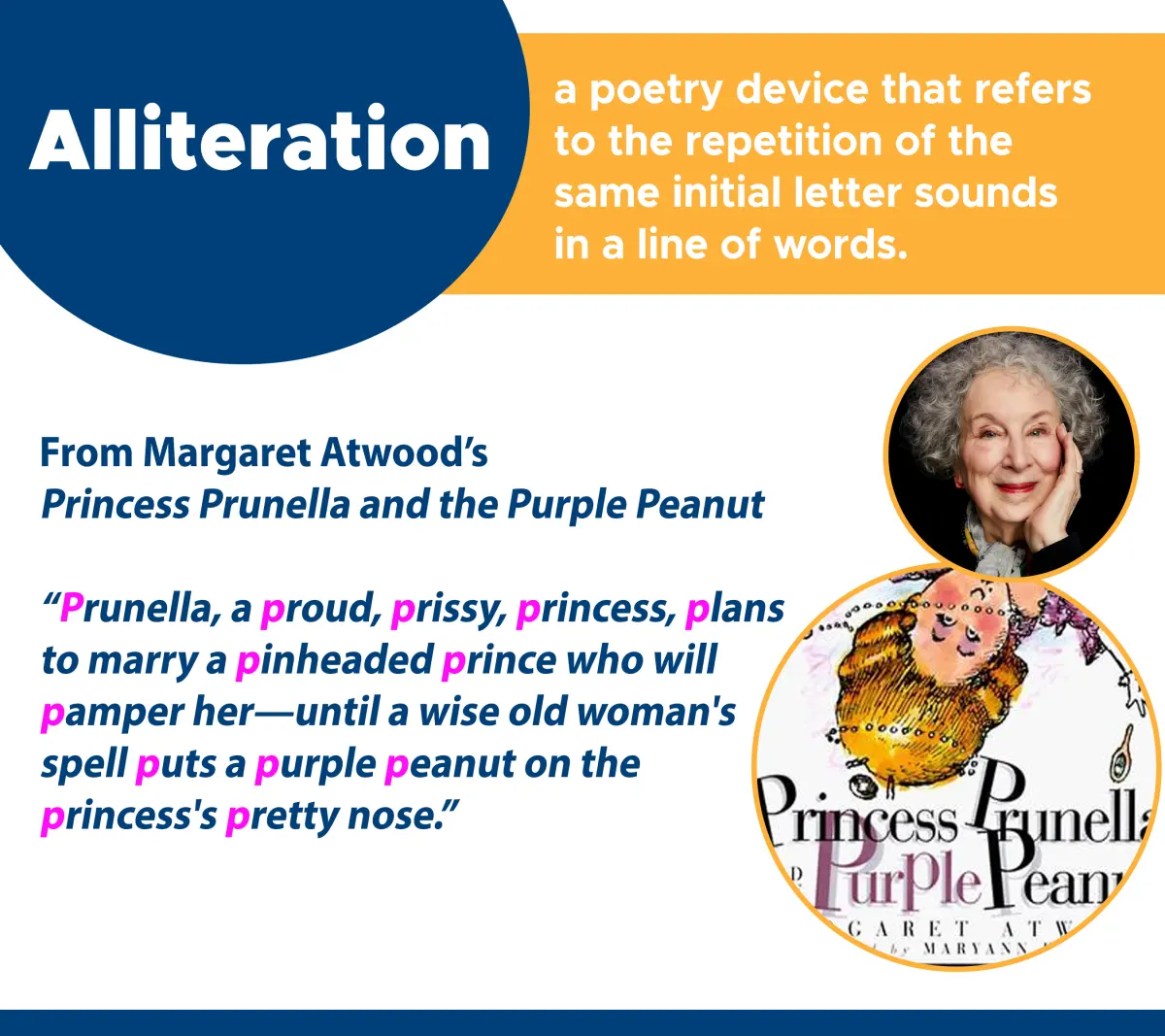
Alliteration is a literary device defined by the repetition of the same consonant sound at the beginning of adjacent or closely connected words. It creates rhythm, emphasizes specific ideas, and makes language more memorable. Writers frequently employ this technique in poetry, prose, advertising slogans, and brand names to capture audience attention effectively.
On this page
How does alliteration work in writing?
Alliteration relies on the repetition of initial consonant sounds, not necessarily the letters themselves. For example, the phrase "phone phobia" is alliterative because both words share the "f" sound, even though they begin with different letters. This phonetic consistency creates an auditory pattern that draws the reader’s ear to the emphasized words. By linking words through sound, writers can establish a specific mood or reinforce the thematic importance of a particular phrase.
The effectiveness of alliteration often depends on its subtlety within a sentence. When used sparingly, it provides a pleasing cadence that highlights key concepts or creates a sense of unity. However, if the repetition is too heavy or forced, it can distract the reader and make the prose feel artificial or childish. Mastering this device requires a balance between intentional sound design and natural flow.
Why do writers use alliteration?
Authors and advertisers utilize alliteration to make their messages more persuasive and easier to recall. Because the human brain is wired to recognize patterns, repeating sounds helps information stick in the memory. This is why many famous brand names, such as Best Buy, Coca-Cola, and PayPal, rely on alliterative structures to build instant recognition. In literature, it serves as a tool to create musicality and emphasize imagery, particularly in poetry.
Beyond mere memorability, alliteration can dictate the emotional tone of a piece of writing. Harsh, plosive sounds like "p," "b," or "k" can convey tension, anger, or sudden action. Conversely, softer sounds like "s," "l," or "m" often evoke tranquility, fluidity, or sadness. By choosing specific consonant sounds, writers can subtly influence how an audience perceives the atmosphere of their work.
- Identify the core message or theme you wish to highlight.
- Brainstorm a list of synonyms for your key nouns or verbs.
- Check the initial sounds of those synonyms to see if they align with surrounding words.
- Integrate the alliterative pair naturally to ensure it does not disrupt the sentence structure.
Examples of alliteration in literature
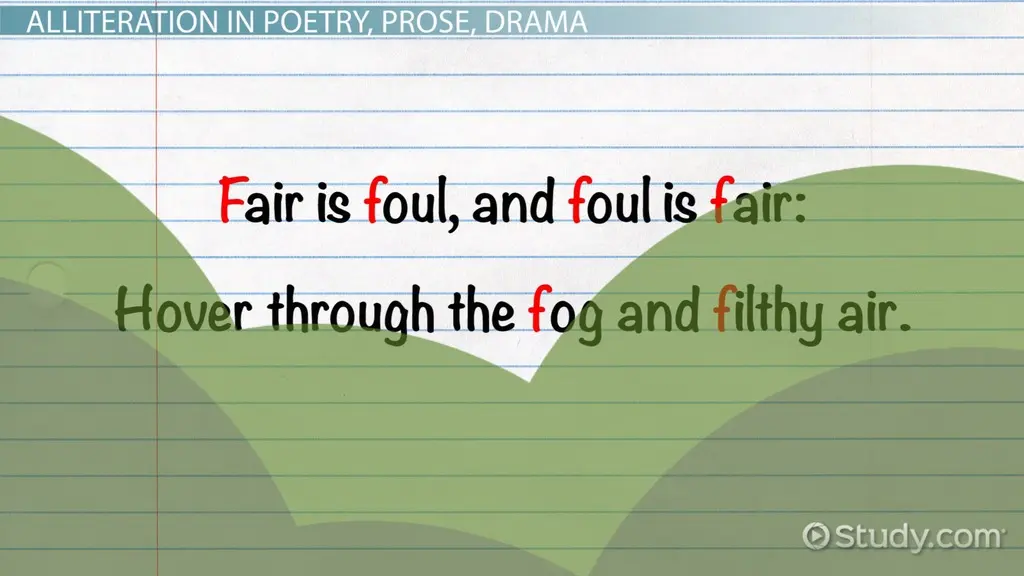
Alliteration has been a staple of English literature for centuries, dating back to Old English epics like Beowulf. In these early works, alliteration was not just an ornamental device but a structural necessity used to organize lines of verse. Later poets, such as Samuel Taylor Coleridge, utilized it to create vivid sensory experiences. In "The Rime of the Ancient Mariner," the phrase "the fair breeze blew, the white foam flew" uses alliteration to mimic the rushing movement of the sea.
Modern writers continue to use this technique to add depth to their narratives. It is frequently found in children’s literature, where the rhythmic quality helps young readers develop phonemic awareness. Beyond children's books, journalists and speechwriters use alliteration to craft "sound bites" that are punchy and authoritative. By repeating sounds, they ensure that the most critical parts of their message resonate with the audience long after the speech or article concludes.
- "Peter Piper picked a peck of pickled peppers" (Tongue twister)
- "Deep into that darkness peering, long I stood there wondering, fearing" (Edgar Allan Poe)
- "The fair breeze blew, the white foam flew" (Samuel Taylor Coleridge)
- "Five miles meandering with a mazy motion" (Samuel Taylor Coleridge)
Common mistakes when using alliteration
One of the most frequent errors is overusing the device, which can turn a professional or artistic piece into a tongue twister. If every sentence contains alliterative phrases, the reader will notice the technique rather than the content, which undermines the message. It is essential to ensure that the sound repetition serves the narrative rather than forcing it into a corner. Always prioritize the clarity of your meaning over the cleverness of the sound.
Another common mistake is ignoring the difference between sounds and letters. Writers sometimes mistakenly believe that words must start with the same letter to be alliterative, which is incorrect. For example, "cat" and "kite" are alliterative, but "cat" and "city" are not, despite both starting with the letter "c." Relying on visual spelling rather than phonetic sound is a frequent pitfall for beginners. Always read your work aloud to confirm that the sounds actually match.
- Overloading a paragraph with too many similar sounds.
- Focusing on identical letters rather than identical sounds.
- Using alliteration in serious contexts where it sounds frivolous.
- Allowing the sound to dictate the word choice at the expense of accuracy.
How to practice using alliteration effectively
To improve your use of alliteration, start by analyzing the work of poets and copywriters. Read their sentences aloud and identify where they have used sound repetition to create emphasis. Once you understand the rhythm, try writing short, descriptive sentences that incorporate a single alliterative pair. Focus on making the repetition feel invisible, so the reader experiences the impact of the sound without immediately identifying the technique behind it.
As you become more comfortable, experiment with different types of consonant sounds to see how they change the tone of your writing. Try writing a paragraph about a storm using harsh, plosive sounds, and then rewrite it using soft, sibilant sounds. This exercise will help you understand the emotional weight that specific letters carry. With consistent practice, you will develop an intuitive sense for when alliteration adds value and when it is best to leave it out.
Key facts
- Alliteration is the repetition of the same consonant sound at the beginning of closely connected words.
- It relies on sounds rather than letters, meaning "phone" and "fun" alliterate despite starting with different letters.
- The technique is frequently used in poetry, advertising, and public speaking to create rhythm and memorability.
- Avoid overusing alliteration, as excessive repetition can make writing sound like a nursery rhyme or a tongue twister.
- Tongue twisters like "Peter Piper picked a peck of pickled peppers" are extreme examples of alliteration used for phonetic practice.
- To create effective alliteration, focus on stressed syllables where the repeated sound is most audible to the listener.
The bottom line
Alliteration is a powerful stylistic device that uses the repetition of initial consonant sounds to enhance the musical quality of language. By drawing attention to specific words, it creates a rhythmic flow that improves recall and emotional impact. When used with moderation, it serves as an effective tool for poets and writers to craft memorable prose, though it should be avoided in strictly formal or scientific contexts.
People also ask
Is alliteration the same as assonance?
No, alliteration focuses on the repetition of consonant sounds at the start of words, while assonance refers to the repetition of vowel sounds within words.
Can alliteration occur in the middle of words?
While true alliteration occurs at the start of words, similar effects called consonance involve repeating consonant sounds anywhere within words to create musicality.
Why do brands use alliteration in their names?
Companies use alliteration because it makes names easier to remember and creates a pleasing, balanced sound that sticks in the consumer's mind.
Does alliteration have to be in every word of a sentence?
Not at all, as using alliteration in every word can sound forced or silly. It is most effective when used sparingly to emphasize specific phrases or themes.
What is the difference between alliteration and rhyme?
Rhyme involves matching the ending sounds of words, whereas alliteration focuses exclusively on the initial sounds of words to establish a rhythmic pattern.
Can alliteration be used in formal academic writing?
It is generally avoided in formal academic or technical writing because it can distract from the clarity and objectivity required in those styles.
This answer was created with the help of AI research tools and reference sources. Spotted an error? Let us know — we correct mistakes quickly. See our editorial policy.