What is a simile?
Short answer
A simile is a figure of speech that compares two distinct things by using connecting words such as "like" or "as." It creates a vivid mental image by highlighting a shared quality between the objects. Unlike metaphors, which equate two things, similes explicitly signal the comparison to help the reader visualize concepts.
On this page
What is a simile and how does it work?
A simile functions as a bridge between two unrelated concepts, allowing a writer to describe something unfamiliar by linking it to something well-known. By utilizing the words "like" or "as," the device clarifies a specific trait, emotion, or action. For instance, saying someone is "as brave as a lion" immediately projects the strength and courage associated with the animal onto the person. It is a fundamental tool in both creative writing and everyday conversation because it simplifies complex ideas into relatable sensory experiences.
The effectiveness of a simile relies on the strength of the connection between the two items being compared. When a writer chooses a comparison, they must ensure the shared characteristic is immediately recognizable to the audience. If the connection is too obscure, the reader may become confused rather than enlightened. Similes are versatile and can be used to describe physical appearances, abstract feelings, or even the speed and intensity of an event.
How to write an effective simile
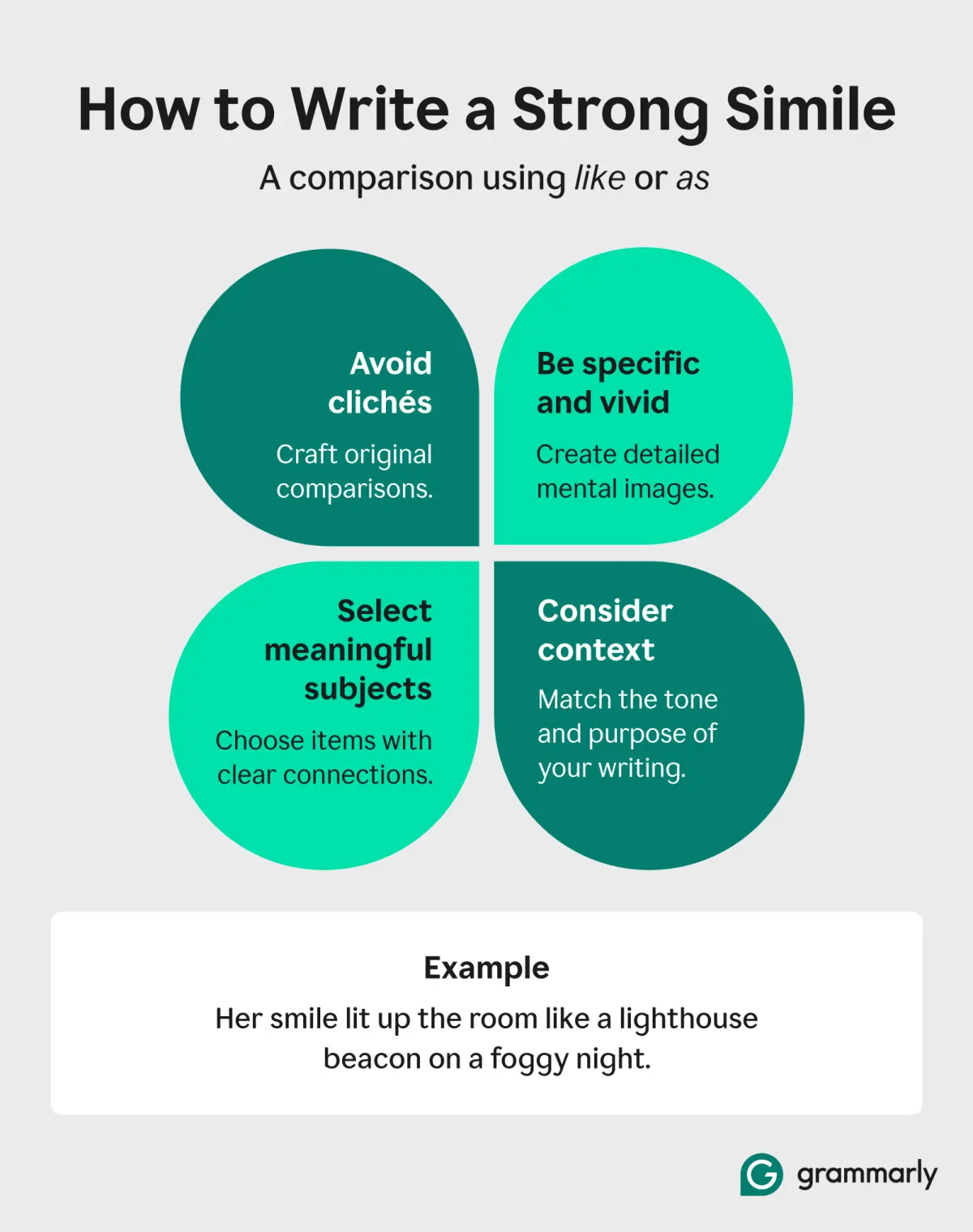
Crafting a compelling simile requires observation and a clear understanding of the subject you wish to describe. You should identify the core quality you want to emphasize, such as heat, speed, or silence, and then brainstorm objects that embody that quality perfectly. Follow these steps to refine your writing:
- Identify the subject you want to describe and the specific attribute you want to highlight.
- Brainstorm a list of objects, animals, or natural phenomena that are famous for that attribute.
- Select the most evocative option that avoids clichés like "as cold as ice."
- Connect the two using "like" or "as" and test the rhythm of the sentence.
- Edit the sentence to ensure it fits the tone of your overall narrative.
By following these steps, you move beyond generic descriptions and create original imagery. A strong simile should feel fresh and surprising while remaining grounded in the reader's own experience.
Why use similes instead of metaphors?
While both similes and metaphors are forms of figurative language, they serve different rhetorical purposes. A metaphor makes an absolute claim, such as "time is a thief," which suggests that time literally steals things. A simile, however, maintains a distance between the two subjects, such as "time is like a thief." This distinction is important when you want to suggest a resemblance without making a definitive, potentially confusing identity statement.
Similes are often preferred when a writer wants to maintain a sense of literal reality while adding poetic flair. They are useful for:
- Providing clarity without overwhelming the reader with abstract symbolism.
- Maintaining a lighter, more conversational tone in prose.
- Allowing for multiple points of comparison within a single sentence.
- Helping the reader visualize a scene through familiar touchstones.
Because similes acknowledge the comparison explicitly, they are generally easier for readers to process quickly. This makes them ideal for instructional writing, journalism, and narrative fiction where accessibility is a priority.
Common mistakes when using similes
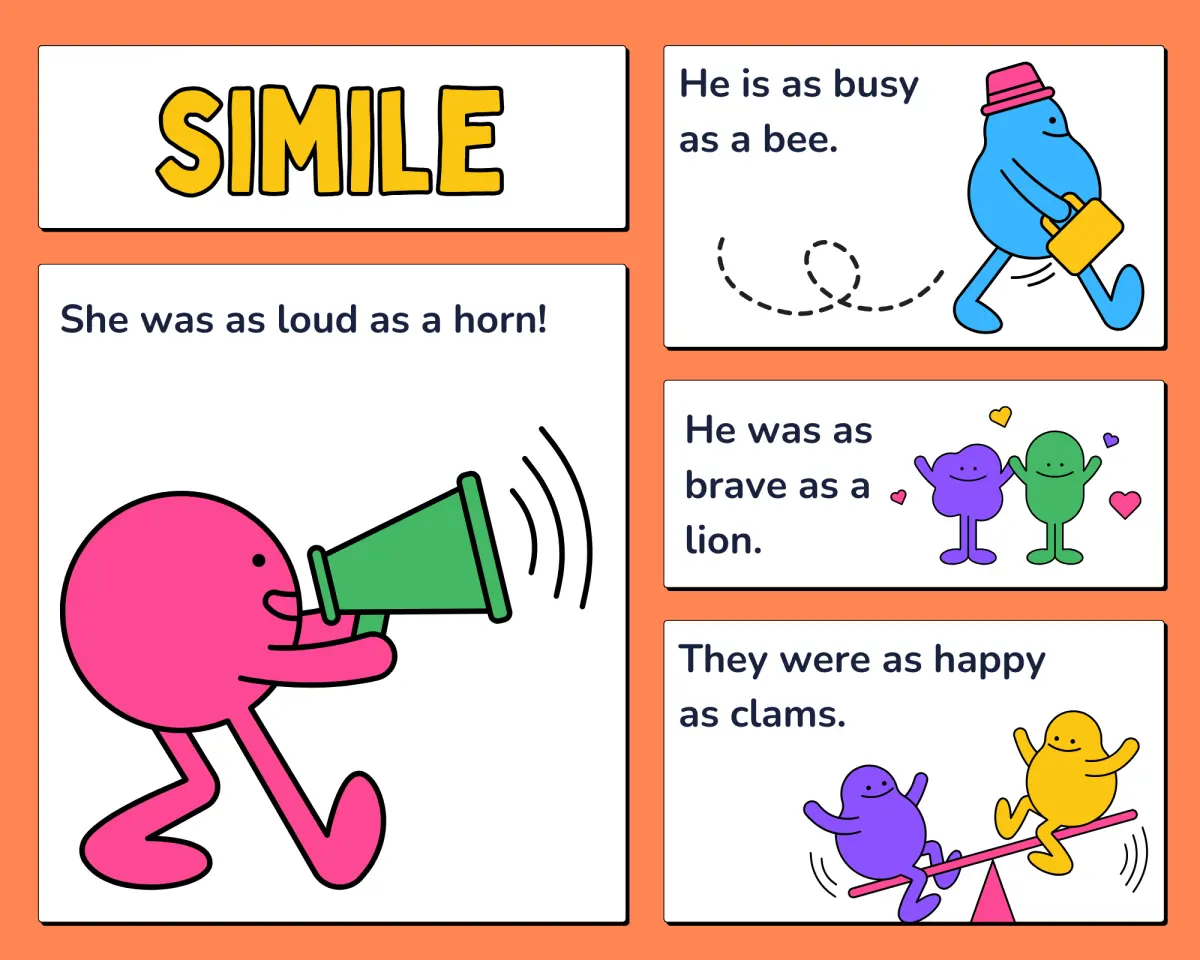
One of the most frequent errors in writing is the reliance on "dead" or overused similes. Phrases like "as busy as a bee" or "like a kid in a candy store" have lost their impact through constant repetition. When a reader encounters these clichés, they often skim over them without forming a mental image. To improve your writing, you must avoid these tired comparisons and strive for original observations that reflect your unique perspective.
Another common mistake is creating illogical comparisons that distract from the message. If the two things being compared share no actual commonality, the simile fails to function. Be wary of these pitfalls:
- Mixing up similes with metaphors, which can lead to clunky, redundant phrasing.
- Using too many similes in a single paragraph, which dilutes the impact of each one.
- Choosing comparisons that are culturally specific and may not be understood by a broad audience.
- Forgetting to include the connecting word, which turns the simile into a confusing metaphor or a literal statement.
Best examples of similes in literature
Great writers often use similes to anchor their stories in sensory details that resonate with the reader. In literature, these comparisons can set a mood or reveal a character’s internal state without needing lengthy explanations. For example, in The Catcher in the Rye, J.D. Salinger writes, "I felt like a horse that had been put out to pasture," which perfectly captures the protagonist's sense of uselessness and isolation. These moments create a lasting impression because they connect the reader's empathy to the character's situation.
Other classic examples demonstrate how similes can elevate simple descriptions into art:
- "The water made a sound like someone pouring out a bag of marbles."
- "His voice was like a rusty gate swinging on its hinges."
- "She was as sharp as a tack, cutting through the tension in the room."
- "The clouds hung low, heavy like a wet wool blanket."
By studying how professional authors employ these devices, you can learn to balance descriptive power with brevity. The key is to ensure that every simile serves a purpose, whether it is to clarify a difficult concept or to evoke a specific emotional response from the reader.
Key facts
- A simile is a figure of speech that explicitly compares two unlike things using the connecting words "like" or "as."
- Unlike a metaphor, which asserts that one thing is another, a simile maintains the distinction between the two objects being compared.
- The term originates from the Latin word similis, which translates directly to "like" or "similar."
- Effective similes rely on shared characteristics between unrelated items to create a vivid image in the reader's mind.
- Avoid "cliché" similes, such as "busy as a bee" or "cold as ice," as these have lost their impact through overuse.
- To create a strong original simile, identify a specific trait of your subject and brainstorm an unexpected object that shares that exact quality.
The bottom line
A simile is a powerful literary tool that enhances communication by drawing clear parallels between distinct ideas. By utilizing the words "like" or "as," you can transform simple descriptions into evocative imagery that resonates with your audience. To master this technique, focus on originality and avoid tired, overused phrases. When applied thoughtfully, similes provide the necessary bridge to help readers visualize your intended meaning with greater precision.
People also ask
What is the difference between a simile and a metaphor?
A simile uses "like" or "as" to draw a comparison, while a metaphor makes a direct statement by saying one thing is another. For example, "He is like a lion" is a simile, whereas "He is a lion" is a metaphor.
Can a simile be used in formal writing?
Yes, similes are common in academic and professional writing when used to clarify complex concepts. They help bridge the gap between abstract ideas and concrete, relatable imagery for the reader.
What is an epic simile?
An epic simile, also known as a Homeric simile, is an elaborate comparison that extends over several lines of text. These are frequently found in classical literature like Homer's The Odyssey to provide detailed, descriptive context.
Why do writers use similes instead of direct descriptions?
Similes provide a sensory shortcut that allows a writer to evoke an emotion or visual without writing a long paragraph of explanation. They make writing more engaging by forcing the reader to visualize two different concepts simultaneously.
Is "He runs fast" a simile?
No, this is a simple descriptive sentence. To turn it into a simile, you must compare the speed to something else, such as "He runs like the wind."
What is the most common mistake when writing similes?
The most frequent error is creating a comparison that is too vague or illogical. If the shared trait between the two objects is not immediately obvious to the reader, the simile will confuse rather than clarify.
This answer was created with the help of AI research tools and reference sources. Spotted an error? Let us know — we correct mistakes quickly. See our editorial policy.