Who invented skis?
Short answer
Skis were not invented by a single individual but evolved over millennia in northern Eurasia. Archaeological evidence, including the 5,000-year-old Kalvträsk ski found in Sweden, confirms that prehistoric hunter-gatherers used wooden planks for winter travel. These early tools were essential for survival, allowing indigenous populations to traverse deep snow to hunt and migrate.
On this page
Who invented the first skis?
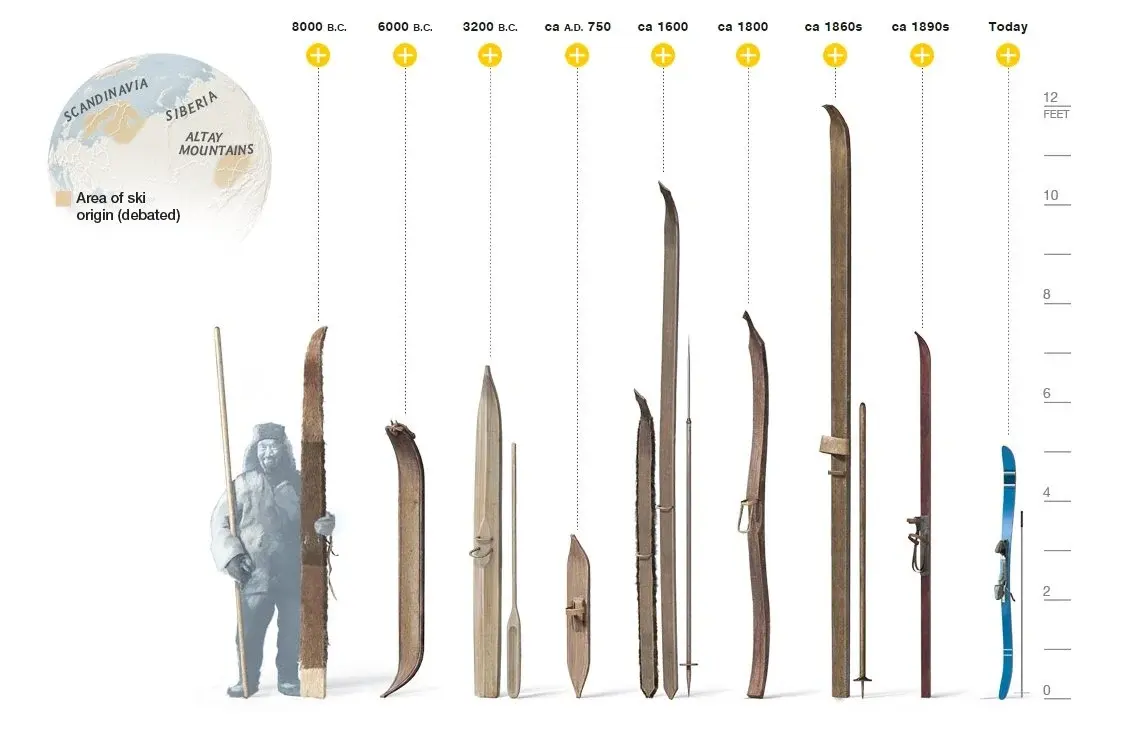
The invention of the ski is a product of long-term cultural evolution rather than a specific moment of discovery. Archaeological findings across Scandinavia and Russia suggest that skis were developed independently by various nomadic groups in the subarctic regions. These early versions were primitive, wide planks of wood often covered in animal fur to provide grip and prevent sliding backward while moving uphill.
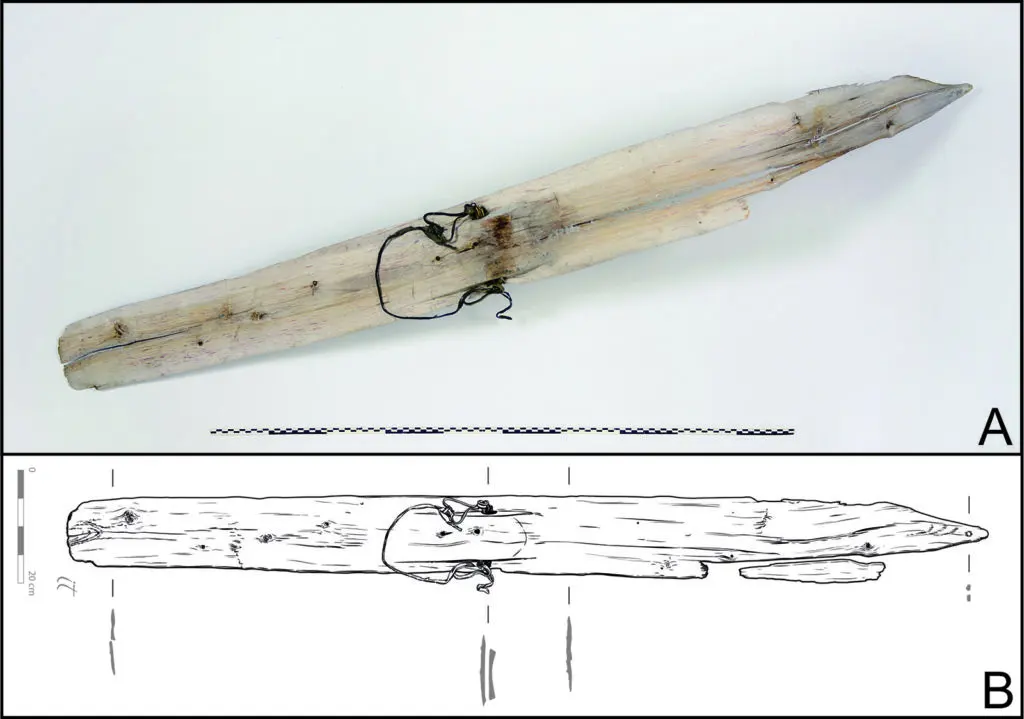
The oldest physical evidence dates back to the Neolithic period, roughly 3,000 to 5,000 years ago. The Kalvträsk ski, discovered in a Swedish bog, remains one of the most significant artifacts in history. It features a distinct hole for a binding, indicating that early users had already developed a sophisticated method for attaching the wood to their boots. This technology transformed winter survival by enabling efficient movement across frozen landscapes.
How did ancient skis work?
Ancient skis functioned quite differently from the sleek, lightweight equipment used in modern sports. They were typically asymmetrical, with one long, smooth ski for gliding and a shorter, broader ski for pushing and balancing. This design allowed hunters to maintain stability while carrying heavy gear or tracking prey through dense forests and deep, powdery snow.
To manage the challenging terrain, ancient users employed several techniques that remain relevant in backcountry skiing today:
- Using a single long pole to steer and brake, which provided a third point of contact for stability.
- Applying animal skins, such as seal or reindeer hide, to the underside of the wood to create traction.
- Utilizing natural materials like willow branches or leather thongs to secure the foot to the ski platform.
Why did people start using skis?
The primary driver for the development of skis was the necessity of winter mobility in harsh climates. In regions where snow remained on the ground for more than half the year, walking was physically exhausting and often impossible. Skis distributed a person's weight over a larger surface area, preventing them from sinking into the snow and conserving vital energy for hunting and gathering.
Beyond survival, skis became central to the social and military structures of northern tribes. Historical records from the Middle Ages describe "skiing battalions" in the Norwegian and Swedish armies, proving that the technology was eventually adapted for warfare. This transition from a tool of subsistence to a tool of defense highlights how integral the ski became to the development of northern European civilizations over several centuries.
How to choose skis for beginners
Selecting the right equipment today is a far more technical process than it was for our ancestors. Modern skis are engineered for specific conditions, such as groomed resort slopes, deep powder, or cross-country touring. Beginners should prioritize stability and ease of control over speed and performance features, as these factors directly impact the learning curve and overall safety on the mountain.
When you are ready to purchase or rent your first pair, follow these professional recommendations:
- Determine your primary activity: Choose "all-mountain" skis for resort use or "touring" skis if you plan to hike uphill.
- Check the length: A beginner should select skis that reach between their chin and nose when standing upright.
- Test the flex: Softer skis are more forgiving and easier to turn, making them ideal for those still learning the basics of edge control.
- Verify the bindings: Ensure they are professionally adjusted to your weight and height to prevent injury during a fall.
Common mistakes when learning to ski
Many novices struggle because they attempt to fight the natural mechanics of the equipment. A frequent error is leaning backward, which shifts your center of gravity away from the center of the ski and makes steering nearly impossible. Instead, you must maintain an athletic stance with your shins pressing firmly against the tongues of your boots to ensure constant contact with the front of the ski.
Another common mistake involves improper speed management, often leading to panic and loss of control. Beginners often try to stop by leaning back or crossing their skis, both of which are ineffective and dangerous. To stop safely, you should gradually transition into a wedge shape, or "pizza," by pushing the tails of your skis outward while keeping the tips close together. Avoid looking down at your feet, as this disrupts your balance; always keep your eyes focused on the path ahead to anticipate changes in terrain or the movements of other skiers. By maintaining a relaxed posture and keeping your hands forward, you will gain the confidence needed to navigate the slopes effectively and safely.
Key facts
- Archaeological evidence suggests skis were used in Fennoscandia as early as 8000 to 5000 BCE.
- The oldest preserved ski, the Kalvträsk ski, was discovered in a Swedish bog and dates to approximately 3300 BCE.
- Ancient skis were primarily functional tools for hunters and travelers to traverse deep snow, rather than equipment for recreation.
- Modern downhill skiing as a sport originated in the Telemark region of Norway during the mid-19th century.
- Sondre Norheim, a Norwegian carpenter, is widely considered the father of modern skiing for inventing the sidecut and heel-binding.
- When learning to ski, keep your weight centered over your boots rather than leaning back to maintain proper control and balance.
The bottom line
Skiing evolved from an ancient survival tool used by prehistoric hunters in northern regions into a sophisticated global sport. While the technology shifted from simple wooden planks to precision-engineered equipment, the fundamental principles of balance and weight distribution remain unchanged. By understanding the historical roots of the sport and mastering proper body positioning, modern skiers can safely enjoy the slopes and appreciate this enduring human innovation.
People also ask
What material were the first skis made from?
The earliest skis were crafted from single pieces of wood, typically pine, birch, or spruce. Hunters often covered the undersides with animal fur to provide grip for climbing slopes while allowing for a glide on the descent.
Did ancient people use poles for skiing?
Yes, early skiers typically used a single, long wooden pole held in both hands. This pole served as a brake, a steering device, and a support for balance on uneven terrain.
When did skiing become a popular recreational activity?
Skiing transitioned from a survival necessity to a leisure sport in the 1860s. The introduction of competitive events in Norway sparked global interest, leading to the first organized ski clubs.
What is the purpose of the "sidecut" on a ski?
The sidecut is the hourglass shape of a ski where the middle is narrower than the tip and tail. This design allows the ski to bend into an arc when tilted, making it significantly easier to carve turns.
How should a beginner choose their first pair of skis?
Beginners should select shorter, softer skis that reach between their chin and nose. These are easier to maneuver and turn at slower speeds, helping new skiers build confidence before moving to longer, stiffer equipment.
What is the most common mistake for new skiers?
The most frequent error is leaning backward, which shifts weight off the front of the skis and makes turning difficult. Beginners must practice keeping their shins pressed firmly against the front of their ski boots.
This answer was created with the help of AI research tools and reference sources. Spotted an error? Let us know — we correct mistakes quickly. See our editorial policy.