What was the Roman Empire?
Short answer
The Roman Empire was a vast Mediterranean civilization centered in Rome, transitioning from a republic to an autocratic state under Augustus in 27 BCE. It dominated Europe, North Africa, and the Near East for centuries, leaving an enduring legacy in law, language, engineering, architecture, and governance before its eventual fragmentation and collapse.
On this page
How did the Roman Empire begin?
The Roman Empire emerged from the ashes of the Roman Republic, a system of government that had become increasingly unstable due to civil wars and political corruption. Julius Caesar’s rise to power and subsequent assassination in 44 BCE served as the final catalyst for the Republic's demise. His adopted son, Octavian, defeated his rivals, Mark Antony and Cleopatra, at the Battle of Actium in 31 BCE.
In 27 BCE, the Senate granted Octavian the title of Augustus, marking the official start of the Roman Empire. He established the Principate, a system that maintained the facade of traditional republican institutions while consolidating absolute authority in his own hands. This transition ended decades of internal strife and inaugurated the Pax Romana, a period of relative peace and stability that lasted for approximately two centuries.
- Consolidation of military power under a single leader.
- The transformation of the Senate into a largely symbolic body.
- Expansion of borders to secure natural frontiers like the Rhine and Danube rivers.
What was the Pax Romana?
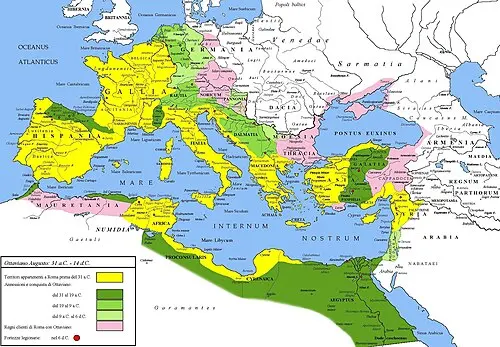
The Pax Romana, or "Roman Peace," refers to the era of relative stability and prosperity that began with Augustus and ended with the death of Marcus Aurelius in 180 CE. During this time, the empire reached its greatest territorial extent, stretching from Britain in the north to Egypt in the south. The Roman military acted as a stabilizing force, securing trade routes and protecting the borders from external incursions.
Economic growth flourished as the Mediterranean became a "Roman lake," allowing for the safe transport of grain, wine, olive oil, and luxury goods. The government invested heavily in infrastructure to connect the far-flung provinces, fostering a shared culture and economy. Latin became the administrative language of the West, while Greek remained the dominant language of commerce and culture in the East.
- Construction of over 50,000 miles of paved roads.
- Standardization of currency to facilitate regional trade.
- Establishment of a professional civil service to manage taxation and governance.
Why did the Roman Empire collapse?
The decline of the Roman Empire was a complex, centuries-long process rather than a single event. By the third century CE, the empire faced severe internal crises, including hyperinflation, recurring plagues, and constant political turnover. The sheer size of the territory made it nearly impossible for one emperor to govern effectively from Rome, leading to the eventual division of the empire into Western and Eastern halves under Diocletian.
The Western Roman Empire struggled with economic stagnation, reliance on slave labor, and increasing pressure from migrating Germanic tribes. In 476 CE, the Germanic chieftain Odoacer deposed the last Western emperor, Romulus Augustulus, which is traditionally cited as the end of the Western Empire. Conversely, the Eastern half, known as the Byzantine Empire, survived for another thousand years, preserving Roman law and culture until the fall of Constantinople in 1453.
What is the legacy of the Roman Empire?
Roman influence remains deeply embedded in modern Western society, particularly in the fields of law, language, and engineering. Many modern legal systems are based on the principles of Roman civil law, which emphasized written codes and the concept of "innocent until proven guilty." Furthermore, the Latin language served as the foundation for the Romance languages, including French, Spanish, Italian, Portuguese, and Romanian.
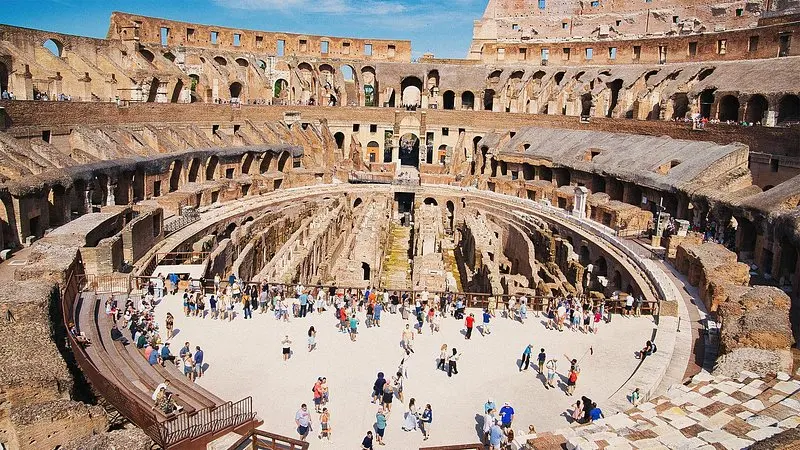
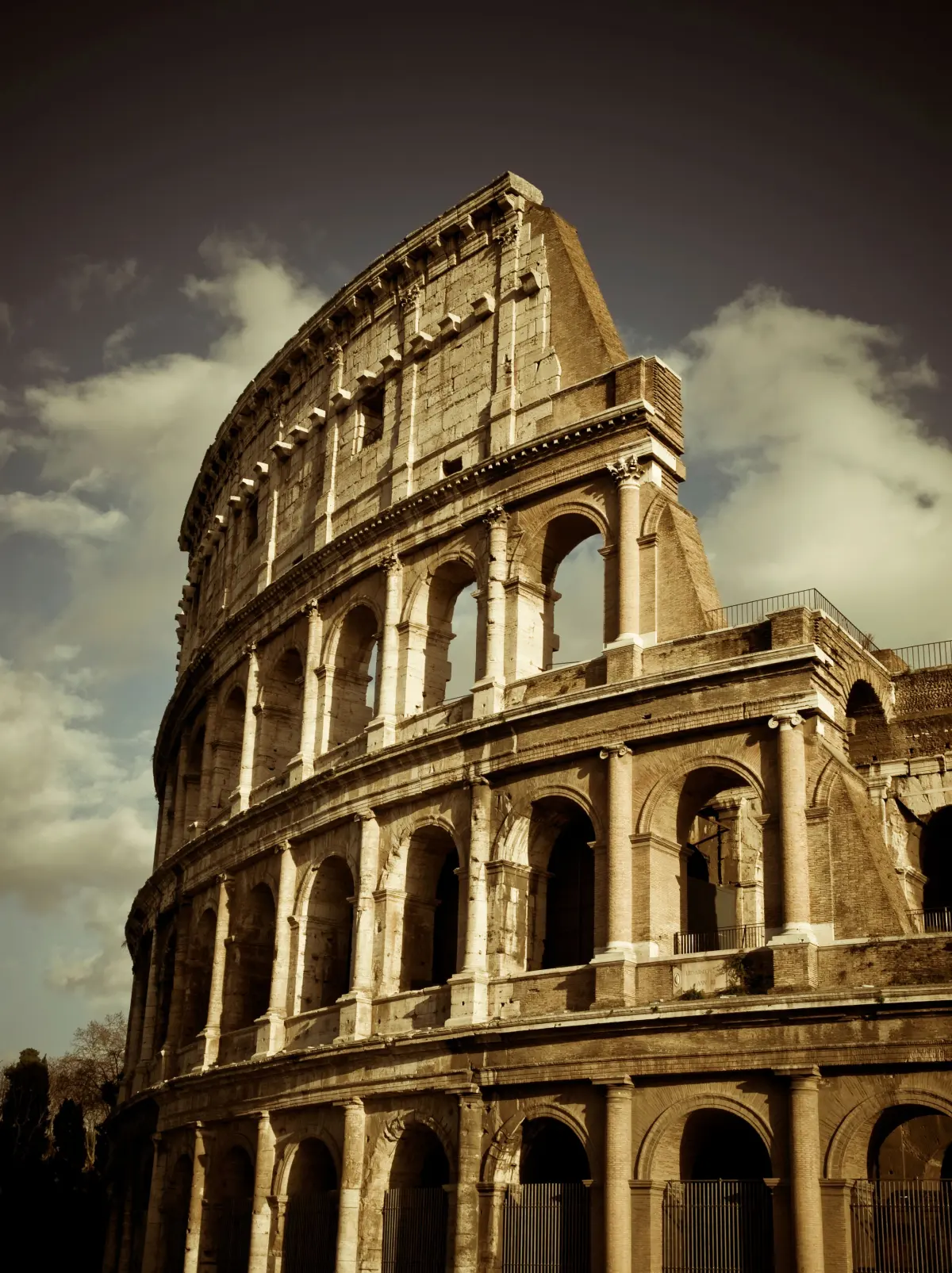
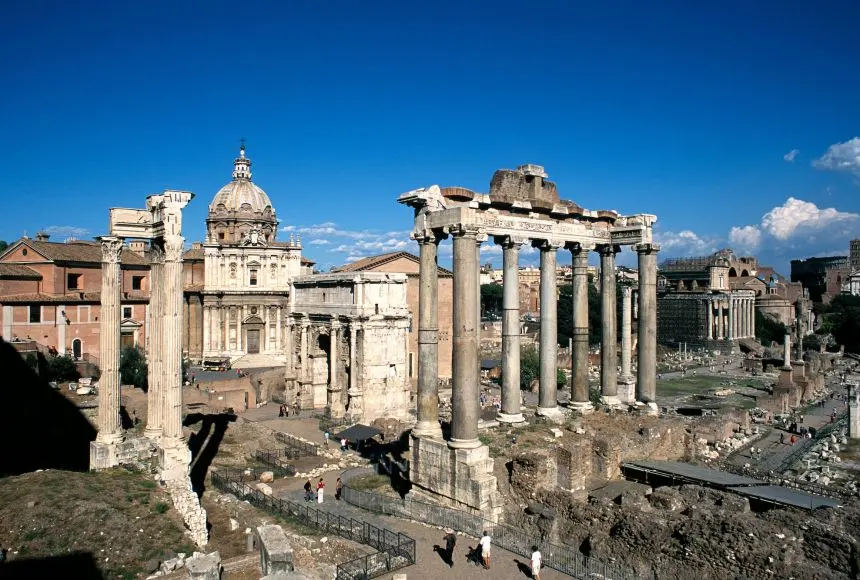
Architectural innovations also define the Roman legacy. The Romans perfected the use of concrete, which allowed them to construct massive structures like the Colosseum and the Pantheon. Their mastery of the arch and the dome influenced centuries of European architecture. Additionally, their sophisticated aqueduct systems demonstrated an advanced understanding of hydraulics, providing water to cities and enabling urban growth on a scale not seen again until the modern era.
Common mistakes when studying Roman history
A frequent error is assuming that the Roman Empire was a monolithic entity that remained unchanged throughout its existence. In reality, the empire evolved significantly, moving from a pagan, expansionist state to a Christianized, defensive power. Another mistake is oversimplifying the "fall" of Rome; historians now emphasize that the transition was a gradual transformation of social and political structures rather than a sudden, catastrophic disappearance of civilization.
Students should also avoid viewing the Roman Empire solely through the lens of its emperors. While figures like Nero, Caligula, and Marcus Aurelius are famous, the daily lives of soldiers, merchants, and enslaved people were equally vital to the empire's function. Understanding the social hierarchy and the role of the Roman military is essential for a balanced perspective. When researching, always distinguish between the Western Roman Empire and the Eastern Byzantine Empire to avoid confusing their distinct historical trajectories and cultural identities.
Key facts
- The Roman Empire began in 27 BCE when Augustus became the first emperor, ending centuries of republican rule.
- At its height under Emperor Trajan in 117 CE, the empire spanned approximately 5 million square kilometers across three continents.
- Rome’s professional army was the backbone of its power, utilizing highly disciplined legions to secure vast borders.
- Latin served as the official language of government and law, eventually evolving into the modern Romance languages like French, Spanish, and Italian.
- Roman engineering revolutionized infrastructure through the creation of durable concrete, extensive road networks, and complex aqueduct systems.
- The empire officially split into Western and Eastern halves in 395 CE, with the Western Empire collapsing in 476 CE.
The bottom line
The Roman Empire was a transformative Mediterranean civilization that shaped the foundations of Western law, architecture, language, and governance. By integrating diverse cultures under a centralized authority, it created a lasting legacy that persists in modern global institutions. Understanding Rome requires looking past its military conquests to appreciate the administrative, engineering, and cultural innovations that allowed its influence to endure long after its political collapse.
People also ask
Why did the Roman Empire fall?
The collapse resulted from a combination of economic instability, constant pressure from migrating Germanic tribes, and internal political corruption. These factors gradually eroded the state's ability to maintain its vast military and administrative structures.
Read the full answer →What was the Pax Romana?
This was a roughly 200-year period of relative peace and stability that began under Augustus. During this time, trade flourished and the empire experienced significant cultural and architectural development.
How did Romans govern such a large territory?
Rome used a hierarchical system of provinces governed by appointed officials who reported to the central government. They maintained control by building roads for rapid troop movement and granting citizenship to loyal local elites.
What was the role of the Senate during the Empire?
While the Senate lost its supreme power to the emperor, it remained a prestigious advisory body. Its members continued to manage some civil administration and provided a veneer of traditional legitimacy to the emperor’s rule.
Did the Roman Empire disappear entirely in 476 CE?
Only the Western Roman Empire fell in 476 CE, while the Eastern half, known as the Byzantine Empire, continued for nearly another thousand years. It remained centered in Constantinople until its final fall to the Ottoman Turks in 1453.
What was the primary religion of the Roman Empire?
Initially, the empire practiced a polytheistic state religion centered on gods like Jupiter and Mars. Following the conversion of Constantine the Great in the 4th century, Christianity rapidly gained influence and eventually became the official state religion.
This answer was created with the help of AI research tools and reference sources. Spotted an error? Let us know — we correct mistakes quickly. See our editorial policy.