What was ancient Greece known for?
Short answer
Ancient Greece is primarily known for laying the foundations of Western civilization through pioneering developments in democracy, philosophy, art, and science. Between the 8th and 4th centuries BCE, Greeks established enduring systems of governance, created iconic architectural styles, and advanced human understanding in mathematics, medicine, and drama that still influence modern society today.
On this page
How did ancient Greek democracy work?
The Athenian model of democracy, emerging around 508 BCE under Cleisthenes, is the most famous political innovation of the ancient world. Unlike modern representative systems, this was a direct democracy where eligible male citizens participated personally in the decision-making process. They gathered at the Pnyx, a hillside meeting place in Athens, to vote on laws, declare war, and manage foreign policy. This system relied on the active engagement of the citizenry, emphasizing the belief that every man should have a voice in the collective governance of the city-state.
To ensure fairness and prevent the rise of powerful tyrants, the Athenians utilized a process called sortition, or selection by lot, for many government positions. This meant that ordinary citizens were chosen randomly to serve on the Council of 500, which prepared the agenda for the assembly. While this system promoted equality among citizens, it was exclusive by modern standards. Women, enslaved people, and foreign residents were strictly barred from participating in political life. Understanding these limitations is essential to grasping the true nature of ancient Greek civic life.
What are the main types of Greek architecture?
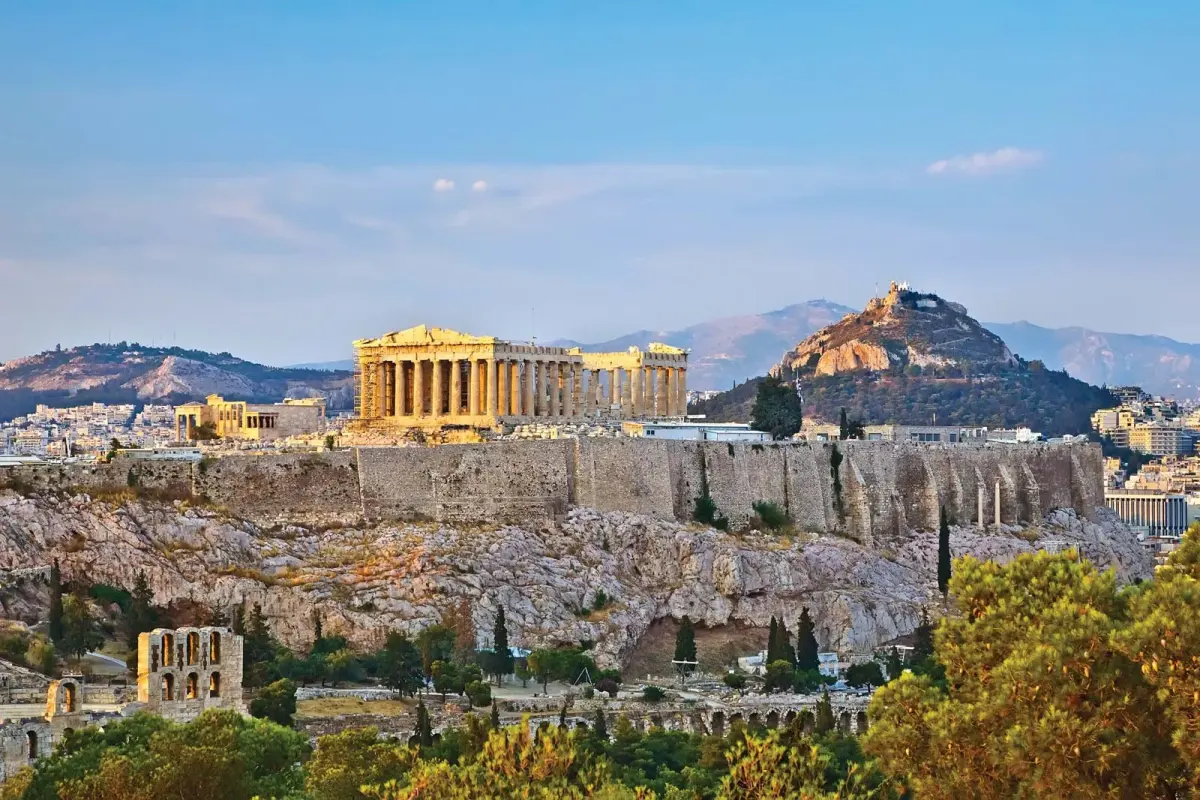
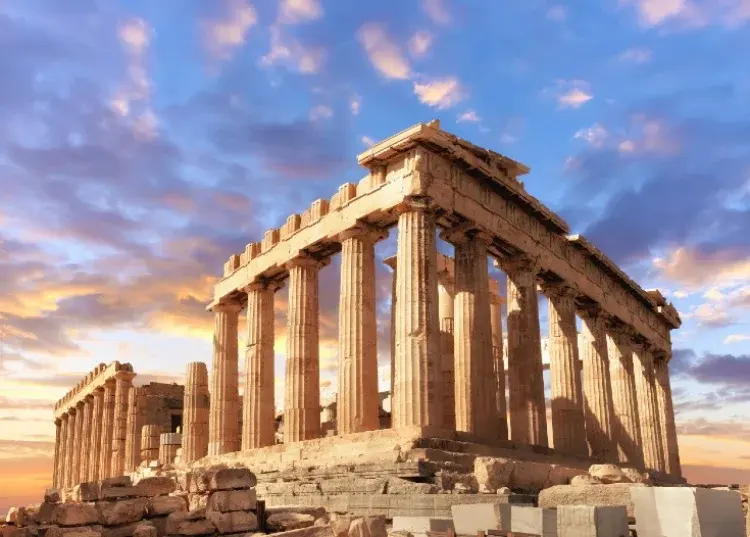
Greek architecture is defined by its focus on proportion, symmetry, and the use of the three classical orders: Doric, Ionic, and Corinthian. The Parthenon, completed in 438 BCE on the Athenian Acropolis, remains the most celebrated example of the Doric order. These structures were designed to reflect mathematical harmony, often using optical illusions, such as slightly curved columns, to make the buildings appear perfectly straight to the human eye. The Greeks viewed architecture as a public service, creating spaces that honored their gods and celebrated the community.
If you are exploring these architectural styles, look for these key identifiers:
- Doric: Simple, sturdy columns with no base and plain, circular capitals.
- Ionic: Slender columns featuring scroll-like ornaments, known as volutes, at the top.
- Corinthian: The most ornate style, characterized by elaborate capitals decorated with acanthus leaves.
- Pediment: The triangular upper part of the front of a building, often filled with intricate sculptures.
Why did Greek philosophy become so influential?
Greek philosophy shifted the focus of inquiry from mythological explanations of the world to rational, evidence-based reasoning. Figures like Socrates, Plato, and Aristotle asked fundamental questions about ethics, politics, and the nature of reality. Socrates, who lived from approximately 470 to 399 BCE, introduced the Socratic method, a form of cooperative argumentative dialogue. By asking probing questions, he forced his interlocutors to examine their own beliefs and identify logical inconsistencies, a practice that remains the bedrock of critical thinking today.
Plato, a student of Socrates, founded the Academy in Athens, often considered the first institution of higher learning in the Western world. His works explored the concept of ideal forms, suggesting that the physical world is merely a shadow of a more perfect, abstract reality. Aristotle, in turn, categorized knowledge into distinct fields such as biology, physics, and logic. His systematic approach to observation and classification provided a framework for scientific study for nearly two millennia. Their collective legacy transformed human thought by prioritizing logic and empirical evidence over superstition.
How to study Greek mythology effectively?
Greek mythology served as a complex framework for explaining natural phenomena, human emotions, and social customs. The Greeks believed in a pantheon of gods who resided on Mount Olympus and possessed human-like traits, including jealousy, pride, and love. To understand these stories, it is helpful to follow a structured approach rather than reading them in isolation. Many beginners make the mistake of assuming these myths were literal history, but they were actually cultural narratives designed to convey moral lessons and societal values.
Follow these steps to gain a better grasp of the subject:
- Start with a reliable translation of Hesiod’s "Theogony" to understand the genealogy of the gods.
- Read Homer’s "Iliad" and "Odyssey" to see how the gods interacted with human heroes.
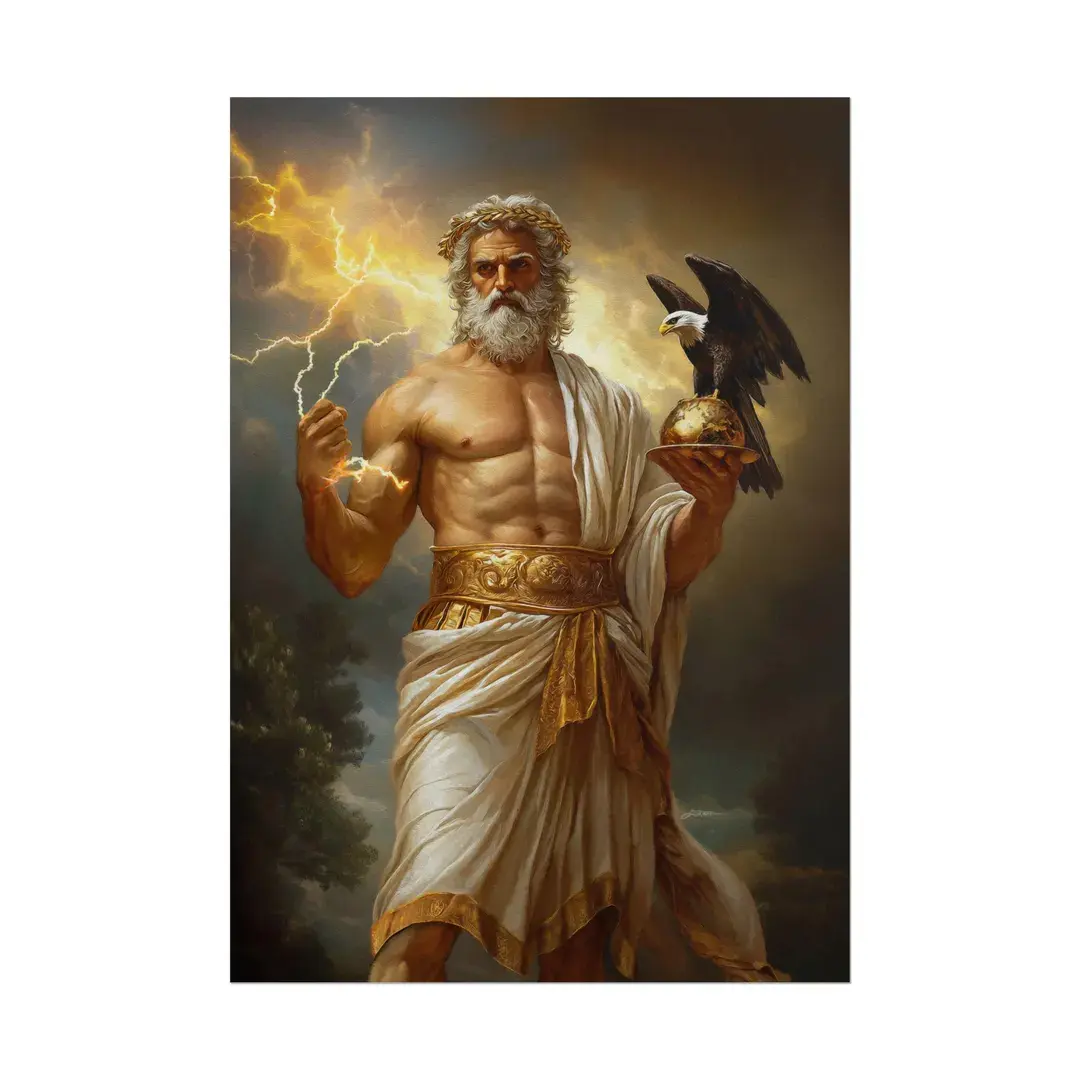
- Map the relationships between the twelve Olympians, such as Zeus, Hera, and Athena, to recognize recurring themes.
- Compare different versions of the same myth, as ancient writers often adapted stories to fit their specific political or artistic agendas.
Common mistakes when interpreting ancient Greece?
A frequent error in interpreting ancient Greece is viewing the region as a unified, monolithic nation. In reality, Greece was a collection of independent city-states, or poleis, such as Athens, Sparta, Corinth, and Thebes. These states often held vastly different values and frequently engaged in fierce competition or outright war. For example, the Peloponnesian War, which lasted from 431 to 404 BCE, highlighted the deep ideological divide between the democratic, naval-focused Athens and the militaristic, land-based Sparta. Ignoring these regional differences leads to a distorted view of their history.
Another common mistake is applying modern moral standards to ancient practices. While the Greeks made monumental contributions to democracy and philosophy, their society also relied heavily on slavery and maintained rigid gender hierarchies. Acknowledging these contradictions is necessary for a complete understanding of the era. By recognizing that the Greeks were humans living within the constraints and social norms of their time, you can better appreciate the revolutionary nature of their achievements without romanticizing the darker aspects of their daily life.
Key facts
- Ancient Greeks introduced the concept of democracy in Athens around 508 BCE, where eligible male citizens voted directly on legislation.
- The Olympic Games were first recorded in 776 BCE in Olympia and were held every four years to honor the god Zeus.
- Greek philosophers like Socrates, Plato, and Aristotle laid the foundational logic and ethics for Western scientific and political thought.
- The Parthenon, completed in 438 BCE, remains the most iconic example of the Classical Greek architectural style known for its precise proportions and Doric columns.
- Greek theater, flourishing in the 5th century BCE, established the genres of tragedy and comedy that still dictate modern storytelling structures.
- To practice Socratic questioning, avoid leading questions; instead, ask open-ended inquiries that force the other person to define their terms and examine their own logic.
The bottom line
Ancient Greece remains a cornerstone of Western civilization due to its profound contributions to governance, philosophy, and the arts. By prioritizing human reason and civic participation, the Greeks created systems that continue to shape modern society. Understanding their legacy requires looking past the myths to appreciate the rigorous intellectual curiosity and structural innovation that defined their culture during the Classical period and beyond.
People also ask
Why is Ancient Greek architecture still influential today?
Greek architecture emphasized symmetry, harmony, and the use of the Golden Ratio, which creates a sense of visual balance. Many modern government buildings and museums use these classical elements, such as columns and pediments, to convey stability and authority.
What was the role of women in Ancient Greek society?
In most city-states, women had limited legal rights and were expected to manage the household and raise children. They generally could not vote, own property, or participate in public political life, though Spartan women enjoyed more freedom and physical training than their Athenian counterparts.
How did the Greeks influence modern mathematics?
Mathematicians like Pythagoras, Euclid, and Archimedes developed principles of geometry and physics that are still taught in schools today. Their work shifted mathematics from practical counting to a system of formal proofs and abstract logical deduction.
What were the main differences between Athens and Sparta?
Athens was a center for arts, philosophy, and democratic experimentation, while Sparta was a militaristic society focused on discipline and land warfare. These two city-states often acted as rivals, most notably during the Peloponnesian War from 431 to 404 BCE.
What did the Ancient Greeks believe in regarding religion?
The Greeks practiced polytheism, worshipping a pantheon of twelve major gods and goddesses who lived on Mount Olympus. They believed these deities controlled natural forces and human destiny, leading to the construction of elaborate temples and the performance of rituals to gain divine favor.
Why is the Greek language important to history?
Ancient Greek provided the roots for thousands of English words, especially in the fields of science, medicine, and philosophy. It was also the lingua franca of the Mediterranean region, allowing for the widespread dissemination of ideas during the Hellenistic period.
This answer was created with the help of AI research tools and reference sources. Spotted an error? Let us know — we correct mistakes quickly. See our editorial policy.