Who invented the thermometer?
Short answer
The thermometer was not invented by a single person but evolved through the work of several scientists. Galileo Galilei created the first thermoscope around 1593, while Santorio Santorio later added a numerical scale. Daniel Gabriel Fahrenheit eventually revolutionized the field in 1714 by developing the first reliable mercury-in-glass thermometer with a standardized scale.
On this page
Who actually invented the thermometer?
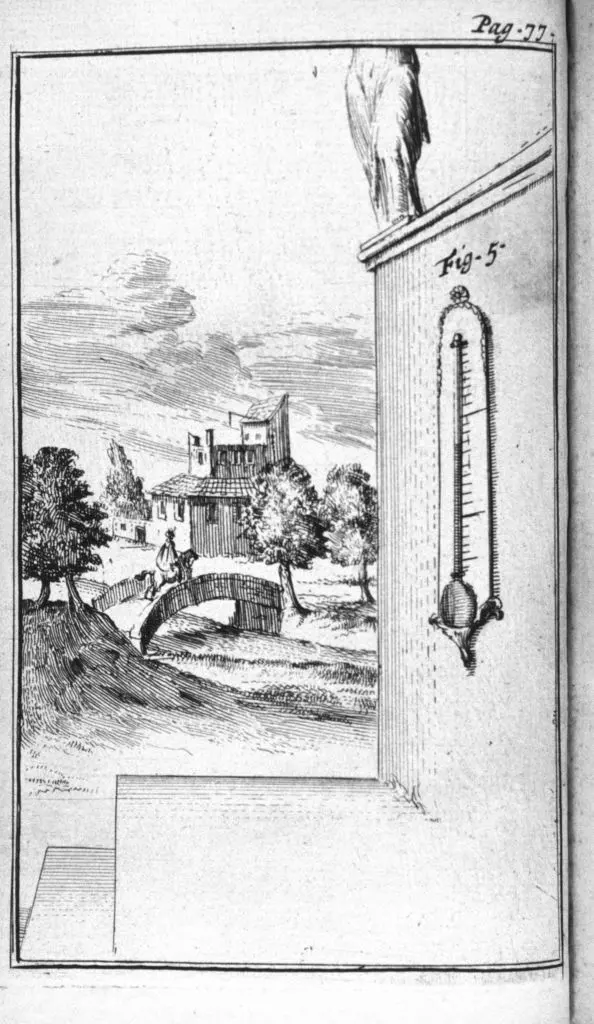
The history of the thermometer is a progression of scientific discovery rather than a singular "eureka" moment. In the late 16th century, Galileo Galilei developed the thermoscope, a device that used air expansion to show changes in temperature. However, this early instrument lacked a calibrated scale, making it impossible to measure specific degrees of heat. It functioned more as a visual indicator of relative warmth rather than a precise scientific tool.
The transition from a simple thermoscope to a true thermometer required the addition of a numerical system. The Italian physician Santorio Santorio is credited with being the first to apply a scale to the thermoscope, allowing for repeatable measurements in clinical settings. Despite these advancements, early versions were highly sensitive to atmospheric pressure, which often led to inaccurate readings. It was not until the early 18th century that the instrument became the reliable tool we recognize today.
How does a thermometer work?
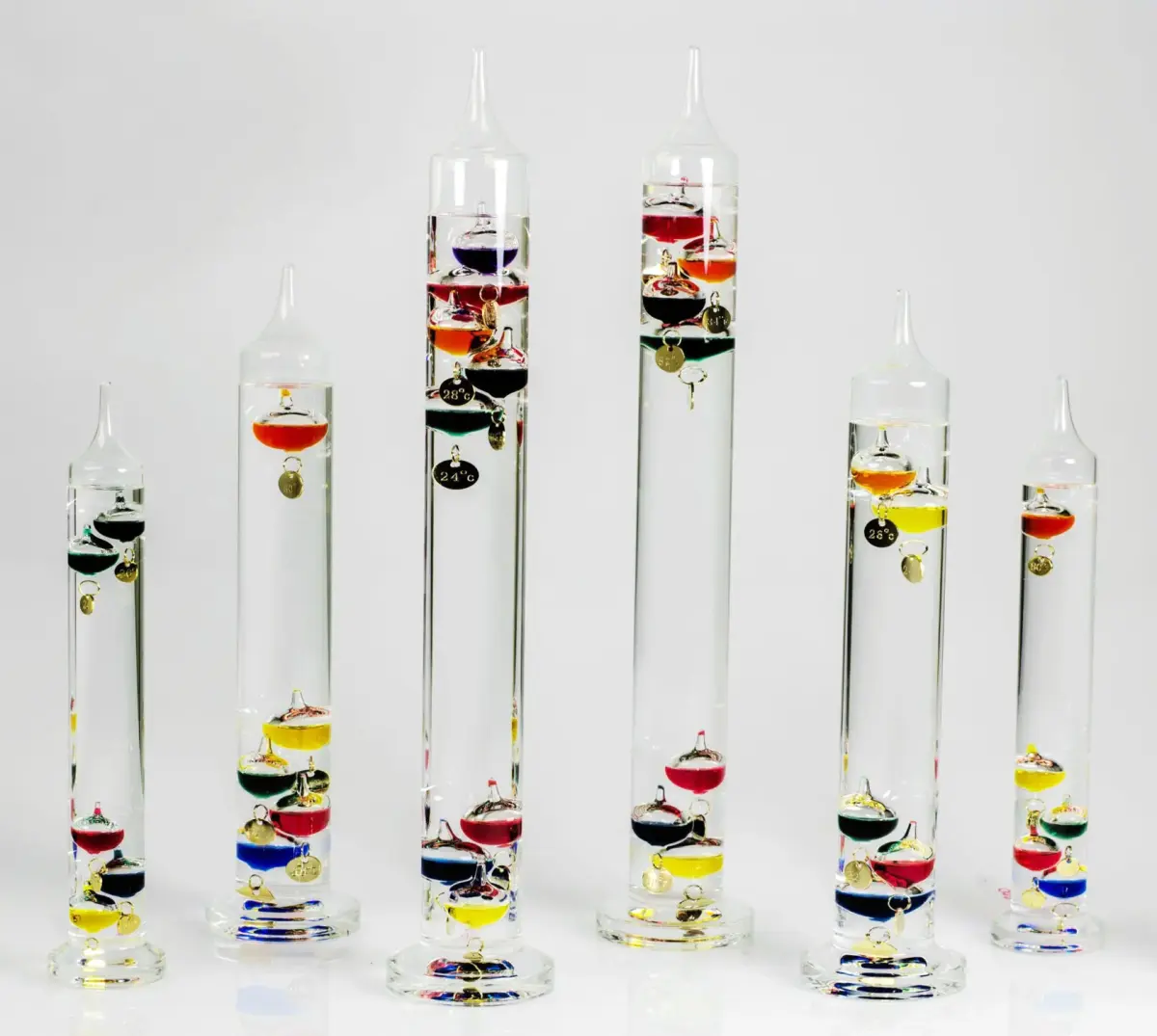
At its core, a thermometer operates on the principle of thermal expansion. Most liquids, such as alcohol or mercury, expand when heated and contract when cooled. By confining these liquids within a narrow, sealed glass tube, the substance is forced to rise or fall along a calibrated scale as the temperature changes. This movement provides a direct visual representation of the thermal energy present in the environment or object being measured.
Modern digital thermometers function differently by utilizing electronic sensors, such as thermistors or thermocouples. These components change their electrical resistance based on temperature, and a microprocessor converts that resistance into a digital reading. Whether using traditional liquid-filled glass or modern electronic sensors, the fundamental goal remains the same: translating physical properties into a standardized numerical value.
- The sensor detects the temperature of the target environment.
- The material inside the thermometer reacts to the thermal energy.
- The device translates this reaction into a readable scale or digital display.
Why did Fahrenheit change the thermometer?
Daniel Gabriel Fahrenheit, a German-Dutch physicist, fundamentally changed thermometry in 1714 by replacing alcohol with mercury. Mercury was superior because it maintained a consistent rate of expansion and could withstand a wider range of temperatures without boiling or freezing. This stability allowed for the creation of more compact and durable instruments that were far more accurate than previous water- or air-based designs.
Fahrenheit also introduced the first widely accepted temperature scale, which bears his name. He established the freezing point of water at 32 degrees and the boiling point at 212 degrees, creating a 180-degree interval between the two. This standardization was critical for the scientific community, as it allowed researchers in different locations to compare data reliably for the first time. His work laid the foundation for global meteorological and medical measurement practices.
- Mercury is highly stable across a broad temperature range.
- The scale provided a consistent reference for scientific experiments.
- Standardized intervals allowed for international data comparison.
How to use a thermometer correctly?
To obtain an accurate reading, one must ensure the thermometer is properly calibrated and positioned. When using a glass thermometer, hold it by the top end to avoid transferring body heat to the bulb. For digital models, ensure the sensor is in direct contact with the substance being measured and wait for the reading to stabilize completely before recording the result.
If you are measuring the temperature of a liquid, ensure the bulb is submerged but not touching the bottom or sides of the container, as these surfaces may be hotter or colder than the liquid itself. For ambient air temperature, keep the device away from direct sunlight or drafts that could skew the reading. Always verify that the thermometer is rated for the specific range you intend to measure to prevent damage to the instrument.
- Ensure the thermometer is clean and free of debris.
- Place the sensor in the center of the medium.
- Wait for the display or liquid column to stop moving.
- Record the measurement at eye level to avoid parallax errors.
Common mistakes when using a thermometer?
One of the most frequent errors is failing to allow enough time for the thermometer to reach equilibrium with its surroundings. Many users rush the process, leading to a reading that reflects the initial state of the sensor rather than the actual temperature of the environment. Another common mistake is neglecting to calibrate the device periodically, which can lead to "drift" where the thermometer consistently reports values that are slightly off.
Additionally, users often fail to account for the thermal mass of the thermometer itself. If a cold thermometer is placed into a small volume of hot liquid, the device will absorb heat, causing the liquid's temperature to drop slightly before the measurement is taken. To avoid this, use the smallest, most sensitive thermometer appropriate for your task and ensure that the object being measured is significantly larger than the sensor to minimize the impact of thermal interference.
Key facts
- Galileo Galilei is credited with inventing the first thermoscope around 1593, which used water to show temperature changes.
- The term "thermometer" was first coined by Jean Leurechon in 1624, derived from the Greek words for heat and measure.
- Daniel Gabriel Fahrenheit introduced the mercury thermometer in 1714, providing much greater accuracy than previous water-based models.
- Anders Celsius proposed the centigrade scale in 1742, which set the freezing point of water at 0 and the boiling point at 100.
- When using a digital thermometer, always ensure the sensor tip is placed directly under the tongue or in the armpit for the most accurate reading.
- Avoid drinking hot or cold liquids for at least 20 minutes before taking an oral temperature to prevent inaccurate results.
The bottom line
The thermometer evolved from Galileo’s early thermoscope into the precise instruments we use today. While early inventors relied on water and alcohol, the transition to mercury and later digital sensors revolutionized medical and scientific accuracy. Understanding the history of these tools highlights the importance of standardized scales like Celsius and Fahrenheit, which allow us to quantify heat and cold consistently in our daily lives.
People also ask
What is the difference between a thermoscope and a thermometer?
A thermoscope indicates changes in temperature but lacks a numerical scale to provide a precise measurement. A thermometer includes a calibrated scale, allowing users to determine the exact degree of heat or cold.
Why did scientists switch from water to mercury in thermometers?
Water expands and contracts inconsistently and freezes at 0 degrees Celsius, which limits its utility in cold weather. Mercury remains liquid across a wider range of temperatures and expands linearly, making it far more reliable for scientific measurement.
Who created the Kelvin scale?
Lord Kelvin, a British physicist, developed the Kelvin scale in 1848. It is an absolute temperature scale where zero represents the theoretical point of no molecular motion, known as absolute zero.
Are glass mercury thermometers still commonly used?
Most modern medical thermometers are digital or infrared because mercury is a toxic heavy metal. Glass thermometers containing mercury are now largely banned or restricted in many countries due to the risk of breakage and environmental contamination.
How do infrared thermometers work?
These devices detect the thermal radiation emitted by an object's surface. By measuring this infrared energy, the device calculates the temperature without needing to make physical contact with the subject.
What is the standard body temperature for a human?
The traditional average is 98.6 degrees Fahrenheit, or 37 degrees Celsius. However, individual body temperatures vary based on age, time of day, and activity levels, often fluctuating between 97 and 99 degrees Fahrenheit.
This answer was created with the help of AI research tools and reference sources. Spotted an error? Let us know — we correct mistakes quickly. See our editorial policy.