Who invented the sewing machine?
Short answer
The sewing machine was not invented by a single individual but evolved through the contributions of several inventors. Thomas Saint received the first patent in 1790, while Elias Howe later secured a patent for the lockstitch design in 1846. Isaac Singer subsequently refined the mechanism, making it commercially viable for widespread household use.
On this page
Who actually invented the sewing machine?
The history of the sewing machine is a complex timeline of incremental improvements rather than a singular "eureka" moment. In 1790, English cabinetmaker Thomas Saint patented a machine intended for leather and canvas, though there is no evidence he ever built a working model. His design featured an awl to pierce holes and a needle to pass thread through, establishing the foundational concept of mechanical stitching.
Decades later, in 1830, French tailor Barthélemy Thimonnier created the first functional sewing machine that used a hooked needle and a single thread to produce a chain stitch. He opened the world's first machine-based garment factory, but angry tailors burned it down, fearing the technology would destroy their livelihoods. These early efforts proved that mechanical sewing was possible, but they lacked the reliability and speed necessary for mass adoption in homes or factories.
How did the lockstitch mechanism change sewing?
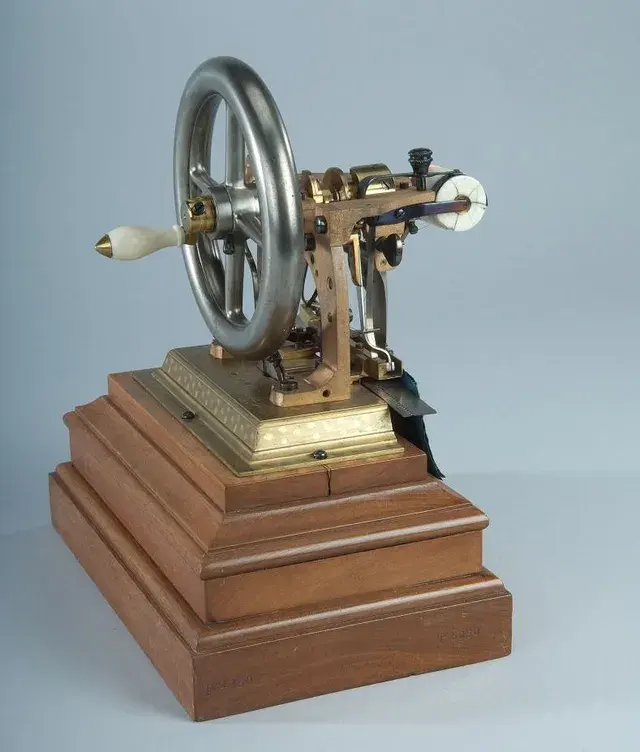
The true breakthrough arrived with the development of the lockstitch, which uses two threads—one from a needle and one from a bobbin—to create a secure, durable seam. Walter Hunt, an American inventor, created a prototype in the 1830s but abandoned it because he feared it would cause unemployment. Elias Howe later patented a similar lockstitch machine in 1846, which became the legal standard for the industry.
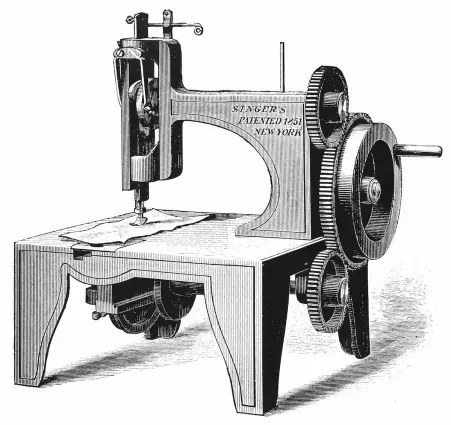
Isaac Merritt Singer entered the scene in 1850, observing that Howe’s machine was prone to frequent jams. Singer added a foot treadle and a vertical needle, which allowed for continuous, fluid motion. This innovation transformed the machine from a temperamental curiosity into a robust tool. The industry eventually settled into a "Sewing Machine War," where inventors fought over patent rights until they formed a patent pool to share technology and royalties.
What are the key features of a modern sewing machine?
Modern machines are marvels of engineering that simplify complex tasks through automation and precision. While the core lockstitch mechanism remains largely unchanged from the 19th century, current models integrate electronic sensors and computerized interfaces. Understanding the anatomy of your machine is essential for achieving high-quality results in any sewing project.
- Needle: The component that carries the top thread through the fabric.
- Bobbin: The small spool located beneath the needle plate that holds the bottom thread.
- Feed Dogs: Metal teeth that move the fabric forward after each stitch.
- Presser Foot: A lever-controlled piece that holds the fabric firmly against the feed dogs.
- Tension Dial: A control that regulates how tightly the threads are pulled together.
How to use a sewing machine for beginners
Operating a sewing machine requires patience and attention to detail to ensure the stitches are balanced and the fabric feeds correctly. Before starting, always ensure your machine is threaded according to the manufacturer’s instructions, as improper threading is the primary cause of mechanical failure. Practice on scrap fabric before beginning your actual project to test your settings.
- Place your fabric under the presser foot and lower the lever to secure it.
- Hold the ends of both the top and bottom threads to prevent tangling during the first few stitches.
- Use the handwheel to manually lower the needle into the fabric to begin your seam.
- Apply gentle pressure to the foot pedal, guiding the fabric with your hands rather than pulling it.
- Stop with the needle in the "down" position if you need to pivot at a corner.
Common mistakes when using a sewing machine
Even experienced sewers encounter issues, but most problems result from simple oversights that are easy to correct. The most frequent error is using the wrong needle size or type for a specific fabric, such as using a heavy denim needle on delicate silk. Always match your needle to the weight of your material to prevent skipped stitches or fabric damage.
Another major mistake is ignoring the importance of regular maintenance and cleaning. Lint buildup in the bobbin case can cause the machine to jam or skip stitches, leading to frustration and poor results. Avoid these pitfalls by following these guidelines:
- Never force the fabric through the machine; let the feed dogs do the work.
- Do not sew over pins, as this can break the needle and damage the hook mechanism.
- Change your needle frequently, as blunt tips can snag fabric and cause uneven tension.
- Keep your workspace clear of debris to ensure smooth movement of the fabric during the sewing process.
Key facts
- Thomas Saint received the first patent for a sewing machine design in 1790, though no evidence exists that he built a working prototype.
- Barthelemy Thimonnier opened the world’s first machine-based clothing factory in 1830, using wooden machines to create uniforms for the French army.
- Elias Howe patented the first lockstitch machine in 1846, which used two threads and a needle with an eye at the point.
- Isaac Singer improved the design in 1851 by adding a foot pedal and a vertical needle, making the machine practical for home use.
- Always ensure your needle is inserted in the correct orientation, as a backward needle is the most common cause of skipped stitches.
- Clean the lint from your bobbin case after every project to prevent thread tension issues and mechanical jamming.
The bottom line
The sewing machine was not the work of a single inventor but the result of incremental advancements by several pioneers over many decades. While early designs by Saint and Thimonnier laid the groundwork, Howe and Singer perfected the lockstitch mechanism for mass production. Today, these machines remain essential tools, combining historical mechanical ingenuity with modern precision to simplify the complex task of garment construction for everyone.
People also ask
Why did tailors riot against the early sewing machine?
In the 1830s, French tailors feared that Barthelemy Thimonnier’s machines would destroy their livelihoods by making clothing production too fast and cheap. They broke into his factory and destroyed his equipment, forcing him to flee for his safety.
What is a lockstitch?
A lockstitch is formed when two threads—one from the needle and one from the bobbin—interlock within the fabric layers. This creates a secure stitch that does not unravel easily, which is the standard for modern sewing.
Did Isaac Singer invent the sewing machine?
No, Isaac Singer did not invent the machine, but he refined existing designs to make them reliable and user-friendly. He introduced the first installment-payment plan, which made expensive machines affordable for average families.
What was the primary purpose of the first sewing machines?
The earliest machines were designed for industrial use, specifically for creating leather goods and military uniforms. It took several decades of mechanical refinement before the technology became small and quiet enough for domestic households.
How do I choose the right needle for my fabric?
Use a sharp, fine needle for woven fabrics like cotton or linen and a ballpoint needle for knits like jersey. Using the wrong needle type can cause fabric puckering or holes, leading to ruined garments.
Why is thread tension so important?
Proper tension ensures the needle thread and bobbin thread meet perfectly in the middle of the fabric. If the tension is too loose or tight, the seam will be weak, uneven, or cause the thread to snap during use.
This answer was created with the help of AI research tools and reference sources. Spotted an error? Let us know — we correct mistakes quickly. See our editorial policy.