Who invented the hot air balloon?
Short answer
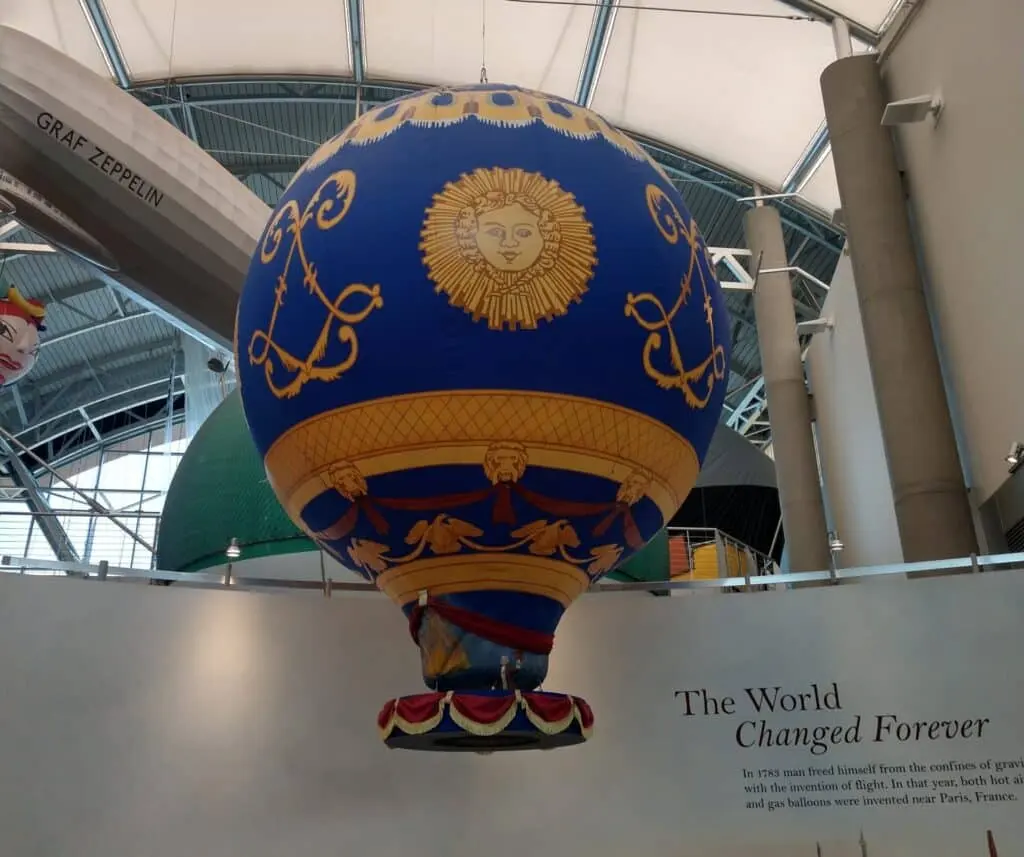
Joseph-Michel and Jacques-Étienne Montgolfier, two brothers from Annonay, France, invented the hot air balloon. They successfully demonstrated the first public flight of an unmanned balloon on June 4, 1783. Their breakthrough relied on the principle that heated air is less dense than the surrounding atmosphere, providing the necessary lift for flight.
On this page
Who were the Montgolfier brothers?
Joseph-Michel and Jacques-Étienne Montgolfier were paper manufacturers born into a large family in Annonay, France. Their expertise in papermaking played a crucial role in their invention, as they understood the properties of lightweight materials and air circulation. Joseph, the elder brother, was an inventive thinker with a keen interest in physics, while Étienne possessed the practical business acumen to manage their family enterprise.
The brothers began experimenting with flight in the early 1780s after observing how smoke rose from a fire. They hypothesized that a special gas, which they initially believed was unique to burning materials, could lift a container. By constructing bags made of paper and silk, they successfully lifted small objects before moving on to larger, more ambitious designs. Their collaborative efforts turned a simple observation of convection into the world's first successful human-made flight technology.
How did the first hot air balloon work?
The Montgolfier balloon operated on the fundamental principle of buoyancy. By burning a mixture of straw and wool beneath an opening at the bottom of the balloon, the brothers heated the air inside the envelope. Because hot air is less dense than the cooler air outside, the balloon experienced an upward force known as lift. This simple yet effective mechanism allowed their craft to rise rapidly once the internal temperature reached a sufficient level.
To ensure the success of their early flights, the brothers had to account for several physical factors:
- The envelope material had to be airtight to prevent the heated air from escaping.
- The fuel source needed to produce consistent heat without burning the structure.
- The weight of the basket and passengers had to be balanced against the volume of the balloon.
- Wind conditions were critical, as the craft lacked steering mechanisms and relied entirely on air currents.
When was the first manned flight?
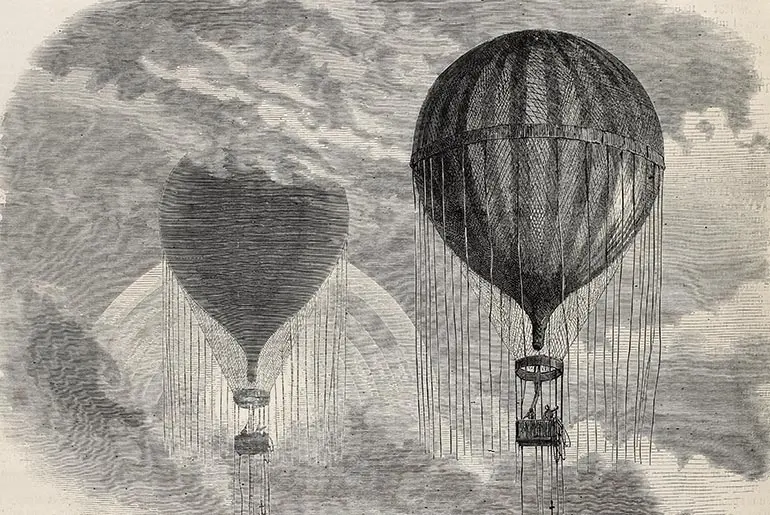
Following their initial success with unmanned balloons, the brothers organized a demonstration for King Louis XVI at Versailles on September 19, 1783. Rather than risking human lives immediately, they sent a sheep, a duck, and a rooster into the sky to test the effects of altitude on living creatures. The animals landed safely, proving that the atmosphere at higher elevations was breathable and that the flight was survivable.
This successful test paved the way for the first untethered human flight, which occurred on November 21, 1783. Jean-François Pilâtre de Rozier and the Marquis d'Arlandes ascended from the grounds of the Château de la Muette in Paris. They traveled approximately five miles across the city in about 25 minutes, reaching an altitude of roughly 3,000 feet. This historic event marked the official beginning of human aviation, forever changing the way humanity viewed the skies and the potential for travel.
How to fly a hot air balloon safely
Modern ballooning has evolved significantly from the paper-and-straw designs of the 18th century. Today, pilots use propane burners to heat the air and nylon envelopes coated with fire-resistant materials. Operating a balloon requires strict adherence to safety protocols and an understanding of meteorological conditions. Pilots must constantly monitor their altitude, fuel levels, and the direction of the wind to ensure a smooth landing in an appropriate area.
If you are interested in pursuing ballooning, follow these foundational steps:
- Enroll in a certified flight school to obtain a pilot's license.
- Study meteorology to understand how thermal currents and wind patterns affect flight.
- Perform a thorough pre-flight inspection of the envelope, basket, and fuel systems.
- Always coordinate with local air traffic control before taking off.
- Practice emergency procedures, such as managing a rapid descent or handling burner malfunctions.
Common mistakes when flying balloons
One of the most frequent errors for beginners is failing to account for shifting wind layers at different altitudes. Pilots often assume the wind will remain constant, but air currents can change direction drastically as the balloon climbs or descends. Another common mistake is neglecting to check the fuel supply against the estimated flight time. Running out of fuel prematurely forces a pilot to make an emergency landing in an unpredictable or hazardous location.
Avoiding these pitfalls requires constant vigilance and preparation:
- Do not attempt to fly in unstable weather conditions, such as high winds or approaching thunderstorms.
- Avoid landing in areas with power lines, dense forests, or livestock, as these pose significant safety risks.
- Never ignore the "burn rate" of your fuel, as temperature changes can deplete reserves faster than expected.
- Ensure that your ground crew is properly briefed on their role in tracking and retrieving the craft.
By maintaining a disciplined approach to maintenance and navigation, pilots can mitigate the inherent risks of this historic mode of transportation and ensure a safe experience for everyone on board.
Key facts
- The Montgolfier brothers, Joseph-Michel and Jacques-Étienne, invented the first successful hot air balloon in 1783.
- The brothers discovered that smoke-filled air trapped in a bag caused it to rise, though they mistakenly believed "Montgolfier gas" was responsible.
- The first public demonstration took place in Annonay, France, on June 4, 1783, where the unmanned balloon reached an altitude of 6,000 feet.
- To ensure safety, the brothers first sent up a sheep, a duck, and a rooster in September 1783 to test the effects of high altitude.
- The first untethered manned flight occurred on November 21, 1783, carrying Jean-François Pilâtre de Rozier and the Marquis d'Arlandes over Paris.
- Modern hot air balloons use propane burners to heat air inside the envelope, which is typically made of heat-resistant nylon or polyester.
The bottom line
The invention of the hot air balloon by the Montgolfier brothers in 1783 marked the dawn of human aviation. By harnessing the basic principles of thermodynamics, they transformed a simple observation about rising smoke into the first successful method of flight. Today, while the technology has evolved with modern materials and safety systems, the fundamental joy of drifting with the wind remains unchanged for enthusiasts worldwide.
People also ask
What was the first living creature to fly in a hot air balloon?
The first passengers were a sheep, a duck, and a rooster. They were launched by the Montgolfier brothers in 1783 to determine if living beings could survive at high altitudes.
How does a hot air balloon actually stay in the air?
A balloon stays aloft because hot air is less dense than the cooler air surrounding it. By using a burner to heat the air inside the envelope, the pilot creates buoyancy that lifts the craft.
Can you steer a hot air balloon?
Pilots cannot steer a balloon in the traditional sense because it has no engine or rudder. Instead, they change altitude to find different wind currents moving in various directions to navigate their path.
How high can a hot air balloon fly?
Most recreational balloons fly between 1,000 and 3,000 feet above the ground. While they are capable of reaching much higher altitudes, pilots must use supplemental oxygen for flights above 10,000 feet.
Why are hot air balloon flights usually scheduled at sunrise?
Sunrise offers the most stable atmospheric conditions with minimal wind. As the sun heats the ground later in the day, thermal currents can make landing difficult and potentially dangerous.
What is the basket of a hot air balloon called?
The basket is officially known as a gondola. It is traditionally constructed from woven wicker, which is lightweight, flexible, and durable enough to absorb the impact of a landing.
This answer was created with the help of AI research tools and reference sources. Spotted an error? Let us know — we correct mistakes quickly. See our editorial policy.