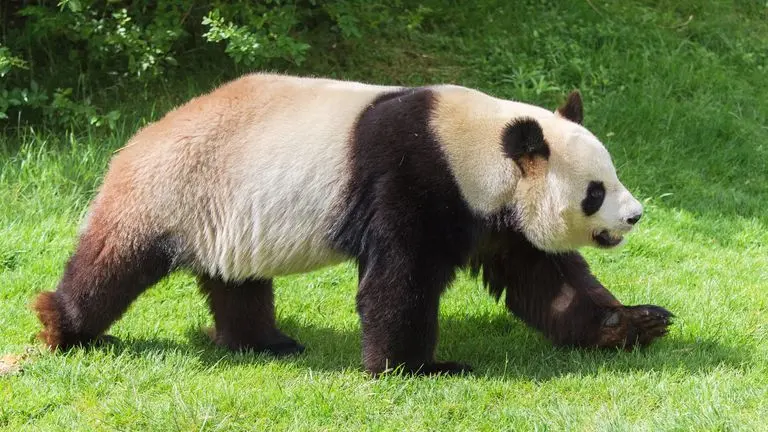
Where do pandas live?
Short answer
Giant pandas live exclusively in the wild in the mountainous regions of central China. Their natural habitat is restricted to a few isolated forest patches across Sichuan, Shaanxi, and Gansu provinces. These bears reside in high-altitude, temperate broadleaf and coniferous forests characterized by dense understories of bamboo, their primary food source.

On this page
Where do pandas live in the wild?
Giant pandas are endemic to China, meaning they are found nowhere else on Earth in the wild. Their current distribution is limited to six distinct mountain ranges: the Qionglai, Minshan, Liangshan, Daxiangling, Xiaoxiangling, and Qinling mountains. These regions provide the cool, humid climate necessary for the growth of the specific bamboo species that pandas rely on for survival.
Historically, the range of the giant panda was much broader, extending across much of southern and eastern China and into parts of Myanmar and Vietnam. Today, human encroachment, infrastructure development, and agricultural expansion have fragmented these populations into small, isolated pockets. Conservationists have established over 60 protected nature reserves to connect these habitats and ensure the species can migrate for food and breeding.
What is the natural habitat of a panda?
Pandas inhabit temperate forests located at elevations typically ranging from 5,000 to 10,000 feet above sea level. These environments are defined by thick mist, heavy rainfall, and a constant canopy cover that maintains a stable, cool temperature. The forest floor is dominated by bamboo, which provides both sustenance and cover for these solitary animals.
To thrive in this environment, pandas require specific ecological conditions:
- Dense bamboo thickets for year-round foraging.
- Access to natural water sources like mountain streams.
- Hollow trees or rock crevices for shelter during harsh winters.
- Sufficient space to avoid human contact and other pandas.
During the summer, pandas often move to higher elevations to escape the heat, descending back to lower, warmer valleys during the winter months. This seasonal migration is essential for managing their body temperature and finding fresh bamboo shoots.
How do pandas survive in their environment?
Survival for a giant panda is almost entirely dependent on the availability of bamboo. Because bamboo is low in nutritional value, an adult panda must consume between 26 and 84 pounds of it daily to maintain its energy levels. This dietary constraint dictates their lifestyle, as they spend approximately 10 to 16 hours every day foraging and eating.
Their physical adaptations are perfectly suited for this lifestyle:
- They possess a specialized "pseudo-thumb," which is an enlarged wrist bone that helps them grip bamboo stalks firmly.
- They have strong jaw muscles and large molars designed to crush tough, fibrous plant material.
- Their thick, woolly fur provides insulation against the freezing temperatures of the high-altitude mountain winters.
Because their food source is so abundant but low-energy, pandas are generally sedentary. They conserve energy by moving slowly and sleeping for long periods, rarely engaging in unnecessary physical activity.

Common mistakes when looking for pandas
Many people mistakenly believe that giant pandas can be found in tropical jungles or rainforests. In reality, the panda’s biology is ill-suited for high heat, and they would struggle to survive in equatorial climates. Another common error is assuming that pandas roam freely across vast, open plains; they are strictly forest-dwelling creatures that avoid open areas where they are vulnerable to predators or heat stress.
If you are planning to visit China to see pandas, avoid these common pitfalls:
- Expecting to see them in the wild: Wild pandas are extremely shy and elusive, making sightings nearly impossible for tourists.
- Visiting during the wrong season: While pandas are active year-round, they are most visible in breeding centers during the cooler spring months.
- Ignoring local regulations: Always stay within designated viewing areas in research centers to avoid disturbing the animals.
How are panda habitats being protected?
The Chinese government and international organizations have implemented rigorous conservation strategies to protect the panda's remaining habitat. The most significant effort involves the creation of the Giant Panda National Park, which spans over 10,000 square miles. This initiative aims to consolidate fragmented reserves and create "green corridors" that allow pandas to move safely between isolated forest patches.
These conservation efforts focus on several key objectives:
- Reforestation: Planting native bamboo species to expand the available feeding grounds.
- Anti-poaching patrols: Monitoring protected areas to prevent illegal hunting and habitat destruction.
- Community engagement: Working with local villagers to reduce reliance on forest resources that pandas depend on.
- Scientific monitoring: Using satellite imagery and camera traps to track population movements and health.
By focusing on habitat restoration rather than just captive breeding, conservationists hope to ensure that the giant panda remains a viable species in its natural mountainous home for generations to come.
Key facts
- Giant pandas live exclusively in the temperate broadleaf and mixed forests of southwest China.
- They are found primarily in the mountainous regions of Sichuan, Shaanxi, and Gansu provinces.
- Their natural habitat is characterized by high altitudes, cool temperatures, and dense bamboo undergrowth.
- Pandas require a range of elevation to follow the seasonal growth cycles of different bamboo species.
- Fragmentation of forests due to human infrastructure remains the greatest threat to their wild populations.
- Conservationists prioritize protecting "bamboo corridors" to allow pandas to migrate between isolated forest patches.
The bottom line
Giant pandas are highly specialized animals restricted to the isolated, high-altitude mountain forests of southwest China. Their survival depends entirely on the availability of dense bamboo thickets, which provide both their primary food source and essential shelter. Because their habitat is fragmented by human activity, ongoing conservation efforts focus on maintaining protected corridors that allow these solitary bears to roam, forage, and breed safely in the wild.
People also ask
Do giant pandas live in the wild anywhere outside of China?
No, wild giant pandas are endemic to China and are not found naturally in any other country. While many zoos worldwide host pandas on loan from China, these individuals are part of international research and conservation programs.
Why do pandas only live in areas with bamboo?
Bamboo constitutes 99 percent of a giant panda's diet, and they must consume between 26 and 84 pounds of it daily to meet their energy needs. Because they have a low-nutrient diet, they cannot migrate long distances to find food and must remain in regions where bamboo is abundant year-round.
Do pandas live in tropical rainforests?
No, pandas live in cool, misty, high-altitude mountain forests rather than tropical environments. These temperate regions provide the specific climate necessary for the growth of the various bamboo species that pandas rely on for survival.
Can pandas survive in captivity if they are moved to a different climate?
Pandas can survive in captivity in various climates, but they require specialized, climate-controlled enclosures to mimic their natural, cool mountain habitat. Without these measures, they are prone to heat stress and health complications, as they are biologically adapted to cold temperatures.
Are there other types of pandas besides the giant panda?
Yes, the red panda is a distinct species that also lives in high-altitude forests, though its range extends through the Himalayas and parts of Nepal, India, and Myanmar. Despite the shared name, red pandas and giant pandas are not closely related in the evolutionary sense.
How much space does a single wild panda need?
A wild panda typically maintains a home range of about 1.5 to 2.5 square miles. They are solitary animals and generally only overlap their territories during the brief breeding season in the spring.
This answer was created with the help of AI research tools and reference sources. Spotted an error? Let us know — we correct mistakes quickly. See our editorial policy.