What do lions eat?
Short answer
Lions are obligate carnivores that primarily hunt medium-to-large ungulates like wildebeest, zebras, and impalas. While they are apex predators capable of taking down animals as large as buffalo or giraffes, they also scavenge carrion and occasionally hunt smaller prey. A healthy adult lion requires approximately 10 to 25 pounds of meat daily.
On this page
What do lions eat in the wild?
Lions are opportunistic hunters that target a wide variety of prey depending on their habitat and availability. Their diet consists almost exclusively of meat, as their digestive systems are specialized for processing animal protein rather than plant matter. In the African savanna, their preferred prey includes animals that provide high caloric value relative to the energy expended during the hunt.
The most common prey species for lions include:
- Blue wildebeest
- Plains zebra
- Thomson’s gazelle
- Common warthog
- African buffalo
- Impala
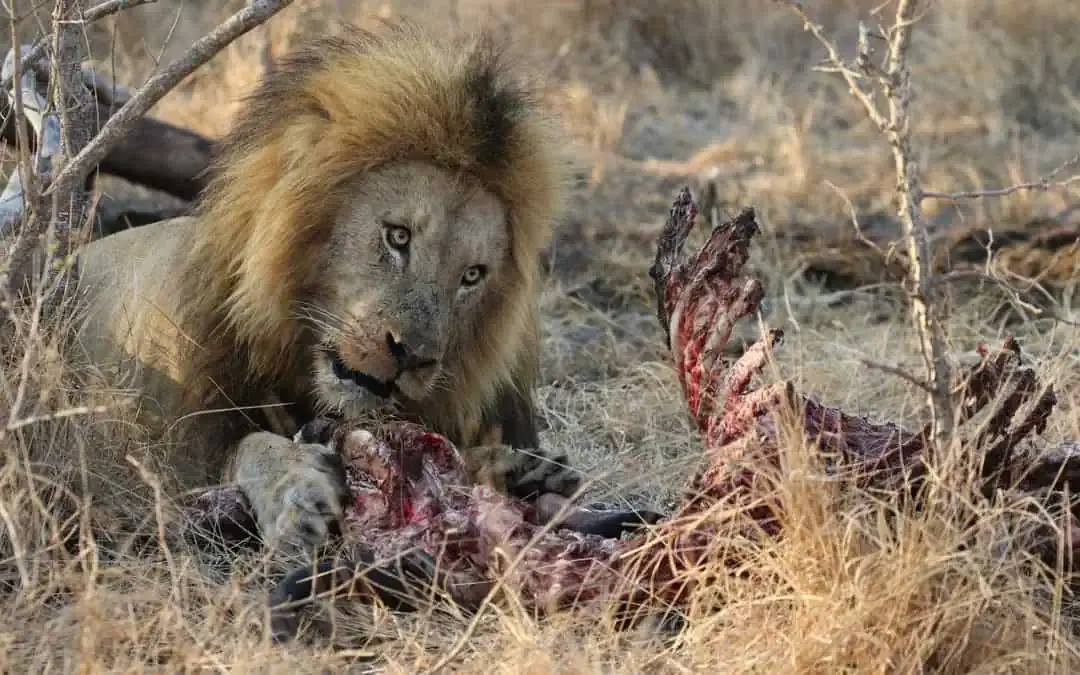
While these animals make up the bulk of a lion’s diet, they are not strictly limited to them. When primary prey is scarce, lions will hunt smaller mammals, reptiles, and even birds. They are also known to scavenge, frequently stealing kills from other predators like hyenas, cheetahs, and leopards. This behavior allows them to survive during periods when hunting is difficult or when they are injured and unable to chase down fast-moving targets.
How do lions hunt their prey?
Lions typically hunt in groups, a behavior that significantly increases their success rate compared to hunting alone. By working together, they can surround prey, block escape routes, and take down animals that are much larger and stronger than an individual lion. Most hunting occurs under the cover of darkness or during the twilight hours of dawn and dusk, when their superior night vision gives them a tactical advantage.
The hunting process generally follows these stages:
- Stalking: The pride moves silently through tall grass, keeping low to the ground to minimize visibility.
- Closing the distance: Once within range, usually less than 100 feet, the lions launch a sudden, explosive sprint.
- The takedown: A lion will typically grab the prey’s hindquarters or back to knock it off balance, then go for the throat to suffocate the animal.
Despite their reputation as fearsome predators, lions are not always successful. Many hunts end in failure, especially when the prey detects the lions early or the terrain does not favor an ambush. Because of this, lions must be highly efficient in their energy expenditure, often choosing to rest for up to 20 hours a day to conserve strength for the next hunt.
How much food does a lion need?
A lion’s nutritional requirements are dictated by its age, sex, and activity level. On average, an adult male lion consumes about 15 to 25 pounds of meat per day, while females typically require about 10 to 15 pounds. However, lions do not eat every single day. They are "feast or famine" eaters, capable of consuming up to 100 pounds of meat in a single sitting after a successful kill.
After a large meal, a lion’s stomach can expand significantly, allowing it to store enough energy to last for several days without food. This biological adaptation is essential for survival in environments where prey availability fluctuates seasonally. During times of abundance, lions will gorge themselves to build up fat reserves, which act as a buffer during periods of drought or migration when their prey moves to different regions.
Why do lions scavenge for food?
Scavenging is a crucial survival strategy for lions, often misunderstood as a sign of weakness. In reality, it is a highly efficient way to acquire high-protein meals without the physical risk or energy cost associated with chasing down live prey. Lions frequently monitor the sky for vultures, which act as natural indicators of a carcass, or listen for the sounds of other predators fighting over a kill.
There are several reasons why lions choose to scavenge:
- Energy conservation: Hunting large prey like buffalo is dangerous and can lead to serious injury.
- Competition: Taking a kill from a smaller predator is often easier than hunting a healthy, alert adult animal.
- Environmental conditions: In extreme heat, hunting is physically taxing, making scavenged meat a more practical option.
Common mistakes when observing lion behavior include assuming that a lion eating a carcass killed it themselves. Many lions are perfectly content to let hyenas do the hard work of hunting, only to arrive at the end to intimidate the smaller predators into abandoning their meal. This kleptoparasitism is a standard part of the ecosystem, ensuring that energy is transferred efficiently between different levels of the food chain.
What are the risks of a lion's diet?
While lions are at the top of the food chain, their diet exposes them to significant dangers. Attacking a large, defensive animal like a buffalo or a giraffe can result in broken bones, deep lacerations, or even death from a well-placed kick. These injuries can be fatal, as an incapacitated lion cannot hunt and may eventually starve to death if the rest of the pride does not provide food.
Furthermore, lions face health risks from the meat they consume. Carcasses can harbor bacteria, parasites, and diseases like anthrax, which can spread through a pride if they feed on an infected animal. To mitigate these risks, lions have evolved highly acidic stomachs that can neutralize many harmful pathogens. Despite these defenses, the life of a lion is inherently precarious, and their reliance on large, dangerous prey remains the greatest challenge to their long-term survival in the wild.
Key facts
- Lions are obligate carnivores, meaning they require nutrients found only in animal flesh to survive.
- A single adult male lion can consume up to 15 pounds of meat in one sitting, though they often gorge on up to 100 pounds at once.
- Their primary prey includes medium-to-large ungulates such as zebras, wildebeests, impalas, and buffalo.
- Lions are opportunistic hunters and will readily scavenge carcasses killed by other predators like hyenas or leopards.
- They typically hunt at night or during twilight hours to utilize the cover of darkness and cooler temperatures.
- Avoid the common misconception that lions only hunt in large prides; they frequently hunt in pairs or even alone depending on the prey size.
The bottom line
Lions are powerful, opportunistic apex predators that rely on a diet consisting almost exclusively of meat. By hunting medium-to-large ungulates under the cover of darkness, they maximize their energy efficiency. While they are capable of scavenging, their social hunting strategies allow them to take down formidable prey. Ultimately, their survival depends on the consistent availability of wild game within their expansive African savanna territories.
People also ask
Do lions eat humans?
While lions are apex predators, humans are not part of their natural diet. Man-eating behavior is usually an anomaly caused by injury, old age, or a severe lack of natural prey in the area.
How often do lions need to eat?
Lions do not necessarily eat every day. They can go several days without food, but they will consume as much as possible when a kill is made to sustain them.
Do male and female lions hunt differently?
Females are the primary hunters for the pride and often work cooperatively to surround prey. Males are larger and less agile, so they typically protect the territory and defend the pride's kills.
Can lions survive on a vegetarian diet?
No, lions are biologically incapable of digesting plant matter for nutrition. Their digestive tracts are short and specifically designed to process high-protein animal tissues.
Do lions drink water regularly?
Lions drink water when it is available, but they can survive for several days without it by obtaining moisture from their prey. During dry seasons, they rely heavily on the fluids found in the animals they consume.
What is the most dangerous prey for a lion?
Cape buffalo are notoriously dangerous and can kill a lion with their horns or hooves. Lions often require the strength of the entire pride to safely bring down a healthy adult buffalo.
This answer was created with the help of AI research tools and reference sources. Spotted an error? Let us know — we correct mistakes quickly. See our editorial policy.