Who is Zeus?
Short answer
Zeus is the king of the gods and the ruler of Mount Olympus in ancient Greek mythology. As the god of the sky, lightning, and thunder, he maintains order and justice among both deities and mortals. He is the youngest son of the Titans Cronus and Rhea, known for his immense power.
On this page
Who was Zeus in Greek mythology?
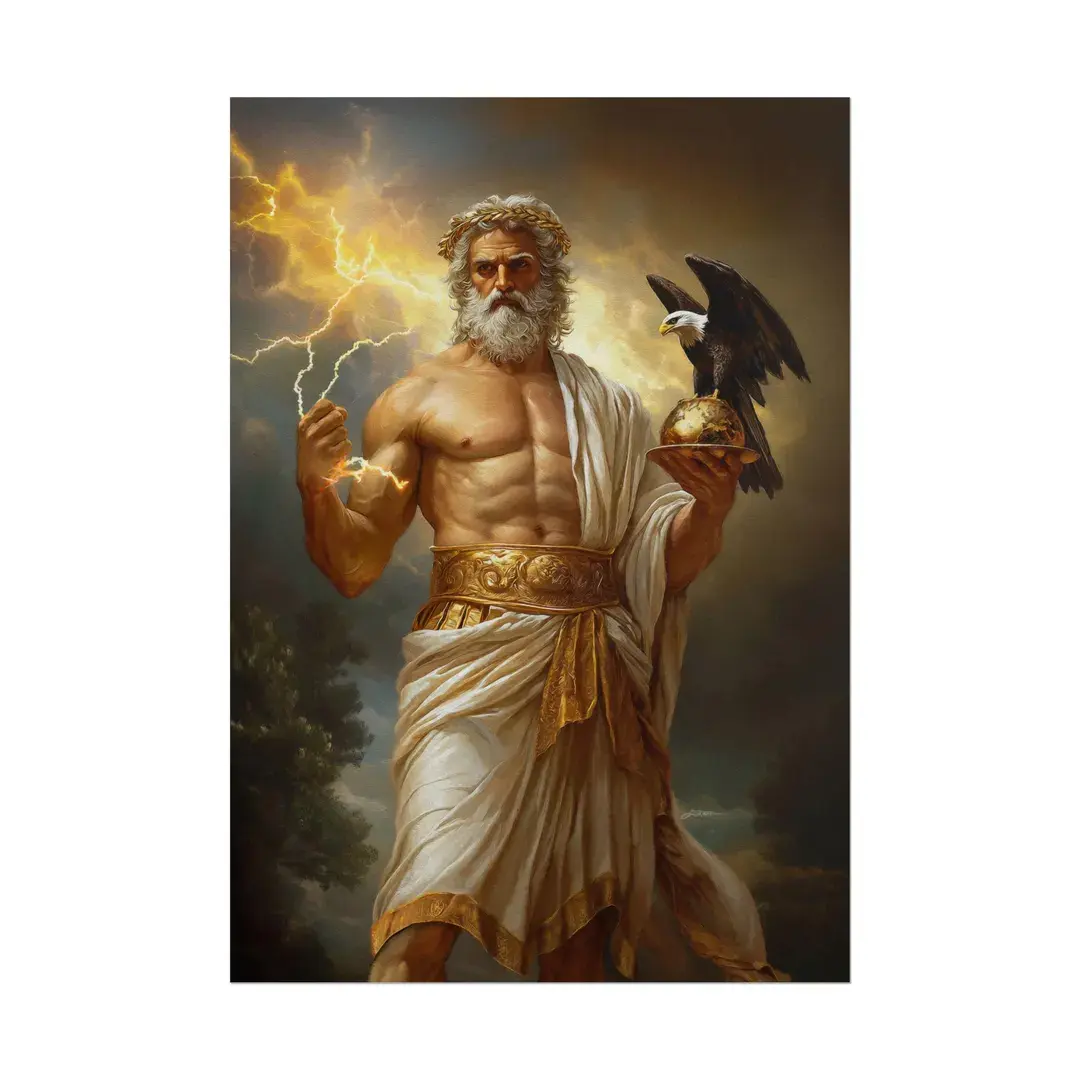
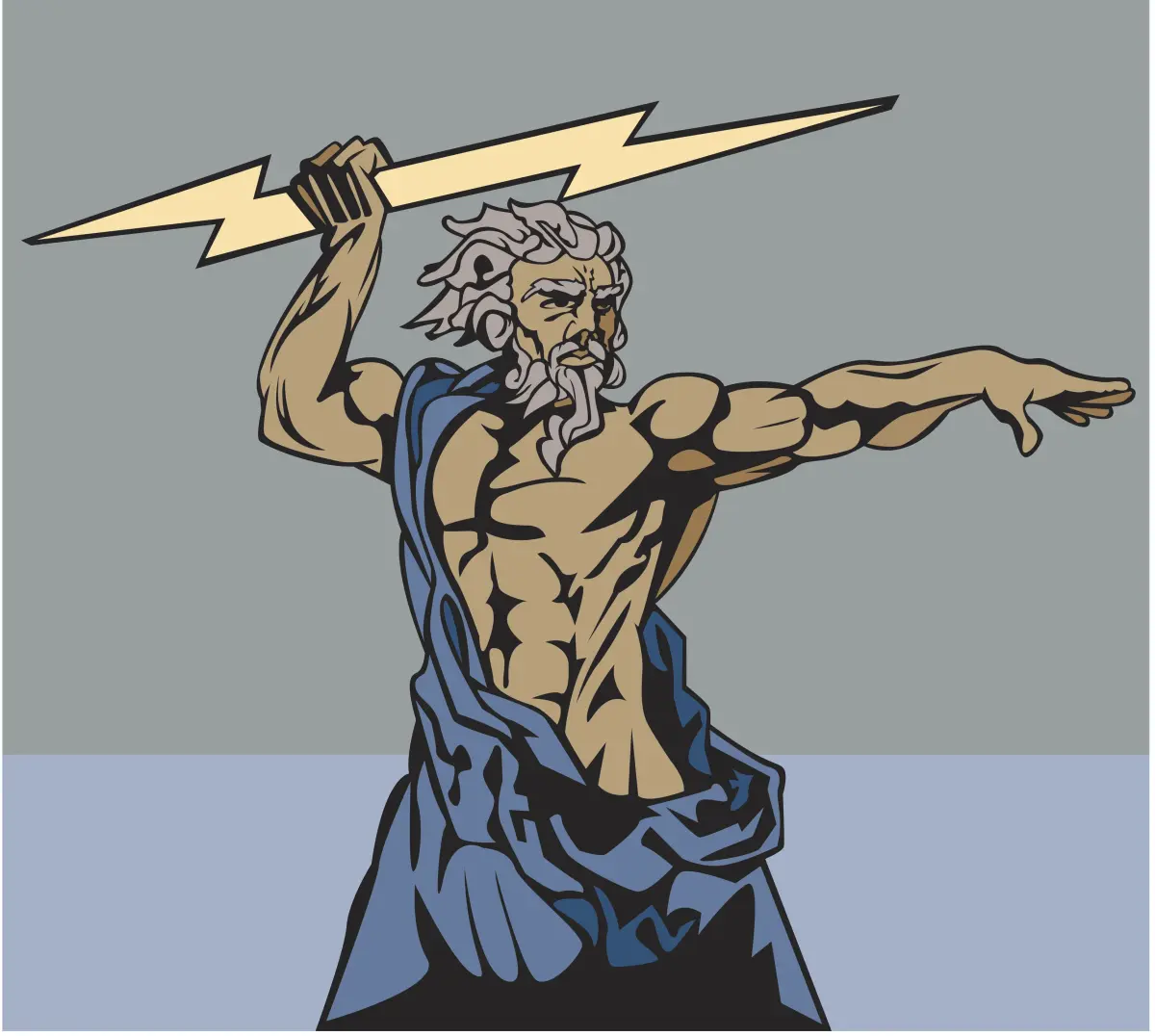
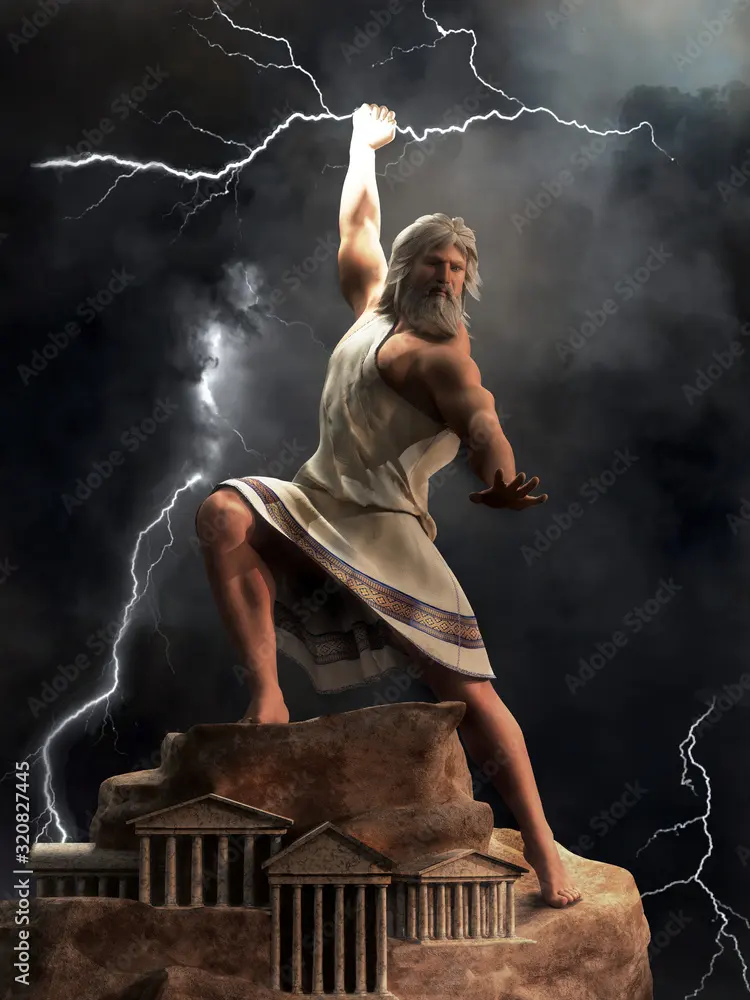
Zeus serves as the supreme deity in the Greek pantheon, presiding over the heavens and the earth. He is frequently depicted as a bearded, regal figure holding a lightning bolt, which represents his command over the forces of nature. His authority is absolute, as he acts as the arbiter of justice and the protector of hospitality, known as xenia.
His origin story begins with his narrow escape from his father, Cronus, who swallowed his children to prevent a prophecy of his own downfall. After being hidden on the island of Crete, Zeus grew up to overthrow his father and liberate his siblings. This victory established the Olympian order, replacing the chaotic rule of the Titans with a structured governance that defined the Greek religious worldview for centuries.
What are the powers and symbols of Zeus?
The primary attribute of Zeus is the thunderbolt, a weapon forged by the Cyclopes that symbolizes his destructive power and divine authority. Beyond his control over the weather, he is considered a guardian of oaths and the patron of kingship. His influence extends to almost every aspect of human life, including the enforcement of moral laws and the maintenance of cosmic balance.
- The lightning bolt: His primary weapon and symbol of divine wrath.
- The eagle: A majestic bird representing strength, courage, and his connection to the sky.
- The oak tree: A sacred plant associated with his oracular powers at Dodona.
- The aegis: A protective shield or breastplate often shared with his daughter Athena.
These symbols were not merely decorative; they were essential components of his iconography in art and architecture. Ancient Greeks utilized these emblems to identify his presence in temples and to invoke his protection during significant civic events or personal petitions.
How did Zeus interact with mortals and gods?
Zeus maintained a complex web of relationships, often acting as a mediator in disputes between other Olympians. While he was the king, his household was frequently marked by internal conflict, particularly regarding his numerous affairs. These myths served to explain the presence of various heroes and minor deities in Greek lore, as many claimed descent from his lineage.
Interaction with mortals was equally significant, as Zeus often appeared in disguise to test human character. He rewarded those who practiced hospitality and punished those who displayed hubris or cruelty. His role as a judge of human conduct reinforced the importance of social etiquette and religious devotion in ancient Greek society, as mortals feared his swift judgment and unpredictable nature.
What are the most common myths about Zeus?
Many stories involving Zeus focus on his rise to power and his efforts to consolidate his rule. The most famous cycle of myths, known as the Titanomachy, details the ten-year war between the Olympians and the Titans. This conflict resulted in the imprisonment of the Titans in Tartarus, the deepest abyss of the underworld, effectively securing Zeus's position as the monarch of the universe.
- The birth of Zeus: His mother Rhea hid him in a cave to prevent Cronus from consuming him.
- The defeat of Cronus: Zeus forced his father to regurgitate his siblings, leading to the war for control.
- The Gigantomachy: A later battle against the Giants, which solidified the Olympians' dominance over the earth.
- The abduction of Europa: A myth illustrating his habit of assuming animal forms to pursue mortal women.
These narratives were essential for teaching moral lessons, such as the inevitability of fate and the necessity of respecting divine power. By studying these myths, one can better understand the cultural values and fears that shaped the ancient Greek civilization.
Common mistakes when studying Zeus
A frequent error is viewing Zeus solely as a benevolent father figure or a purely destructive force. He was neither entirely good nor evil; he operated according to his own divine logic, which often conflicted with human standards of morality. To understand him correctly, one must view him through the lens of ancient polytheism, where gods embodied the raw, often contradictory forces of the natural world.
Another mistake is confusing him with his Roman counterpart, Jupiter. While they share many characteristics, their roles in their respective societies differed significantly due to the unique political and cultural contexts of Rome versus Greece. When researching, always verify the specific historical period and regional tradition, as the perception of Zeus evolved over centuries of Greek history. By focusing on his role as a maintainer of order rather than a simple hero or villain, you gain a more accurate and nuanced perspective on this foundational figure of Western mythology.
Key facts
- Zeus is the king of the Olympian gods and the supreme deity in ancient Greek mythology.
- He is the son of the Titans Cronus and Rhea and the brother of Poseidon and Hades.
- His primary symbols are the thunderbolt, the eagle, the bull, and the oak tree.
- He resides on Mount Olympus, where he rules over the sky, weather, law, and justice.
- He is famously married to his sister Hera, though he had numerous affairs with goddesses and mortals.
- To identify Zeus in art, look for a bearded, muscular man holding a lightning bolt or sitting on a throne.
The bottom line
Zeus stands as the central figure of the Greek pantheon, embodying the dual nature of divine authority and human-like fallibility. As the master of the sky and the enforcer of cosmic order, he shaped the moral and physical landscape of ancient mythology. Understanding Zeus provides essential insight into how the Greeks interpreted natural phenomena, social hierarchies, and the complex relationship between mortals and the gods.
People also ask
Who were the parents of Zeus?
Zeus was the youngest son of the Titans Cronus and Rhea. To prevent his children from overthrowing him, Cronus swallowed them, but Rhea hid Zeus in a cave on Crete and fed Cronus a stone wrapped in swaddling clothes instead.
What is the significance of the thunderbolt in Greek mythology?
The thunderbolt was a weapon forged for Zeus by the Cyclopes as a gesture of gratitude for his role in freeing them from Tartarus. It represents his absolute power over the heavens and his ability to dispense divine justice or punishment.
Did Zeus have any children?
Yes, Zeus fathered many famous deities and heroes, including Athena, Apollo, Artemis, Hermes, Persephone, and the hero Heracles. These offspring were often the result of his unions with both divine consorts and mortal women.
Was Zeus considered a benevolent god?
Zeus was viewed as a complex figure who maintained order and hospitality, known as xenia. While he protected the moral fabric of society, he was also feared for his unpredictable temper and his tendency to intervene in human affairs for his own purposes.
How did the ancient Greeks worship Zeus?
Worship involved animal sacrifices, libations, and the construction of massive temples, such as the Temple of Zeus at Olympia. The Olympic Games were held every four years specifically in his honor to demonstrate athletic prowess and religious devotion.
What is the difference between Zeus and Jupiter?
Zeus is the Greek name for the king of the gods, while Jupiter is his Roman counterpart. Although they share many of the same myths and attributes, Roman culture integrated Jupiter more deeply into the political and civic identity of the state.
This answer was created with the help of AI research tools and reference sources. Spotted an error? Let us know — we correct mistakes quickly. See our editorial policy.