What is the tallest waterfall in the world?
Short answer
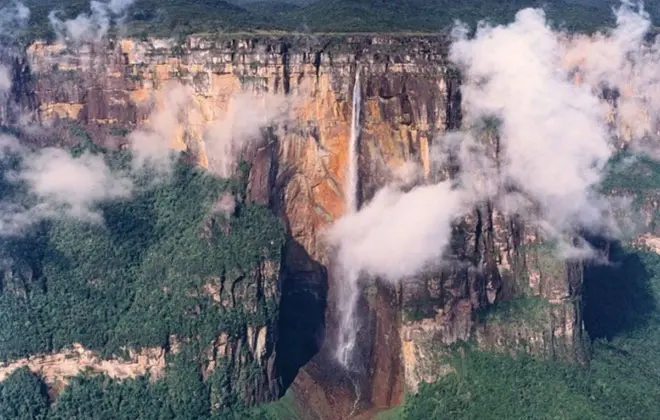
Angel Falls in Venezuela is the tallest waterfall in the world. It drops 3,212 feet (979 meters) from the summit of Auyán-tepui, a massive flat-topped mountain in Canaima National Park. The water falls from the Churún River, creating a spectacular, mist-heavy cascade that is recognized as the world's highest uninterrupted waterfall.
On this page
Where is Angel Falls located?
Angel Falls is situated deep within the Guiana Highlands of southeastern Venezuela. It is located inside Canaima National Park, a protected area that spans over 11,000 square miles. The park is characterized by its unique "tepuis," which are table-top mountains formed by ancient sandstone erosion. Because of its remote location, the falls are surrounded by dense, rugged rainforest that remains largely untouched by modern development.
Reaching the site requires significant logistical planning, as there are no roads leading to the base of the falls. Visitors typically arrive by small aircraft from the town of Canaima or the city of Ciudad Bolívar. After landing, the journey continues by motorized canoe, known as a curiara, which navigates the winding Carrao and Churún rivers. This journey takes several hours and offers a glimpse into the diverse flora and fauna of the Venezuelan jungle.
How do you visit Angel Falls?
Planning a trip to see the falls requires working with local authorized tour operators. Because the region is remote and the terrain is challenging, independent travel is generally not feasible for international tourists. Most expeditions are scheduled during the rainy season, which runs from June to December, as the increased water volume makes the falls more impressive and the rivers easier to navigate by boat.
If you are planning an excursion, follow these steps to ensure a smooth experience:
- Book a flight from Caracas to Canaima well in advance, as seats on these small planes are limited.
- Select a multi-day guided tour package that includes river transport, meals, and overnight stays in hammocks at base camps.
- Pack lightweight, quick-drying clothing and sturdy waterproof footwear to handle the humid environment and muddy trails.
- Bring a high-quality waterproof bag for your camera equipment to protect it from the intense mist generated by the falls.
Why is Angel Falls so tall?
The extreme height of Angel Falls is a result of the unique geological structure of the Auyán-tepui. This mountain is one of the largest tepuis in the region, acting as a massive plateau that catches significant rainfall. The water collects on the flat summit and eventually finds a path over the vertical cliff face. Because the cliff is nearly sheer, the water has a long, unobstructed descent before it reaches the jungle floor below.
The waterfall is technically a "plunging" type, meaning the water loses contact with the cliff face for much of its descent. As the water falls, much of it atomizes into a fine mist before reaching the bottom, especially during the drier months. This creates a persistent cloud of spray that characterizes the base of the falls. The height is officially measured from the top of the cliff to the point where the water hits the talus slope at the bottom.
Common mistakes when visiting Angel Falls
One of the most frequent errors travelers make is underestimating the impact of the local weather. The area is prone to heavy tropical rain and sudden cloud cover, which can obscure the falls entirely. Visitors who arrive with a rigid, one-day itinerary are often disappointed if the weather prevents a clear view. It is essential to build flexibility into your schedule to account for potential delays caused by low visibility or river conditions.
Another common mistake involves physical preparation and gear selection. The hike from the river landing to the primary viewpoint is steep, slippery, and humid. Many visitors fail to bring sufficient insect repellent or appropriate gear for the trek, leading to discomfort. Avoid these pitfalls by:
- Wearing long-sleeved, breathable synthetic fabrics to protect against insects and sun exposure.
- Carrying a personal water filtration system to stay hydrated during the hike.
- Ensuring your tour operator provides a certified guide who knows the river channels intimately.
- Checking your travel insurance to confirm it covers remote adventure activities in South America.
How to photograph the waterfall
Capturing the scale of Angel Falls is a challenge for even experienced photographers. Because the waterfall is so immense and the surrounding environment is so vast, it is difficult to convey its true height in a single frame. Wide-angle lenses are useful for capturing the context of the tepui, but they often make the waterfall appear smaller than it is. Using a telephoto lens can help isolate the cascade against the cliff face, providing a better sense of the water's texture and force.
To get the best results, consider these professional tips for your photography:
- Shoot during the early morning hours when the lighting is softer and the mist is less likely to be blown away by strong winds.
- Use a tripod to capture long-exposure shots, which will make the falling water look like a smooth, silky veil.
- Experiment with different angles from the riverbank to find a perspective that includes the lush jungle vegetation for scale.
- Keep a microfiber cloth handy at all times, as the constant spray will quickly coat your lens in moisture and ruin your images.
Key facts
- Angel Falls in Venezuela is the world’s tallest uninterrupted waterfall, reaching a total height of 979 meters (3,212 feet).
- The waterfall drops from the edge of the Auyán-tepui mountain, a massive flat-topped plateau located in Canaima National Park.
- During the dry season, much of the water evaporates before reaching the bottom, creating a mist rather than a powerful flow.
- The falls were named after Jimmie Angel, an American aviator who first flew over the site in 1933 and later crash-landed his plane nearby.
- Reaching the falls requires a multi-day journey involving a flight to Canaima followed by a motorized canoe trip up the Churun River.
- Avoid planning your trip during the peak of the dry season (December to March) if you want to see the waterfall at its most impressive volume.
The bottom line
Angel Falls holds the title of the world’s tallest uninterrupted waterfall, plummeting nearly a kilometer from the summit of a Venezuelan tepui. While reaching this remote natural wonder requires significant planning, including light aircraft travel and river navigation, the sight of the water cascading into the jungle remains a premier bucket-list experience. Always prioritize safety by hiring local guides and visiting during the wetter months.
People also ask
Is Angel Falls the tallest waterfall if you count multi-tiered cascades?
No, if you include multi-tiered systems, the Tugela Falls in South Africa is often considered the tallest in the world, with a total drop of 983 meters. Angel Falls remains the tallest single, uninterrupted drop.
How do I get to Angel Falls?
You must first fly into the village of Canaima, which is accessible only by small aircraft from cities like Puerto Ordaz or Ciudad Bolívar. From there, you hire a local guide for a boat trip and a hike to the base of the falls.
Is it possible to swim at the base of Angel Falls?
Yes, visitors can swim in the natural pool at the base of the falls during the rainy season. However, the current can be strong and the water is cold, so always follow the instructions of your local guide.
What is the best time of year to visit?
The rainy season, which runs from June to November, is the best time to see the waterfall at full capacity. During these months, the water flow is significantly more powerful and visually dramatic.
Can you see Angel Falls from the air without hiking?
Yes, many tour operators offer sightseeing flights that circle the Auyán-tepui plateau. This is a popular option for those who have limited time or prefer to avoid the strenuous boat and hiking journey.
Are there dangerous animals in the area?
The Canaima National Park is a wilderness area home to various insects, snakes, and tropical wildlife. It is essential to wear long sleeves, use insect repellent, and stay on marked trails with your guide to ensure safety.
This answer was created with the help of AI research tools and reference sources. Spotted an error? Let us know — we correct mistakes quickly. See our editorial policy.