What is the highest mountain in Canada?
Short answer
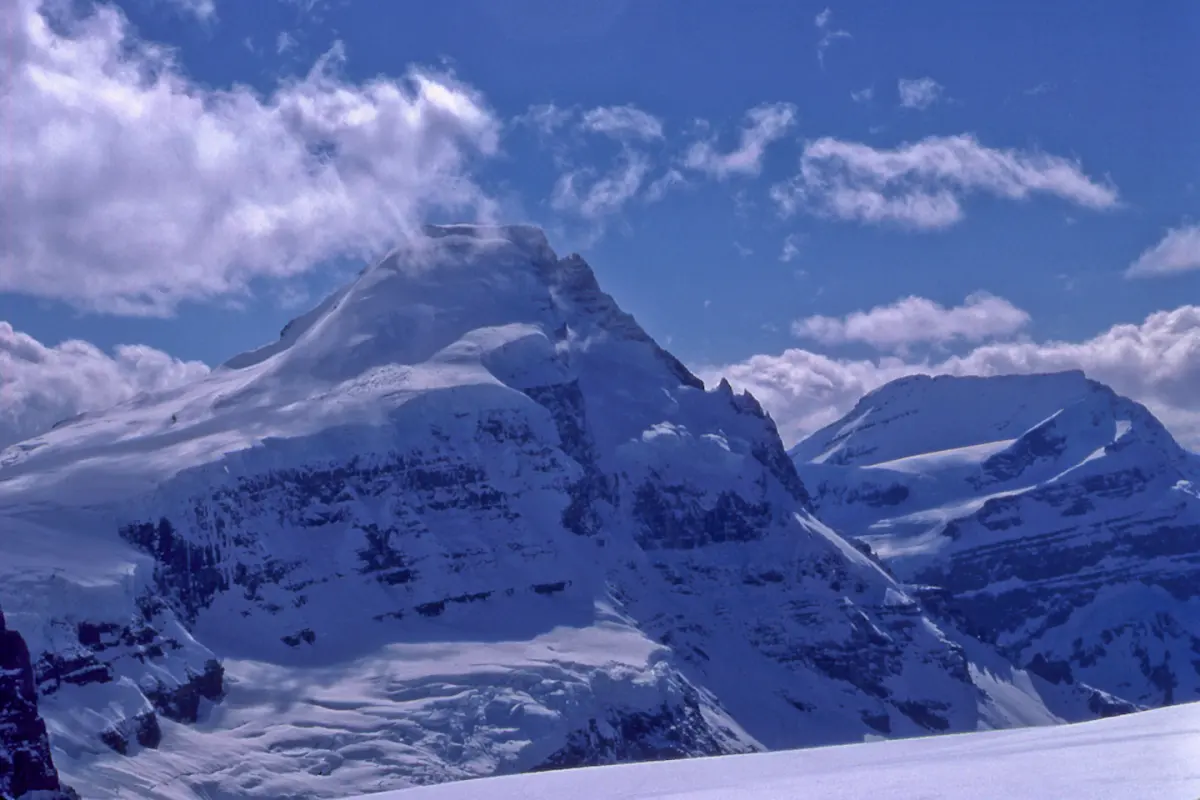
Mount Logan is the highest mountain in Canada, reaching an elevation of 5,959 meters (19,551 feet) above sea level. Located within Kluane National Park and Reserve in the southwestern corner of the Yukon, it is not only Canada's tallest peak but also the second-highest mountain in North America after Denali in Alaska.
On this page
Where is Mount Logan located?
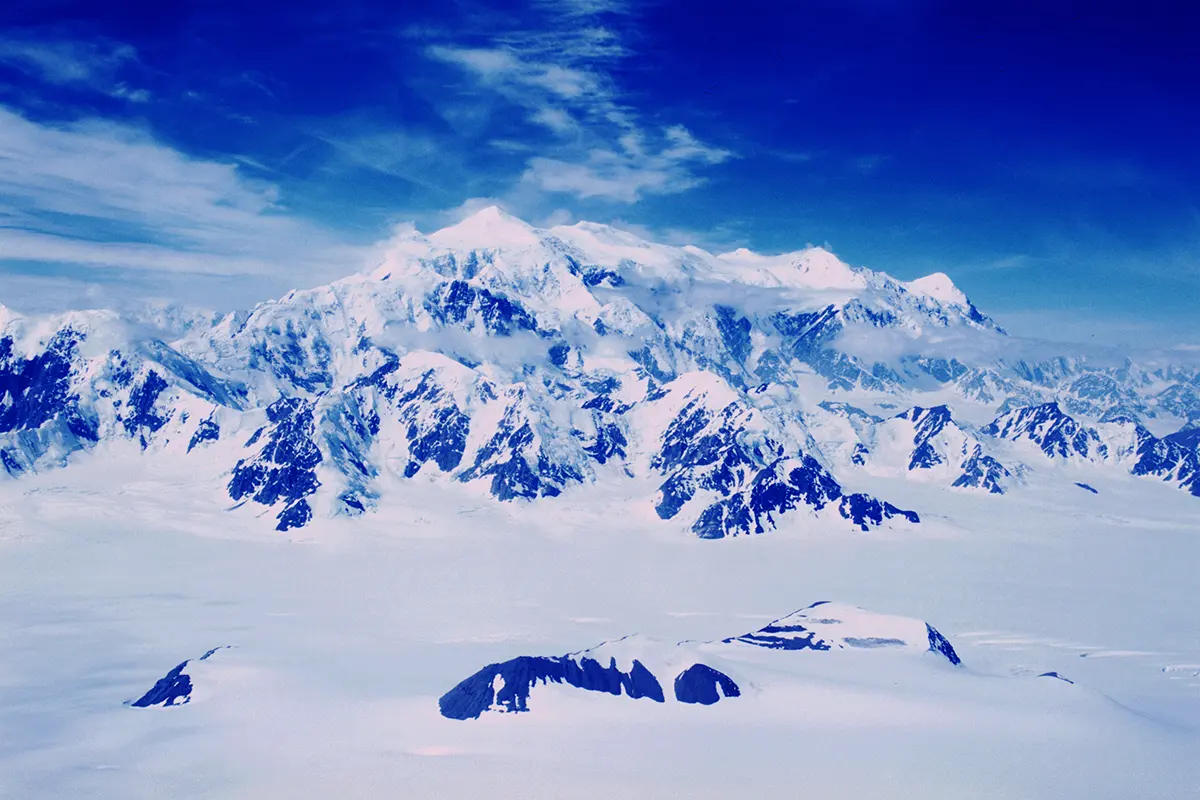
Mount Logan is situated in the Saint Elias Mountains of the Yukon Territory. Its massive base covers a significant portion of Kluane National Park and Reserve, a region designated as a UNESCO World Heritage site due to its extensive icefields and rugged alpine terrain. Because of its immense size and high latitude, the mountain features one of the largest non-polar icefields in the world.
The peak is notoriously difficult to access because it is surrounded by vast glaciers and extreme weather systems. Unlike many other major mountain ranges that offer established road access to trailheads, Mount Logan requires specialized logistical planning. Most expeditions begin by flying from the community of Haines Junction into the glacier base via ski-equipped aircraft. The isolation of the mountain means that climbers must be entirely self-sufficient, as rescue operations are exceptionally complex and often delayed by the persistent, high-altitude storms that frequent the massif.
What is the history of the first ascent?
The first successful ascent of Mount Logan occurred on June 23, 1925. A team of seven international climbers, led by Albert H. MacCarthy, reached the summit after a grueling expedition that involved trekking hundreds of kilometers through untracked wilderness just to reach the base of the mountain. The achievement was widely celebrated as a triumph of endurance and navigation in an era before modern GPS technology or satellite weather forecasting.
Following the initial success, the mountain remained a rare destination for mountaineers for several decades. It was not until the late 20th century that the peak saw more frequent attempts, though the sheer scale of the massif continues to present a formidable challenge. Today, the mountain remains a symbol of Canadian wilderness, representing the extreme conditions found in the northern reaches of the continent.
How to prepare for a Mount Logan expedition?
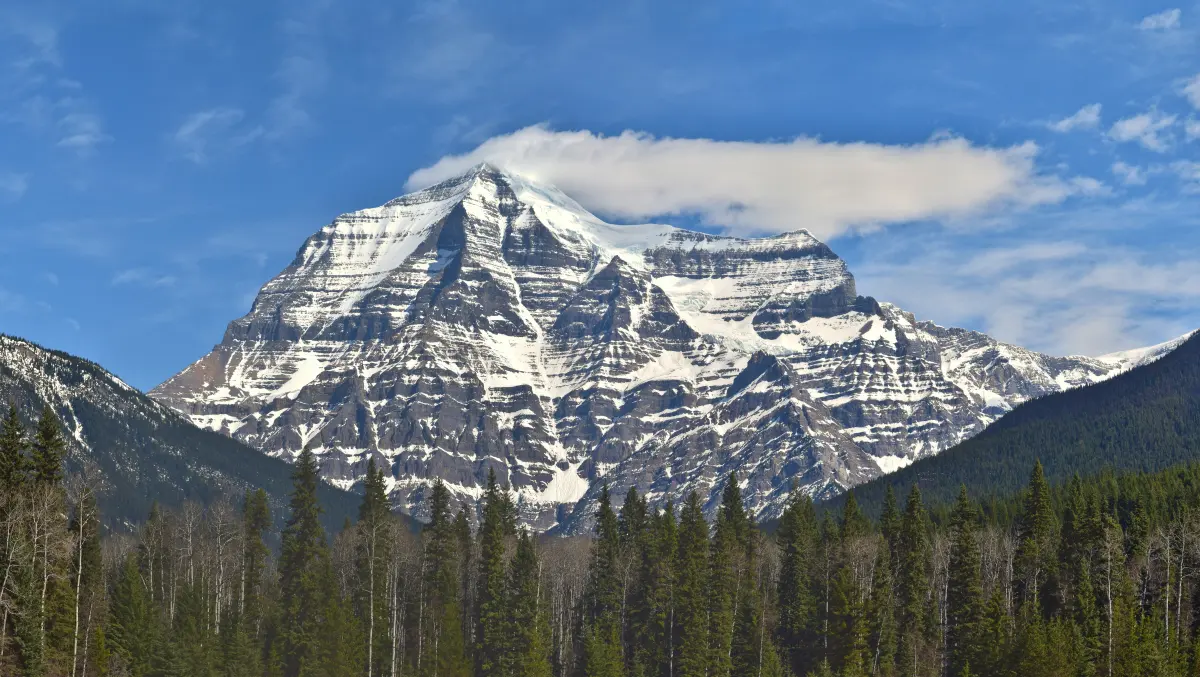
Preparing for a climb of this magnitude requires years of high-altitude experience and rigorous physical conditioning. Climbers must demonstrate proficiency in glacier travel, crevasse rescue, and cold-weather survival techniques before attempting the ascent. Because the mountain is located in a remote, high-latitude environment, the physical demands are compounded by the extreme cold and the potential for rapid weather changes.
- Obtain necessary permits from Parks Canada for entry into the Kluane National Park and Reserve.
- Hire a certified mountain guide service with specific experience in the Saint Elias Mountains.
- Conduct a thorough medical evaluation to ensure physical fitness for extreme high-altitude conditions.
- Test all gear, including specialized stoves and high-altitude tents, in simulated sub-zero environments.
- Create a detailed communication plan using satellite-based devices, as there is no cellular coverage in the region.
Common mistakes when climbing Mount Logan
One of the most frequent errors climbers make is underestimating the sheer size of the mountain’s plateau. Mount Logan is not a single, sharp peak but a massive massif with a summit plateau that spans several kilometers. Many teams lose valuable time navigating the expansive, featureless icefields, where whiteout conditions can occur without warning. Relying solely on visual landmarks is dangerous, as the scale of the landscape often creates optical illusions regarding distance and elevation.
Another common mistake involves inadequate planning for the "Logan cold." Temperatures on the summit plateau can drop well below -40 degrees Celsius, even during the summer months. Climbers who fail to bring sufficient fuel for melting snow or who lack high-quality, expedition-grade sleeping systems often face life-threatening situations. It is essential to carry extra supplies for at least one week beyond the planned expedition duration to account for the frequent, multi-day storms that can trap teams in their tents.
Best time of year to visit
The optimal window for attempting the summit is typically between late May and early June. During this period, the days are at their longest, providing maximum light for navigation, and the temperatures are slightly more manageable than in the depths of winter. However, even in this window, the weather remains unpredictable and can shift from clear skies to blizzard conditions in a matter of hours.
- Monitor long-range weather forecasts specifically for the Saint Elias range.
- Ensure all team members are trained in identifying symptoms of High Altitude Pulmonary Edema (HAPE).
- Pack extra layers of synthetic or down insulation to manage moisture buildup.
- Carry a comprehensive first-aid kit designed for remote, long-duration expeditions.
- Maintain a strict "leave no trace" policy to protect the pristine glacial environment.
By choosing the right window and respecting the mountain's volatile climate, experienced mountaineers can safely navigate one of the most challenging and rewarding peaks in North America.
Key facts
- Mount Logan is the highest mountain in Canada, reaching an elevation of 5,959 meters (19,551 feet).
- It is located within Kluane National Park and Reserve in the southwestern corner of the Yukon territory.
- The mountain is part of the Saint Elias Mountains, a range known for its massive glaciers and extreme weather.
- Mount Logan is the second-highest peak in North America, surpassed only by Denali in Alaska.
- The mountain is named after Sir William Edmond Logan, a Canadian geologist and founder of the Geological Survey of Canada.
- Mountaineers attempting to summit must be prepared for sub-zero temperatures and high-altitude challenges, often requiring a multi-week expedition.
The bottom line
Mount Logan stands as Canada’s tallest peak, offering a formidable challenge for elite mountaineers due to its remote Yukon location and harsh glacial environment. Located within Kluane National Park, it remains a site of significant geological interest and extreme adventure. Reaching the summit requires extensive planning, specialized gear, and a deep respect for the unpredictable mountain weather that defines this massive, ice-covered geological giant.
People also ask
Is Mount Logan a volcanic mountain?
No, Mount Logan is not a volcano. It is a massive block of sedimentary and metamorphic rock that was uplifted by tectonic plate collisions.
Can you drive to the base of Mount Logan?
There are no roads leading to the base of the mountain. Access typically requires chartering a ski-equipped aircraft from Haines Junction to land on the glacier.
What is the biggest danger when climbing Mount Logan?
The most significant risks include extreme weather shifts, high-altitude pulmonary edema, and the presence of deep, hidden crevasses in the massive glaciers.
When is the best time of year to attempt a climb?
The optimal window for climbing is during the late spring and early summer, specifically from May to June, when weather conditions are most stable.
How long does a typical expedition take?
A standard expedition to the summit and back usually lasts between three to four weeks. This timeframe accounts for potential weather delays and the need for slow acclimatization.
Is a permit required to climb Mount Logan?
Yes, all climbers must register with Parks Canada and obtain a permit before entering the Kluane National Park and Reserve for mountaineering activities.
This answer was created with the help of AI research tools and reference sources. Spotted an error? Let us know — we correct mistakes quickly. See our editorial policy.