Who is Hades?
Short answer
Hades is the ancient Greek god of the underworld, the realm where the souls of the dead reside. He is one of the three primary Olympian brothers, alongside Zeus and Poseidon, who divided the world among themselves. Though often feared, he is not a villain, but a stern ruler of the afterlife.
On this page
Who is Hades in Greek mythology?
Hades is the eldest son of the Titans Cronus and Rhea. Following the defeat of their father, he and his brothers cast lots to divide the cosmos. Zeus claimed the heavens, Poseidon took the seas, and Hades was granted dominion over the subterranean world. Unlike the other Olympians, he rarely leaves his dark domain, preferring the solitude of his silent, shadowy kingdom.
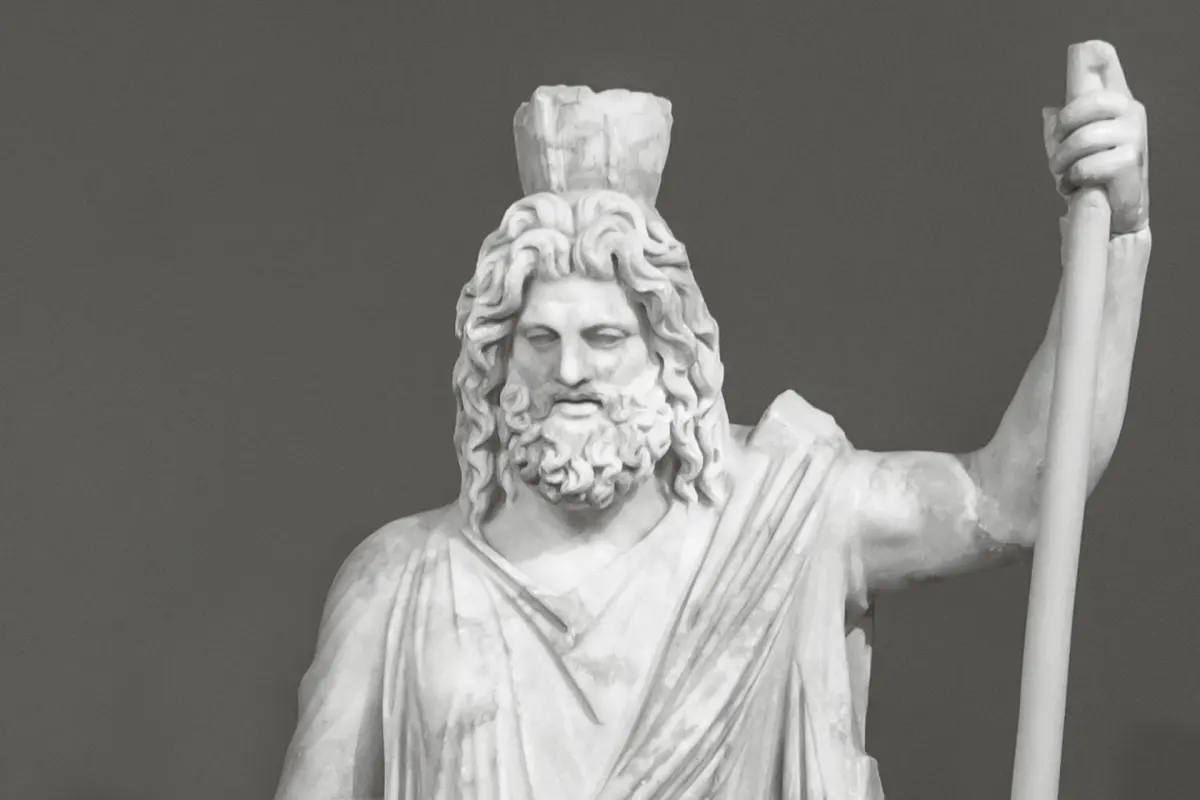
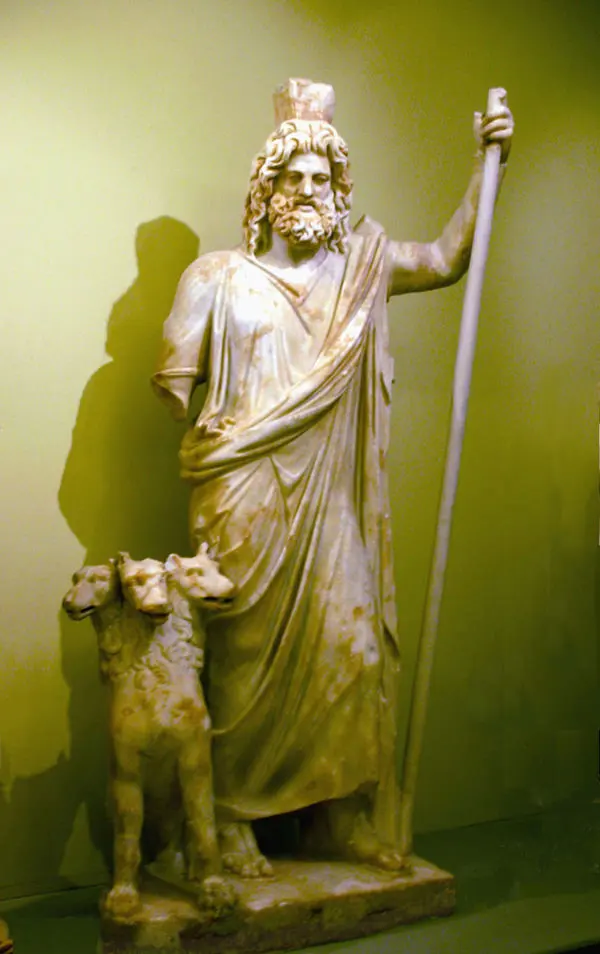
He is frequently depicted as a somber, bearded figure holding a bident or a key, symbolizing his role as the jailer of the dead. His name is also synonymous with the underworld itself, a place often referred to simply as "the house of Hades." Despite his fearsome reputation, he is considered a just and unyielding administrator of the laws of death, ensuring that no soul escapes the finality of their fate.
What is the domain of Hades like?
The underworld is a complex geography designed to contain and categorize the deceased based on their earthly conduct. It is surrounded by five rivers, each possessing unique properties that define the experience of the dead. The most famous, the River Styx, serves as the boundary between the world of the living and the dead, requiring the ferryman Charon to transport souls across its waters.
The realm is divided into several distinct regions:
- Tartarus: A deep, dark abyss used as a dungeon of torment for the wicked and the Titans.
- The Asphodel Meadows: A neutral space for souls who lived lives that were neither virtuous nor evil.
- Elysium: A paradise reserved for heroes and those favored by the gods.
- The Fields of Mourning: A place for those consumed by unrequited love or earthly sorrow.
How does Hades relate to Persephone?
The most famous myth involving Hades is his abduction of Persephone, the daughter of Demeter, the goddess of agriculture. Captivated by her beauty, Hades took her to the underworld to be his queen. This act triggered a profound crisis in the natural world, as Demeter’s grief caused the earth to wither and stop producing crops, leading to the creation of the seasons.
To resolve the conflict, Zeus intervened, decreeing that Persephone must return to the surface for part of the year. The arrangement follows these specific conditions:
- Persephone spends one-third of the year in the underworld with Hades.
- During this period, Demeter mourns, causing winter to fall upon the earth.
- Upon her return to the surface, spring blooms, representing the cycle of life and renewal.
- This myth explains the agricultural cycle and the fundamental connection between death and rebirth in ancient Greek belief.
What are common misconceptions about Hades?
A frequent error is equating Hades with the Christian concept of Satan or a figure of pure evil. In Greek mythology, Hades is not a tempter or an adversary of humanity; he is a functional deity performing a necessary duty. He does not actively seek to cause suffering, nor does he focus on the moral corruption of the living. His role is purely administrative, maintaining the balance of the afterlife.
Another common mistake is assuming that Hades is a god of death itself. That role belongs to Thanatos, a separate deity who acts as the personification of death. Hades is merely the king of the dead, the landlord of the underworld. He is also sometimes confused with Pluto, the Roman equivalent. While they share similar traits, Pluto is more closely associated with the earth’s hidden mineral wealth, reflecting the transition of the god’s image from a king of shadows to a provider of prosperity.
How to study Hades for beginners?
For those beginning their exploration of Greek mythology, it is best to start by reading primary sources like Homer’s Odyssey or Hesiod’s Theogony. These texts provide the foundational descriptions of the underworld and the roles of the Olympian gods. Avoid relying solely on modern film adaptations, as these often take significant creative liberties that distort the original mythological context.
When researching, keep these tips in mind to avoid confusion:
- Focus on the distinction between the gods of the Olympians and the chthonic deities who reside underground.
- Look for the cult titles associated with Hades, such as "Plouton," which emphasize his role as the giver of wealth.
- Compare his interactions with other gods to understand his social standing within the divine hierarchy.
- Research the specific rituals, known as "necromancy," that ancient Greeks performed to communicate with the dead.
By following these steps, you will gain a nuanced understanding of this complex deity and his essential place in the ancient worldview.
Key facts
- Hades is the ancient Greek god of the underworld and the dead, rather than a personification of death itself.
- He is the eldest son of the Titans Cronus and Rhea, and the brother of Zeus and Poseidon.
- After the overthrow of the Titans, he drew lots with his brothers and received the underworld as his domain.
- His name is often used interchangeably with his realm, which is also called Hades.
- He is frequently depicted with his three-headed guard dog, Cerberus, who prevents the dead from leaving.
- Avoid confusing Hades with Thanatos, who is the literal personification of death, or with the Christian concept of Satan.
The bottom line
Hades remains a central figure in Greek mythology as the stern ruler of the underworld. Often misunderstood as a villain, he served as a necessary, impartial judge of the deceased. Understanding his role requires distinguishing him from the concept of evil, as he was simply the keeper of the dead. His story highlights the ancient Greek preoccupation with the inevitability of death and the subterranean riches.
People also ask
Who is Persephone in relation to Hades?
Persephone is the queen of the underworld and the wife of Hades. According to myth, he abducted her to be his bride, leading to the creation of the seasons when she returns to the earth to visit her mother, Demeter.
Did Hades live on Mount Olympus?
No, Hades rarely left his subterranean realm. He was considered an Olympian in terms of lineage, but he was not welcome among the gods residing on the mountain.
What was the personality of Hades in mythology?
Unlike many other Greek gods, Hades was generally portrayed as stern, unyielding, and pitiless, but not inherently evil. He was a rigid administrator of the dead rather than a malevolent tempter.
What is the significance of the Helm of Darkness?
This magical helmet, forged by the Cyclopes, granted Hades the power of invisibility. He famously used it during the war against the Titans to sabotage his enemies.
Are there temples dedicated to Hades?
Temples to Hades were extremely rare because the Greeks feared invoking his name. One notable site of worship was located in Elis, which opened only once per year for his priests.
What does the term "Pluto" mean in relation to Hades?
Pluto is the Roman equivalent of Hades, derived from the Greek word ploutos, meaning wealth. This name reflects his role as the god of the precious metals and gems found beneath the earth.
This answer was created with the help of AI research tools and reference sources. Spotted an error? Let us know — we correct mistakes quickly. See our editorial policy.