Why do trees lose their leaves?
Short answer
Trees shed their leaves primarily to survive harsh winter conditions. By dropping foliage, deciduous trees conserve water and prevent damage from heavy snow or ice accumulation. This process, known as abscission, allows the tree to enter a state of dormancy, protecting its internal tissues until warmer temperatures return in the spring.
On this page
Why do leaves change color and fall
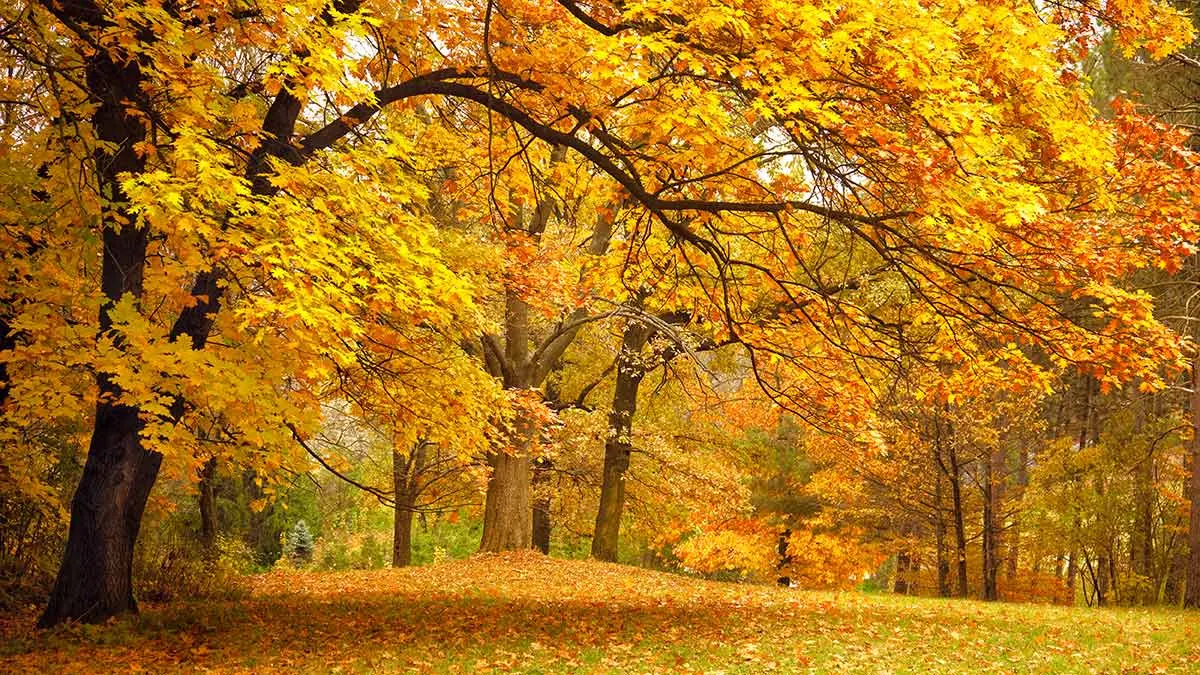
Deciduous trees lose their leaves as a strategic response to the shortening days of autumn. As sunlight diminishes, trees detect the change in photoperiod and begin to shut down chlorophyll production, the pigment responsible for photosynthesis. Without chlorophyll, other pigments like carotenoids and anthocyanins—which were previously masked—become visible, creating the vibrant yellow, orange, and red hues of fall.
Once the chlorophyll fades, the tree forms an abscission layer at the base of each leaf stem, known as the petiole. This layer of specialized cells acts as a seal, gradually cutting off the flow of water and nutrients to the leaf. Eventually, the connection weakens until the leaf detaches, leaving behind a protective scar on the branch. This biological mechanism ensures the tree does not lose vital moisture through leaf pores during the dry, cold winter months.
How trees survive winter dormancy
Winter presents a significant challenge for plants because frozen water is inaccessible. If a tree kept its broad, thin leaves, it would continue to lose water through transpiration while being unable to replace it from frozen soil. By dropping their leaves, trees significantly reduce their surface area, effectively "shutting down" their metabolic processes to conserve energy until conditions improve.
During this dormant phase, the tree relies on stored carbohydrates accumulated throughout the spring and summer. This energy reserve sustains the tree through the winter, allowing it to survive even when it cannot produce new food. The process is highly efficient, as the tree reabsorbs valuable nutrients, such as nitrogen and phosphorus, from the leaves before they fall, recycling these components for future growth.
What happens during the abscission process
The abscission process is a highly choreographed chemical event triggered by plant hormones, specifically a decrease in auxin and an increase in ethylene. As the tree prepares for winter, these hormonal shifts prompt the development of two distinct layers at the base of the leaf stalk:
- The separation layer: A zone of weak, thin-walled cells that eventually break apart.
- The protective layer: A layer of cork-like cells that forms a scar to prevent infection and water loss once the leaf falls.
This process ensures that when the leaf finally detaches, the tree is not left with an open wound. The protective layer effectively seals the vascular system, preventing pathogens or freezing temperatures from damaging the internal tissues of the branch. This transition is so precise that a light breeze is often all that is required to finish the job once the abscission layer is fully formed.
Common mistakes when caring for trees
Many homeowners mistakenly believe that fallen leaves are merely waste that must be removed immediately. In reality, leaves provide essential nutrients back to the soil as they decompose, mimicking the natural cycle of a forest floor. Removing every leaf can lead to soil nutrient depletion over time, forcing a greater reliance on synthetic fertilizers that may not be as effective as natural organic matter.
Another common error involves the improper disposal of leaves, such as burning them or sending them to landfills. Instead, consider these sustainable practices:
- Mulch the leaves with a lawnmower to create a natural fertilizer for your grass.
- Rake leaves into garden beds to provide insulation and moisture retention for perennials.
- Compost the leaves to create nutrient-rich humus for future planting projects.
By leaving a portion of the leaf litter, you support the local ecosystem, providing habitat for beneficial insects and microorganisms that improve soil health.
How to identify deciduous vs evergreen trees
It is important to distinguish between deciduous trees, which lose their leaves, and evergreens, which retain needles or leaves year-round. Evergreens have evolved different adaptations to survive winter, such as a waxy coating on their needles and a unique chemical composition that prevents their internal fluids from freezing. While they do shed old needles, they do so gradually throughout the year rather than all at once.
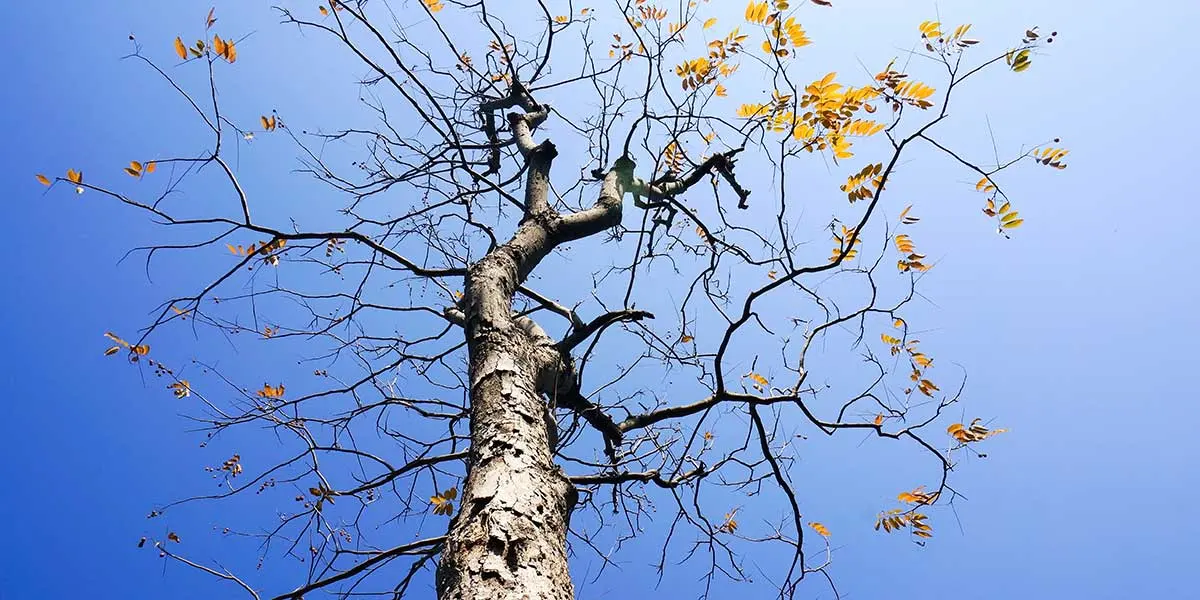
To determine if a tree is deciduous or evergreen, observe its behavior during the late autumn and winter months. Deciduous trees will stand bare, revealing their branching structure, while evergreens will maintain their foliage. Understanding these differences helps in planning your landscape, as deciduous trees provide shade in the summer and allow sunlight to reach your home in the winter, whereas evergreens provide consistent windbreaks and privacy throughout the year. Knowing these characteristics allows for more intentional planting and better long-term management of your outdoor space.
Key facts
- Deciduous trees shed leaves to conserve water and energy during the harsh winter months when moisture is scarce.
- The process is triggered by shorter day lengths and cooler temperatures, which signal the tree to stop producing chlorophyll.
- As chlorophyll breaks down, hidden pigments like carotenoids and anthocyanins emerge, creating the vibrant fall colors.
- A layer of cells called the abscission zone forms at the leaf base, eventually severing the connection to the tree.
- Trees recycle nutrients from the leaves back into their roots and trunks before the leaves drop to the ground.
- Avoid raking leaves too early in the fall, as they provide essential insulation for tree roots and habitat for beneficial insects.
The bottom line
The annual shedding of leaves is a sophisticated survival strategy that allows deciduous trees to endure winter dormancy. By withdrawing nutrients and sealing off leaf stems, trees minimize water loss and protect themselves from freezing temperatures. This cycle not only ensures the tree’s long-term health but also contributes to the ecosystem by recycling nutrients back into the soil, proving that leaf loss is essential for growth.
People also ask
Do all trees lose their leaves in the autumn?
No, only deciduous trees lose their leaves annually. Coniferous trees, such as pines and spruces, keep their needle-like leaves year-round to photosynthesize whenever conditions permit.
Why do leaves change color before they fall?
Leaves change color because the tree stops producing green chlorophyll as winter approaches. This allows yellow, orange, and red pigments that were already present in the leaf to become visible.
Is it harmful for a tree to lose its leaves?
No, it is a healthy, natural process that allows the tree to go dormant. Without this cycle, trees would likely freeze or dehydrate during the winter.
What happens to the leaves after they fall on the ground?
Fallen leaves decompose and return vital organic matter and nutrients to the soil. This process enriches the earth, supporting the tree's future growth in the spring.
Can I use fallen leaves as mulch for my garden?
Yes, leaves make excellent mulch that suppresses weeds and retains soil moisture. Simply shred them with a lawnmower first to prevent them from matting into a thick, water-resistant layer.
Do trees lose leaves during droughts?
Yes, some trees experience "drought deciduousness" where they drop leaves early to prevent water loss. This is a survival mechanism to keep the tree alive during extreme heat or lack of rain.
This answer was created with the help of AI research tools and reference sources. Spotted an error? Let us know — we correct mistakes quickly. See our editorial policy.