How do birds migrate?
Short answer
Birds migrate by navigating thousands of miles using internal biological compasses, celestial cues, and environmental landmarks to reach seasonal habitats. Driven primarily by changing day length and food availability, they endure extreme physiological shifts to survive long-distance journeys, ensuring they find optimal conditions for breeding and avoiding harsh winter climates.
On this page
Why do birds migrate?
Migration is an evolutionary strategy driven by the need to maximize survival and reproductive success. As seasons change, food resources like insects, seeds, and nectar fluctuate, forcing birds to move toward areas where these supplies are more abundant. By relocating, species avoid the metabolic stress of winter food scarcity and the extreme cold that would otherwise threaten their survival.
Beyond food, migration is essential for finding optimal breeding grounds. Many species travel to northern latitudes during the spring because the long daylight hours provide more time to forage for their young. This seasonal cycle is triggered by photoperiodism, where the lengthening or shortening of days signals the bird's endocrine system to prepare for departure. This internal clock ensures that birds arrive at their destinations just as the local environment becomes most hospitable for nesting and raising offspring.
How do birds navigate during migration?
Birds utilize a sophisticated suite of sensory tools to maintain their heading across vast distances. Many species rely on magnetoreception, a biological ability to detect the Earth’s magnetic field, which acts as a constant, reliable compass. Others look to the sky, using the position of the sun during the day and the patterns of constellations—specifically the North Star—at night to orient themselves.
In addition to celestial and magnetic cues, birds use visual landmarks to refine their routes. They follow geographic features such as mountain ranges, river valleys, and coastlines to navigate toward specific stopover sites. Some species also possess a sense of smell, using olfactory maps to identify familiar landscapes. This multi-modal approach allows birds to correct their course even when weather conditions obscure the stars or disrupt magnetic readings, ensuring they reach the same nesting sites year after year.
- Magnetoreception: Detecting the Earth's magnetic field for orientation.
- Celestial Navigation: Utilizing the sun and stars for directional guidance.
- Olfactory Mapping: Using scent to identify geographical regions.
- Landmark Recognition: Following coastlines and mountains as visual cues.
How long does it take to migrate?
The duration of migration varies significantly depending on the species, the distance traveled, and the bird's physical condition. Some birds, such as the Arctic Tern, perform one of the longest migrations in the animal kingdom, traveling up to 44,000 miles round-trip annually between the Arctic and the Antarctic. Others, like the Ruby-throated Hummingbird, complete a 2,000-mile journey that includes a non-stop flight across the Gulf of Mexico, lasting approximately 18 to 22 hours.
Migration is rarely a continuous flight; it is a series of long-distance movements punctuated by stopovers. During these intervals, birds rest and "refuel" by consuming large amounts of food to build up fat reserves. The speed of migration is therefore dictated by how quickly a bird can replenish its energy. A bird might travel for several days, then spend a week or more at a stopover site before continuing its journey toward the final destination.
- Assess current fat reserves to determine if the bird needs to stop.
- Locate a high-quality stopover site with abundant food resources.
- Rest and forage for several days to rebuild metabolic energy.
- Wait for favorable wind conditions to minimize energy expenditure during flight.
- Depart during the night or early morning to avoid predators and heat.
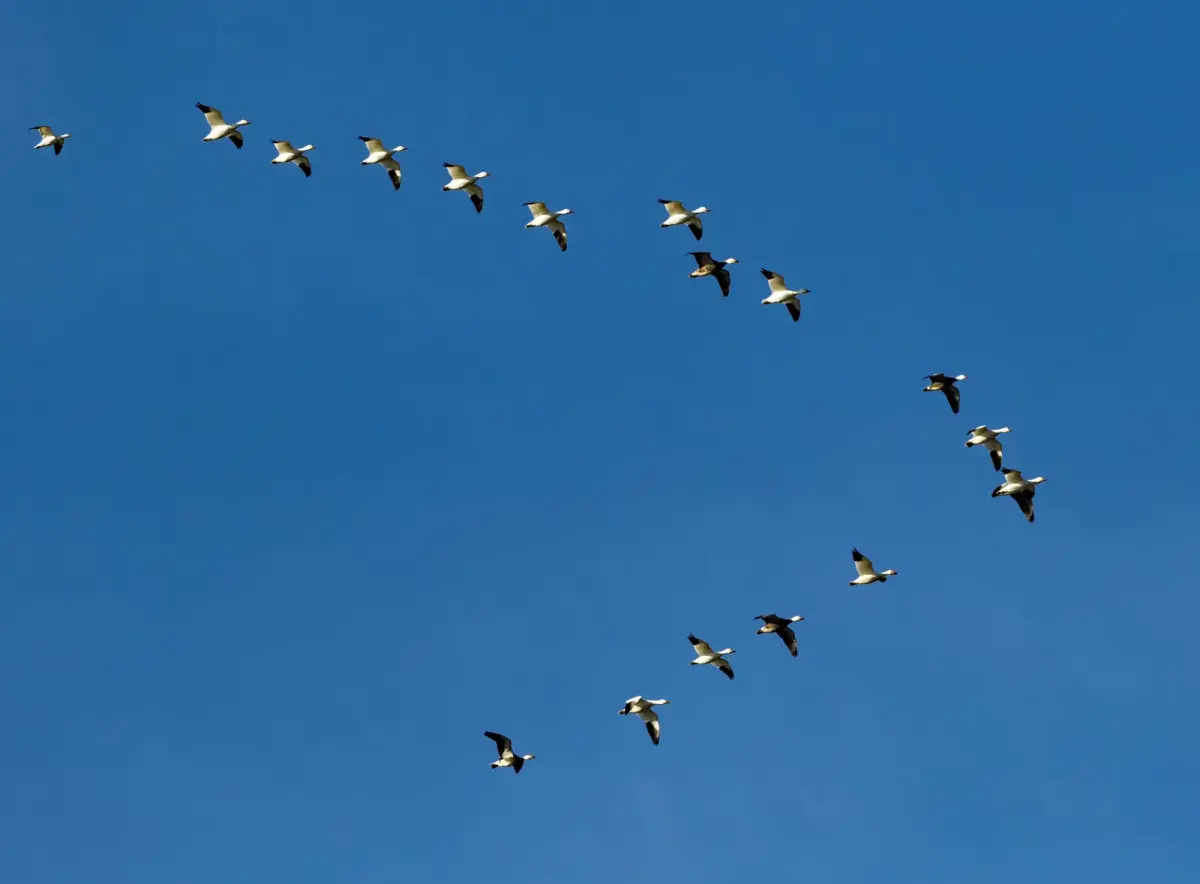
Best ways to help migrating birds
Supporting migratory birds requires creating a safe environment during their stopovers. Because birds rely on specific habitats to refuel, maintaining native plants in your garden is one of the most effective ways to assist them. Native vegetation provides the high-protein insects and nutrient-dense berries that birds need to survive their grueling journeys.
You can also minimize human-related hazards that claim millions of bird lives annually. During peak migration months, such as April and May or September and October, keep outdoor lights dimmed to prevent birds from becoming disoriented by artificial illumination. Additionally, applying window decals or screens can prevent fatal collisions, as birds often mistake reflections for open sky. Providing a clean, reliable source of water is also vital, as birds frequently become dehydrated during long flights.
- Plant native trees and shrubs to attract insects and provide shelter.
- Turn off unnecessary exterior lighting during peak migration windows.
- Place decals on large windows to make them visible to birds.
- Maintain a clean birdbath with fresh water throughout the season.
- Avoid using pesticides that reduce the insect population available to birds.
Common mistakes when observing migration
One frequent error is failing to account for the specific timing of local arrivals, which can lead to missed opportunities for observation. Migration is highly dependent on weather patterns; a sudden cold front or storm can force birds to land prematurely, creating a "fallout" where large numbers of birds congregate in small areas. Beginners often overlook these weather-driven events, assuming migration follows a rigid, date-based schedule rather than a fluid, weather-dependent one.
Another mistake is disturbing birds during their stopovers. Migrating birds are often exhausted and in a state of high stress, meaning they have little energy to spare for fleeing from human observers. Approaching too closely or using loud playback calls can cause them to waste vital energy or abandon a prime feeding spot. Always view birds from a distance, use binoculars or a spotting scope, and prioritize the bird’s need to conserve energy over the desire for a close-up photograph. By respecting their need for undisturbed rest, you contribute directly to their survival.
Key facts
- The Arctic Tern holds the record for the longest migration, traveling up to 44,000 miles annually between the Arctic and Antarctica.
- Many migratory birds use the Earth’s magnetic field, detected through specialized proteins in their eyes, to navigate over vast distances.
- Celestial navigation allows birds to orient themselves by the position of the sun during the day and the stars at night.
- Stopover sites, such as wetlands and forests, are critical "refueling stations" where birds must double their body weight in fat to survive the journey.
- Light pollution in urban areas is a common mistake that disorients nocturnal migrants, often leading to fatal collisions with buildings.
- Most songbirds migrate at night to avoid predators, minimize water loss, and take advantage of cooler, calmer air.
The bottom line
Bird migration is a sophisticated survival strategy driven by seasonal shifts in resources and day length. By navigating through magnetic fields and celestial cues, birds traverse thousands of miles to reach optimal breeding or wintering grounds. Protecting critical stopover habitats and reducing artificial light pollution are essential actions that humans can take to ensure these remarkable travelers successfully complete their journeys across the globe each year.
People also ask
Why do birds migrate?
Birds migrate primarily to find abundant food sources and suitable nesting grounds as seasons change. By moving to warmer climates, they avoid the scarcity of winter resources and ensure the survival of their offspring.
How do birds know when it is time to leave?
Migratory timing is triggered by photoperiodism, which is the bird's physiological response to changing day lengths. This hormonal shift prompts them to enter a state called zugunruhe, or migratory restlessness, before they depart.
Do all bird species migrate?
No, many species are considered resident birds and remain in the same geographic area year-round. Migration is a strategy specific to species that rely on seasonal food supplies, such as nectar, insects, or aquatic life.
How do birds find their way back to the same nest?
Birds utilize "site fidelity," which is an impressive memory for landmarks and magnetic mapping. Many species return to the exact same territory or even the same nest box every year to breed.
What are the biggest threats to migrating birds?
Habitat loss at stopover points, window collisions, and climate change are the primary threats. When stopover habitats are destroyed, birds lack the energy reserves needed to complete their arduous journeys.
Can I help birds during their migration?
Yes, you can help by keeping your cats indoors, turning off unnecessary outdoor lights at night, and planting native vegetation. Providing clean water sources also helps exhausted travelers refuel during their stopovers.
This answer was created with the help of AI research tools and reference sources. Spotted an error? Let us know — we correct mistakes quickly. See our editorial policy.