Why is the ocean blue?
Short answer
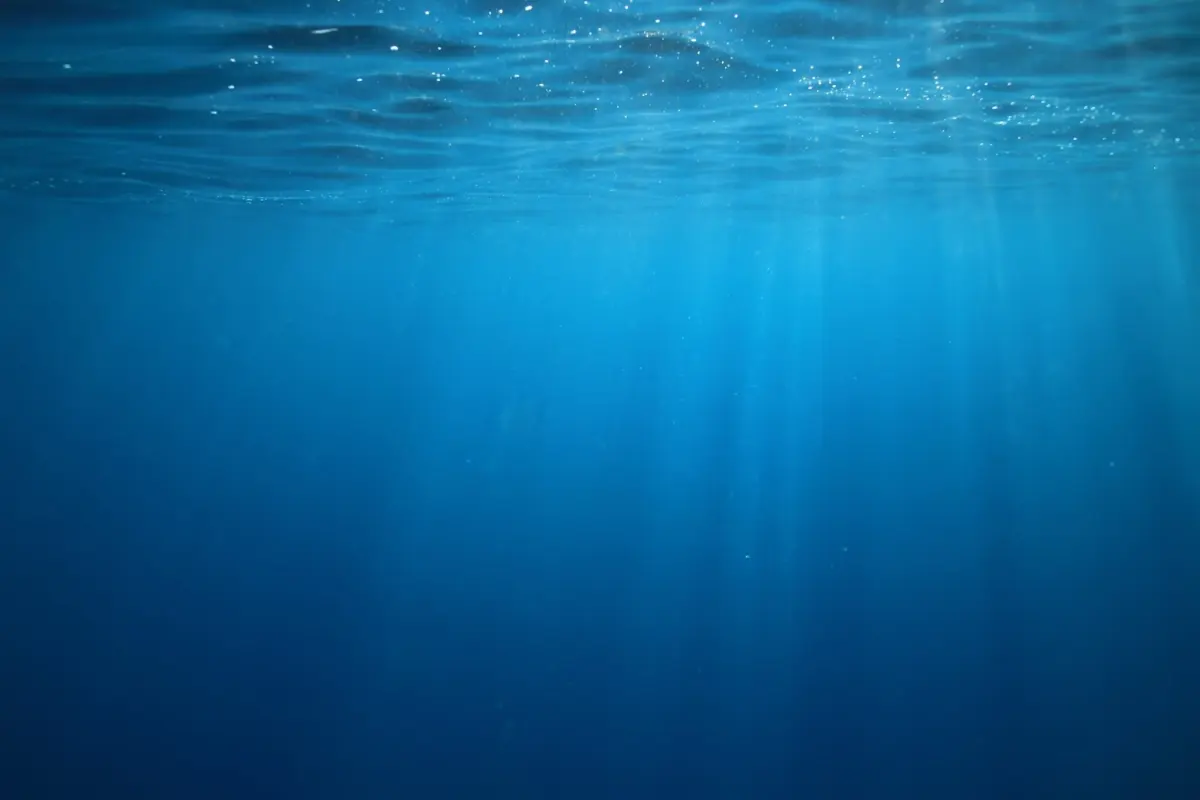
The ocean appears blue primarily because water molecules absorb the longer wavelengths of sunlight, such as red, orange, and yellow, while scattering shorter blue wavelengths back to our eyes. While water is transparent, this selective absorption process acts as a filter, leaving only the blue spectrum visible in deeper, clear bodies of water.
On this page
Why does the ocean look blue?
The color of the ocean is a result of how sunlight interacts with water molecules. When sunlight enters the water, it contains all the colors of the visible spectrum. Water molecules are particularly efficient at absorbing the longer, lower-energy wavelengths of light, which correspond to the red, orange, and yellow parts of the spectrum.
Because these longer wavelengths are removed, the remaining light that reaches our eyes is dominated by the shorter, higher-energy blue wavelengths. This phenomenon is known as selective absorption. It is the same reason why a glass of water looks clear; there simply isn't enough water volume to absorb a significant amount of light. However, in the vast, deep expanse of the ocean, the cumulative effect of this absorption becomes clearly visible as a deep blue hue.
How does light scattering affect ocean color?
Beyond absorption, scattering plays a critical role in the ocean's appearance. As light enters the water, it bounces off water molecules and suspended particles in a process called Rayleigh scattering. This is the same scientific principle that makes the sky appear blue during the day. Blue light, having a shorter wavelength, scatters more easily than red light, causing it to disperse in all directions and reach our eyes from various angles.
The interaction between scattering and absorption creates the vibrant range of blues we see. When the water is very deep and pure, the scattering of blue light is most prominent. If the water contains high amounts of dissolved organic matter or sediment, the light is scattered differently, which can shift the perceived color toward green, brown, or even murky gray.
- Pure, deep water absorbs red light and scatters blue light intensely.
- Phytoplankton contain chlorophyll, which absorbs blue and red light, reflecting green.
- Suspended sediments like silt or sand reflect brown or tan light.
- Shallow water over white sand appears turquoise due to reflection from the seafloor.
Why does the ocean change color?
The ocean is rarely a uniform shade of blue because its chemical and biological composition varies significantly by location. One of the most common reasons for color variation is the presence of phytoplankton, which are microscopic marine algae. These organisms contain chlorophyll, a pigment that absorbs blue and red light for photosynthesis but reflects green light. In areas where phytoplankton thrive, the ocean often takes on a distinct greenish tint.
Coastal areas also experience frequent color changes due to terrestrial influence. Rivers carry sediment, soil, and organic runoff into the ocean, which can turn coastal waters brown or murky. Furthermore, the depth of the water column affects the color; light reflects off the seafloor in shallow areas, often mixing the blue of the water with the color of the sand or coral below to create bright turquoise or light blue shades.
- Observe the water from a high vantage point to see the true color without surface glare.
- Check for the presence of algae blooms if the water appears unusually bright green.
- Note the proximity to river mouths, which often introduce sediment that clouds the blue.
- Consider the weather, as cloudy skies prevent direct sunlight from penetrating the surface to reveal the blue.

Common mistakes when observing ocean color
Many people mistakenly believe that the ocean is blue simply because it reflects the color of the sky. While the surface of the water does act as a mirror, reflecting the sky's color, this only accounts for the light reflecting off the very top layer. If the ocean were only blue because of the sky, it would appear black or gray on a cloudy day, yet the deep water often retains its blue color regardless of the weather.
Another common error is assuming that all blue water is clean or healthy. While a deep blue color is often associated with clear, nutrient-poor water in the open ocean, it does not confirm the absence of pollutants or chemicals. Conversely, green water is often seen as "dirty," but it is frequently a sign of high biological productivity and a healthy, nutrient-rich ecosystem supporting fish and marine life.
How to photograph the ocean's true blue
Capturing the natural blue of the ocean requires an understanding of light and equipment. The most common mistake photographers make is shooting at high noon, when the overhead sun creates harsh glare on the water's surface. This glare masks the true color of the water by reflecting the bright white of the sun. Instead, aim to shoot during the "golden hours" shortly after sunrise or before sunset, when the light is softer and the water's color is more saturated.
Using a polarizing filter is the most effective tool for improving ocean photography. This filter works by blocking light waves that are vibrating at certain angles, which effectively cuts through surface reflections and glare. By rotating the filter, you can reveal the deep, natural blues of the water and even see through the surface to the objects beneath. Always avoid using excessive saturation in post-processing, as this can make the water look artificial and lose its natural, deep-blue texture.
Key facts
- Water molecules absorb the long-wavelength colors of the light spectrum, such as red, orange, and yellow, more effectively than blue.
- Blue light has a shorter wavelength and higher energy, allowing it to scatter and reflect back to the human eye.
- The ocean appears deepest blue in the open sea because there are fewer particles like sediment or algae to interfere with light absorption.
- Shallow coastal waters often appear green because high concentrations of phytoplankton contain chlorophyll, which reflects green light.
- A glass of water appears clear because the volume is too small to absorb a significant amount of the red spectrum.
- To observe the true color of the ocean, look away from the sun’s reflection (glitter path) to avoid glare that masks the water's natural hue.
The bottom line
The ocean appears blue primarily because water molecules absorb the red end of the light spectrum while scattering blue light back to our eyes. While factors like depth, sediment, and phytoplankton can shift the water toward green or brown, the fundamental physics of light absorption remains the constant driver. Understanding this process reveals how light interacts with matter to define the vibrant colors of our planet's oceans.
People also ask
Why does the ocean look grey or brown near the shore?
Near the coast, waves stir up sand, silt, and organic debris from the sea floor. These suspended particles scatter all wavelengths of light equally, which masks the blue color and makes the water appear murky, brown, or grey.
Do fish see the ocean as blue?
Fish perceive light differently than humans because their eyes are adapted to the specific light conditions of their habitat. Many deep-sea species are sensitive to blue light, as it is the only wavelength that penetrates to significant depths.
Does the color of the sky make the ocean blue?
While the sky’s reflection can influence the surface appearance of the water, it is not the primary reason the ocean is blue. Even if the sky were a different color, the water would remain blue due to the intrinsic physical properties of water molecules.
How deep does light penetrate the ocean?
Sunlight can only penetrate the upper layer of the ocean, known as the euphotic zone, which typically extends to about 200 meters. Beyond this depth, the ocean becomes progressively darker until it reaches the aphotic zone, where no sunlight reaches at all.
Why do some tropical waters look turquoise?
Turquoise water occurs in shallow areas with white, sandy bottoms that reflect light back to the surface. This reflection combines with the blue light absorbed by the water to create a bright, vibrant cyan or turquoise color.
Does the ocean change color during a storm?
Yes, the ocean often darkens or turns grey during a storm due to the thick cloud cover blocking direct sunlight. Additionally, high winds increase turbulence, bringing more sediment to the surface and altering the light-scattering properties of the water.
This answer was created with the help of AI research tools and reference sources. Spotted an error? Let us know — we correct mistakes quickly. See our editorial policy.