What is a mangrove forest?
Short answer
A mangrove forest is a specialized coastal ecosystem dominated by salt-tolerant trees and shrubs known as mangroves. These forests thrive in the intertidal zones of tropical and subtropical regions worldwide. They serve as vital buffers between land and sea, protecting shorelines from erosion while providing essential habitats for diverse marine life.
On this page
Where do mangrove forests grow?
Mangrove forests are found primarily in tropical and subtropical latitudes, generally between 30° North and 30° South. They require warm water temperatures and protected shorelines to establish their complex root systems. These forests typically flourish in areas where freshwater rivers meet the salty ocean, creating brackish conditions that most other plants cannot tolerate.
While they are most famous in Southeast Asia, which holds the highest concentration of mangrove biodiversity, they are also prevalent in the Americas, Africa, and Oceania. Indonesia alone contains nearly 20 percent of the world’s total mangrove cover. Regardless of the specific geography, these forests are strictly limited to intertidal zones, meaning they must be regularly inundated by tides to survive and cycle nutrients effectively.
How do mangroves survive in saltwater?
Mangroves have evolved remarkable physiological adaptations to thrive in environments that would kill most terrestrial plants. The primary challenge is the high salinity of the water, which would normally dehydrate a plant through osmosis. Mangroves have developed three distinct strategies to manage salt intake and maintain internal water balance:
- Salt exclusion: Species like the red mangrove use specialized root membranes to filter out up to 90 percent of salt before it enters the plant.
- Salt excretion: Species like the black mangrove possess salt glands on their leaves that actively push excess salt out to the surface, where it crystallizes and blows away.
- Salt accumulation: Some species store salt in older leaves or bark, which they eventually shed to remove the mineral buildup from their system.
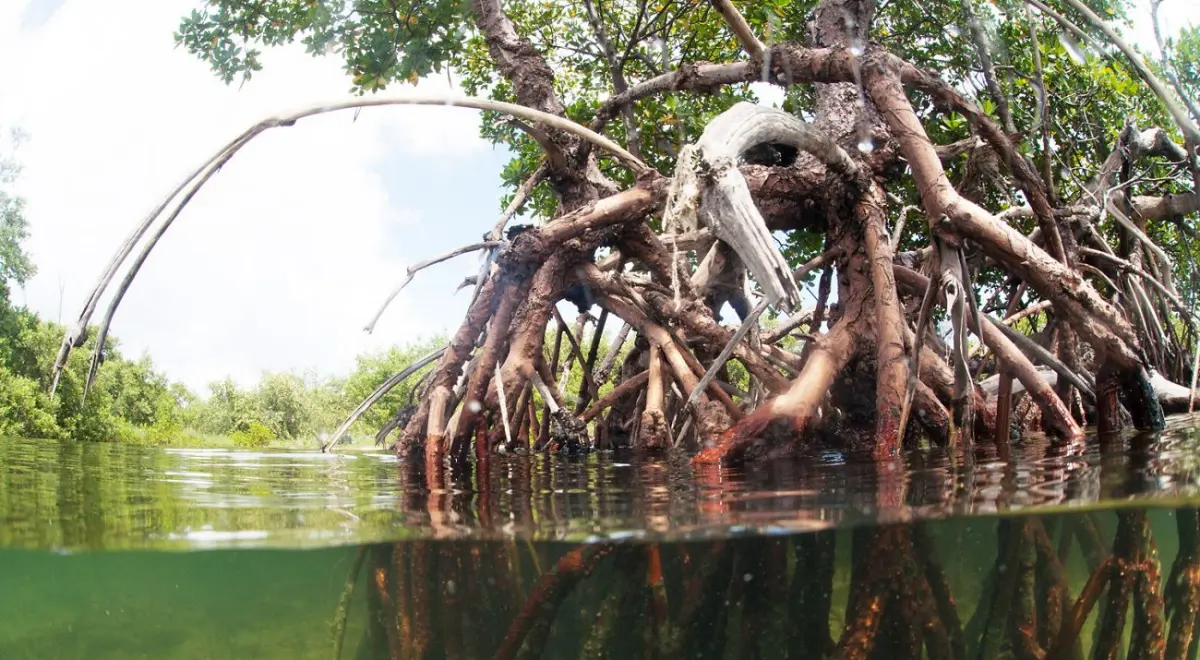
In addition to salt management, mangroves utilize specialized root structures to breathe in oxygen-poor, waterlogged mud. Red mangroves use "prop roots" that arch above the water, while black mangroves use "pneumatophores," which are straw-like structures that poke vertically out of the sediment to collect oxygen directly from the air.
Why are mangrove forests important?
These forests function as some of the most productive ecosystems on the planet, often described as "blue carbon" sinks. Because they grow in deep, waterlogged soil, they trap massive amounts of organic carbon, sequestering it at rates significantly higher than most terrestrial forests. This makes them a critical natural tool in the global effort to mitigate the effects of climate change.
Beyond carbon storage, mangroves provide essential ecosystem services that protect human communities:
- Coastal Protection: The dense, tangled root systems act as a physical barrier that dissipates wave energy, significantly reducing the impact of storm surges and hurricanes.
- Erosion Control: Mangrove roots stabilize coastal sediments, preventing the loss of land and protecting inland areas from flooding.
- Biodiversity Support: The complex root architecture serves as a nursery for thousands of species of fish, crustaceans, and mollusks, many of which are commercially important.
- Water Filtration: The forests trap sediments and pollutants flowing from rivers, ensuring that the water reaching coral reefs and seagrass beds remains clean.
Common mistakes when protecting mangroves
Efforts to restore or protect mangrove forests often fail due to a misunderstanding of local hydrology and ecology. A common error is the "monoculture planting" approach, where well-meaning groups plant thousands of seedlings of a single species in an area that may not support them. This ignores the natural succession of mangrove species, which usually requires a specific mix of pioneers and climax species to create a stable, resilient forest.
Another frequent mistake is the blocking of tidal flow. Mangroves are entirely dependent on the regular ebb and flow of the tide to bring in nutrients and flush out toxins. Construction projects, such as roads or seawalls that cut off these tidal channels, effectively kill the forest by starving it of oxygen and water exchange. Successful restoration requires restoring the natural "hydrological regime" before planting a single tree, ensuring the site is physically capable of supporting long-term growth.
How to identify mangrove species
Identifying mangroves in the field is a practical skill that relies on observing root structures and leaf patterns. While there are over 80 species of mangroves globally, most coastal forests are dominated by a few key types that are easily distinguishable once you know what to look for.
- Red Mangroves (Rhizophora mangle): Look for the iconic, high-arching "prop roots" that look like stilts. Their leaves are dark green, waxy, and oval-shaped.
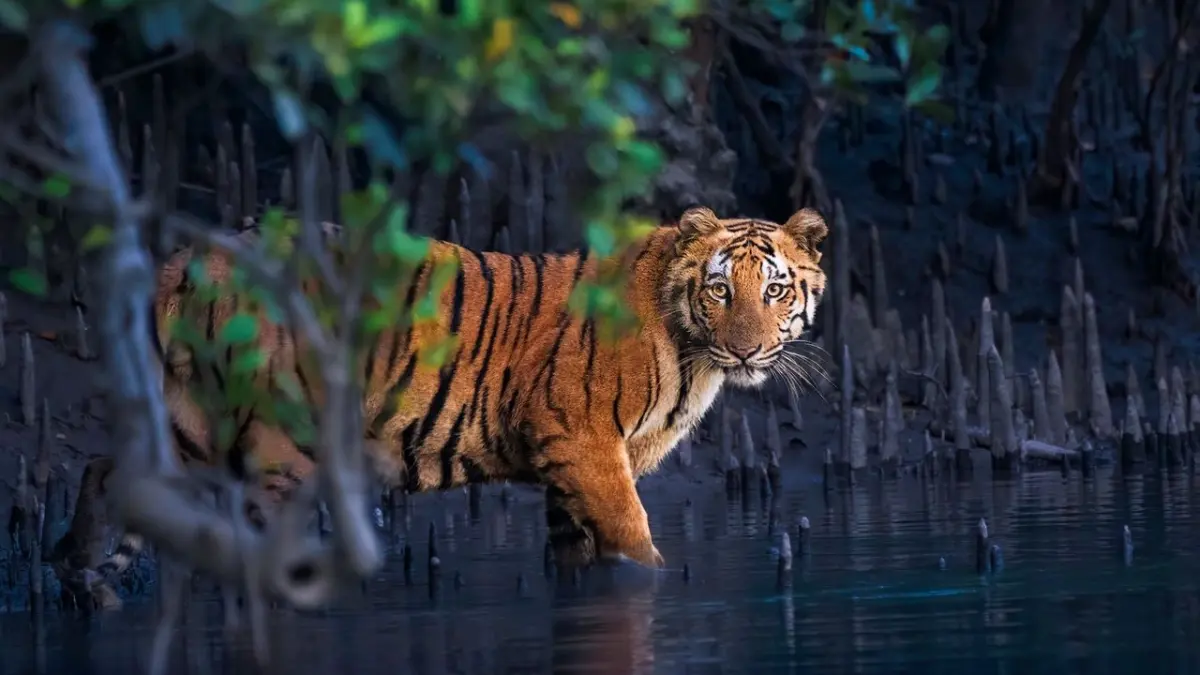
- Black Mangroves (Avicennia germinans): These are identified by the "pencil-like" pneumatophores sticking out of the mud around the base of the tree. Their leaves often have a silvery, salt-crusted underside.
- White Mangroves (Laguncularia racemosa): These usually grow at higher elevations further from the waterline. They lack visible aerial roots and can be identified by two small, distinct salt-secreting glands at the base of each leaf blade.
By observing the transition from the water's edge to the land, you can often see a natural zonation where these species organize themselves based on their specific tolerance to salt and depth. Learning these markers helps researchers and conservationists monitor the health of these vital coastal forests and track their expansion or decline over time.
Key facts
- Mangroves are salt-tolerant trees and shrubs that grow in the intertidal zones of tropical and subtropical coastlines.
- There are approximately 80 different species of mangroves worldwide, thriving in oxygen-poor, waterlogged soils.
- These forests store up to four times more carbon per hectare than terrestrial tropical rainforests, making them vital for climate regulation.
- Mangrove root systems, known as prop roots, act as natural filters that trap sediment and protect shorelines from erosion and storm surges.
- To identify a mangrove, look for specialized roots called pneumatophores that stick out of the mud to breathe air.
- When visiting a mangrove forest, never walk directly on the mudflats, as this crushes the delicate root systems and destroys the habitat.
The bottom line
Mangrove forests are highly specialized coastal ecosystems that serve as critical buffers between land and sea. By sequestering massive amounts of carbon and providing essential protection against erosion and extreme weather, they remain indispensable to global environmental health. Protecting these unique, salt-tolerant forests is a practical necessity for maintaining biodiversity and stabilizing coastlines against the ongoing threats of climate change and human-driven habitat destruction.
People also ask
Why are mangrove forests important for marine life?
Mangroves act as essential nurseries for fish, crustaceans, and mollusks by providing shelter from predators among their complex root structures. Many commercially important fish species spend their juvenile stages in these protected waters before migrating to the open ocean.
How do mangrove trees survive in saltwater?
Mangroves have evolved specialized mechanisms to handle high salinity, including excreting salt through their leaves or blocking salt intake at the root level. Some species, like the red mangrove, filter out up to 90 percent of the salt from the water they absorb.
Are mangrove forests disappearing?
Yes, mangrove forests are declining globally due to coastal development, aquaculture, especially shrimp farming, and pollution. Estimates suggest that more than 30 percent of the world’s mangrove cover has been lost over the past several decades.
Can you plant a mangrove tree in a home aquarium?
While possible, it is difficult because mangroves require intense, full-spectrum lighting and very specific water chemistry to thrive. Most home hobbyists fail because they do not provide enough vertical space for the roots or sufficient nutrient export to mimic a tidal environment.
What is the difference between red, black, and white mangroves?
These common names refer to the color of the bark and the tree's position relative to the water. Red mangroves grow closest to the water with arching prop roots, black mangroves grow further inland with straw-like breathing roots, and white mangroves typically occupy the highest, driest ground.
How do mangroves protect against tsunamis?
The dense, tangled root systems of a mangrove forest create significant friction that dissipates the energy of incoming waves. By slowing the flow of water, these forests significantly reduce the impact of tsunamis and storm surges on inland human settlements.
This answer was created with the help of AI research tools and reference sources. Spotted an error? Let us know — we correct mistakes quickly. See our editorial policy.