How do trees communicate?
Short answer
Trees communicate through complex underground fungal networks known as mycorrhizal networks, often called the "Wood Wide Web." By connecting root systems, trees exchange nutrients, carbon, and chemical signals. They also release airborne pheromones to warn neighbors of pest attacks or environmental stressors, enabling a sophisticated, cooperative survival strategy within forest ecosystems.
On this page
How do trees talk to each other underground?
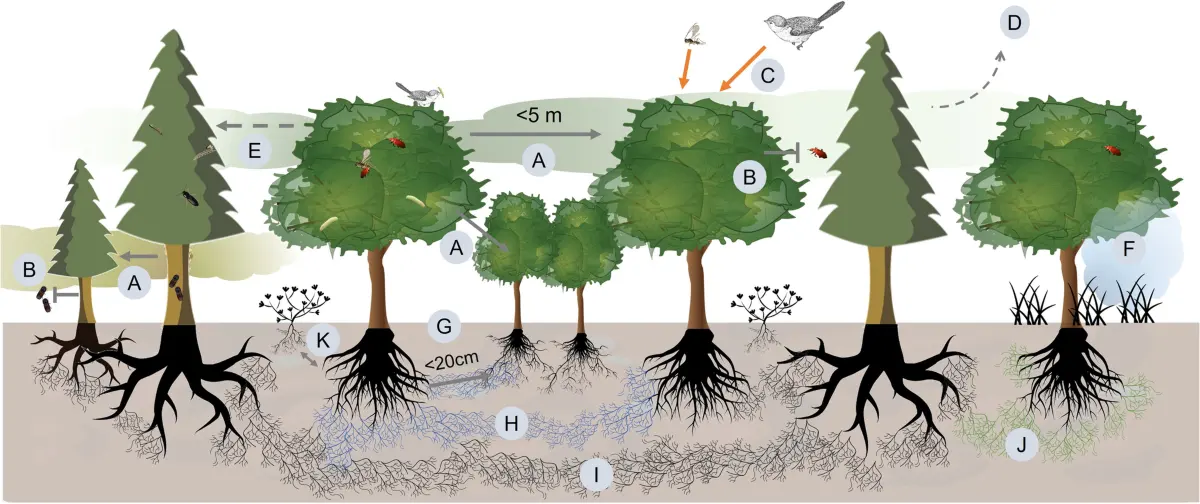
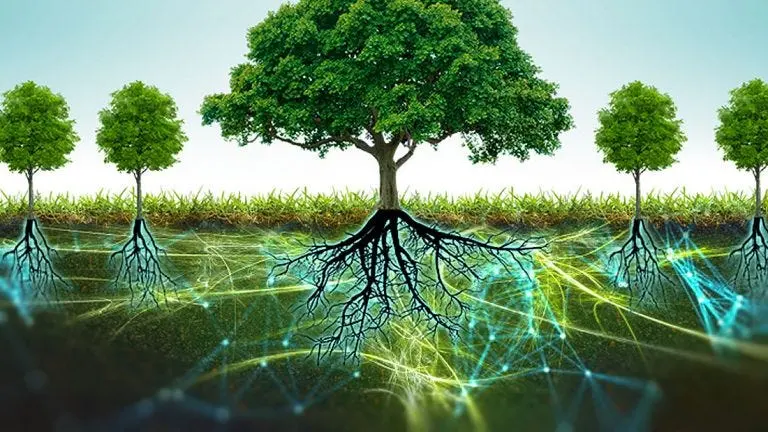
Trees establish symbiotic relationships with mycorrhizal fungi, which colonize their root systems. These fungal threads, or hyphae, extend far beyond the reach of the tree's own roots, creating a massive subterranean infrastructure. Through this network, trees can trade sugars produced via photosynthesis for essential minerals like phosphorus and nitrogen gathered by the fungi.
This connection serves as a conduit for information exchange between individual trees. Research suggests that larger, older "mother trees" use these pathways to send excess nutrients to younger saplings struggling in the shade. When a tree is attacked by insects, it can send chemical distress signals through the fungal network. Neighboring trees receive these alerts and begin producing defensive enzymes or bitter-tasting chemicals to protect themselves from the impending threat.
- Fungal hyphae act as physical bridges between diverse plant species.
- Carbon-rich sugars are transferred from healthy trees to those in need.
- Chemical signals act as early warning systems for forest communities.
- Resource sharing increases the overall resilience of the forest ecosystem.
How do trees send signals through the air?
Beyond the soil, trees utilize volatile organic compounds (VOCs) to communicate across distances. When a tree experiences damage from herbivores, such as beetles or caterpillars, it releases specific chemical "scents" into the atmosphere. Nearby trees detect these airborne molecules through their leaves, triggering an internal physiological response that prepares them for a potential attack.
This aerial communication is remarkably specific. Different types of damage—whether from wind, drought, or specific insects—elicit distinct chemical signatures. By interpreting these signals, neighboring trees can preemptively bolster their defenses. This strategy is particularly vital in dense forests where physical contact is limited. The speed of this communication allows entire groves to coordinate their immune responses, significantly reducing the success rate of pests and pathogens.
- A tree suffers tissue damage from an herbivore.
- The tree releases specific VOCs into the surrounding air.
- Neighboring trees sense the chemical compounds via their stomata.
- Nearby trees synthesize defensive proteins or toxins in response.
Why do trees share resources with rivals?
While it may seem counterintuitive for trees to support competitors, this behavior is essential for long-term forest survival. By maintaining a healthy, interconnected community, trees ensure the stability of their environment. A forest with diverse, resilient members is less susceptible to catastrophic failure from disease outbreaks or extreme weather events.
Sharing resources also prevents the collapse of the local microclimate. If a neighboring tree dies, the resulting gap in the canopy can expose the forest floor to harsh sunlight and wind, which may harm the remaining trees. By keeping their neighbors alive, trees preserve the humidity and temperature regulation of their immediate surroundings. This collective survival strategy demonstrates that cooperation is often more beneficial than competition in stable, long-established forest ecosystems.
Common mistakes when observing forest communication
Many observers assume that all trees in a forest are connected to the same network. In reality, these networks are highly selective and often favor specific species or kin. Assuming that every tree in a woodland is actively sharing resources can lead to misunderstandings about forest health. Not all interactions are cooperative; some species use these networks to spread toxins or sabotage the growth of rivals.
Another common error is ignoring the role of soil health. Mycorrhizal networks require specific conditions to thrive, including undisturbed soil and the presence of diverse fungal species. Introducing synthetic fertilizers or tilling the ground can disrupt these delicate connections, effectively "silencing" the trees. Understanding that communication is a biological process rather than a mechanical one is key to appreciating how forests function as living, breathing units.
How to support natural forest communication
If you manage a woodlot or garden, you can take practical steps to protect these underground networks. The most important action is to minimize soil disturbance. Avoid digging deep trenches or using heavy machinery near the root zones of established trees, as this severs the fungal threads that facilitate communication. Protecting the leaf litter layer is also vital, as it provides the organic matter necessary for fungi to flourish.
When planting new trees, aim for diversity rather than monocultures. A variety of species encourages a more robust and complex fungal network, which in turn improves the resilience of the entire area. Avoid the excessive use of fungicides or broad-spectrum pesticides, which can kill the beneficial fungi that trees rely on for their social interactions. By creating a stable environment, you allow the trees to maintain their natural, ancient dialogue without human interference.
Key facts
- Trees communicate primarily through a symbiotic underground network of mycorrhizal fungi that connects their root systems.
- This "Wood Wide Web" allows trees to share water, carbon, nitrogen, and other nutrients with neighboring plants.
- Older "mother trees" use these fungal networks to provide extra sugar to shaded seedlings, increasing their survival rates.
- Trees release volatile organic compounds (VOCs) into the air to warn nearby trees about incoming insect attacks or diseases.
- When a tree is under stress, it can send chemical signals that trigger neighboring trees to boost their own immune responses.
- To support tree communication in your garden, avoid excessive tilling, which destroys the delicate fungal threads essential for connectivity.
The bottom line
Trees are not solitary organisms but rather active participants in a complex, interconnected social network. By utilizing both underground fungal pathways and airborne chemical signals, they share vital resources and provide early warnings against environmental threats. Understanding this hidden dialogue reveals that forest health depends on the collective cooperation of all its members, highlighting the importance of preserving soil integrity and natural biodiversity in our ecosystems.
People also ask
Do trees feel pain when they are cut?
Trees do not have nervous systems or brains, so they do not experience pain in the way animals do. However, they possess sophisticated defense mechanisms that react to physical damage, such as sealing off wounds to prevent infection.
Can trees recognize their own kin?
Research suggests that some tree species can detect the presence of their own offspring through root-based chemical signaling. They often prioritize resource sharing with these related seedlings to ensure the survival of their genetic legacy.
Is communication between trees limited to the same species?
While trees often communicate most effectively with their own species, the fungal network can facilitate exchanges between different types of trees. This cross-species interaction helps maintain the overall health and biodiversity of the forest ecosystem.
How far can a tree’s signal travel?
Chemical signals sent through the air via VOCs typically travel short distances, usually reaching only the immediate surrounding trees. Underground fungal networks, however, can span vast areas, connecting entire forest stands into a single communication web.
What happens if the soil is too dry for communication?
Mycorrhizal fungi require a certain level of moisture to thrive and transport nutrients effectively. In drought conditions, these fungal networks may become dormant or die back, significantly hindering the trees' ability to share resources.
Can trees communicate with plants other than trees?
Yes, the fungal network is non-discriminatory and connects a wide variety of plants, including shrubs, grasses, and wildflowers. This creates a complex, interconnected community where diverse species support one another's growth and defense.
This answer was created with the help of AI research tools and reference sources. Spotted an error? Let us know — we correct mistakes quickly. See our editorial policy.